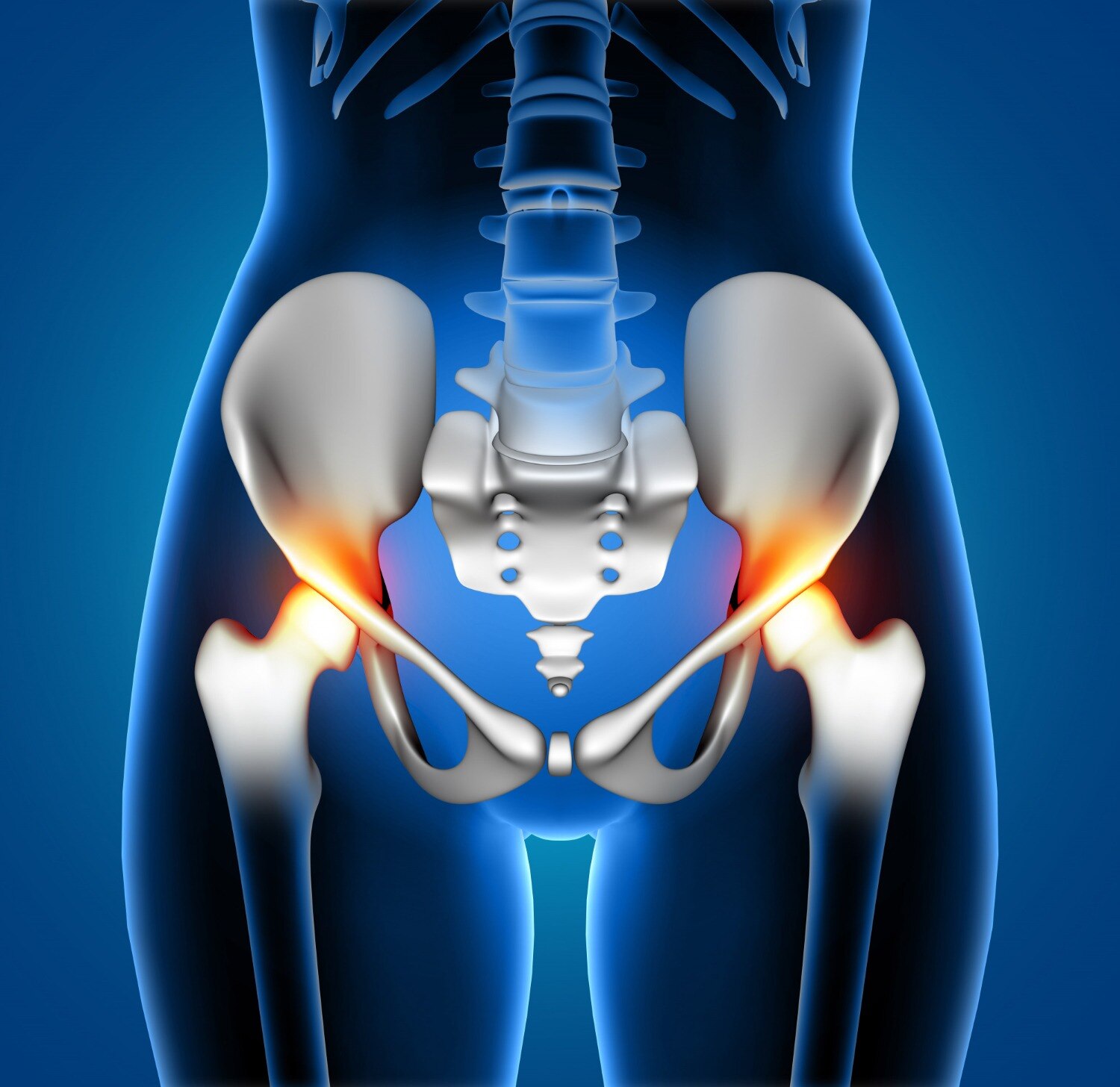
A usable procurement specification must define more than a nominal 6.5 mm diameter: it must identify the acetabular shell, screw geometry, fixation role, instrument interface, material and traceability documents. By the end, you will be able to compare a screw drawing with the implant system and prepare an order that does not rely on unsafe assumptions about interchangeability.
Key takeaways
- Use screws only when the surgeon’s acetabular fixation plan requires supplemental fixation.
- Specify diameter, length, thread, head, drive and allowable placement details.
- Match screw dimensions and locking features to the exact acetabular cup system.
- Request material certificates, test reports, traceability records and sterilization details.
When does a total hip replacement cup need a screw?
A total hip replacement cup needs a screw only when the surgeon’s fixation plan calls for supplemental acetabular-shell fixation. The screw cannot compensate for inadequate press-fit, poor rim contact, incorrect bone preparation or an unstable cup.
Classify the requested item before specifying quantity:
- Optional primary acetabular screw: for a cementless, press-fit shell when bone quality, dysplasia or concern about initial stability supports added fixation. Some stable cups receive no screws.
- Revision or augment-fixation screw: for a reconstruction shell, augment or pelvic bone-loss construct. It may require greater length, variable-angle fixation or multiple fixation points and is not interchangeable with a primary cup screw.
- No screw: for a cemented cup, or for a cementless cup that achieves satisfactory stability without supplemental fixation. Do not infer this choice from cup diameter alone.
A “THR screw” normally means the first category: a cancellous-style screw passing through an acetabular shell hole. It is not a generic fastener for all THR implants. Femoral stems are usually secured by press-fit or bone cement, without routine transosseous screws.
Specify the cup’s fixation philosophy and approved screw family, not merely “screws for hip implants.” A nominal 6.5 mm diameter does not prove suitability; thread form, head seating and hole geometry remain system-specific. If the request concerns an augment, pelvic fixation point or revision construct, name that implant and fixation site explicitly.
Which dimensions belong in a complete THR screw specification?
A complete specification names the compatible acetabular shell and screw family, not merely “6.5 mm.” State the fixation role, shell-hole diameter, hole angle, locking or non-locking interface, head-seating geometry, and whether the joint replacement prosthesis permits that screw.
Thread form must match the bone and fixation site:
| Screw type | Design feature | Appropriate use |
|---|---|---|
| Cancellous | Coarser, deeper thread with greater purchase in softer bone | Supplemental fixation in acetabular cancellous bone |
| Cortical | Finer thread and smaller pitch for dense bone | Cortical purchase when the approved surgical technique specifies it; unsuitable as a substitute for a cancellous cup screw |
Include these fields in the thr screw specifications:
- Nominal diameter, core diameter, overall length, threaded length, available range, and size increments; a common 15–50 mm range is system-specific, not an interchangeability standard.
- Thread pitch, thread profile, tip design, and whether the tip is self-tapping or blunt.
- Head diameter, head profile, recess or drive type, cannulation, and insertion-driver interface.
- Material designation, surface coating, sterile or non-sterile supply, and single-use status.
- Approved drill diameter, drill length, depth-gauge dimensions, and the compatible driver.
- Permitted trajectory, maximum length, and screw-hole or liner clearance for each shell.
- Compatible liner, screw-hole seating, and locking interface.
Specify the approved length after drilling with the system’s depth gauge. An overlong screw can penetrate the medial wall or enter a hazardous pelvic trajectory even when its diameter is correct.
How do you verify screw-to-cup compatibility before ordering?
A 6.5 mm label does not prove compatibility. A screw can match the diameter yet fail to seat in the shell, damage the liner, or extend beyond the inner pelvic cortex. Verify the complete system against the manufacturer’s current instructions for use and catalogue before placing the order.
1. Record the exact acetabular shell model, nominal diameter, screw-hole diameter, hole angle, and locking or non-locking design. Confirm that the proposed screw belongs to the shell’s approved screw family, not merely that its dimensions resemble those of other hip implants.
2. Match the head and recess geometry. The head must sit flush in the shell without rocking or projecting into the liner; confirm the liner’s screw-hole pattern and clearance for the selected screw head and trajectory.
3. Match the instruments by part number. Check that the approved drill diameter and length, depth gauge range, and insertion driver interface fit the screw’s thread, recess, cannulation, and tip design. A driver that engages loosely can strip the recess or prevent full seating.
4. Follow the approved drilling trajectory and measure depth with the compatible gauge after drilling. Do not select length from the radiographic cup diameter or assume a common 15–50 mm range is interchangeable between systems.
5. Select a length that gains useful host-bone purchase without crossing the inner pelvic cortex. Confirm the measured depth, intended trajectory, shell position, and available length increments; an overlong screw can injure pelvic vessels, nerves, or viscera.
Keep the verification record with the order: shell and liner part numbers, screw diameter and length, drill, gauge, driver, and compatibility confirmation. These entries turn THR screw specifications into a checkable purchase decision.
Which material, testing and quality documents should you request?
A material certificate must identify the exact alloy, not merely say “medical grade.” Request the heat or lot number, chemical composition, applicable designation such as ASTM F136 titanium alloy or ASTM F75 cobalt-chromium alloy, and confirmation that the screw is approved for the specified shell.
Material choice does not establish compatibility with every joint replacement prosthesis.
| Document or evidence | Check | Why it matters |
|---|---|---|
| Material and surface report | Alloy, coating, heat treatment and mating shell material | Reveals risks of galvanic corrosion, fretting, cold welding and difficult removal |
| Corrosion and mechanical testing | Test method, sample configuration and acceptance result; ASTM F543 where applicable | ASTM F543 does not prove the cup interface or clinical suitability |
| MRI documentation | MR Conditional label and limits for field strength, SAR, scan time and implant configuration | Prevents unsafe scanning assumptions for THR implants |
| Sterilisation record | Sterile or non-sterile status, method, cycle validation, packaging seal and expiry | Identifies whether hospital sterilisation is required |
| Inspection and traceability | Dimensional report, visual inspection, batch number, serial or lot record and certificate of conformity | Links each screw to released specifications and inspection results |
| Regulatory file | US 510(k) when applicable, EU MDR Declaration of Conformity and certificate where required, plus destination-market registration | Confirms permission to supply in the intended market |
Also request the approved instructions for use, implant-system compatibility statement, and a signed release record for the supplied lot. A passing laboratory result cannot substitute for these documents or for validated screw-hole compatibility.
How should a buyer turn the findings into an order?
Turn the findings into a purchase-ready request by naming the exact acetabular shell and its approved screw family, not merely “6.5 mm THR screws.” State whether the order is for primary total hip replacement, revision reconstruction, augment fixation or pelvic fixation.
Include these fields in the request:
- Compatible shell model, cup screw-hole diameter, hole angle, locking or non-locking interface, and liner clearance
- Nominal diameter, overall length range, thread length, pitch, core diameter, tip design and required size increments
- Head diameter and profile, drive or recess type, cannulation, approved driver, drill and depth gauge
- Material designation, coating, sterile or non-sterile supply, single-use status and packaging
- Quantity and required length mix, based on the surgical plan rather than cup diameter alone
| Role | What it means | Ordering rule |
|---|---|---|
| Primary cup screw | Supplemental fixation for a primary press-fit shell | Order only the shell manufacturer’s approved family |
| Revision reconstruction screw | Longer or larger screws for bone loss and multiple fixation points | Do not substitute for a primary screw because the diameter matches |
| Augment fixation screw | Fixes an augment through its dedicated interface | Confirm augment-specific head seating and trajectory |
| Pelvic fixation screw | Serves reconstruction fixation outside the routine cup interface | Require the named construct and compatible instrumentation |
A supplier’s approved family must match the shell, seating geometry, trajectory and instruments. Similar length or diameter proves none of these. When assessing Komal Health Care Pvt Ltd, request a compatibility matrix and component-level drawings before placing the order. State the required screw quantity separately; one case may need none, one or several screws.
Related products
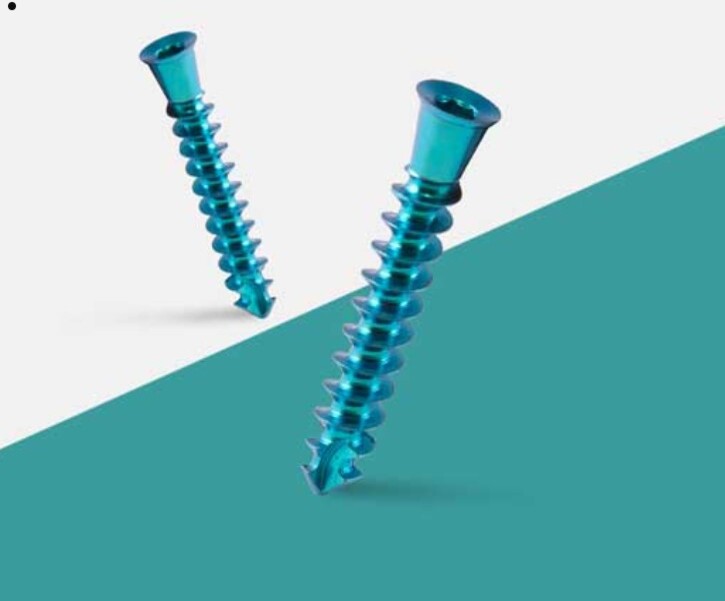 | Joint Replacement A THR Screw Manufacturer produces specialized screws used in Total Hip Replacement (THR) surgeries to secure implants and enhance joint stability. View product → |
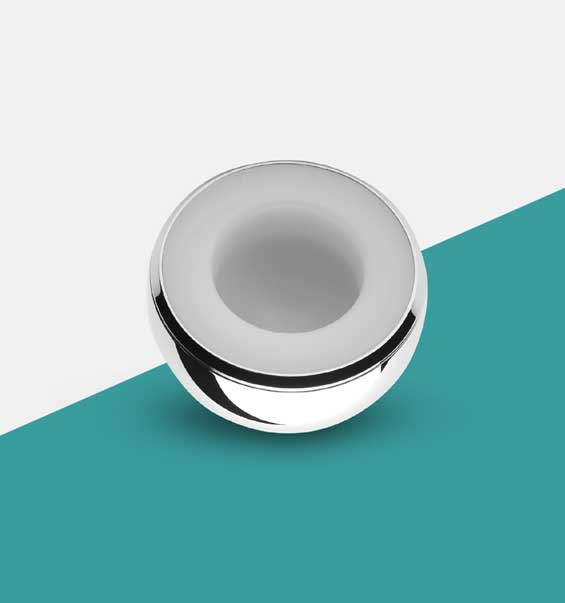 | Joint Replacement Modular Bipolar Cup Manufacturer A Modular Bipolar Cup Manufacturer specializes in producing advanced orthopedic components used in hip replacement surgeries. View product → |
Frequently asked questions
When does a total hip replacement cup need a screw?
Use a screw when the surgeon’s fixation plan calls for supplemental acetabular-shell fixation. A screw does not correct poor press-fit, inadequate rim contact, incorrect bone preparation or an unstable cup.
Which dimensions belong in a complete THR screw specification?
Specify screw diameter, available lengths, thread profile, thread length, tip design, head geometry, drive type and any limits on insertion depth or angulation.
How do you verify screw-to-cup compatibility before ordering?
Match the screw to the exact cup model and revision, then confirm hole diameter, thread or locking interface, head seating, permitted trajectory, length range and the manufacturer’s approved instrument set.
Which material, testing and quality documents should you request?
Request the material grade, certificate of conformity, lot or batch traceability, dimensional inspection results, mechanical test reports, sterilization status and the device’s applicable regulatory documents.
How should a buyer turn the findings into an order?
Create a purchase specification naming the cup system, screw reference, diameter, length, quantity, packaging state, documents required and acceptance checks for delivery.