Finding a nearby seller is not enough: you need to identify who legally manufactures the femoral stem, who imports it into Chile, and who can support the operation in Santiago. By checking regulatory records, compatibility, instruments, stock location and landed cost, you can separate a usable local supply route from a catalogue-only quotation.
Key takeaways
- Identify the legal manufacturer, Chilean importer and hospital-facing representative.
- Confirm whether the stem is manufactured in Chile or imported.
- Request regulatory and technical documents before comparing prices.
- Check system compatibility, stock, surgical support and delivered cost.
Start with the right supplier: manufacturer, importer or hospital representative
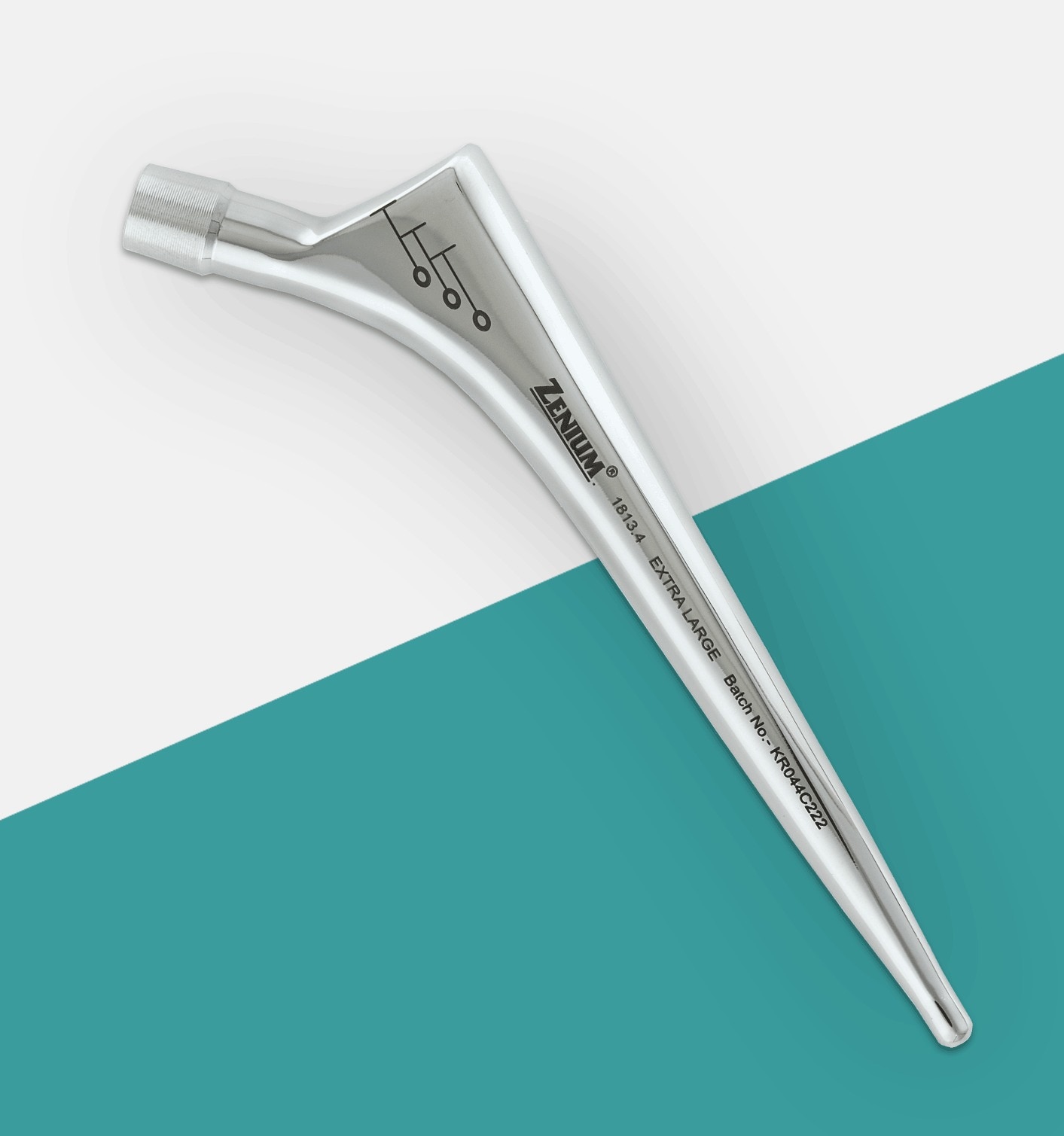
A search for an “uncemented stem supplier near santiago” can return three different parties. The legal manufacturer makes the implant; the Chilean importer or distributor brings it through customs and holds commercial responsibility; a hospital-facing representative arranges quotations, surgeon support or consignment stock.
A Santiago address proves none of these roles by itself, and does not prove the stem is made in Chile.
Ask each candidate to identify:
- The manufacturer’s full legal name, manufacturing-site address and certificate scope.
- The Chilean importer of record, authorized representative and dispatch location.
- Whether the quoted uncemented femoral stem is physically stocked in Chile or shipped from another country.
- The available stem sizes, offsets and versions, plus the matching broaches, rasps, trial heads, impactors and extraction tools.
- The product’s current Instituto de Salud Pública de Chile regulatory pathway, import documentation and traceability records.
A manufacturer can answer for design and production but still lack Chilean inventory. An importer can deliver locally without making the implant. A hospital representative can support a case while depending on another company for stock, instruments and documentation.
Confirm who signs the quotation, who issues the invoice, who handles recalls and who guarantees delivery of the complete system. Reject a supplier that offers only a product photograph, a nominal head diameter or an “FDA approved” or “CE marked” claim without identifying the Chilean supply chain.
Check whether the stem is made in Chile or shipped into Chile
A Santiago address does not prove that an uncemented stem is made in Chile. It may identify only a distributor’s office, warehouse or hospital-facing representative, while the implant is manufactured overseas and imported through a separate legal entity.
Ask the supplier to identify each party in writing:
- Legal manufacturer name, registered manufacturing-site address, and the exact certificate scope covering the femoral stem.
- Chilean importer of record, legal name, RUT, registered address and authorized representative for the device.
- Santiago office or warehouse address, with confirmation that the listed stock is physically held in Chile.
- Dispatch point for your order: Chilean inventory, overseas factory, regional hub or another distributor.
- Delivery route, including international freight, customs broker, port or airport entry, local carrier and estimated time to your hospital.
- Invoice issuer and the party responsible for customs clearance, product traceability, recalls and delivery damage.
If the supplier claims to be an uncemented stem manufacturer Chile, compare its manufacturing address with the device documentation. A Chilean company can import a foreign-made stem; a foreign manufacturer can sell through a Santiago distributor. Treat “local supplier” and “made in Chile” as separate claims.
Request the batch or lot traceability process and the Chilean regulatory information held by the Instituto de Salud Pública de Chile. Do not accept “CE marked” or “FDA approved” as proof of Chilean import responsibility. A quotation without a named importer, dispatch point and delivery route is incomplete.
Request the regulatory and technical file before comparing quotations
Do not compare prices until the seller can identify the exact implant and show how it enters Chile legally. Ask for the legal manufacturer’s name, manufacturing-site address, model and catalogue number, and the certificate scope covering that uncemented femoral stem—not a certificate for a different hip component.
Request these records for the quoted system:
- Manufacturer’s declaration of conformity and quality certificate, with the certificate scope, validity dates and manufacturing site.
- Chilean importer-of-record, its address and authorization to import or distribute the device.
- Instituto de Salud Pública de Chile registration, recognition or import documentation applicable to the stem, plus any authorization for the local representative.
- Spanish labeling and instructions for use, including indications, contraindications, stem sizes, alloy, coating, sterilization status and storage conditions.
- Lot or serial-number traceability documents, expiry information where applicable, and a sample implant label.
- Technical drawings and the compatibility list for taper, head, neck geometry, offset options, instruments and approved acetabular components.
| Document | What it proves | Stop if |
|---|---|---|
| Manufacturer declaration | The named company made the exact stem | Model or site differs |
| ISP record or import file | The product has a Chilean supply route | Seller cannot identify the pathway |
| Spanish instructions and label | Clinical and traceability information accompanies delivery | Only a generic brochure is supplied |
| Compatibility and instrument list | The quotation covers a usable system | Broaches, trials or impactors are absent |
| Lot records | Each delivered implant can be traced | No lot, catalogue or serial reference appears |
CE marking or FDA clearance alone does not establish lawful Chilean supply. Match every quotation line to the documents and the exact catalogue numbers.
Match the stem to the complete hip system and the fixation plan
A quoted stem is not compatible merely because it uses a 28 mm or 32 mm femoral head. Ask for the complete system matrix linking the exact stem version, taper, neck geometry, offset options, compatible heads, acetabular shell, polyethylene or ceramic liner, and locking mechanism.
Request these records before approval:
- The manufacturer’s compatibility chart for the proposed stem and acetabular components
- The exact taper designation, head material, neck length options and offset range
- Broaches or rasps for every planned stem size, plus trial heads, neck trials and femoral impactors
- Stem extraction tools and any dedicated acetabular instruments
- The instrument-loan list, sterilisation instructions and tray identification numbers
- Written confirmation that the components are approved for use together, not merely sold by the same distributor
Give the supplier the surgeon’s fixation plan, not just the patient’s implant size. Confirm whether the operation uses a press-fit stem, the intended stem geometry and coating, the planned canal-preparation sequence, and the trial components required to assess leg length and offset.
A stem designed for a different broach shape or metaphyseal fixation strategy can force intraoperative changes, delay surgery or leave the surgeon without a usable implant.
For a search such as “hip implant manufacturer near Santiago,” require the same evidence from a local warehouse, importer or overseas manufacturer: a current catalog, system compatibility statement and complete instrument inventory. If the supplier cannot identify the matching tray and backup sizes, proximity does not make the system ready for surgery.
Evaluate a Santiago supplier by inventory, support and total delivered cost
A quoted stem is not proof that a supplier can support surgery. Ask whether the company holds implants in Chile, carries the complete size range, and can deliver the matching broaches, rasps, trial heads, impactors, extraction tools and instrument trays for the exact system.
Search results for an uncemented stem supplier near Santiago should identify three separate parties:
- Legal manufacturer: request its full legal name, manufacturing-site address and certificate scope.
- Chilean importer or distributor: confirm the importer of record, Santiago stock location, dispatch route and lead time.
- Hospital-facing representative: identify who handles case planning, tray delivery, instrument maintenance and urgent replacement.
Komal Health Care Pvt Ltd should be assessed by asking for a current catalogue and written confirmation that it supplies uncemented femoral stems, not only calcar or cemented products, together with compatible instrumentation and available sizes.
Compare the landed cost, not only the stem quotation:
| Cost item | What to verify | What goes wrong if omitted |
|---|---|---|
| Implant and logistics | Stem price, importer margin, customs, brokerage, freight and local delivery | A low unit price hides an expensive imported route |
| Surgical support | Instrument-loan fee, tray maintenance, training and case coverage | The implant arrives without usable instruments |
| Inventory risk | Consignment losses, expiry replacement and replenishment terms | Your hospital pays for unusable or expired stock |
| Compatibility | Exact taper, neck geometry, offset, head options and stem version | A nominally matching head or instrument does not fit |
A hip implant manufacturer near Santiago is useful only when its documentation, Chilean supply route and operating-room support match the surgeon’s planned system.
Related product
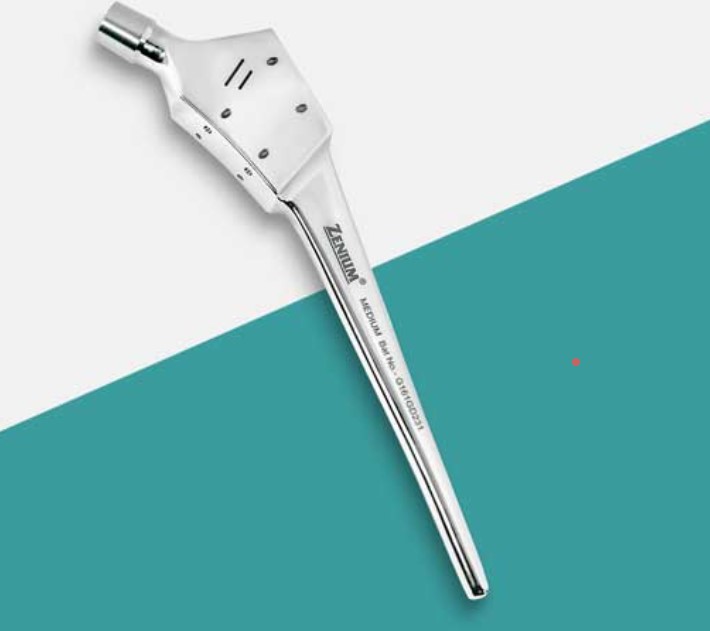 | Joint Replacement A Calcar Stem Manufacturer specializes in producing orthopedic implants designed for hip replacement surgeries, particularly when there is damage or... View product → |
Frequently asked questions
What is the difference between a manufacturer, importer and hospital representative?
The manufacturer makes the stem, the Chilean importer brings it through customs and assumes commercial responsibility, and the hospital representative handles quotations, surgeon support or consignment stock.
How can you tell whether an uncemented stem is made in Chile or imported?
Ask the supplier for the manufacturing site, country of origin, importer details and shipping documentation, then compare those details with the product label and regulatory file.
Which documents should you request before comparing quotations?
Request the product’s regulatory authorization, technical file, instructions for use, sterilization information, traceability details and evidence identifying the legal manufacturer and importer.
Why must an uncemented stem be matched to a complete hip system?
The stem must work with the planned femoral head, acetabular component, taper, instruments and fixation approach; a lower price is not useful if the components or surgical tools are incompatible.