A distal femoral restrictor does not fix the stem directly; it creates the conditions for controlled PMMA cement delivery, pressurisation and interdigitation. By the end, you will be able to match the plug to the prepared canal and stem system, identify unsafe positioning, and write a Santiago hospital purchasing specification that covers the full cemented THR workflow.
Key takeaways
- A distal restrictor contains PMMA cement below the femoral stem tip.
- Match plug diameter and depth to the femoral canal and planned stem.
- Reject a restrictor that migrates, leaks cement, or cannot be seated securely.
- Specify compatibility, sterile packaging, traceability, and surgical instrumentation before sourcing.
How a distal restrictor improves cemented femoral fixation
A distal femoral restrictor improves cemented fixation by sealing the canal below the planned femoral stem tip. This closure lets the surgeon deliver polymethylmethacrylate (PMMA) cement retrograde and pressurise it around the stem instead of allowing cement to run distally.
With distal escape controlled, cement can fill the prepared canal as a more continuous mantle. Pressurisation drives PMMA into the cancellous bone surface, supporting mechanical interdigitation rather than leaving distal voids or a thin proximal mantle.
The contained cement also gives the surgeon a controlled medium in which to insert the stem at the planned depth, version and alignment during the cement’s working time.
These are the practical cemented restrictor benefits for THR implants in Santiago and elsewhere. They support the fixation process for THR implants; the restrictor does not grip or anchor the stem by itself.
A plug cannot rescue poor preparation or rushed insertion. Reliable fixation still depends on:
- Thorough canal preparation and pulsatile lavage
- Complete drying before cement introduction
- Correct PMMA mixing and retrograde delivery
- Adequate cement pressurisation
- Stem insertion and alignment within the cement working time
The restrictor therefore functions as a canal occluder, not a substitute for cementing technique. If it leaks, migrates or is positioned incorrectly, distal cement escape and a discontinuous mantle can undermine the conditions the device is intended to create.
How surgeons select and place the plug during THR
After broaching or rasping, the team measures the prepared femoral canal and selects a restrictor that fits that canal—not a plug chosen from stem size alone. The selected diameter must engage the canal walls and resist distal displacement during cement pressurisation.
1. Measure the canal with the sizing gauge or instrument specified for the stem-and-plug system. Confirm that the plug matches the prepared diameter and that its insertion tool is compatible.
2. Calculate the insertion depth from the prepared canal and planned stem tip. Leave the intended distal cement mantle beneath the stem; use the selected system’s instructions for the final distance rather than a universal measurement.
3. Insert the distal femoral restrictor, also called a distal cement plug, to the planned depth. The plug should seat with firm resistance. Stop if it spins, advances unexpectedly, will not reach the depth mark, or requires force that could damage the canal.
4. Verify the position before injecting cement. Use the insertion instrument’s depth stop, calibrated markings or other system check, and obtain an intraoperative radiograph when the position cannot be confirmed reliably by instruments.
5. Deliver PMMA cement retrograde only after the plug is verified. The seated plug provides the distal stop needed for controlled filling and pressurisation around the stem.
A proximal cement plug is a different canal-blocking technique and is not automatically interchangeable with a distal restrictor. A centralizer centres the stem within cement; it does not necessarily occlude the distal canal. Always match the restrictor, centralizer and cementing instruments to the selected THR implants.
What goes wrong when the restrictor does not fit the case
A restrictor mismatch can turn controlled cement pressurisation into distal cement escape. An undersized plug may bypass or migrate when pressure rises, allowing PMMA cement to pass beyond it and reducing the pressure available for proximal interdigitation with cancellous bone.
An oversized plug creates the opposite problem: it can resist insertion, require excessive force or injure the femoral canal. Do not substitute a larger size because the stem is larger; restrictor selection depends on the prepared canal diameter and the selected system’s instructions.
Position matters as much as diameter. A shallow plug leaves too little cement beneath the stem tip, compromising the intended distal cement mantle. A plug placed excessively deep or displaced during insertion can create an unnecessarily long cement column, cause cement extrusion beyond the intended canal and make later femoral revision harder.
Stop before cement injection if any of these conditions applies:
- The surgical plan has changed to an uncemented femoral stem.
- The stem system requires a proprietary restrictor that is not available.
- Abnormal anatomy prevents reliable canal measurement or seating.
- Canal perforation is suspected or confirmed.
- The insertion instrument is incompatible with the plug.
- The final plug position has not been verified by the specified instrument or imaging method.
Do not pressurise cement to compensate for an unverified plug. Remove, replace or reposition the restrictor according to the selected stem-and-plug system’s technique, then confirm that its depth leaves the planned cement mantle beneath the stem tip.
When cemented or uncemented femoral fixation is the better choice
A cemented femoral stem is not automatically better because a distal restrictor is available. Cement gives immediate mechanical stability and often suits older patients, poor-quality bone, and cases where early stability matters.
Its results depend on lavage, drying, cement mixing, delivery, pressurisation and mantle control; revision also requires cement removal, which can cost bone and time.
| Option | Fixation basis | Main limitation or advantage |
|---|---|---|
| Cemented femoral | Immediate stability through PMMA cement | Requires meticulous technique and managed cement mantle |
| Uncemented femoral | Bone ingrowth onto a prepared stem | Depends on bone quality, stem geometry and biological healing |
| Hybrid THR | Cemented femoral stem, uncemented acetabular cup | Uses different fixation strategies in one construct |
| Reverse hybrid THR | Uncemented femoral stem, cemented acetabular cup | The restrictor is irrelevant to the femoral component |
Choose the construct from the patient and the hospital’s results, not from the restrictor alone. Age, bone quality, fracture risk, femoral anatomy, implant design, surgeon experience, revision patterns and case mix all matter.
- Stratify the case: compare elective primary THR, fracture-related arthroplasty and revision demand rather than applying international registry results directly to Santiago.
- Match fixation to the planned stem and the surgeon’s reliable technique. An uncemented stem needs biological healing; a cemented stem needs controlled cement preparation and insertion.
- Specify the whole construct before ordering THR implants. A cemented femoral stem does not require a cemented acetabular cup, and a restrictor has value only when that femoral stem is cemented.
How Santiago hospitals should specify and source a compatible system
Make the purchase file a compatibility record, not a request for a plug alone. A cemented restrictor manufacturer must identify the sterile, single-use femoral-canal plug by catalogue number and link it to the planned cemented stem and PMMA technique.
- Specify the restrictor’s compatible prepared-canal diameter range, material, radiopacity or radiographic visibility, packaging, sterilisation method, shelf life and instructions for use. Require the catalogue number for each size, not merely the word “restrictor.”
- Match the plug to the femoral stem, required distal or proximal centralizer, femoral head, acetabular shell or cup, liner and intended construct: fully cemented, hybrid, reverse hybrid or uncemented. A cemented femoral stem does not make the acetabular cup cemented.
- Record catalogue numbers and instructions for use for PMMA cement, vacuum-mixing or other specified mixing equipment, cement-delivery and pressurisation equipment, lavage and drying equipment, and insertion instruments. Incompatible equipment can prevent controlled cement delivery or stem seating.
- Require the local importer or distributor to document the applicable Instituto de Salud Pública requirements and its authority to place each device on the Chilean market. CE marking or an overseas catalogue listing alone does not establish Chilean authorisation or local support.
- Ask the THR implant supplier in Santiago to provide the complete compatibility matrix. Buyers sourcing hip replacement components in Santiago can then compare the file across suppliers, including Komal Health Care Pvt Ltd, rather than judging a supplier only by individual component availability.
Stop procurement until an IFU confirms the plug, stem, cement and instruments work together.
Related products
 | Joint Replacement Cemented Restrictor Manufacturer A Cemented Restrictor Manufacturer produces medical devices used in orthopedic surgeries to control the depth of bone cement during joint replacement... View product → |
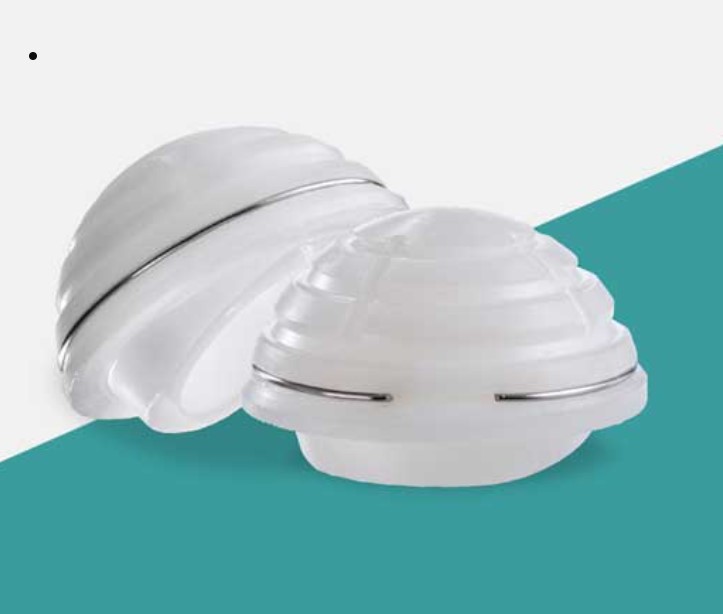 | Joint Replacement Acetabular Cup Cemented Manufacturer An Acetabular Cup Cemented Manufacturer produces acetabular components specifically designed for cemented fixation in total hip replacement... View product → |
Frequently asked questions
How does a distal restrictor improve cemented femoral fixation?
It seals the femoral canal below the planned stem tip, allowing retrograde PMMA delivery and pressurisation around the stem instead of distal cement escape.
How do surgeons select and place a restrictor during THR?
They match the restrictor to the canal diameter and planned stem depth, then place it below the stem tip at the depth specified by the implant system.
What happens when a femoral restrictor does not fit the case?
A poor fit can allow cement leakage, reduce pressurisation, migrate during cementing, or leave inadequate cement distal to the stem.
When is cemented or uncemented femoral fixation the better choice?
The choice depends on bone quality, patient factors, stem design, surgical technique, and the fixation objectives for that hip replacement.
How should Santiago hospitals specify and source a compatible THR system?
Request the stem, restrictor sizes, insertion instruments, sterile-pack details, lot traceability, technical documentation, and confirmation that the components are compatible.
Related product
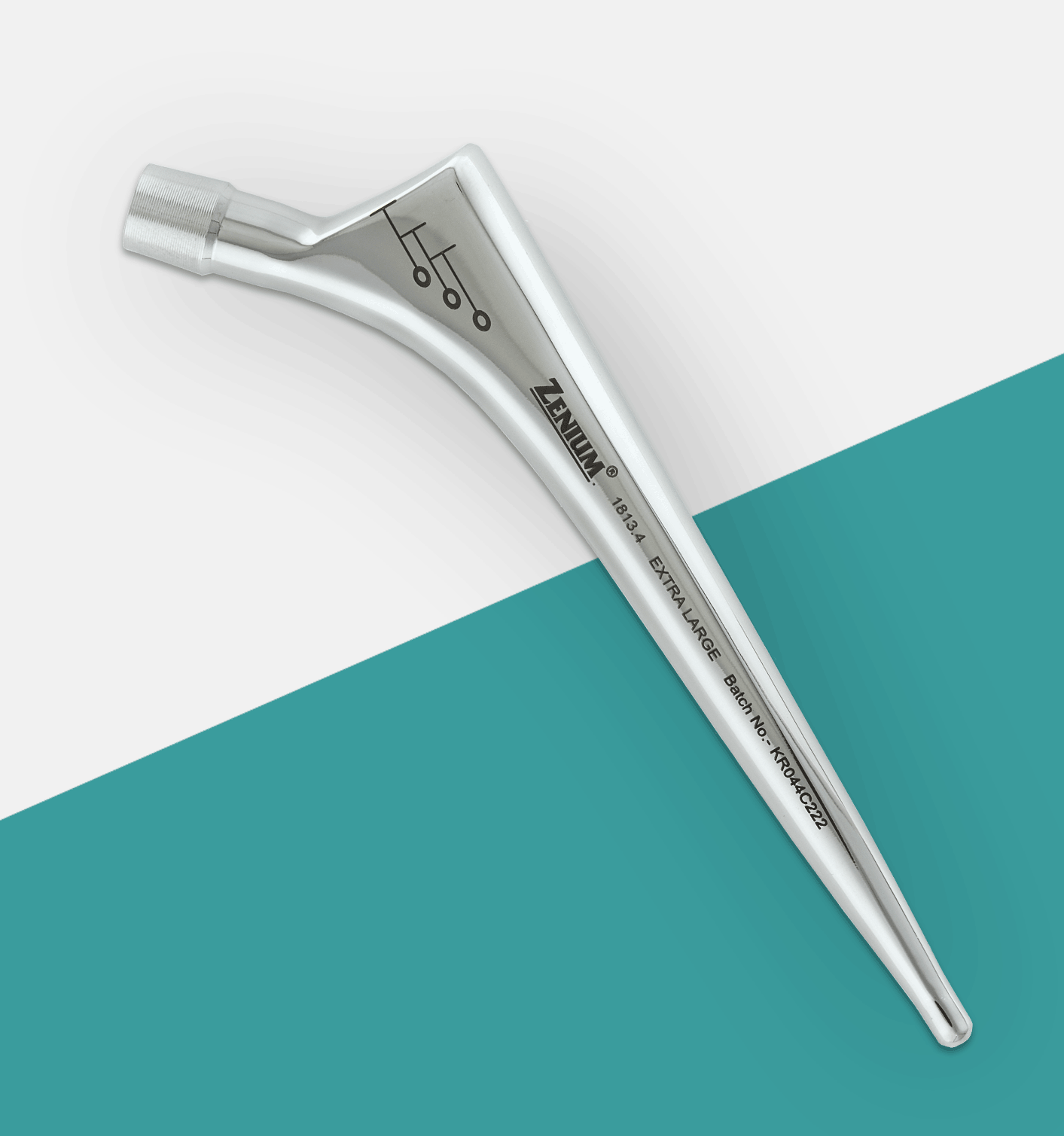 | Joint Replacement Bipolar Modular Stem (Cemented) Manufacturer The Bipolar Modular Stem (Cemented) is an orthopedic implant used in hip replacement surgeries, especially for elderly patients with fractured or... View product → |