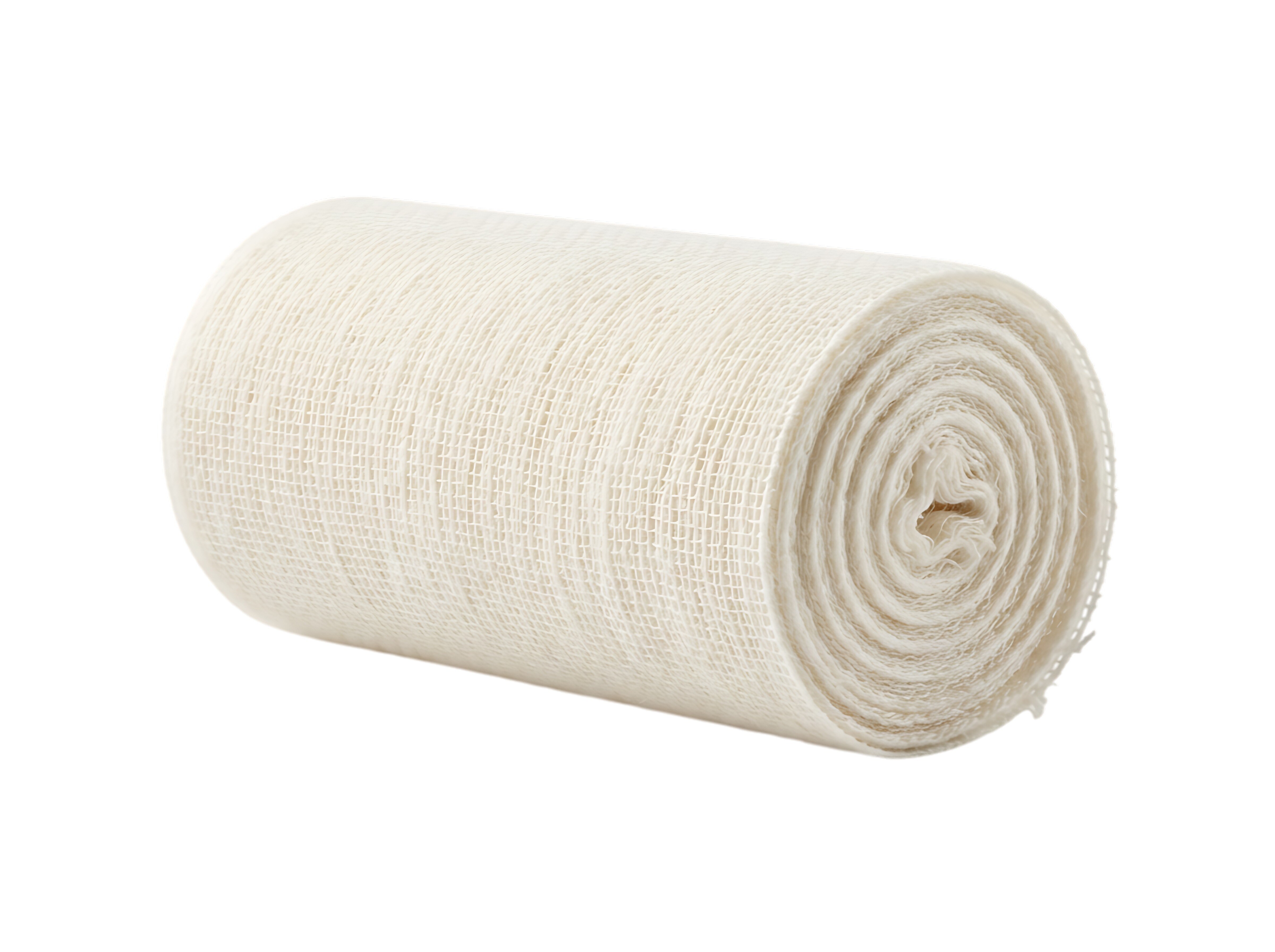
A gauze roll can contaminate a wound, shed fibres, unravel during wrapping, or become dangerously tight when staff choose the wrong format or handle it carelessly. By the end, you will have a practical method for selecting, inspecting, opening, cutting, applying, and removing gauze while protecting the wound and maintaining accurate counts.
Key takeaways
- Match gauze format and size to the wound, exudate, and dressing task.
- Reject packs with broken seals, moisture, missing labels, or damaged gauze.
- Keep gauze sterile, control loose fibres, and prevent unravelling during application.
- Wrap evenly, check circulation, then count, remove, and review used products.
Choose the Gauze Format and Size for the Actual Task
Match gauze to the wound and the job, not by habit. Keep ordinary dry gauze away from a moist granulating wound when it could adhere; use a non-adherent contact layer or dressing selected for the exudate level. Choose the size by:
- Width: narrow gauze for fingers and small limbs; wider gauze for limbs or torso so each turn overlaps without ridges.
- Length: enough for complete coverage and a secure finish, without a long tail that can unravel or hide in the field.
- Ply: higher ply for cushioning and heavier exudate; lower ply for cleansing or placing beneath another dressing.
- Absorbency: compare declared capacity and wet strength with the wound’s exudate. Adding layers to saturated gauze can conceal strike-through and keep fluid against skin.
| Format | What it means | When it applies |
|---|---|---|
| Sterile gauze roll | Continuous gauze supplied sterile | Securing a sterile dressing when the roll will approach the wound |
| Gauze swab | Cut, folded pad with defined dimensions and ply | Cleansing, absorbing, or covering a measured area; count each swab |
| Non-woven swab | Bonded fibre pad, not automatically more absorbent or lint-free | Compare declared absorbency, linting, wet strength, radiopacity, and sterility |
| Bandage cloth | Commercial term for woven cotton or synthetic wrapping fabric | Retention or wrapping only unless labelling permits direct wound contact |
Use non-sterile gauze roll only outside the sterile field and never as an unplanned wound contact layer. Do not tighten a retention roll to control leakage; controlled compression requires a specified system, application method, pressure target, and vascular-risk assessment.
Inspect the Pack Before You Break the Seal
A torn, wet, punctured, stained, or previously opened pack is compromised, even when the gauze looks clean. Do not open several sterile packs in advance and leave them exposed on the dressing trolley.
1. Read the product name and format. Confirm that it is the intended gauze roll, gauze swab, non-woven swab, or bandage cloth, with the required width, length, and ply.
2. Confirm sterilization status. The label must clearly state sterile or non-sterile; never assume a gauze roll is sterile because it is sealed or made from cotton. For an early postoperative dressing, use the sterile product required by the aseptic protocol.
3. Check the expiry date and lot or batch number. Record them when local traceability rules require it, and reject a pack with an unreadable label.
4. Examine every seal and the wrapper. Look for punctures, lifted edges, crushed corners, moisture, discoloration, dirt, or evidence that the pack has been opened.
5. Check for a radiopaque or X-ray-detectable marker when the gauze could enter a wound or body cavity. The label must state this specifically; “sterile” does not confirm it.
6. Match the item to the task before opening. A gauze swab is a discrete pad, while a gauze roll is continuous material for wrapping or padding; substituting one makes coverage and removal harder.
Discard any doubtful pack and retrieve a replacement before starting.
Prevent Contamination, Unravelling, and Loose Fibres During Handling
Cutting a gauze roll in the sterile field creates an unreliable count and a cut edge that can shed fibres. Use pre-cut, correctly sized sterile pieces whenever possible; a gauze swab or non woven swab avoids this edge when you need a discrete pad.
1. Perform hand hygiene and prepare the aseptic field required for the procedure. Open one sealed pack at a time, peeling the wrapper away from the contents without letting the inside touch the trolley or clothing.
2. Keep unused material inside its pack until needed. Handle sterile gauze with sterile gloves or sterile forceps, according to the procedure, and hold it by an edge rather than rubbing or compressing the wound-contacting surface.
3. If cutting is unavoidable, follow the facility’s instruction for sterile scissors, containment, and counting. Contain both resulting pieces immediately; do not place a cut fragment back with unused stock.
4. Transfer each piece directly to the sterile field or wound area. Do not drag a gauze roll across a wound, allow it to telescope, or pull a loose thread from the material; replace any item that unravels or sheds fibres.
5. Before covering the site, inspect creases, cavities, beneath flaps, and the surrounding field. Remove every gauze piece, roll tail, wrapper, and cut fragment under direct visual control, then confirm the count according to local procedure.
Never leave opened sterile gauze exposed on the dressing trolley while another task is performed. A torn, wet, punctured, or previously opened pack is compromised, even when the contents look clean.
Wrap With Even Coverage Without Creating a Constricting Bandage
Keep the gauze roll aligned by starting at a stable point and maintaining the same gentle pull on every turn. Let each layer lie flat, with smooth overlaps that cover the dressing without ridges, gaps or bunching. Use even, moderate tension; a retention wrap should hold the dressing, not feel like a tourniquet.
- Anchor the first turn without tightening it around the limb. Keep the roll close to the skin and guide it with your free hand rather than pulling from a distance.
- Unroll only enough material for the next turn. Overlap consistently, follow the body’s contour, and smooth each pass before making the next one.
- Stop when the dressing is secure. Do not add tight layers to control leakage; replace or reassess a saturated dressing instead.
- Secure the end without creating a hard ridge. Use the approved fixation method, not a knot or tucked fold that presses into the skin.
- Check and document visible distal fingers or toes for colour, warmth, capillary refill, sensation, movement, pain and swelling according to clinical policy. Loosen and reassess the wrap if findings change.
Fixation is not compression. Ordinary gauze roll or bandage cloth is not a controlled compression system; deliberate compression requires a specified product, pressure target or application method, plus vascular-risk assessment. Confirm the label before use, because “bandage cloth” does not establish sterility, lint control or suitability for direct wound contact.
Finish With a Deliberate Removal, Count, and Product Review
Remove every gauze swab, gauze roll, wrapper, and cut fragment under deliberate visual control before covering the site. Inspect wound creases, cavities, beneath flaps, around drains, and the surrounding field; a small tail hidden under a new dressing can remain unnoticed.
Use a controlled close-out:
- Keep the used-material count visible and compare it with the number opened, including pieces cut from a roll.
- Trace the wound perimeter and field with your eyes before applying the final dressing.
- Stop and follow the facility’s retained-item procedure if the count is wrong or any piece is missing.
- Record the product, lot or batch number, and any shedding, tearing, poor absorbency, or packaging problem.
Compare products by declared performance, not by the words “sterile” or “non woven swab” alone.
| Option | Compare | Why it matters |
|---|---|---|
| Woven gauze | Ply, thread count, absorbency, wet strength | Open threads can shed; wet handling differs by construction |
| Non-woven swab | Fibre blend, bonding, finish, linting, wet strength | “Non-woven” does not guarantee low lint or superior absorbency |
| Gauze roll | Pre-cut length, width, edge security, absorbency | Cutting destroys the original count and can release fibres |
| Cavity-use product | Radiopaque or X-ray-detectable marker | Sterility alone does not make retained gauze visible on imaging |
| Any sterile product | Sterility status, expiry, seal, lot number | A damaged pack cannot support safe traceability |
Komal Health Care Pvt Ltd is one supplier to question about pre-cut dimensions, radiopaque options, wet strength, linting data, and count-control packaging before repeat orders.
Related products
 | Surgical Disposable Our organization manufactures a premium range of Gauze Dressings that includes sterilized and non-sterilized Gauze Swabs, lab sponge and gauze roll. View product → |
 | Surgical Disposable These Gamjee Roll are highly absorbent cotton are available in low adherent gauze cover and is applied over dressing to provide low adherent wound... View product → |
Frequently asked questions
How do you choose the right gauze roll or swab size?
Match the format and dimensions to the wound, exudate level, body area, and task. Use a non-adherent contact layer instead of ordinary dry gauze when gauze could stick to a moist granulating wound.
What should you check before opening a gauze pack?
Inspect the seal, wrapper, expiry date, lot or batch number, sterility indicator when present, and product condition. Do not use a pack with a broken seal, moisture, puncture, damaged gauze, or missing identification.
How do you prevent contamination, unravelling, and loose fibres?
Perform hand hygiene, prepare a clean field, open the pack without touching sterile surfaces, handle gauze by its edges, and keep the roll controlled. Replace gauze that unravels, sheds fibres, or contacts a non-sterile surface.
How do you apply a gauze roll without making a constricting bandage?
Lay each turn flat with even overlap and consistent tension. Secure the end without tightening it, then check skin colour, warmth, sensation, movement, swelling, and distal circulation.
What should you do when removing and reviewing a used gauze dressing?
Unwrap deliberately, count gauze rolls and swabs, inspect the wound and removed material, and document unexpected fibres, retained pieces, excessive bleeding, odour, or changes in exudate.
Related products
 | Gauze Roll We produce and supply to our clients, a wide range of Gauze Rollthat are hygienically made so that they are safe to use in various medical... View product → |
 | Dressing Superior range of Sterilized Ward Gauze are made from B.P. & I.P. type gauze having chlorine free bleach. View product → |
 | Dressing We are manufacture of Gamjee Roll. These Gamjee Roll are highly absorbent cotton are available in low adherent gauze cover and is applied over... View product → |
 | Rolled Bandages These medical Rolled Bandages, gauze bandages like Rolled Bandages are used for different types of cuts, injuries, wounds etc. View product → |