An uncemented stem can provide biological fixation through press-fit stability and later bone ingrowth, but that benefit depends on bone quality, femoral preparation, stem geometry and a verified head-stem interface. By the end, you will be able to compare fixation methods, identify compatible modular components, judge when bipolar hemiarthroplasty fits the clinical need and request the documentation required for procurement in Santiago.
Key takeaways
- Confirm the stem, head taper and bipolar cup are validated as one compatible system.
- Choose press-fit fixation only when bone quality supports immediate mechanical stability.
- Check acetabular cartilage and patient factors before selecting bipolar hemiarthroplasty.
- Request traceability, sterilization and compatibility documents from Santiago suppliers.
How uncemented fixation changes the stem decision
An uncemented stem achieves fixation without bone cement: its press-fit geometry gives immediate mechanical stability, while a porous or textured surface allows bone ongrowth or ingrowth over time.
For anyone assessing uncemented stem benefits of modular bipolar cup heads in Santiago, the key question is not whether cement is absent, but whether the stem remains stable during early healing.
An uncemented stem offers a meaningful advantage over cemented fixation when:
- The femur has sufficient bone quality and geometry for reliable cortical contact.
- The surgeon can prepare the canal accurately and achieve stable press-fit fixation.
- Preserving bone for a possible future revision matters.
- The patient’s age, activity level, or anatomy makes durable biological fixation a priority.
Early micromotion is the danger. A poorly seated stem can migrate, cause thigh pain, prevent bone ingrowth, and require revision; cemented fixation can provide immediate fixation when bone is weak or press-fit stability is unreliable.
The modular bipolar head adds intraoperative choices in head diameter, neck length, and offset after the stem is positioned. Those options can help restore leg length and soft-tissue tension, but they cannot correct incorrect stem version, height, or femoral preparation.
Verify that the stem taper, head taper, locking geometry, and permitted bipolar cup combinations have been validated together. A catalog of compatible-looking parts is not proof of a validated system. Expect stem-specific evidence on migration, revision, and patient-reported outcomes, because stress shielding on an X-ray does not automatically mean clinical failure.
What must match between the stem, head and bipolar cup
The stem fixes in the femur by press-fit stability, while porous coating gives bone a surface for ingrowth. Early micromotion threatens that fixation, so the stem must be seated at the planned depth and version before the modular head is selected.
The bipolar cup then locks onto the femoral head and provides two motions: the inner bearing moves around the head, and the outer cup moves against the patient’s native acetabulum.
Treat uncemented stem hip components as one validated assembly, not as interchangeable catalogue parts.
| Interface | What the buyer must verify | What goes wrong |
|---|---|---|
| Stem-to-head taper | Exact taper geometry, size, neck angle, head diameter, and approved neck lengths | A nominally fitting head can sit incompletely, damage the taper, fret, or dissociate |
| Head-to-cup connection | Approved head diameters, cup sizes, bearing clearance, and the specified locking mechanism | An incorrect combination can lock poorly, restrict motion, or increase wear |
| Stem geometry | Compatible offset options and the stem’s allowable head-neck combinations | Modularity cannot correct incorrect stem version, height, or femoral preparation |
| System validation | The named stem family, bipolar heads, cups, instruments, and instructions tested together | A catalogue of parts does not prove clinical or mechanical compatibility |
Ask for the manufacturer’s compatibility matrix, not only a taper description. ISO 7206-6 fatigue evidence for a stem and neck does not validate every bipolar head. Confirm that the selected construct is a hemiarthroplasty system for the native acetabulum; it does not replace the acetabular component required for total hip arthroplasty.
When bipolar hemiarthroplasty fits the patient and the acetabulum
Choose bipolar hemiarthroplasty when the femoral head needs replacement but the native acetabulum remains reasonably healthy. The cup moves against that acetabulum while its polyethylene liner permits a second articulation with the femoral head; the proposed benefit is shared motion rather than a guaranteed improvement in pain, function, or revision rate.
| Option | Articulation | Best fit | Main limitation |
|---|---|---|---|
| Modular bipolar hemiarthroplasty | Head against polyethylene liner, plus cup against native acetabulum | Femoral-neck fracture or femoral-head disease with preserved acetabular cartilage | It does not replace diseased acetabular bone, and bipolar motion has not consistently outperformed unipolar outcomes |
| Unipolar hemiarthroplasty | Femoral head directly against native acetabulum | Similar femoral indications when simplicity and fewer moving interfaces matter | All motion occurs at the native acetabulum, which can become painful or eroded |
| Total hip arthroplasty | Femoral head against an implanted acetabular liner | Significant arthritis, erosion, inflammatory disease, or symptomatic cartilage loss | Requires an acetabular component, additional preparation, and a complete THA system |
Do not approve a bipolar cup because its catalogue lists compatible-looking diameters. Confirm that the specific cup, polyethylene liner, head-neck geometry, taper and locking mechanism are validated with the selected uncemented stem family and instruments.
A bipolar head leaves the acetabular side untreated; choosing it for a patient who needs total hip replacement creates an incomplete reconstruction.
The trade-offs behind modularity and press-fit fixation
A press-fit stem is not automatically safer than a cemented stem. Its benefit depends on immediate stability, adequate cortical contact and later bone ongrowth or ingrowth; early micromotion can cause migration, thigh pain, failed fixation and revision, especially in weak or poorly prepared bone.
Do not approve the construct without addressing these risks:
- Stress shielding can reduce proximal femoral loading. A radiographic change is not proof of clinical failure, but stem-specific migration, revision and patient-reported-outcome data matter more than the word “uncemented.”
- A modular bipolar cup adds taper interfaces. Contamination, incomplete seating or a mismatched taper can cause fretting, mechanically assisted crevice corrosion, metal-ion release, taper damage or rare head-neck dissociation.
- Bipolar motion does not eliminate acetabular problems. Motion occurs inside the cup and between the cup’s outer surface and acetabulum; cartilage wear or acetabular erosion can still drive pain and later conversion to total hip arthroplasty.
- Extra head, neck-length and offset options cannot correct an incorrectly positioned stem. Wrong version, height or femoral preparation remains wrong after the cup is attached.
For Santiago buyers assessing uncemented stem benefits of modular bipolar cup heads in Santiago, treat the stem, head and cup as one validated system. Confirm the exact stem taper, head diameter, neck length, locking geometry and approved combinations; a catalog head with a matching nominal diameter is not enough.
ISO 7206-6 fatigue compliance supports stem evaluation, not universal head compatibility or clinical superiority.
A Santiago procurement checklist for a validated system
Approve the combination only after the supplier proves that the stem, femoral head and bipolar cup form one validated system, not merely a compatible-looking catalogue selection. A modular bipolar cup supplier in Santiago should identify the exact stem family and every permitted pairing in writing.
1. Request the compatibility matrix: stem taper standard, head-neck geometry, taper dimensions, locking mechanism, available head diameters, neck lengths and offsets. Nominal diameter alone is not enough; a different taper or locking interface can create poor seating, fretting or head-neck dissociation.
2. Request validation evidence for the complete combination, including test reports and the applicable ISO 7206-6 fatigue results for the stem and neck. Stem fatigue compliance does not prove that every bipolar head is compatible or clinically superior.
3. Request the Spanish instructions for use, surgical technique, trial components, insertion instruments and cleaning or handling limits. Confirm that the system is for hemiarthroplasty; a bipolar cup does not provide the acetabular component required for total hip arthroplasty.
4. Require traceability documents showing catalogue number, lot number, sterilization method, expiry date, implant-card or patient-traceability information, and complaint and recall procedures.
5. Treat a “modular bipolar cup manufacturer chile” listing as a lead, not validation. Ask Komal Health Care Pvt Ltd for the same system-level evidence before approval, especially if its catalogue includes components from different stem families. Reject any offer that substitutes a similar taper or omits the approved instrument set.
Related products
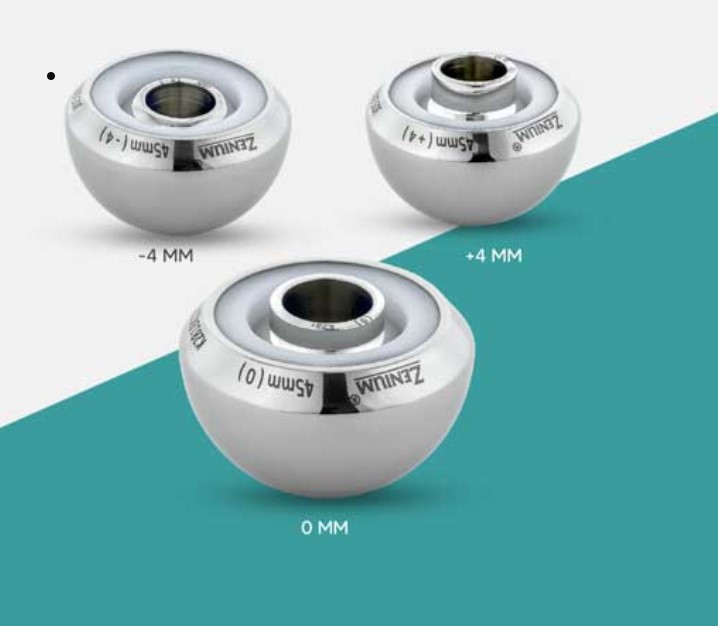 | Joint Replacement Modular Bipolar Cup (With Head) Manufacturer The Modular Bipolar Cup (With Head) is an advanced hip implant system used in hemiarthroplasty procedures, particularly for treating femoral neck... View product → |
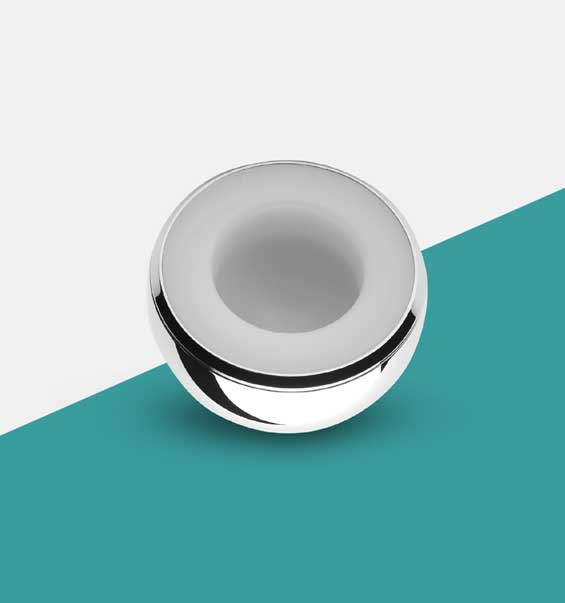 | Joint Replacement Modular Bipolar Cup Manufacturer A Modular Bipolar Cup Manufacturer specializes in producing advanced orthopedic components used in hip replacement surgeries. View product → |
Frequently asked questions
How does uncemented fixation change the stem decision?
An uncemented stem relies on press-fit geometry for immediate stability and a porous or textured surface for later bone ongrowth or ingrowth. Stem geometry and bone quality must support fixation without cement.
What must match between the stem, head and bipolar cup?
The femoral head taper must match the stem taper, and the head dimensions must fit the bipolar cup’s internal bearing. Ask for the manufacturer’s compatibility matrix rather than mixing components by appearance or measurement alone.
When does bipolar hemiarthroplasty fit the patient and acetabulum?
Bipolar hemiarthroplasty suits cases where replacing the femoral head is appropriate and the acetabulum can accept articulation with the bipolar outer shell. Inspect acetabular cartilage, patient activity and dislocation risk before choosing it.
What are the trade-offs behind modularity and press-fit fixation?
Modularity allows surgeons to adjust head size and offset, but it adds junctions that require precise compatibility and handling. Press-fit fixation avoids cement but demands accurate preparation, implant sizing and sufficient bone quality.
What should Santiago buyers request for a validated system?
Request the technical file, compatibility matrix, implant size range, sterilization status, batch and lot traceability, instructions for use, packaging integrity requirements and evidence that the supplied components are intended to function together.
Related product
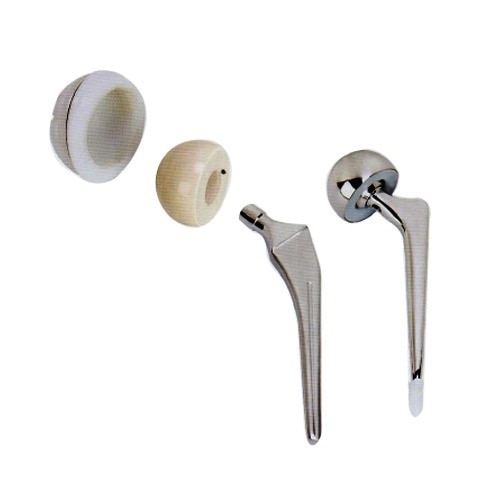 | Bipolar Hip Prosthesis We are manufacturer of Bipolar Prosthesis . Fix Bipolar and Modular Bipolar. Cup Size : 37 mm to 55 mm with 2 mm variation Material : S.S.316 L/LVM View product → |