The two implants can both be modular, metallic and described with words such as head, cup or bipolar, but they serve different joints and restore different mechanics. By the end, you will be able to identify the anatomical site, compare the sizing and fixation logic, and check whether a quoted component belongs in a hip or elbow reconstruction.
Key takeaways
- A modular bipolar cup is for hip hemiarthroplasty, not elbow reconstruction.
- A radial head prosthesis replaces the proximal radial head at the elbow.
- Hip and elbow measurements, interfaces, and sizing systems are not interchangeable.
- Confirm anatomy, dimensions, fixation method, and mating components before procurement.
Different joint, different surgical purpose
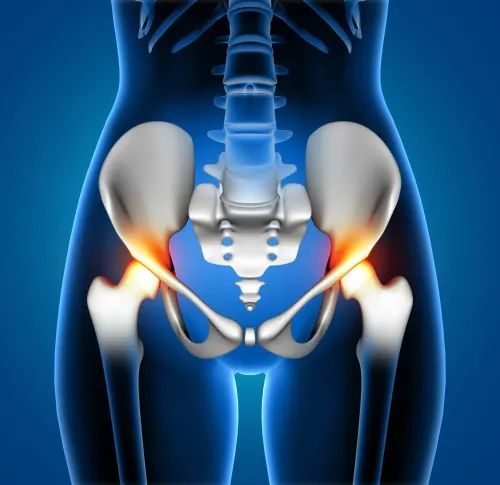
A modular bipolar cup is a hip hemiarthroplasty component: it replaces the femoral head while its outer shell moves against the patient’s native acetabulum. A radial head prosthesis belongs at the elbow, where it replaces the resected proximal radial head and interacts with the capitellum and radial notch.
| Feature | Modular bipolar cup | Radial head prosthesis |
|---|---|---|
| Joint and anatomy | Hip; femoral head, acetabulum, and femoral stem | Elbow; proximal radius, capitellum, and proximal radioulnar joint |
| Main clinical problem | Femoral-neck fracture or another condition requiring femoral-head replacement while the acetabulum remains usable | Comminuted radial-head fracture, excision, instability, or loss of load transmission |
| Surgical purpose | Restore hip articulation, leg length, and weight-bearing mechanics | Restore elbow valgus and axial stability, forearm rotation, and radiocapitellar contact |
| Basic construction | Outer shell, inner bearing or liner, femoral-head component, and stem connection | Radial stem and head sized for the proximal radius; some designs have a mobile or bipolar head |
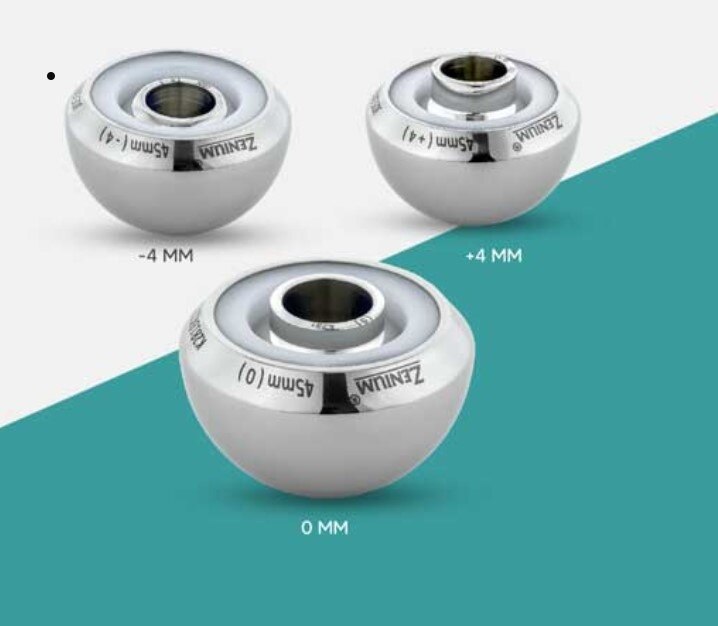
The cup’s two potential motion interfaces are between its inner head and shell, and between its shell and the native acetabulum. It is not the acetabular shell and liner used in total hip replacement.
The radial head prosthesis difference is functional as well as anatomical: it must permit pronation and supination while maintaining elbow stability. “Bipolar” alone does not identify a hip device, because some radial-head implants also use mobile-head designs. These joint replacement component basics prevent a catalogue label from hiding an incompatible implant.
How the interfaces and motion differ
The useful modular bipolar cup explanation is simple: it creates two possible hip motion interfaces. An inner femoral head moves inside a metal outer shell, while the shell moves against the patient’s native acetabulum; the assembly connects to a femoral stem.
It is a femoral-side hemiarthroplasty component, not the acetabular shell used in total hip replacement.
| Feature | Modular bipolar cup | Radial head prosthesis |
|---|---|---|
| Anatomy replaced | Femoral head at the hip | Proximal radial head at the elbow |
| Main interfaces | Inner head to shell; shell to native acetabulum | Prosthetic head to capitellum; radial neck or stem to the radius |
| Principal motion | Hip flexion, extension, rotation and abduction around a ball-and-socket articulation | Forearm pronation and supination, with elbow flexion and extension; the implant also supports radiocapitellar contact |
| Modular choices | Outer diameter, inner head size, neck length and compatible femoral stem | Head diameter, thickness or height, stem size and, in some systems, a mobile or bipolar head |
The hip cup’s shell can share motion between its inner bearing and the acetabulum, although the amount depends on loading, contact and soft-tissue conditions. A radial head implant does not reproduce a second acetabular-style articulation: it restores the radial head’s role in elbow stability, load transmission and proximal radioulnar mechanics.
Do not classify the devices by the word bipolar alone. Some radial-head systems use a mobile or bipolar head, but their anatomy, instruments, fixation and sizing remain entirely different.
Why the measurements cannot be exchanged
A modular bipolar cup explanation starts at the hip’s femoral side: measure the femoral head, neck length, offset and canal for the stem, then match the outer shell to the native acetabular diameter. Its inner head moves inside the shell; its outer shell moves against the acetabulum.
The radial head prosthesis difference is anatomical and functional. Measure the resected radial head’s diameter and height, radial-neck length, stem diameter and canal, then check the capitellum, radial notch and annular-ligament relationship. The target is elbow stability and unrestricted pronation–supination, not hip leg length.
Hip and elbow measurements cannot cross over:
| Joint | Landmarks and dimensions | Fixation and surgical position |
|---|---|---|
| Hip bipolar cup | Femoral canal, neck cut, head diameter, offset, leg length and acetabular size | Cemented or press-fit femoral stem; assess in supine or lateral hip position for version, offset and leg length |
| Elbow radial head | Radial neck and canal, native head diameter and height, capitellum, radial notch and proximal radioulnar alignment | Cemented or press-fit radial stem; assess with the elbow flexed and forearm rotated to confirm stability and clearance |
Before selecting either device, verify:
- A hip cup must articulate with the native acetabulum; it is not an acetabular shell and liner for total hip replacement.
- A radial implant must restore the resected head’s height without overlengthening the radius, which can restrict motion and overload the capitellum.
- Confirm stem geometry, modular interfaces, instrumentation and the manufacturer’s compatibility matrix. A matching diameter alone does not prove compatibility.
What wrong sizing does to hip and elbow mechanics
An undersized or oversized implant changes joint mechanics immediately: in the hip it can alter leg length and stability; at the elbow it can block rotation or overload the capitellum. Confusing a modular bipolar cup versus a radial head prosthesis compounds the problem because each is shaped for a different joint, articulation and surgical position.
| Device | Wrong dimension or position | Functional consequence |
|---|---|---|
| Hip bipolar cup | Outer shell too large or too small for the native acetabulum | Poor seating, acetabular cartilage damage, painful motion or instability |
| Hip bipolar cup | Incorrect inner head or femoral connection | Altered offset or leg length, limp, abductor weakness, impingement or dislocation |
| Radial head prosthesis | Excessive height or thickness | Overlengthening, reduced elbow flexion-extension, increased capitellar pressure and pain |
| Radial head prosthesis | Insufficient height or an undersized head | Loss of radiocapitellar contact, valgus laxity, poorer load transmission and instability |
| Radial head prosthesis | Incorrect diameter or stem fit | Restricted pronation-supination, loosening, wear or persistent elbow pain |
The hip cup must move against the native acetabulum while its inner head and outer shell provide the intended bipolar interfaces. A radial head implant must match the capitellum and preserve the radial notch relationship during forearm rotation.
A catalogue label containing “bipolar” proves neither anatomical site nor compatibility; verify the joint, dimensions and instrumentation before selection.
A procurement check for compatible components
A search for “bipolar cup distributor chile” does not identify the correct implant. Specify hip bipolar hemiarthroplasty system, then ask separately whether the supplier provides radial-head prostheses. Apply joint replacement component basics before comparing prices.
- Confirm Chilean product registration or authorization status, intended-use labeling, and the anatomical site. “Bipolar” alone is insufficient because mobile-head designs also exist for the elbow.
- Request the complete hip system configuration: outer cup diameters, inner head sizes, neck lengths, stem options, fixation method, and the manufacturer’s compatibility matrix. Do not combine a cup, head, liner, or stem from different systems unless the manufacturer explicitly validates that combination.
- For a radial-head prosthesis, verify radial-head diameters, implant heights, stem dimensions, fixation options, and compatibility with the supplied instruments. Hip cup measurements cannot select an elbow implant.
- Obtain material and coating information, sterilization status, sterile-packaging details, shelf life, lot number, and expiry format. A product that cannot be traced to its lot should not enter inventory.
- Check that the quotation includes the required instruments, trial components, extraction tools, and instructions for use. Missing trials can turn an apparently economical implant into an operating-room delay.
Komal Health Care Pvt Ltd can be assessed using this same document check: ask whether the quoted item is the hip bipolar system itself, which components are compatible, and whether radial-head products are actually included rather than inferred from the word “bipolar.”
Related products
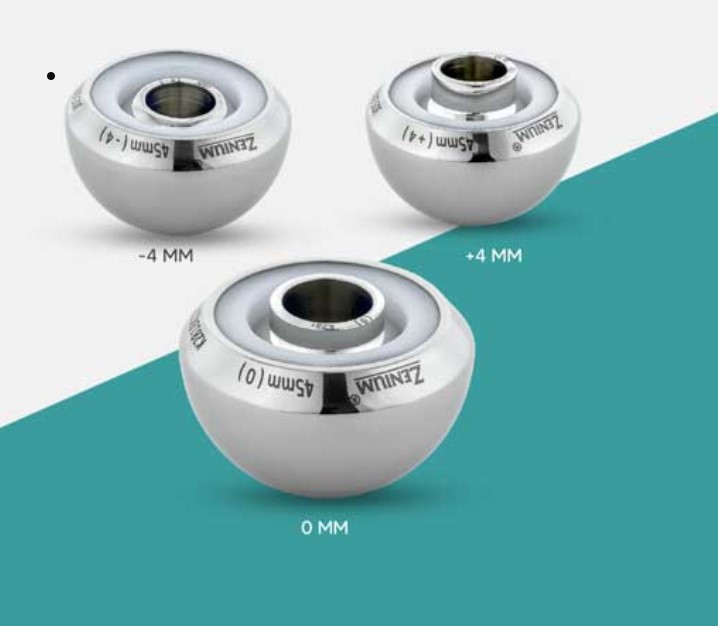 | Joint Replacement Modular Bipolar Cup (With Head) Manufacturer The Modular Bipolar Cup (With Head) is an advanced hip implant system used in hemiarthroplasty procedures, particularly for treating femoral neck... View product → |
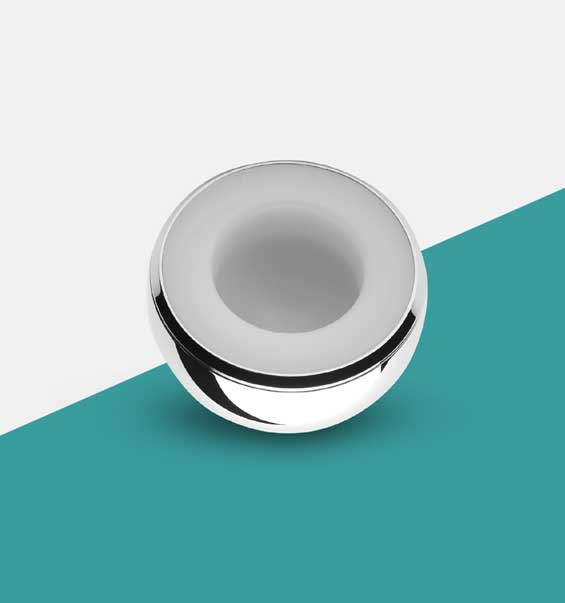 | Joint Replacement Modular Bipolar Cup Manufacturer A Modular Bipolar Cup Manufacturer specializes in producing advanced orthopedic components used in hip replacement surgeries. View product → |
Frequently asked questions
What is the difference between a modular bipolar cup and a radial head prosthesis?
A modular bipolar cup is a hip hemiarthroplasty component that replaces the femoral head and moves within the native acetabulum. A radial head prosthesis replaces the resected proximal radial head and works with the capitellum and radial notch.
Can hip bipolar cup measurements be used to select a radial head prosthesis?
No. The components serve different joints, use different interfaces, and require joint-specific measurements.
What happens when a replacement component is incorrectly sized?
Incorrect sizing can alter joint mechanics, contact, stability, alignment, and the movement available after surgery.
What should buyers verify before ordering compatible components?
Confirm the intended joint, component type, dimensions, fixation method, connection geometry, manufacturer compatibility, and the required technical documentation.
Related product
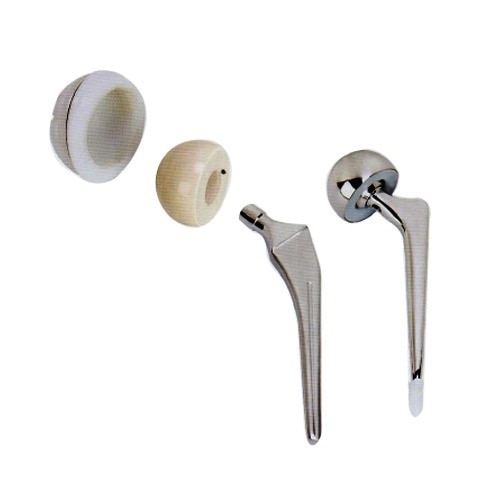 | Bipolar Hip Prosthesis We are manufacturer of Bipolar Prosthesis . Fix Bipolar and Modular Bipolar. Cup Size : 37 mm to 55 mm with 2 mm variation Material : S.S.316 L/LVM View product → |