An acetabular cup and a femoral stem are separate implants, and each has its own fixation method. By the end, you will be able to distinguish a fully uncemented construct from a hybrid replacement, identify the patient factors that support an uncemented stem, and check whether the selected components form a validated total-hip system.
Key takeaways
- Treat the cup and femoral stem as separate components during selection.
- Choose an uncemented stem when bone quality supports biological fixation.
- Consider cemented fixation when immediate stability or weak bone is the priority.
- Verify taper, size range, materials, instruments, and regulatory documents before ordering.
What does an acetabular cup with an uncemented stem actually mean?
An acetabular cup with uncemented stem describes two separate components, not one anatomical part. The cup is fixed inside the acetabulum, while the uncemented femoral stem is fixed inside the femur. Therefore, an uncemented stem does not automatically require an uncemented cup.
The three possible constructs are:
- Fully uncemented: both the acetabular cup and femoral stem are press-fit, relying on initial stability and later bone ongrowth or ingrowth.
- Hybrid: the femoral stem is uncemented, while the acetabular cup is fixed with bone cement.
- Reverse hybrid: the femoral stem is cemented, while the acetabular cup is uncemented and press-fit.
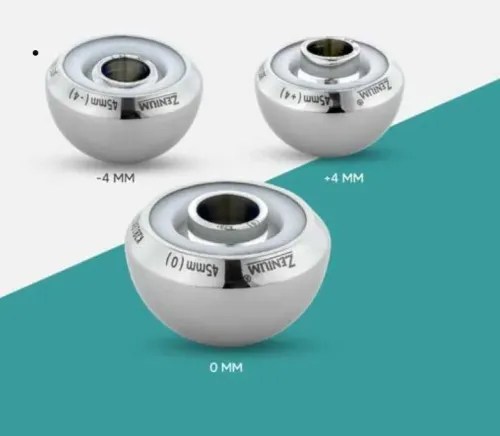
The decision concerns an acetabular cup–uncemented stem pairing within one compatible total-hip system, including the shell, liner, femoral head, taper and stem. It does not concern choosing a single component in isolation.
The main screening question is whether the surgeon can obtain immediate mechanical stability in both the femur and acetabulum, followed by biological fixation as bone grows onto or into a porous or roughened surface.
If a press-fit component moves during surgery, it faces migration, fibrous fixation, early loosening or subsidence; a porous coating cannot correct inadequate initial fit.
The treating orthopaedic surgeon makes the final choice after reviewing radiographs, examining you and assessing your bone quality, anatomy and soft tissues.
Which patients are good candidates for an uncemented femoral stem?
Good candidates have adequate femoral bone stock, reliable metaphyseal bone and a canal geometry that permits stable axial and rotational press-fit fixation. A porous or roughened coating supports bone ongrowth or ingrowth over weeks and months; it cannot rescue a stem that moves during insertion or lacks immediate stability.
Radiographs should assess:
- Femoral morphology, cortical thickness, canal width and Dorr classification. Thin cortices, a wide stovepipe canal and Dorr type-C geometry raise fracture, migration and subsidence risk.
- The fracture pattern, if treating a fracture, and whether enough proximal bone remains for reliable fixation.
- Femoral version and the planned restoration of leg length, offset and soft-tissue tension.
Chronological age is not an automatic cutoff for uncemented stem hip implant selection. Interpret it alongside osteoporosis, activity expectations, comorbidities, fracture risk, revision risk and the surgeon’s experience obtaining press-fit fixation.
| Patient profile | Potential benefit or concern | Selection implication |
|---|---|---|
| Younger, active patient with strong bone | Durable biological fixation; good ingrowth potential | Uncemented fixation can be appropriate |
| Older patient with osteoporosis or thin cortices | Higher early periprosthetic-fracture risk, especially in older women in registry and cohort comparisons | Consider cemented fixation |
| High-activity patient with poor stability or weak abductors | Activity will magnify problems with migration, version or instability | High activity alone does not justify an uncemented stem |
The surgeon must confirm component stability, abductor function and femoral version before choosing the stem. A cementless implant is a poor choice when those checks, the bone stock or the planned reconstruction cannot support secure fixation.
When is a cemented stem safer or more practical?
Cemented fixation solves an immediate stability problem: the cement mantle secures the stem during surgery, even when bone cannot hold a dependable press-fit. It is useful with osteoporosis, thin cortices, a wide canal, poor metaphyseal bone or a fracture pattern that makes uncemented fixation unreliable.
| Fixation choice | Problem addressed | Main trade-off |
|---|---|---|
| Cemented stem | Provides immediate fixation in weak or irregular femoral bone | Requires cement preparation, canal cleaning, pressurisation and management of cement-related surgical considerations |
| Uncemented stem | Avoids bone cement and achieves fixation through initial press-fit, followed by bone ongrowth or ingrowth | An oversized or forcefully inserted stem can cause intraoperative or early periprosthetic fracture, subsidence or migration |
Early weight-bearing instructions after an uncemented stem depend on measured axial and rotational stability, fracture risk and the surgeon’s protocol. Porous coating cannot rescue a stem that was unstable at implantation.
Reconsider an uncemented stem when you find:
- Active infection, inadequate canal geometry or severe osteoporosis; infection requires treatment before definitive reconstruction.
- A selected proximal femoral fracture or a revision with insufficient bone stock for reliable press-fit fixation.
- An inability to follow postoperative loading restrictions, when protecting an unstable or borderline construct would be unsafe.
Femoral and acetabular choices remain separate. A cemented stem can pair with an uncemented cup when the acetabular rim provides stable press-fit fixation, creating a reverse-hybrid construct. That acetabular cup uncemented stem pairing is a system decision, not an automatic result of uncemented stem hip implant selection.
How do you match the cup and stem as one working system?
Match an acetabular cup with uncemented stem as one validated total-hip system, not as two attractive components. An acetabular cup uncemented stem pairing fails if its taper, liner lock or fixation plan is incompatible.
- Confirm the manufacturer-approved shell, liner, femoral head, taper and stem combinations. Do not mix product families without written compatibility evidence.
- Check taper geometry, head-neck dimensions, shell size, liner compatibility and the liner-locking mechanism. Request the validated bearing combination, including ceramic or cobalt-chrome heads with highly cross-linked polyethylene where indicated.
- Plan cup inclination and anteversion with femoral version, neck length, offset, leg-length restoration and soft-tissue tension. Do not rely only on the traditional Lewinnek safe zone: pelvic tilt, spinal fusion, severe stiffness and sagittal imbalance can change functional cup position and raise impingement or dislocation risk.
- Confirm that the acetabulum can support hemispherical press-fit fixation with adequate host-bone contact. Severe bone loss, segmental defects or pelvic discontinuity may require augments, cages or custom reconstruction instead of a routine shell.
- Use larger heads or dual-mobility designs only as selected instability strategies. They do not correct poor positioning or unstable fixation.
The surgeon must also judge whether the cup and femoral stem restore stable biomechanics together. This includes assessing bone contact, femoral fixation, abductor function and the planned loading environment before selecting an acetabular cup with uncemented stem.
What should you verify before sourcing this construct?
A catalogue listing for an acetabular cup does not prove compatibility with a particular uncemented stem. Treat the purchase as an acetabular cup uncemented stem pairing within one validated total-hip system, not as two products matched by appearance or size.
Request these documents before comparing suppliers:
- The exact instructions for use, taper drawings or a written compatibility statement, material specifications, validated shell, liner, femoral head and stem combinations, and approved ceramic, cobalt-chrome or polyethylene bearing options.
- Confirmation that the proposed system supports the intended fully uncemented or hybrid construct, plus approved head and liner combinations.
- Sterilization status, lot or batch traceability, shelf life, packaging integrity requirements and handling instructions.
- Replacement-component availability for revision surgery, including liners, heads and other parts likely to be needed later.
Evidence to compare across suppliers:
| Supplier check | Evidence | Procurement risk if absent |
|---|---|---|
| Quality management | Current certificate naming the manufacturer and covered devices | Unverified production controls |
| Market access | Device registration or market authorization in the destination country | Supply or legal-use failure |
| Post-market safety | Complaint, vigilance, recall and corrective-action process | Problems remain unidentified |
An acetabular cup manufacturer in Santiago deserves the same scrutiny as any other supplier; location proves none of these points. Komal Health Care Pvt Ltd can be considered for orthopaedic implants and instruments, but assess its products against the same clinical, regulatory and traceability requirements.
Choose the pairing only after surgeon assessment, system compatibility review and documented supplier verification.
Related products
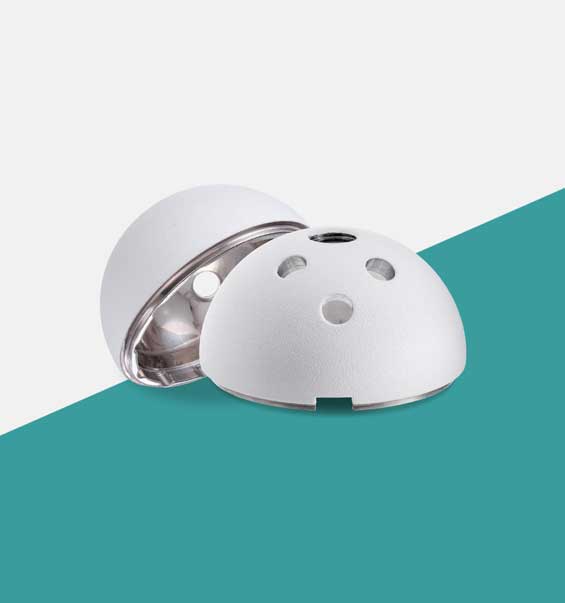 | Joint Replacement The Acetabular Cup is a key component in total hip replacement surgery, designed to fit into the hip socket (acetabulum). View product → |
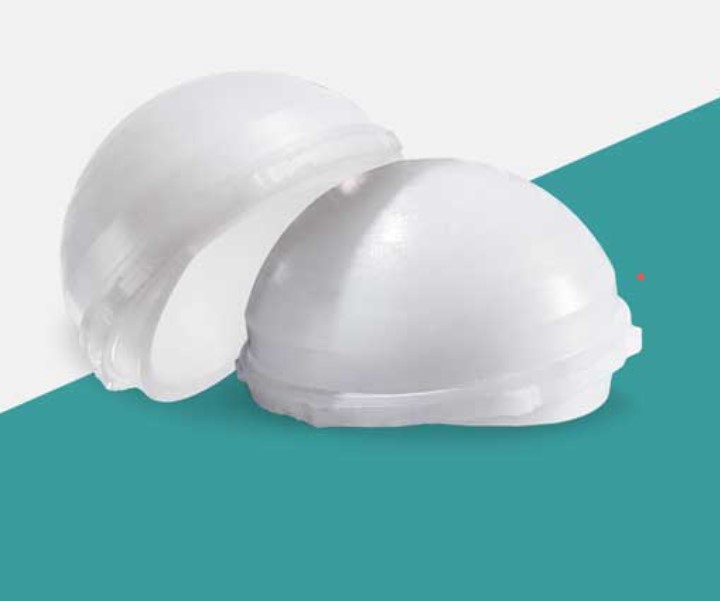 | Joint Replacement Acetabular Cup Liner Manufacturer An Acetabular Cup Liner Manufacturer specializes in producing liners that fit inside the acetabular cup during total hip replacement surgeries. View product → |
Frequently asked questions
What does an acetabular cup with an uncemented stem mean?
It means the acetabular cup sits in the pelvis while a separate uncemented femoral stem fixes inside the thigh bone. The cup and stem can use different fixation methods.
Which patients are good candidates for an uncemented femoral stem?
Patients need femoral bone that can provide initial stability and support bone ingrowth. The surgeon also considers age, activity level, bone quality, anatomy, and fracture risk.
When is a cemented stem safer or more practical?
A cemented stem can be preferable when bone is fragile, the canal is wide or irregular, or immediate fixation is more important than biological ingrowth.
How do you match an acetabular cup and femoral stem?
Confirm the bearing couple, head diameter, taper geometry, offset options, leg-length options, size range, and compatibility within the same validated implant system.
What should you verify before sourcing this construct?
Request technical drawings, compatibility tables, material specifications, sterilization status, lot traceability, surgical instruments, instructions for use, and applicable regulatory documents.