The right implant depends on the fracture’s mechanical demands, bone quality, soft-tissue conditions, and the instruments available to apply it—not simply on the bone named in a catalogue. By the end, you will be able to match fixation strategy to fracture pattern, check plate and screw compatibility, and evaluate hospital supply specifications in Chile.
Key takeaways
- Choose compression or relative stability before selecting a plate.
- Match plate contour and screw trajectory to the fracture and anatomical site.
- Specify the plate, screws, instruments, packaging, and traceability as one system.
- Verify evidence, sterile packaging, batch records, and operating-room readiness before purchase.
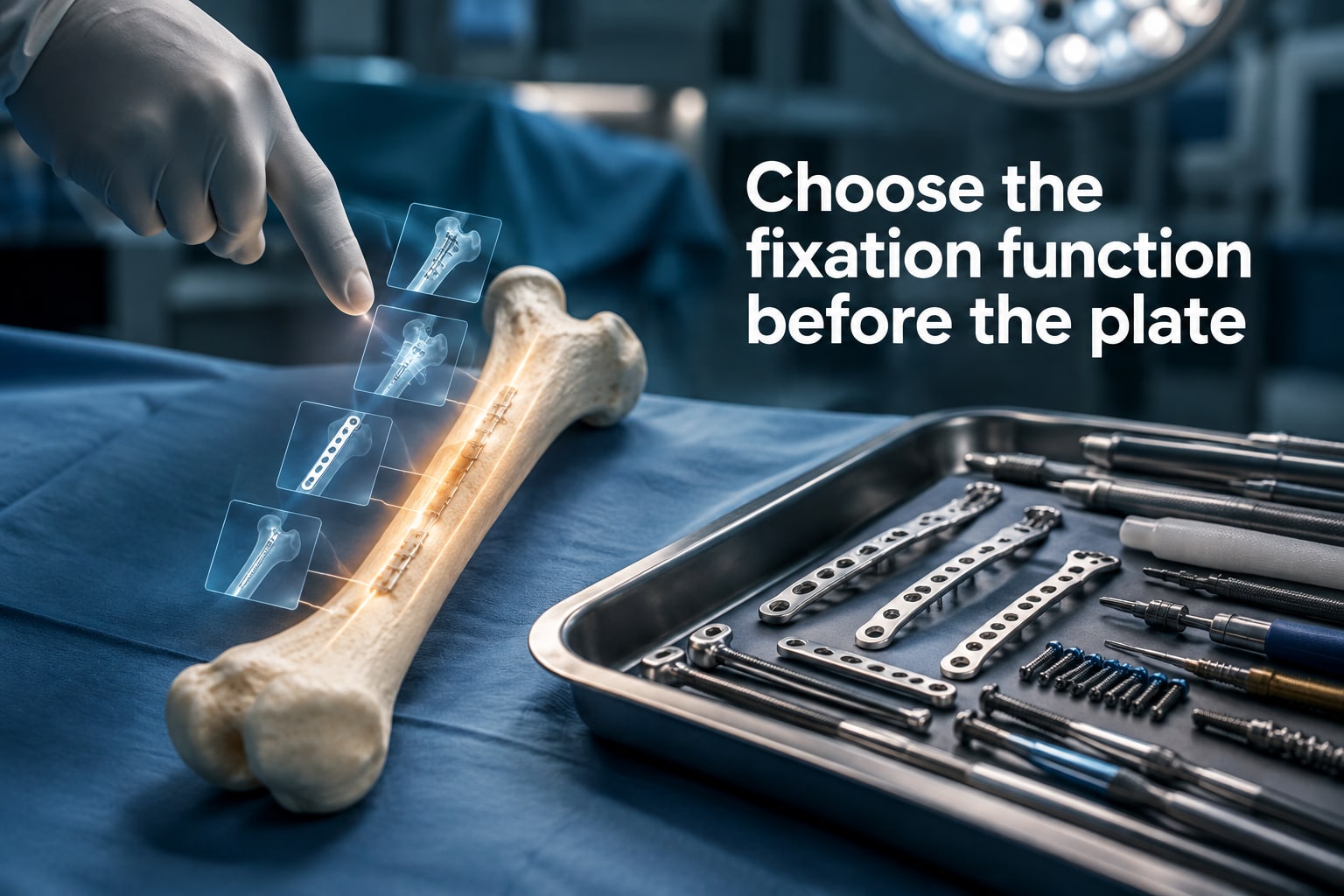
Choose the fixation function before choosing the plate
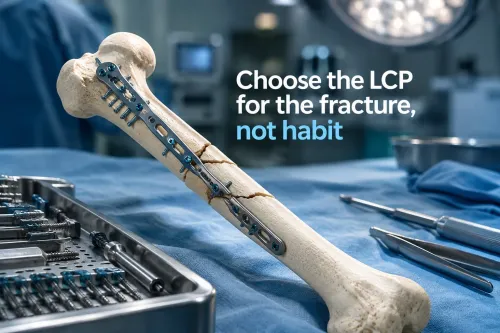
Start with the mechanical goal, not the bone label. A bone plate for fracture fixation should create absolute stability through compression, or relative stability through controlled motion and callus formation. For comminuted fractures, forcing compression across every fragment can strip soft tissue and damage fracture biology.
| Option | Mechanical function | Choose it when |
|---|---|---|
| Compression plate | Interfragmentary compression and primary stability | The fracture is simple, reducible, and compression can be applied safely |
| Bridge plate | Extramedullary splint with relative stability | The fracture zone is comminuted and intermediate fragments should remain undisturbed |
| Locking plate | Fixed-angle screw–plate stability | Bone is osteoporotic, metaphyseal, or periarticular; confirm reduction and trajectory separately |
| Intramedullary nail | Load-sharing fixation along the bone axis | A suitable shaft fracture allows a nail, especially when preserving soft tissue matters |
| Screws alone | Direct fragment compression or lag fixation | The fragments have sufficient size, stability, and screw purchase without a plate |
| External fixation | Load-bearing frame outside the soft-tissue envelope | Severe swelling, open injury, contamination, or damage-control treatment makes internal fixation unsafe |
A locking plate does not reduce a fracture by itself, and excessive bridge stiffness can delay healing or contribute to nonunion. Match working length, screw density, bone quality, and loading to the fracture; filling every hole is not a quality test.
Use external fixation as definitive treatment only when its stability and soft-tissue demands suit the injury. A nail or screws alone can be the better choice when a plate would require unnecessary exposure.
Match the construct to the fracture and anatomical site
A distal femur plate is not applied like a distal radius plate: bone shape, fracture biology, loading, and nearby joints change the construct. Surgical bone plates for hospitals should therefore be specified by site and fracture pattern, not by anatomical label alone.
| Site | Construct focus | Application and failure to avoid |
|---|---|---|
| Distal femur | Long lateral locking plate, often used as a bridge | Span metaphyseal comminution while preserving fragments. Check distal screw trajectories against the knee joint; excessive stiffness or a short working length can delay union. |
| Tibia | Metaphyseal buttress, bridge, or locking plate | Support the proximal or distal articular block and protect limited soft-tissue coverage. A prominent plate can irritate tendons or compromise skin; confirm contour and screw length. |
| Distal radius | Volar fixed-angle plate for the joint-adjacent fragment | Capture subchondral bone without entering the radiocarpal joint. A screw that is slightly too long can injure dorsal tendons. |
| Ankle | Lag screws for a simple fracture, with a neutralisation or buttress plate when needed | Restore the fibula and articular alignment while avoiding the ankle joint and syndesmosis. Comminution calls for spanning support rather than forceful compression. |
| Proximal femur | Site-specific plate for selected patterns; a nail or sliding hip screw may be more suitable | Secure the head-neck fragment and resist varus collapse. Confirm screw position in the femoral head and avoid a construct that cannot tolerate cyclical loading. |
In osteoporotic or periarticular bone, locking fixation improves fixed-angle purchase but does not replace reduction. Match plate span, working length, screw density, and bicortical or unicortical purchase to the fracture’s stability requirement.
Check plate geometry, screw trajectory, and construct stiffness
A plate fits only when its contour follows the bone’s mechanically appropriate surface and its holes direct screws into safe, useful purchase. A poorly contoured plate shifts the load path, forces excessive screw angulation, and can irritate soft tissue or overload the implant.
- Confirm the surface before fixation. Conventional compression constructs commonly place the plate on the tension side; placing it elsewhere can reduce bending efficiency and increase plate stress.
- Check the three-dimensional contour against the bone, not just the plate label. At periarticular sites, the profile must follow the joint region while clearing tendons, nerves, and vessels.
- Trace every screw trajectory on imaging or with the instrument guide. Keep screws out of the joint, preserve subchondral support where required, and confirm adequate bicortical or unicortical purchase for the selected design.
- Treat locking holes as fixed-angle guides, not as a substitute for reduction or positioning. A locking plate helps in osteoporotic, metaphyseal, and periarticular bone, but an excessively rigid bridge construct can delay callus formation or contribute to nonunion.
- Set working length and screw density deliberately. In bridge plating, leave holes near the comminuted zone empty when appropriate and distribute screws through the main fragments; filling every hole can make the construct unnecessarily stiff.
- Compare the finished plate’s fatigue and bending data, not only its material certificate. ASTM F382 provides recognised methods for metallic bone plates, including bending strength, structural stiffness, and fatigue strength.
Build a Chile hospital specification around the complete system
Specify the complete plate–screw system, not a plate catalogue. For orthopaedic plate applications in Chile, require the bidder to identify each plate, compatible screw family, instruments, intended anatomical indication, and sterile or non-sterile presentation. Confirm current import, sanitary, registration, labelling, and post-market obligations with the Instituto de Salud Pública de Chile (ISP).
- Name the legal importer or local responsible party and provide Spanish-language information where applicable.
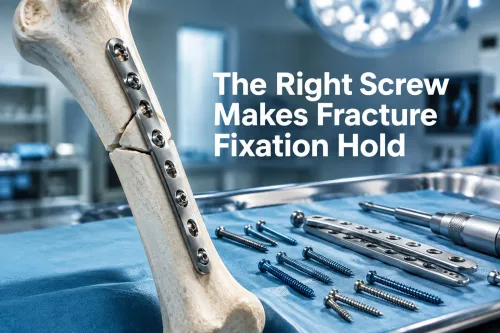
- State the material, dimensions, hole design, screw diameters, locking or compression options, and permitted screw trajectories.
- Supply design-verification records, mechanical or fatigue testing, biocompatibility assessment, sterilisation validation, packaging validation, and controlled-change records.
- Show lot or serial traceability from implant label to hospital record, including a process for recalls and complaints.
- Define availability and lead times for matching screws, drill guides, depth gauges, bending tools, and uncommon sizes.
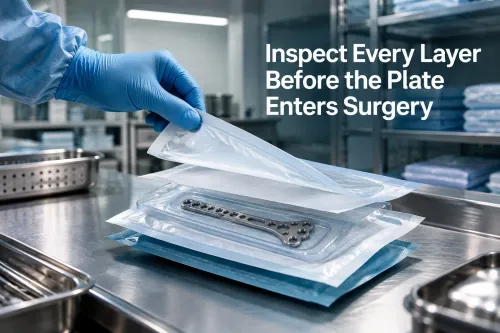
- Explain replacement of damaged sterile packs, shelf life, package-integrity checks, and the validated sterilisation method.
- Prohibit reprocessing of single-use implants unless the manufacturer has specifically validated and authorised it.
An orthopaedic plate supplier Chile hospitals can audit must also support surgeon training and operating-room troubleshooting. Komal Health Care Pvt Ltd should be compared by this same evidence, not by brochure claims or unit price alone.
Reject any fracture fixation plate manufacturer that cannot link its clinical indication to the exact plate–screw construct and traceable production batch.
Related products
 | Orthopaedic Locking Plate Our range of locking plates are manufactured using the highest quality medical grade stainless steel for strength and durability. View product → |
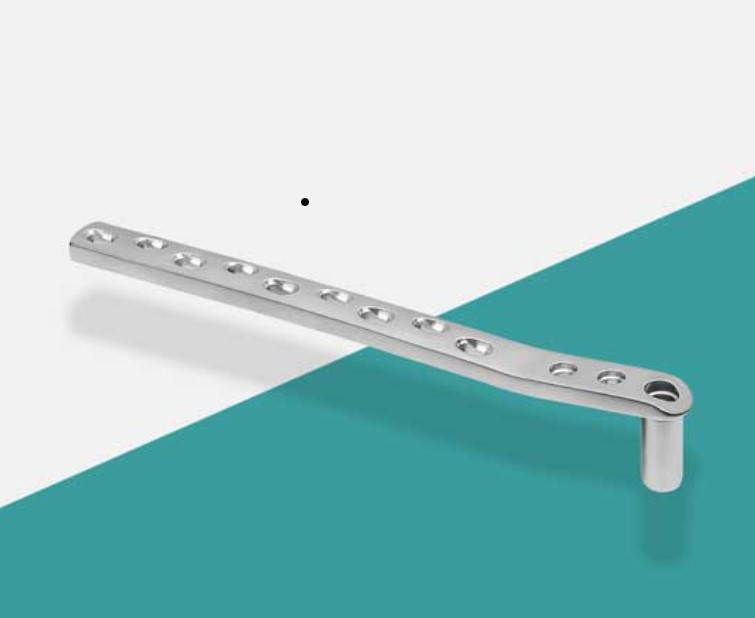 | Bone Plate Distal Femoral Compression Plate Manufacturer Distal femoral compression plate manufacturers design and produce orthopedic implants used for stabilizing fractures of the distal femur. View product → |
Verify evidence, packaging, traceability, and operating-room readiness
A low unit price does not make surgical bone plates for hospitals usable if compatible screws, drill guides, or depth gauges are unavailable. Request the exact plate–screw–instrument configuration, lead time for uncommon sizes, and a written process for replacing damaged sterile packs.
Ask the supplier for:
- ISO 13485 certification and the certificate scope; treat it as quality-system evidence, not proof of clinical suitability.
- Design-verification records, mechanical or fatigue-test results, biocompatibility assessment, and documented change control for the offered plate system.
- Sterilization validation, the validated method, sterile-barrier configuration, package-integrity testing, shelf life, and storage conditions when plates arrive sterile.
- Lot or serial traceability from implant label to shipment, complaint-handling contacts, recall procedures, and Spanish-language labeling or instructions where applicable.
- Evidence of Chilean import and sanitary compliance, including the legal importer or local responsible party; confirm current requirements with the Instituto de Salud Pública de Chile.
| Document | What it confirms | Warning sign |
|---|---|---|
| Quality testing | The design and material passed stated verification and fatigue tests | Brochure claims without reports |
| Sterile pack | Sterilization and packaging preserve sterility through shelf life | Torn seal, missing expiry, or unclear method |
| Traceability | A recalled implant can be located by lot or serial number | Label shows no lot, serial, or implant code |
| Operating readiness | Matching screws and instruments are stocked or rapidly supplied | Plate arrives without guides or screw options |
Treat a single-use plate as an implant, not a reusable instrument. Do not reprocess it unless the manufacturer has validated and authorised that process.
Frequently asked questions
How do you choose a plate’s fixation function?
Choose absolute stability with compression for suitable simple fractures; use relative stability with controlled motion for comminuted fractures when preserving blood supply matters.
What should you match when selecting a fracture fixation plate?
Match the plate to fracture pattern, bone segment, anatomical site, available bone stock, contour, and required screw trajectory.
How does construct stiffness affect fracture fixation?
Plate length, screw spacing, working length, screw type, and plate-bone contact determine stiffness and the amount of motion at the fracture.
What should a Chile hospital specification include?
Specify the complete system: plates, compatible screws, instruments, sterilization instructions, packaging, batch traceability, documentation, and supplier support.
What should hospitals verify before using surgical bone plates?
Check evidence, material and size information, intact packaging, lot or batch records, expiry where applicable, instrument completeness, and operating-room readiness.
Related products
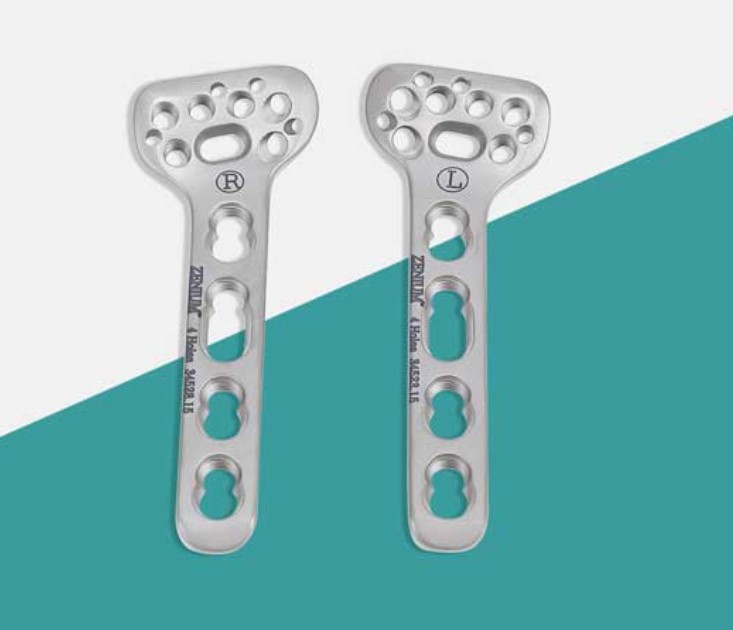 | Bone Plate Distal Redius Plate Manufacturer Distal radius plate manufacturers specialize in creating orthopedic implants used to treat fractures of the distal radius, commonly occurring near... View product → |
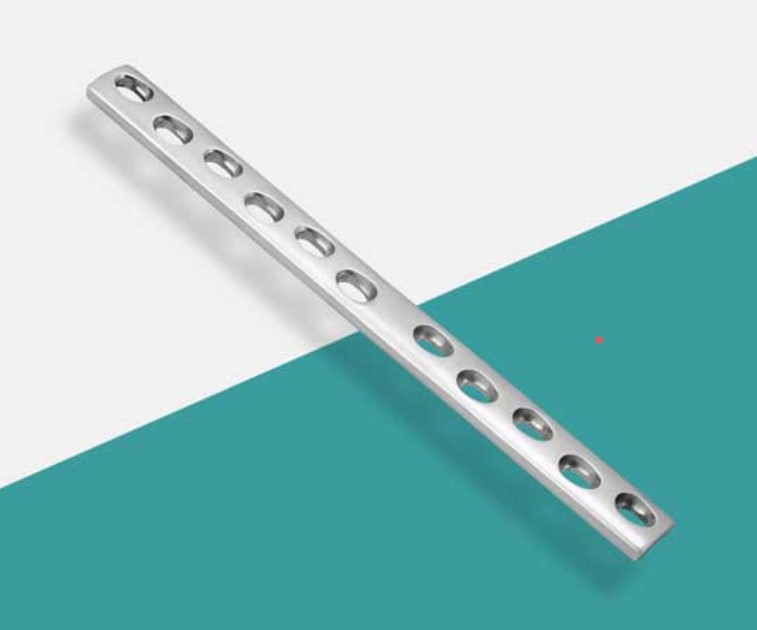 | Bone Plate D.C. (Dynamic Compression) plate manufacturers produce orthopedic implants designed to provide stable fixation for bone fractures through controlled... View product → |
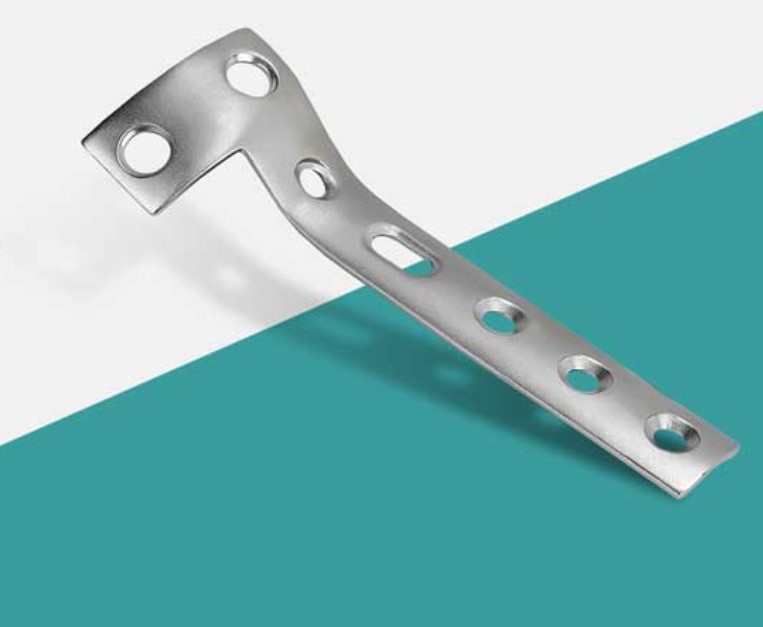 | Bone Plate 'L' Buttress Plate Manufacturer 'L' Buttress Plate manufacturers produce specialized orthopedic implants designed for the stabilization of fractures, particularly around the distal... View product → |
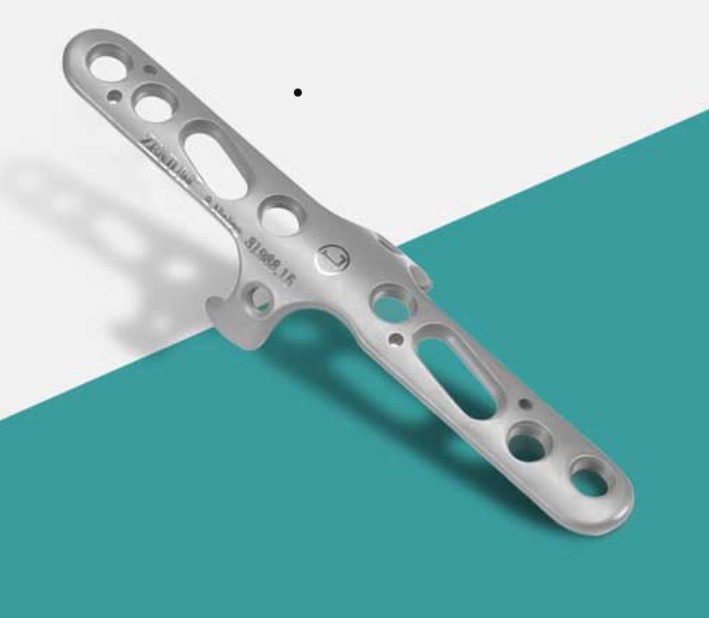 | Bone Plate Ankle Fixation Febula Locking Plate Manufacturer Ankle fixation fibula locking plate manufacturers design and produce specialized orthopedic implants used in the surgical treatment of distal fibula... View product → |