Hospitals can face a shortage even when total implant inventory looks adequate: a bipolar component for hemiarthroplasty cannot automatically cover a revision stem case, and one revision stem diameter cannot replace another. By separating clinical indications, compatibility checks, demand forecasts, and Chilean import risks, you can set stock levels that protect scheduled and emergency surgery.
Key takeaways
- Forecast bipolar prostheses separately from uncemented revision stems.
- Match fenestration, fixation, and instruments to the planned surgical technique.
- Check stem size, taper, offset, and compatibility before placing each order.
- Reserve seasonal stock according to size demand and supplier lead-time risk.
Separate the Two Inventories Before You Forecast Demand
A combined procurement plan fails when a hospital treats every femoral implant as one seasonal pool. A non-fenestrated bipolar prosthesis is generally associated with hemiarthroplasty for selected femoral neck fracture cases; an uncemented revision stem addresses revision or complex femoral reconstruction. They differ in indication, fixation strategy, component configuration, instruments, and demand pattern.
| Product | Typical use | Stock-planning distinction |
|---|---|---|
| Non-fenestrated bipolar prosthesis | Hemiarthroplasty for selected femoral neck fractures | Track bipolar head outer diameter, matching stem, taper, neck geometry, and instruments |
| Uncemented revision stem | Revision or complex femoral reconstruction | Track distal or diaphyseal fixation zone, diameter, length, offset, version control, and modular options |
| Primary uncemented stem | Primary femoral reconstruction | Do not count as a substitute for a revision stem with required fixation length or proximal-body options |
Keep the inventories separate in the hospital system:
- Record bipolar heads and their associated stems by outer diameter, stem diameter, length, taper, configuration, and instrument set.
- Record revision stems by distal diameter, length, fixation zone, modular or monoblock design, proximal body, offset, and anteversion options.
- Link each reserve to its intended cases: fracture hemiarthroplasty or revision reconstruction.
A request for a non fenestrated bipolar prosthesis for uncemented revision stem supply problems is incomplete unless the hospital states how each product will be used and which cases the reserve protects. Fenestration status alone does not establish compatibility, and a bipolar component cannot replace a revision stem.
Match Fenestration and Stem Design to the Surgical Technique
Fenestration changes the approved fixation technique, so a non-fenestrated bipolar prosthesis is not a universal substitute for a fenestrated model.
| Design | Surgical implication | Purchasing consequence |
|---|---|---|
| Non-fenestrated bipolar | No openings for cement passage; use only the fixation and cement-management method stated in the instructions for use | Do not assume it replaces a fenestrated component or supports the same cement technique |
| Fenestrated bipolar | Openings may permit cement passage or form part of the manufacturer’s fixation and instrumentation concept | Confirm cement delivery, containment, removal, and handling requirements in the instructions for use |
| Primary uncemented stem | Designed for fixation in the prepared proximal femur | Stock primary lengths, diameters, offsets, and instruments; do not substitute for revision fixation |
| Uncemented revision stem | May require distal or diaphyseal fixation, greater length, selectable offset, version control, and a solution for proximal bone loss | Hold multiple distal diameters, lengths, proximal bodies, and revision instruments |
| Modular bipolar versus monoblock | Modular parts allow separate selection of stem, neck, offset, or version; a monoblock fixes those relationships together | Modular systems need separate stock-keeping units for compatible bodies, stems, heads, sleeves, and junctions; monoblocks need each complete size and configuration |
Specify the stem fixation method, length and diameter range, neck geometry, bipolar head outer-diameter range, taper, laterality when applicable, instruments, and sterile or non-sterile status. For revision supply, state whether distal diameter, proximal body, offset, anteversion, and length can be selected independently.
Confirm every combination against the manufacturer’s instructions for use; nominally similar parts do not prove compatible.
Use a Compatibility Checklist for Every Revision Stem Configuration
A bipolar component and an uncemented revision stem are usable as a set only after documented compatibility, not because both fit the same femur. Treat the bipolar head, sleeve, neck adapter, and stem as separate compatibility decisions.
1. Confirm the stem’s diameter and length range against the patient’s available distal or diaphyseal fixation zone. Bone loss and femoral anatomy can make a nominally standard length unusable.
2. Record the exact taper specification: taper angle, taper length, locking geometry, material pairing, and manufacturer-approved combinations. Identical nominal diameters do not prove a safe connection.
3. Verify selectable offset and version or anteversion control. Ask whether these choices are independent of stem diameter and length, or fixed by one proximal body.
4. Identify every modular junction, its locking mechanism, and its approved mating component. Confirm whether the stem is modular or monoblock.
5. List the available proximal body options and confirm whether proximal body, distal diameter, offset, anteversion, and length can be selected independently. If they cannot, each fixed combination needs its own stock-keeping unit.
6. Match the required broaches, reamers, trials, extraction tools, and instrument trays to the exact stem system. An implant without its instruments is not usable stock.
7. Compare the proposed stem with femoral heads and bipolar components already held. Check outer diameter, head taper, sleeve or adapter requirements, laterality, and the manufacturer’s approved combination; do not mix brands by appearance.
8. Count safety stock by diameter, length, fixation zone, modular body, and configuration. Ten stems in one size cannot protect cases requiring four sizes and two body options.
Calculate Seasonal Stock by Product, Size, and Lead-Time Risk
A defensible reorder point starts with a separate forecast for each product, size, and configuration. Combine local trauma volume, elective operating schedules, prior consumption, demand variability, supplier lead time, and the chosen service-level target; do not use average monthly consumption alone for intermittent revision cases.
1. For each bipolar prosthesis size, calculate: reorder quantity or target stock = demand during replenishment lead time + safety stock − usable on-hand inventory − confirmed inbound stock. Estimate demand from fracture volume and scheduled hemiarthroplasties.
Set safety stock from demand and lead-time variability at the selected service level, then round the order to the supplier’s minimum order quantity.
2. For each uncemented revision stem, calculate the same formula separately for diameter, length, and configuration. A hospital-supplied example might forecast one 14 mm, 220 mm distal-fixation stem during lead time, with two as safety stock, one usable locally, and no confirmed inbound: target stock is two.
A forecast of “three revision stems” is unsafe because those dimensions are not interchangeable.
3. Add failure exposure to the lead-time calendar: holiday factory closures, sterilization-release delays, freight and customs delays, surgeon leave, tender-cycle deadlines, emergency trauma surges, and incomplete instrument trays. These drivers explain seasonal hospital implant shortages even when surgical demand is stable and expose uncemented revision stem supply risk.
4. Count stock by status: manufactured; released in the supplier’s warehouse; physically allocated to the hospital; and cleared for Chilean delivery. Only usable local stock and confirmed, cleared inbound supply reduce the formula. Treating overseas stock as available conceals the real reorder point.
Qualify a Chile Supplier and Lock the Contingency Plan Before Winter
Before winter, require a non fenestrated bipolar prosthesis supplier to prove that each shipment is identifiable, releasable, and legally deliverable in Chile.
1. Request lot numbers and serial numbers where applicable, a certificate of conformity or market authorization, sterilization method, release status, shelf life, and remaining expiry at delivery. Separate “manufactured,” “released,” “allocated,” and “cleared for Chilean delivery”; warehouse stock overseas is not local supply.
2. Obtain the complaint-handling and recall procedure, including contact, response times, field-action notices, and product retrieval. Require written change control covering dimensions, materials, packaging, and sterilization; a catalogue update alone is not approval.
3. For bipolar prosthesis procurement chile, verify current Instituto de Salud Pública requirements for the device classification, the Chilean importer or responsible entity, Spanish-language labels and instructions where required, and customs documents. FDA, CE, or ISO status alone does not establish Chilean authorization or import readiness.
4. Read the ChileCompra tender or framework terms before counting supply. Confirm partial deliveries, substitutions, emergency purchases, price adjustment, and delivery-date penalties; a supplier’s private allocation cannot override the contract.
5. Allocate constrained revision stems by diameter, length, fixation configuration, and clinical priority. Prequalify an alternate configuration or supplier with approved dimensions, tapers, instruments, regulatory documents, sterilization status, and surgeon acceptance.
Assess Komal Health Care Pvt Ltd against this same evidence: documented compatibility, traceability, release, and delivery controls—not catalogue wording. Reject any substitute until the responsible surgeon approves it.
Related product
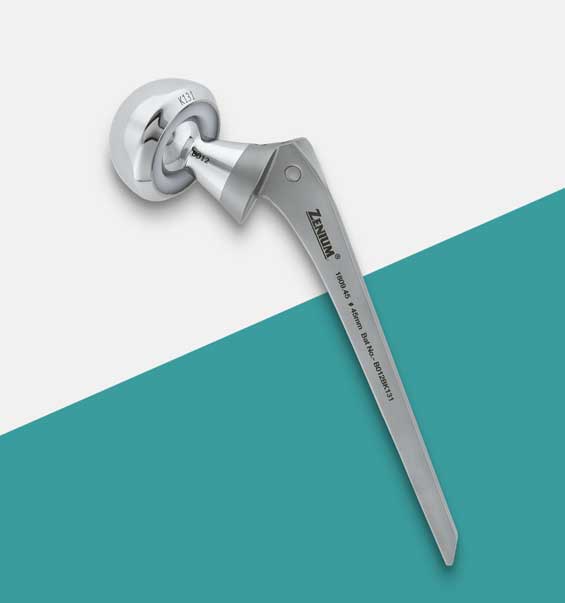 | Joint Replacement Bipolar Prosthesis (Non Fenestrated) Manufacturer The Bipolar Prosthesis (Non-Fenestrated) is a type of hip implant commonly used in hemiarthroplasty procedures, especially for treating femoral neck... View product → |
Frequently asked questions
Why should hospitals forecast bipolar prostheses and uncemented revision stems separately?
They serve different procedures, use different fixation strategies and instruments, and follow different demand patterns. Combining them hides shortages in specific sizes or configurations.
How do fenestration and stem design affect procurement?
Confirm whether the planned technique requires a fenestrated or non-fenestrated bipolar component, then match the revision stem’s fixation method, geometry, taper, and instruments to the procedure.
What should a compatibility checklist include for an uncemented revision stem?
Check stem size, length, diameter, taper, offset, modular components, femoral head connection, extraction tools, trial components, and the manufacturer’s compatibility documentation.
How should hospitals calculate seasonal stock for these implants?
Forecast each product and size separately, add stock for expected surgical volume, and increase the buffer when lead times, import steps, or supplier capacity create higher interruption risk.
How can a Chile hospital prepare a supplier contingency plan before winter?
Qualify a supplier, verify product documentation and delivery capability, confirm available sizes and instruments, set reorder points, and agree on an alternative supply route before seasonal demand rises.