After a long-stem hip or knee procedure, the external wrap protects the dressing and surrounding skin; it does not hold the implant in place. You will be able to match the roll to the dressing stack, verify supplier claims, apply it without creating unsafe pressure, and recognise findings that need the surgical team.
Key takeaways
- Keep the soft roll outside the wound dressing and follow the rehabilitation plan.
- Compare material, stretch, width, lint, packaging, and traceability before ordering.
- Apply even contact without tight compression, folds, or pressure over the incision.
- Check toes, skin colour, swelling, pain, numbness, and circulation after wrapping.
What the soft roll is protecting after long-stem surgery
An uncemented femoral stem gains early stability from press-fit and later from bone ongrowth or ingrowth. A soft bandage roll for uncemented long stem care sits outside the wound dressing; it does not stabilise the implant or change the surgeon’s weight-bearing and rehabilitation plan.
For a closed incision, place the prescribed primary dressing over the wound before adding any roll. A low-adherent wound-contact layer is made to touch the incision, while a clean or nonsterile soft roll placed above it is used for padding, absorption or retention only when the surgical protocol calls for it.
| Layer | Intended role | Contact with incision |
|---|---|---|
| Sterile primary dressing | Covers and protects the closed wound | Yes, if specified |
| Low-adherent contact layer | Limits sticking during dressing changes | Yes |
| Soft bandage roll | Adds padding, absorbs overflow or retains layers | No, unless the product and protocol expressly permit it |
Choose capacity from incision length, drains, exudate and the planned replacement interval—not from the length of the implant stem. A long incision or active drain can need more secondary absorbency, while a bulky roll can hide drainage and retain heat and moisture.
CDC guidance recommends protecting a primarily closed surgical incision with a sterile dressing for 24–48 hours after surgery. Perform hand hygiene before and after dressing contact, and follow the surgical team’s instructions for inspection, replacement and any drain.
Treat these details as part of selecting uncemented long stem dressing supplies, not as proof that every “soft roll surgical disposable” is sterile or wound-safe.
How to compare materials and performance specifications
Material choice depends on whether you need cushioning, absorbency, fixation or inspection access. Compare each option against the job:
| Option | Main performance | Use |
|---|---|---|
| Cotton Gamjee | Cushioned, fluid-absorbing | Padding and secondary absorption |
| Non-woven viscose cast padding | Soft, conformable padding | Under a cast or other specified layer |
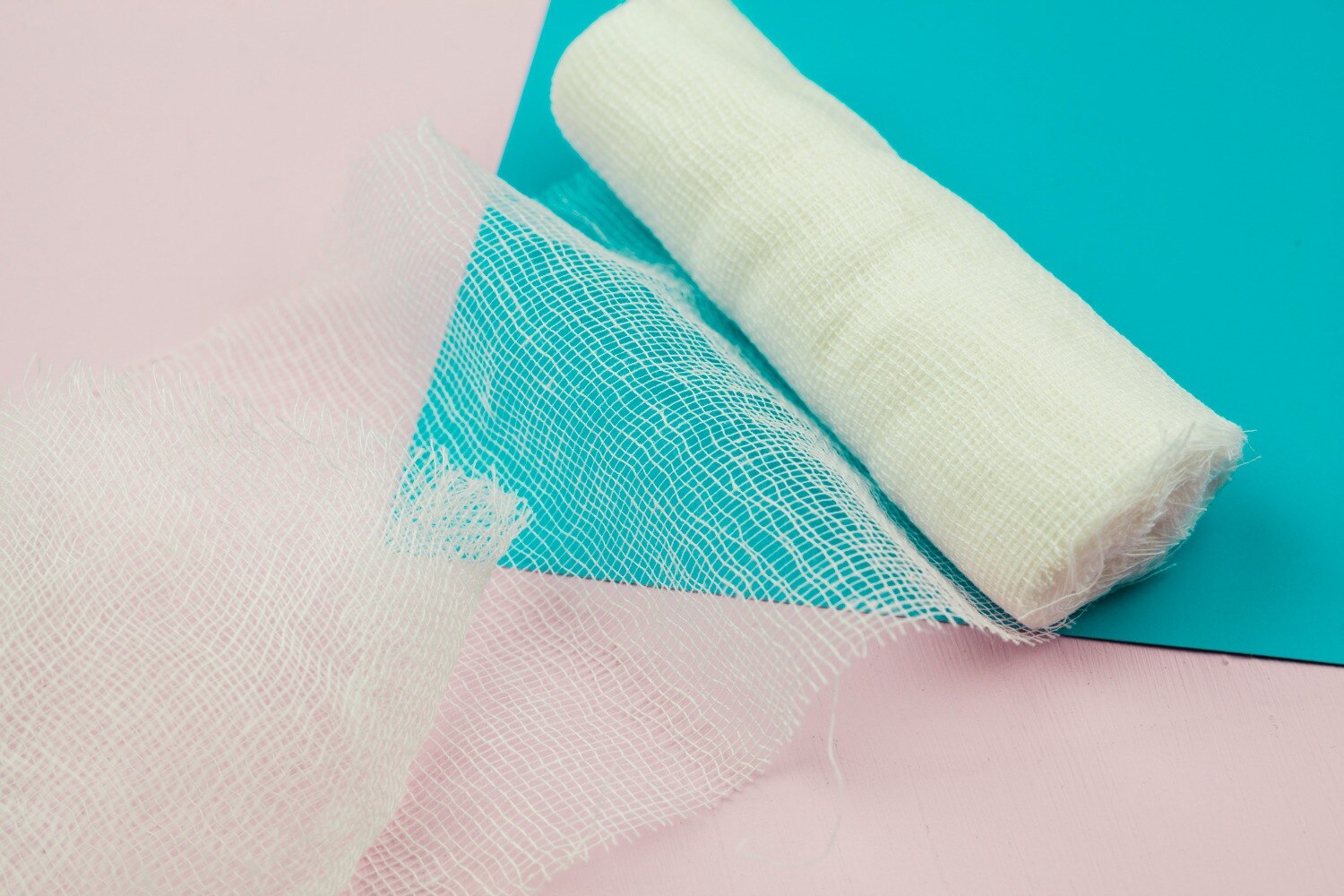
| Gauze roll | Light absorbency and retention | Holding a primary dressing with minimal bulk |
| Cotton crepe | Controlled support | Only when the protocol defines support |
| Elastic adhesive bandage | Adhesive-based fixation | Securing where skin and adhesive tolerance are confirmed |
| Cohesive retention product | Sticks to itself, not skin | Fixation without skin adhesive |
A soft bandage roll is not automatically a compression bandage. Force depends on tension, limb circumference, overlap, layers and the securing material—not width alone. A bulky roll adds cushioning but retains heat and moisture; a thin roll improves inspection.
For a bandage cloth hospital supply or soft roll surgical disposable, require checkable specifications for:
- Fibre composition, width, length, basis weight or thickness
- Wet and dry strength, absorbency, lint or particle shedding, and edge fray
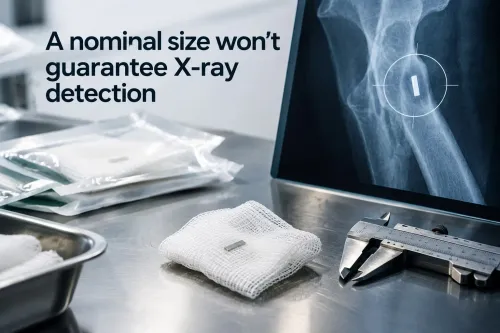
- Conformability around the thigh and knee, breathability and radiographic compatibility
- Skin-contact information, including intended contact layer and sensitising materials
A saturated roll loses loft, becomes heavier and increases friction and maceration risk. Do not use it as the sole exudate-management product for persistent drainage. Confirm that the chosen roll fits over the primary dressing rather than assuming “soft” means suitable for direct wound contact.
How to size and apply the roll without unsafe pressure
Fit the roll to the dressing stack, not to the implant length. Start with the surgeon’s protocol: confirm which primary dressing must remain visible or untouched, where wrapping begins and ends, and whether a clinician must apply it.
A soft bandage roll for uncemented long stem care is an outer layer unless the product is specifically approved for wound contact.
Choose a width that covers the dressing without creating bulky folds at the hip or knee. Estimate length from limb circumference, dressing thickness, planned overlap and number of layers; do not infer safe pressure from width or softness.
| Option | Advantage | Main check |
|---|---|---|
| Thin roll | Easier inspection and less heat | Provides less cushioning |
| Moderate-width roll | Covers the primary dressing with fewer turns | Confirm overlap and layer count |
| Bulky roll | Adds padding | Can hide drainage and retain moisture |
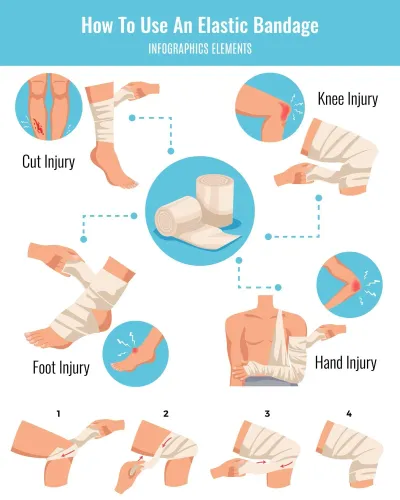
Use only the tension and overlap specified by the clinical team. Do not tighten a cushioning roll to control drainage or treat it as therapeutic compression.
- Lay each turn smooth, without ridges over the incision or behind the knee.
- Leave required distal areas visible for circulation and neurological checks.
- Secure it with a method approved for fragile skin; never place adhesive directly on irritated skin.
Have a clinician apply or replace the uncemented long stem dressing supplies when there is a drain, heavy drainage, fragile skin, vascular disease, sensory loss, a complex closure or uncertainty about the protocol.
What to request from a soft bandage roll distributor
Do not approve a roll because it feels soft. Ask the soft bandage roll distributor for evidence that matches the dressing protocol and the roll’s intended role.
- Intended body contact: outer padding, secondary absorbent layer, retention, cast padding, intact skin or direct wound contact.
- Status: sterile, clean or nonsterile; fibre composition; width, length, thickness or basis weight; edge construction; lint or particle shedding; conformability; wet and dry strength.
- Handling: storage temperature and humidity limits, shelf life, packaging configuration, disposal classification and radiographic compatibility.
- Skin contact: latex, adhesives, dyes and other sensitizers, particularly for prolonged intact-skin contact.
For sterile stock, inspect the intact sterile barrier and record the stated sterilisation method, lot number and expiry date. Never treat a bulk-packaged nonsterile roll as sterile after opening it.
| Evidence to request | Why it matters |
|---|---|
| Lot traceability | Links stock to a recall or investigation |
| Certificate or declaration of conformity | Supports the product’s stated regulatory status where applicable |
| Recall contact details | Gives your hospital a direct escalation route |
| Single-use label | Confirms disposal status only, not sterility, low linting or wound-contact suitability |
A bandage cloth hospital supply and any soft roll surgical disposable must pass the same checks. Komal Health Care Pvt Ltd can be assessed against this evidence rather than the vague word “soft.” Compare the specification with the hospital’s dressing protocol and confirm the radiographic workflow before approval.
Related product
 | Surgical Disposable ₹27 These Gamjee Roll are highly absorbent cotton are available in low adherent gauze cover and is applied over dressing to provide low adherent wound... View product → |
How to check the wrapped limb and decide what happens next
1. At the interval specified by the surgical team, inspect the wrapped limb without disturbing the primary dressing. Check pain, swelling, skin colour and temperature, toe movement, sensation, and whether the soft bandage roll for uncemented long stem care remains smooth, secure and correctly positioned.
2. Treat increasing pain, numbness, tingling, pale or blue toes, cold toes, or marked swelling as a reason for prompt clinical assessment. Do not add another layer or tighten the roll; extra pressure can worsen circulation or conceal a postoperative complication.
3. Contact the surgical team if the dressing is wet, saturated, loose, slipped or displaced, or if you see new drainage, foul odour, wound separation or worsening skin irritation. Ask whether a clinician must replace it, particularly when drainage has soaked through the planned dressing stack.
4. Do not remove the primary dressing, disturb a drain, or replace incisional negative-pressure wound therapy with an ordinary roll unless the clinical team directs you. A soft roll protects padding and retains a dressing, but it cannot create controlled subatmospheric pressure or sealed fluid management.
Keep the limb accessible for every check required by the postoperative instructions. Uncemented long stem dressing supplies must support inspection, not obstruct it; if the instructions are unclear, contact the surgical team instead of inventing a pressure or replacement schedule.
Frequently asked questions
What does a soft bandage roll protect after uncemented long-stem surgery?
It protects the outer dressing from movement and contamination and adds gentle padding. It does not stabilise the femoral stem or replace the surgeon’s weight-bearing instructions.
How do you compare soft bandage rolls for uncemented long-stem care?
Compare the roll’s material, width, length, stretch, edge finish, lint, packaging, lot identification, and intended clinical use. Choose the specification that matches the dressing and the facility’s protocol.
How tight should a soft bandage roll be?
Use even, comfortable contact without constriction, ridges, wrinkles, or pressure over the incision. Follow the treating clinician’s application instructions rather than using the roll to control swelling independently.
What should you check after applying the wrapped bandage?
Check the toes and exposed skin for colour, temperature, swelling, pain, numbness, tingling, and movement. Contact the clinical team promptly if symptoms worsen or the dressing becomes wet, loose, soiled, or displaced.