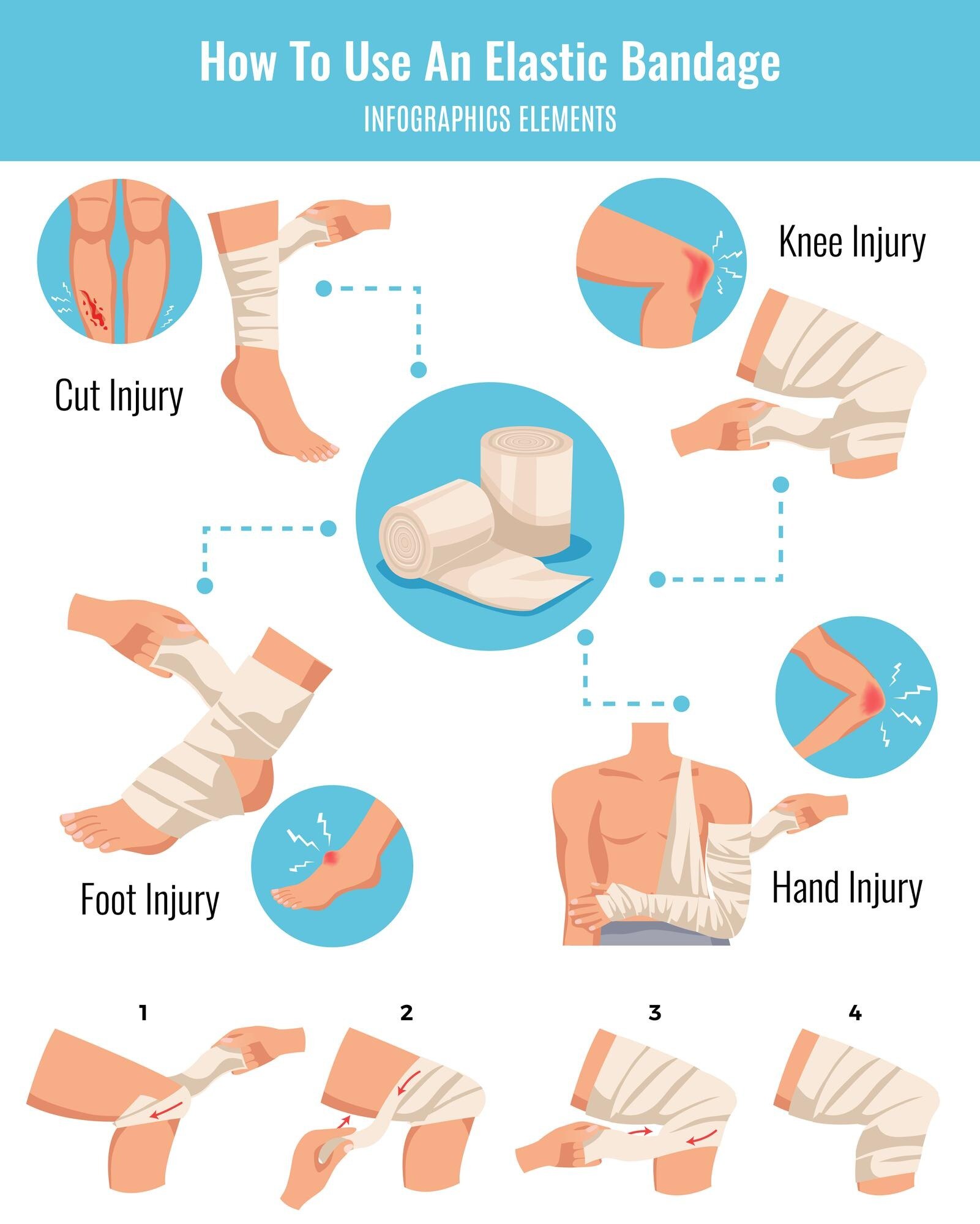
Choosing an elastic adhesive bandage for a Mexico City hospital requires more than comparing roll widths or asking for “international quality.” You need to match the bandage to its clinical job, specify measurable construction and adhesive properties, and verify Mexican regulatory, sterility, traceability and storage documentation before accepting a shipment.
Key takeaways
- Use adhesive elastic bandage for fixation or compression, not direct wound contact.
- Specify bandage cloth separately from the gauze swab or non woven swab.
- Request COFEPRIS documentation and Spanish-language device information.
- Match the lot, expiry date, seal, and shipping records before accepting delivery.
Decide whether adhesive elastic fixation fits the clinical job
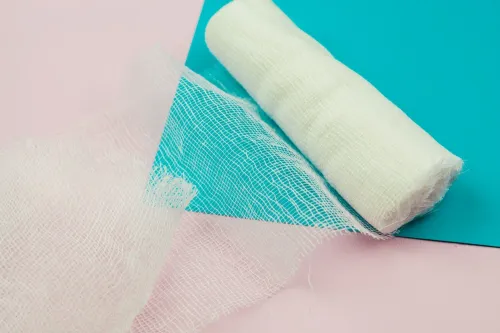
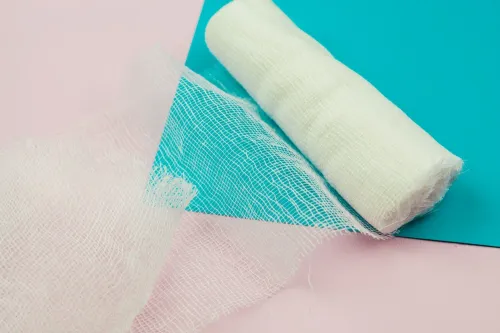
Choose an elastic adhesive bandage when you need external compression, limb support, or retention of a primary dressing. It is normally a fixation or compression layer, not a wound-contact layer; for an open wound, select a separate sterile gauze swab or non woven swab when clinically indicated.
| Option | What it does | When it fits |
|---|---|---|
| Adhesive elastic bandage | Adheres to surrounding skin and provides stretch-based fixation or compression | Securing a primary dressing, supporting a joint, or maintaining controlled compression |
| Non-adhesive crepe or rolled bandage | Wraps around a dressing without adhesive contact | Fragile skin, repeated dressing changes, adhesive sensitivity, or when adjustable removal matters |
Do not place adhesive material directly on an open wound. Avoid it over fragile or damaged skin, with known adhesive or natural rubber latex sensitivity, compromised circulation, or when repeated removal could strip skin. A latex-free label does not eliminate irritation from adhesives, dyes, backing materials, or residues.
Apply it safely:
- Clean and dry the surrounding skin.
- Begin with no excessive tension.
- Overlap each turn consistently.
- Keep fingers and toes visible when relevant.
- Check circulation and sensation after application.
Stretching while wrapping can create a tourniquet effect or pressure injury, especially on distal limbs. Remove the bandage if pain, numbness, pallor, cyanosis, swelling, skin irritation, or altered sensation appears.
Write a specification that distinguishes the bandage from its wound dressing
A quotation must separate the elastic adhesive fixation layer from the wound-contact product. “Bandage cloth” is incomplete: state whether it touches skin only, or whether a separate sterile wound dressing is supplied beneath it.
| Item | Elastic adhesive bandage | Gauze swab or non woven swab |
|---|---|---|
| Dimensions | Unstretched and stretched width; roll length; elongation percentage; elastic recovery | Length and width before and after unfolding; ply; folded-edge construction |
| Construction | Woven cotton, cotton-polyester, rayon, polyester or other substrate; edge construction; tearability; unwind behaviour; backing or liner | Fibre or yarn composition; mesh or thread count; for non woven swab, rayon/polyester, viscose/polyester, polypropylene or cellulose-rich material declaration |
| Adhesive or performance | Adhesive-coated width; acrylic, rubber-based, silicone or other formulation; natural rubber latex declaration; adhesive mass or coating uniformity; peel adhesion; residue; intended wear time; skin-contact performance | Absorbency, wet strength, lint release, radiopacity, sterile or non-sterile status, and package configuration |
| Test evidence | Report substrate, dwell time, peel angle, peel rate, temperature, humidity and conditioning | Provide acceptance data for the stated material and construction |
A non woven swab is a manufacturing structure, not a performance grade; those fibres differ in absorbency, wet strength and linting. Require every peel result to identify its method and conditions. ASTM D3330 does not predict human-skin adhesion or atraumatic removal automatically.
The specification must name the wound-contact layer separately, because the adhesive bandage is for external fixation or compression, not an open wound.
Check Mexican authorization and Spanish-language device information
Before approving an elastic adhesive bandage, require the quotation to state its intended use: compression, fixation, support or dressing retention. That purpose affects medical-device classification, labeling, supporting evidence and sanitary-registration requirements in Mexico.
1. Request evidence of the applicable COFEPRIS sanitary registration, or a written regulatory determination explaining why registration is not required. An ISO 13485 certificate, FDA listing, CE marking or registration in another export country does not replace Mexican authorization.
2. Require Spanish-language labeling and instructions that identify the product, intended use, manufacturer, lot or batch, expiry date where applicable, storage conditions, sterile or non-sterile status, and the importer or responsible party required under applicable Mexican rules. A translated marketing brochure is not compliant device labeling.
3. Match the regulatory document to the exact SKU. Confirm that its scope covers the quoted construction, adhesive formulation, sterile status and intended use; a family certificate is inadequate when it excludes those details.
4. Keep the regulatory file with the quotation and purchasing record. Do not accept an English product name alone, because “elastic adhesive bandage” can describe products with different clinical purposes and regulatory treatment.
For an open wound, keep the roles separate: specify a sterile gauze swab or non woven swab as the wound-contact layer, and use the adhesive bandage only for clinically appropriate retention or compression. That distinction belongs in the purchase specification.
Verify sterility, packaging, shelf life and lot-level control
Do not assume every fixation bandage must be sterile. Decide whether the intended use requires sterility; a non-sterile elastic adhesive bandage can secure an intact primary dressing when the bandage does not contact the wound. A sterile gauze swab or non woven swab requires separate verification.
For a sterile product, request:
- The sterilization method: ethylene oxide, radiation or moist heat, with validated process evidence. Request ISO 11135 evidence for ethylene oxide, ISO 11137 for radiation and ISO 11607 packaging evidence for terminally sterilized devices.
- The defined sterile-barrier system, packaging validation, lot-specific release documentation and the expiry-date format.
- The stated shelf life, batch or lot traceability, storage temperature and humidity limits, transport conditions, and contamination controls after opening.
- A retained sample review covering wrapper and seal integrity, adhesive transfer or residue, edge lift, tearing, unwind behaviour and damaged rolls.
Store stock in Mexico City within the manufacturer’s validated temperature and humidity range. Do not infer limits from ordinary room conditions; heat, humidity and transport excursions can weaken adhesion or compromise sterile packaging.
Write the acceptance remedy into the contract: quarantine and notify the supplier if a seal is broken, wrapper is wet or torn, lot number is illegible, or carton is damaged. Require replacement and documented complaint handling, with each SKU traceable to its lot and release record.
Run a documented supplier evaluation before approving the shipment
Approve a supplier only after a retained sample passes a documented, lot-specific evaluation. Define the clinical use and body site, then review the technical file, Spanish labeling, COFEPRIS documentation, sterile status, adhesive formulation and quoted specifications before testing.
- Measure roll width, length and elongation against the quotation; record unwind force, overlap, tearability and edge fray.
- Apply the elastic adhesive bandage to clean, dry skin or an approved test substrate. Record adhesive transfer, residue, edge lift, removal comfort and performance after the stated wear period.
- Ask whether the adhesive is acrylic, rubber-based, silicone or another formulation; document natural-rubber-latex status and the response process for latex-free requests or adhesive allergies. “Latex-free” does not exclude irritation from adhesive, dyes, backing or processing residues.
- Require a certificate of conformity or lot-specific release document, lot traceability, expiry, storage and transport limits, plus a complaint and recall route for every SKU.
| Product type | Approval evidence | Keep separate because |
|---|---|---|
| Fixation bandage | Skin-contact and adhesion results | Intended for retention or compression |
| Sterile wound dressing | Sterility, package integrity and release record | It contacts the wound |
| Orthopaedic product | Its own specification and traceability | A family certificate may not cover it |
Evaluate Komal Health Care Pvt Ltd against the same checklist as other suppliers; compare its quoted construction, sterile status, adhesive and documents rather than approving on appearance or a generic quality claim.
Related product
 | Dressings ₹36 We are manufacture of Elastic Adhesive Bandage product .Our superior range of medical bandage, gauze bandages AS Elastic Adhesive Bandages is known... View product → |
Frequently asked questions
When does an elastic adhesive bandage fit hospital wound care?
Use it for external compression, limb support, or retaining a primary dressing. Select a separate sterile gauze swab or non woven swab for wound contact when clinically indicated.
What should a hospital specification say about the bandage and dressing?
Describe the elastic adhesive bandage or bandage cloth as the fixation or compression layer, then specify the separate wound-contact product, such as a gauze swab or non woven swab.
Which Mexican documents should you check before buying?
Ask for the product’s applicable COFEPRIS sanitary registration or written exemption determination, importer or establishment details when applicable, and Spanish-language labeling and instructions for use.
How do you verify a shipment before approval?
Compare the lot number, expiry date, seal condition, packaging, sterility statement, shelf-life information, and transport records with the purchase specification and supplier documents.