A cemented modular stem may solve a specific fixation problem in radial head arthroplasty, but it is not automatically better than a press-fit stem and it is not the same implant as a cemented hip stem. By the end, you will be able to match the fixation method to bone quality, assess the value of modular sizing, and identify the checks that protect elbow motion and stability.
Key takeaways
- Confirm the implant is designed for the radiocapitellar joint, not the hip.
- Request stem sizing, cement interface, and range-of-motion evidence before approval.
- Assess ligament and fracture injuries alongside the prosthesis when estimating recovery.
- Verify traceability, sterilization records, and Mexican regulatory documentation.
What implant and clinical problem are you actually evaluating?
The implant under evaluation is an elbow reconstruction, not a hip hemiarthroplasty component. A radial head prosthesis contains a radial head, neck, stem and fixation interface designed for the radiocapitellar joint and forearm rotation; a cemented bipolar or modular hip stem addresses the proximal femur, acetabulum and a different loading pattern.
| Device or treatment | Defining feature | Typical clinical problem |
|---|---|---|
| Cemented modular radial-head prosthesis | Adjustable head and stem with cemented fixation in the radial canal | Irreparable fracture, post-traumatic reconstruction or elbow instability |
| Cemented bipolar hip stem | Hip stem supporting a head with inner and outer articulation | Femoral-neck fracture treated with hip hemiarthroplasty |
| Fixation or excision | Repairs a reconstructable radial head or removes a nonessential fragment | Selected fractures with stable ligaments and preserved elbow mechanics |
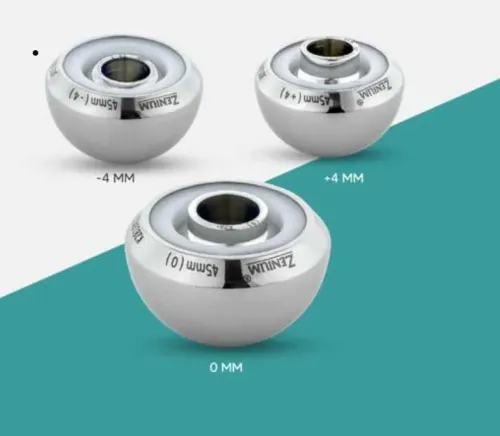
“Bipolar” usually describes mobile inner and outer articulations in a hip hemiarthroplasty. Ordinary radial-head modularity means components can be selected or adjusted; it does not justify “bipolar” unless the specific device has a mobile head-to-stem articulation.
Radial head arthroplasty fits an unrepairable fracture when fixation cannot restore stable anatomy, or when ligament and coronoid injuries make the radial head essential to elbow stability. Fixation remains preferable for a reconstructable fracture, while excision can suit a low-demand, stable elbow when reconstruction is unnecessary.
For a Mexico City buyer, “radial head prosthesis cemented modular stem for benefits in Mexico City” should not be confused with “bipolar modular stem benefits in Mexico City.” The relevant claim is elbow-specific reconstruction, not city-specific superiority.
When does cemented fixation offer a practical advantage?
Choose cemented fixation when a short or comminuted radial neck, osteoporotic bone, or unfavourable canal geometry cannot deliver reliable press-fit purchase. Cement can provide immediate primary and rotational stability, supporting protected early elbow motion while the surrounding injuries heal.
| Option | Main advantage | Main trade-off |
|---|---|---|
| Cemented modular stem | Immediate fixation when bone quality or geometry makes press-fit unreliable | Requires an adequate cement mantle, accurate alignment and control of cement extrusion |
| Press-fit or uncemented stem | Avoids cement-related revision concerns | Depends on sufficient bone contact and reliable initial mechanical stability |
That stability does not rescue a poorly positioned or incorrectly sized implant. Cement does not correct malposition, elbow instability or a radial head that overfills the joint; those errors can still cause stiffness, radiocapitellar wear, loss of rotation or loosening.
For anyone assessing cemented modular stem benefits in Mexico City, the defensible claim is conditional fixation support, not universal superiority. Radial head prosthesis recovery also depends heavily on ligament stability, fracture treatment and rehabilitation timing.
Do not transfer cemented hip-stem evidence to the elbow: the anatomy, loading pattern, sizing and failure modes differ, and comparative long-term evidence for cemented versus uncemented radial-head stems remains less established.
How does modular sizing protect the radiocapitellar joint?
Modularity protects the radiocapitellar joint by letting the surgeon reproduce the patient’s anatomy instead of accepting a fixed implant shape. A monoblock implant offers one stem diameter, stem length, radial-head diameter and head height; a modular system permits intraoperative adjustment of each dimension.
| Implant type | Adjustment available | Main consequence |
|---|---|---|
| Monoblock | Fixed stem and head dimensions | A mismatch can overfill the joint or leave inadequate support |
| Modular cemented stem | Selectable stem diameter, stem length, head diameter and head height | Better restoration of the native radiocapitellar relationship |
Overlengthening, or overstuffing, is the critical failure risk. An excessively tall or large head raises radiocapitellar contact pressure, restricts pronation and supination, damages capitellar cartilage and worsens elbow stiffness. Filling the radial canal is not enough.
During trial reduction, compare reconstructed joint height and alignment with the patient’s native anatomy on imaging. Confirm smooth capitellar tracking through elbow flexion and extension, verify forearm rotation, and check that the implant does not impinge on the ulna or the annular-ligament region.
Use the manufacturer’s sizing guide and trial instrumentation to select components. Do not substitute hip cup dimensions such as 37 to 55 mm; those measurements do not determine radial-head size.
A search for cemented modular stem benefits in Mexico City should lead to the same conclusion: modular adjustment matters, while city altitude does not establish a sizing advantage.
How do associated injuries change radial head prosthesis recovery?
Associated injuries, not cement alone, usually determine radial head prosthesis recovery. The main drivers are:
- Collateral-ligament disruption
- Coronoid fracture
- Elbow dislocation
- Pre-existing ulnohumeral stiffness
A cemented stem can provide immediate rotational fixation for protected motion, but it cannot restore a damaged ligament, repair a coronoid fracture or reverse established stiffness.
Prolonged immobilization increases elbow stiffness, so begin range-of-motion work early when the fracture and ligament repairs are protected; the surgeon’s rehabilitation plan must set the permitted arc, loading and timing.
Reconsider the implant when any of these conditions prevents a stable, anatomically correct reconstruction:
- Active infection at the operative site
- Inadequate proximal-radius bone stock for secure fixation
- Untreated ligament instability
- A component that does not match native radial-head size, height or capitellar anatomy
Cemented fixation addresses primary stability, not every later failure. Track these unresolved risks during follow-up:
- Aseptic loosening
- Radiocapitellar wear
- Stem or head malalignment
- Recurrent instability
- Loss of pronation or supination
Pain during rotation, progressive stiffness, catching, recurrent subluxation or a radiographic change in component position warrants reassessment. An anatomically mismatched or unstable implant can compromise recovery even when the cement mantle remains intact.
What should a Mexico City buyer verify before accepting a benefit claim?
A defensible claim is “modular adjustment with cemented fixation available when bone quality or geometry requires it.” It is not a city-specific superiority claim. Treat “radial head prosthesis cemented modular stem for benefits in Mexico City” and “bipolar modular stem benefits in Mexico City” as search phrases, not clinical evidence.
1. Request the device-specific surgical technique, sizing chart, cementing instructions, instrumentation list and radiographic examples. Confirm that the documents show the radial head, neck, stem and fixation interface rather than a hip implant.
2. Request sterilization records, lot and serial traceability, shelf-life information, and local regulatory documentation. Ask for clinical evidence that directly supports claims about fixation, durability, reduced recovery time or maintained forearm rotation.
3. Separate hip evidence from elbow evidence. A cemented hip stem manufacturer may specify cement restrictor compatibility, stem centralization, polished or matte stem behavior, cement-mantle thickness and bone-cement implantation syndrome management. Those requirements cannot establish radial-head performance.
4. Check whether “bipolar” describes a genuine mobile head-to-stem articulation. A hip bipolar design’s inner and outer articulations do not make an ordinarily modular radial-head prosthesis bipolar.
5. Record altitude as a perioperative planning issue: Mexico City sits at approximately 2,240 metres, so oxygenation assessment and anesthesia planning matter, but altitude does not select the implant.
Komal Health Care Pvt Ltd may belong in a supplier comparison for documentation and supply capability; confirm every radial-head specification in that product’s own technical file and local regulatory record.
Frequently asked questions
What implant and clinical problem does a radial head prosthesis address?
It reconstructs the radial head at the elbow after an unreconstructable fracture or other loss of radial head function. The implant includes a radial head, neck, stem, and fixation interface for radiocapitellar contact and forearm rotation; it is not a bipolar or modular hip stem.
When does cemented fixation offer a practical advantage?
Cemented fixation can provide immediate stem stability when press-fit bone purchase is unreliable, such as compromised proximal radial bone. Compare cement mantle requirements, removal options, and the surgeon’s fixation plan before treating it as an automatic benefit.
How does modular sizing protect the radiocapitellar joint?
Modular head, neck, and stem options help the surgeon match radial length, offset, and diameter to the patient’s anatomy. Correct sizing reduces the risk of overlengthening, capitellar overload, restricted rotation, and instability.
How do associated injuries change radial head prosthesis recovery?
Recovery depends on more than the implant. Coronoid fractures, collateral-ligament damage, elbow dislocation, stiffness, and forearm interosseous injury can change immobilization, therapy, loading, and expected motion.
What should a Mexico City buyer verify before accepting a benefit claim?
Ask for the product specification, sizing range, cemented-stem technique, sterilization record, lot traceability, instructions for use, and Mexican regulatory documentation. Require clinical evidence that matches the radial head indication rather than evidence for a cemented hip stem.