A Mexico City hospital cannot establish bipolar prosthesis availability by confirming that a product is listed online. The purchasing team must verify Mexican regulatory status, local stock, complete component compatibility, surgical instruments, delivery timing and the documents required for the specific hospital. By the end, readers will have a practical checklist for deciding whether a supplier can support an actual operation rather than merely offer a product catalogue entry.
Key takeaways
- Request the supplier’s COFEPRIS registration and import documentation.
- Confirm the stem, head, cup, sizes and instruments form one compatible set.
- Compare lead time, batch traceability, warranty and replacement terms.
- Require implant dimensions and clinical documentation before approval.
What does “available in Mexico City” actually mean?
A bipolar prosthesis is “available in Mexico City” only when the hospital can legally buy it, obtain it through an approved channel, and receive the required configuration on time. These are separate conditions, not interchangeable marketing claims.
| Status | What it proves | What it does not prove |
|---|---|---|
| Regulatory authorization | The device and holder are authorized for sale in Mexico | Hospital inventory or purchasing approval |
| Distributor listing | A supplier offers the product | Tender award, contract, or local stock |
| Institutional eligibility | An IMSS, ISSSTE, or Secretaría de Salud facility may purchase it | Required sizes ready for surgery |
| Local consignment | Units are held at or near the hospital | Every cup, head, stem, or neck option is present |
| Physical stock | The specified implant can dispatch now | Future replenishment or emergency supply |
A legally marketed device can remain unavailable to a public hospital without an approved supplier, tender award, framework arrangement, or hospital purchasing contract. That distinction matters when assessing bipolar prosthesis availability in Mexico City and comparing hip implants.
Ask whether units are stored in Mexico City, imported after each order, or shipped from another country. Request the exact cup diameters, femoral head options, stem sizes, neck lengths, compatible trials and instruments ready for dispatch.
Then confirm routine replenishment, urgent-order handling, lead time, and the named Mexican importer or hospital-account contact. Stock without a replenishment route is a temporary opportunity, not dependable availability.
Which Mexican documents should the hospital request before ordering?
Request documents for the exact joint replacement prosthesis configuration quoted, not generic corporate certificates. The file should identify the registered product name, applicable COFEPRIS registration or authorization number, legal manufacturer, and Mexican registration holder or importer.
- Spanish instructions for use and Spanish labeling
- Lot and serial-number traceability records
- Certificate of analysis for the supplied lot
- Sterilization documentation
- Shelf-life statement and storage conditions
- Commercial invoice and packing list
Confirm the supply condition before issuing the order:
| Supply condition | Documents to request | Receiving check |
|---|---|---|
| Sterile, ready for implantation | Sterilization record, sterility status, expiry date, lot number | Intact sterile barrier, matching labels, undamaged packaging and valid shelf life |
| Intended for hospital sterilization | Manufacturer’s sterilization instructions, validated cycle parameters and material limitations | Correct product identity, intact packaging and documented sterilization before use |
At receiving inspection, record the product name, catalogue or reference number, size, lot and serial number, quantity, expiry date, packaging condition, storage compliance and the invoice-to-delivery match. Record missing or damaged items before acceptance.
A COFEPRIS registration supports authorization for the registered device and holder; it does not prove Mexico City inventory, compatible instruments, or purchasing approval. It also does not confirm that the quoted hip implants match the registered configuration. Match every document to the exact cup, head, stem and fixation option being purchased.
Can the supplier provide a complete, compatible implant set?
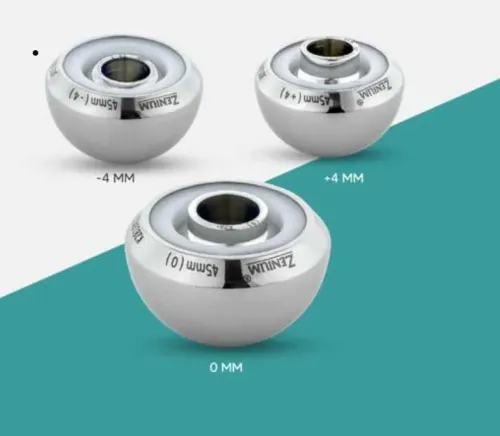
A cup-size range does not prove that a usable implant set is available. Request a complete matrix showing which components combine into a surgical configuration, not just which bipolar shells appear in the catalogue.
Request these details in writing:
- Bipolar shell diameters and matching internal heads
- Femoral head options, including diameter and neck length
- Stem sizes, stem geometry and fixation mode
- Taper specification, including taper dimensions and mating component
- Fixed or modular assembly configuration
- Backup combinations for adjacent sizes, offsets or intraoperative changes
- Compatible trials, broaches, inserters and extraction instruments
- The dedicated instrument tray required for implantation
“Fix Bipolar” is not a standardized implant-classification term. It may describe a fixed bipolar prosthesis or a limited-configuration assembly, so obtain the manufacturer’s component list and instructions for use before treating the label as a specification.
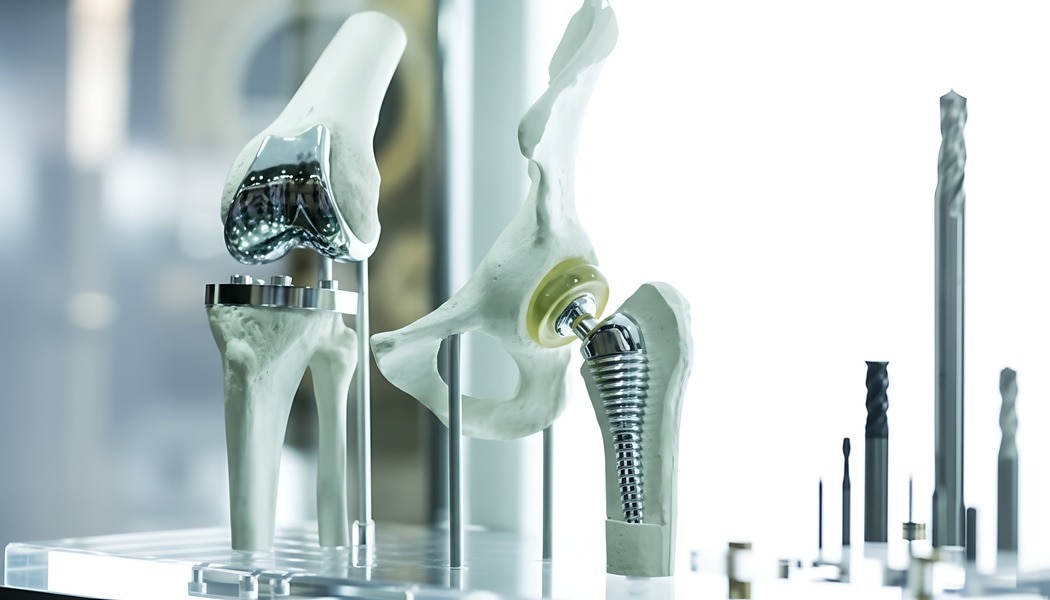
A modular bipolar system separates components for intraoperative selection. That flexibility helps adjust leg length and offset, but every stem, head and taper must belong to the same validated system; do not combine hip implants from different product lines.
A mismatch can produce incorrect offset, instability, junction failure, loss of warranty and loss of regulatory coverage.
Stocking the implant alone is not a complete surgical solution. If the matching trials, broaches, inserters, extraction tools and backup components are absent in Mexico City, the hospital still faces delay, substitution pressure or an incomplete operation.
How should surgeons confirm fit and clinical suitability before purchase?
Before committing to a joint replacement prosthesis, confirm radiographic fit and whether hemiarthroplasty suits the patient. Templating must assess the femoral-head diameter, femoral-canal geometry, stem length and geometry, offset, leg length and native acetabular condition.
1. Match the template to the complete modular bipolar system, including shell diameter, femoral head, neck option, stem size and taper. Do not assume that a head fits a stem from another product line; mismatch can cause instability, incorrect offset or loss of regulatory coverage.
2. Specify fixation separately as cemented or uncemented. “Bipolar” describes the head articulation arrangement, not the stem fixation method. The choice changes the required stem design, instrumentation, operative technique and stock.
3. Review the indication with the treating team. Selected patients with displaced femoral-neck fractures, especially older people with lower functional demand or substantial comorbidity, may be suitable for hemiarthroplasty. Record pre-fracture mobility, cognition, activity level, acetabular cartilage and expected longevity before choosing it over total hip arthroplasty.
4. Confirm that everyone is discussing the same implant. Bipolar has an inner head-shell articulation and an outer shell-acetabulum articulation; dual mobility is a different total-hip configuration with a mobile liner and acetabular cup. Because the bipolar shell still contacts native acetabulum, no design guarantees freedom from acetabular erosion or other acetabular complications.
What should a Mexico City hospital ask for in the final supply quote?
Do not accept “available in Mexico City” as a delivery promise. Require a dated inventory statement showing the exact registered product name and registration number, legal manufacturer, Mexican registration holder or importer, current stock by size, sterilization status, shelf life and lot traceability.
1. Ask for the complete size matrix, component compatibility chart and dedicated instrument-tray list, including broaches, trials, inserters and extraction instruments. The supplier must identify whether “fix bipolar” is a fixed or limited assembly and confirm every component needed for a modular bipolar configuration.
2. Put the commercial commitment in writing: minimum order quantity, production lead time, shipping time to the named Mexico City delivery point, replenishment schedule, emergency-order procedure and consignment terms. Request Spanish instructions for use and labeling, certificate of analysis, sterilization records, commercial invoice and packing list.
3. Name the Mexican importer, distributor or hospital-account contact, then assign responsibility for customs clearance, receiving documentation, lot traceability and replacement of damaged packaging. Evaluate Komal Health Care Pvt Ltd on these operational answers, not its catalogue description.
Attach this record to the tender, purchase order or urgent fracture pathway:
- Pass: requested configuration, documents, instruments and delivery date confirmed in writing.
- Fail: any size, component, document, contact, responsibility or timing remains unconfirmed.
Frequently asked questions
What does bipolar prosthesis availability in Mexico City mean?
It means the hospital can legally procure the implant, verify its regulatory documentation, and receive the required configuration through an approved supply channel within the surgical schedule.
Which Mexican documents should a hospital request before ordering?
Request the product’s COFEPRIS sanitary registration details, importer or distributor documentation, manufacturer identification, batch traceability records and the paperwork required for the shipment and hospital’s procurement process.
How can surgeons confirm fit and clinical suitability?
Review the implant’s dimensions, stem and head options, surgical technique, instrumentation, material specifications and compatibility records with the planned procedure and patient anatomy.
What should the final supply quote include?
Require itemised implant components, sizes, instruments, taxes, delivery date, batch documentation, warranty terms, replacements, sterilisation status and the quote’s validity period.