A cemented bipolar modular stem described for hip hemiarthroplasty cannot be treated as a radial head implant merely because it is modular or cemented. By comparing the anatomy, dimensions, component interfaces, instruments and Mexican supply documentation, you can decide whether a proposed product belongs in an elbow procurement plan or a hip implant order.
Key takeaways
- Do not substitute a hip bipolar stem for a radial head prosthesis.
- Compare head diameter, stem dimensions, taper, offset, and instrumentation.
- Request a complete implant, trial, instrument, and sterilization documentation set.
- Verify COFEPRIS status, traceability records, and supplier credentials before ordering.
Does a hip bipolar stem fit the radial head replacement problem?
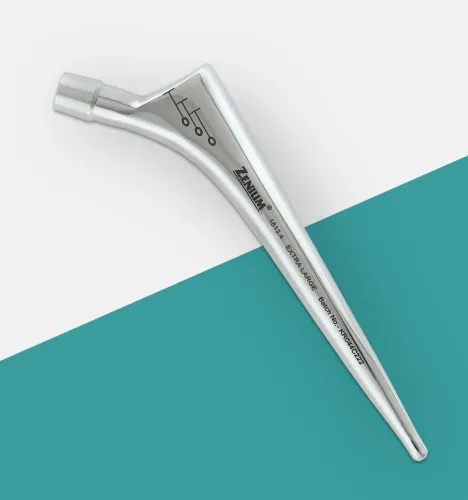
No. On the evidence available, a hip cemented bipolar modular stem does not solve a radial-head replacement requirement.
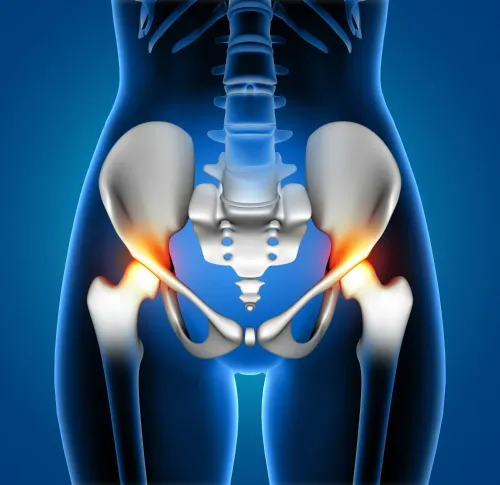
A hip stem anchors in the femoral canal and works with a bipolar cup; a radial head prosthesis replaces the radial head at the elbow and must restore radiocapitellar contact, proximal radioulnar function, forearm rotation and lateral-column stability.
1. Treat the anatomy as the first disqualifier. “Bipolar” describes relative motion inside a hip construct, not suitability for elbow anatomy. The product could meet supply needs only when the order is for hip hemiarthroplasty components, not radial-head implants.
2. Do not treat “modular” as permission to interchange parts. A modular stem still has a specified taper, neck geometry, locking method, canal-fill profile and approved mating components. Similar-looking dimensions do not authorise assembly across anatomical sites, implant systems or manufacturers.
3. Request evidence for a complete radial-head system, not a loose stem catalogue. The file must identify radial-head components, approved stem combinations, fixation instructions, cement-compatible instruments, trials and extraction tools. It must also show catalogue-level compatibility for each head-to-stem taper, locking feature and allowable combination.
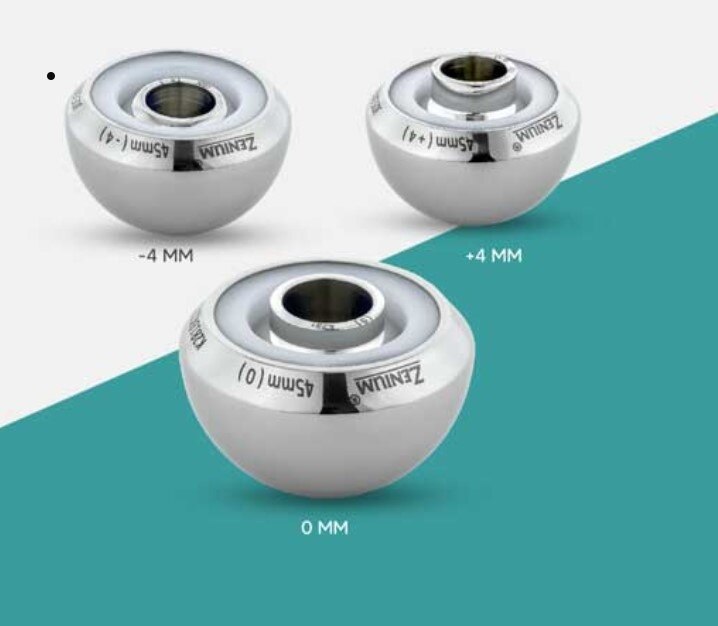
4. Reject a catalogue that lists only an overall implant size. Ask for stem length, proximal and distal diameters, offset, taper dimensions, cement-mantle requirement, radial-head diameter and head height. An over-tall head can restrict rotation and increase capitellar contact pressure; an undersized head can reduce support and stability.
Which dimensions prove that a radial head system is actually compatible?
Compatibility is proven by matched dimensions and documented component combinations, not by the word “modular” or a similar-looking taper. Request this side-by-side specification before treating a proposed stem as suitable for radial-head use.
| Proposed stem | Radial-head system |
|---|---|
| Stem length | Radial stem length |
| Proximal and distal diameters | Radial head diameter |
| Offset and neck geometry | Head thickness or longitudinal height |
| Taper dimensions and locking features | Radial neck or stem diameter and head-to-stem taper |
| Canal-fill profile | Implant axis and allowable alignment |
| Cement-mantle requirement | Press-fit or cemented fixation options |
| Every approved modular head or neck combination | Capitellar articulation dimensions and approved combinations |
The supplier must identify each pairing by catalogue number. A matching diameter does not authorise cross-brand assembly; taper angles, locking features and articulation dimensions can differ.
Radial-head sizing must restore both diameter and longitudinal height. An over-tall implant can increase radiocapitellar contact pressure, restrict forearm rotation and accelerate capitellar wear; an undersized head can reduce lateral-column support and stability.
For modular stem sizes for medical buyers, require a controlled matrix showing stem diameter, stem length, head diameter, head height or thickness, and every neck or offset option. Ask for this matrix in the technical file and replenishment catalogue. An overall implant size alone cannot support operative planning, trial selection or safe reordering.
What must a complete radial head prosthesis supply include?
A complete supply is a validated implant-and-instrument system, not a loose stem catalogue. A cemented bipolar modular stem for radial head prosthesis supply is credible only when radial-head components, approved stems, fixation instructions, cement-compatible instruments, trials, extraction tools and validated catalogue-number combinations are available together.
1. Confirm every permitted combination at catalogue-number level. Check head-to-stem taper geometry, locking features, bipolar articulation dimensions and allowable stem, head, neck and offset combinations. Similar-looking diameters do not authorise cross-brand assembly.
2. Request the operative instruments, not just implants: canal broaches or reamers, stem trials, head trials, insertion handles, impactors, cement restrictor or cement-delivery options where applicable, and revision or extraction instruments. Missing trials can make a broad modular range unusable.
3. Ask the cemented bipolar modular stem supplier for the fixation method, cement-mantle requirement, canal-preparation sequence and removal instructions. A radial head prosthesis implant distributor must show that these instructions match the supplied components and declared anatomical site.
4. Separate the implant bill of materials from procedure inventory. The implant record must state each stem diameter and length, head diameter and height, neck or offset options, sterile-pack quantity, packaging configuration, shelf life, laterality policy and replacement status. The instrument record must identify reusable and single-use items, including their catalogue numbers.
Without that documentation, you have stock, not a complete radial-head supply.
When does cemented or bipolar fixation help—and when does it add risk?
Cemented and bipolar describe different features, so neither term guarantees a safe radial-head replacement. Bipolar refers to relative motion within the prosthetic construct; cemented refers to fixation of the stem in the radial canal. A bipolar radial-head design can therefore use either a cemented or press-fit stem, depending on its validated system.
Cement fixation can provide immediate purchase when press-fit fixation is unreliable, but it adds canal-management and revision demands. A cemented system must support:
- Adequate canal preparation
- Central stem positioning
- A controlled cement mantle
- Controlled cement mixing and delivery
An undersized or poorly fixed stem can migrate or loosen. Excessive cement, malposition, or difficult cement removal can complicate revision, so the surgical set and instructions for use must address extraction as well as implantation.
Bipolar motion cannot compensate for incorrect implant geometry or stem alignment. It does not correct:
- Incorrect head height
- Incorrect head diameter
- Stem malalignment
The operative team still needs resection measurement, trial reduction, and radiocapitellar assessment. These checks matter most in an unreconstructible radial-head fracture with elbow instability, coronoid injury, or ligament injury, where restoring lateral-column support is part of the treatment objective. Choose cemented fixation for a documented fixation problem, not because “cemented” or “bipolar” sounds inherently safer.
How should a Mexican buyer verify the supplier before ordering?
Do not release a purchase order until the supplier passes a document-and-market-access gate. Stock on a warehouse shelf proves availability, not lawful delivery or suitability for the elbow.
1. Inspect the technical file, implant label, instructions for use, regulatory classification, surgical technique and declared anatomical site. Each document must identify radial-head or elbow use directly; none may rely on the word “modular,” a similar diameter or an inferred indication.
2. Require the cemented bipolar modular stem supplier or radial head prosthesis implant distributor to provide catalogue-number compatibility records. Confirm head-to-stem taper, locking features, bipolar articulation dimensions and permitted combinations, plus the size matrix for stem diameter and length, head diameter and height, and neck or offset options.
3. Verify the complete supply file: sterile-release records, lot traceability, expiry and packaging controls, complaint-handling contacts, recall procedures, and the instrument list. Ask for broaches or reamers, stem and head trials, insertion handles, impactors, cement delivery or restrictor options where applicable, and revision instruments.
4. Separate physical stock from Mexican market access. Check the applicable COFEPRIS sanitary-registration status, importer or distributor responsibilities, Spanish-language labeling, and traceability obligations. Request quality-system evidence aligned with current Mexican requirements, including NOM-241-SSA1-2021 where applicable.
Komal Health Care Pvt Ltd belongs in the comparison only after the buyer confirms the requested product’s declared anatomy, documentation and Mexican distribution pathway; a listed hip product is not thereby cleared for radial-head use.
Related product
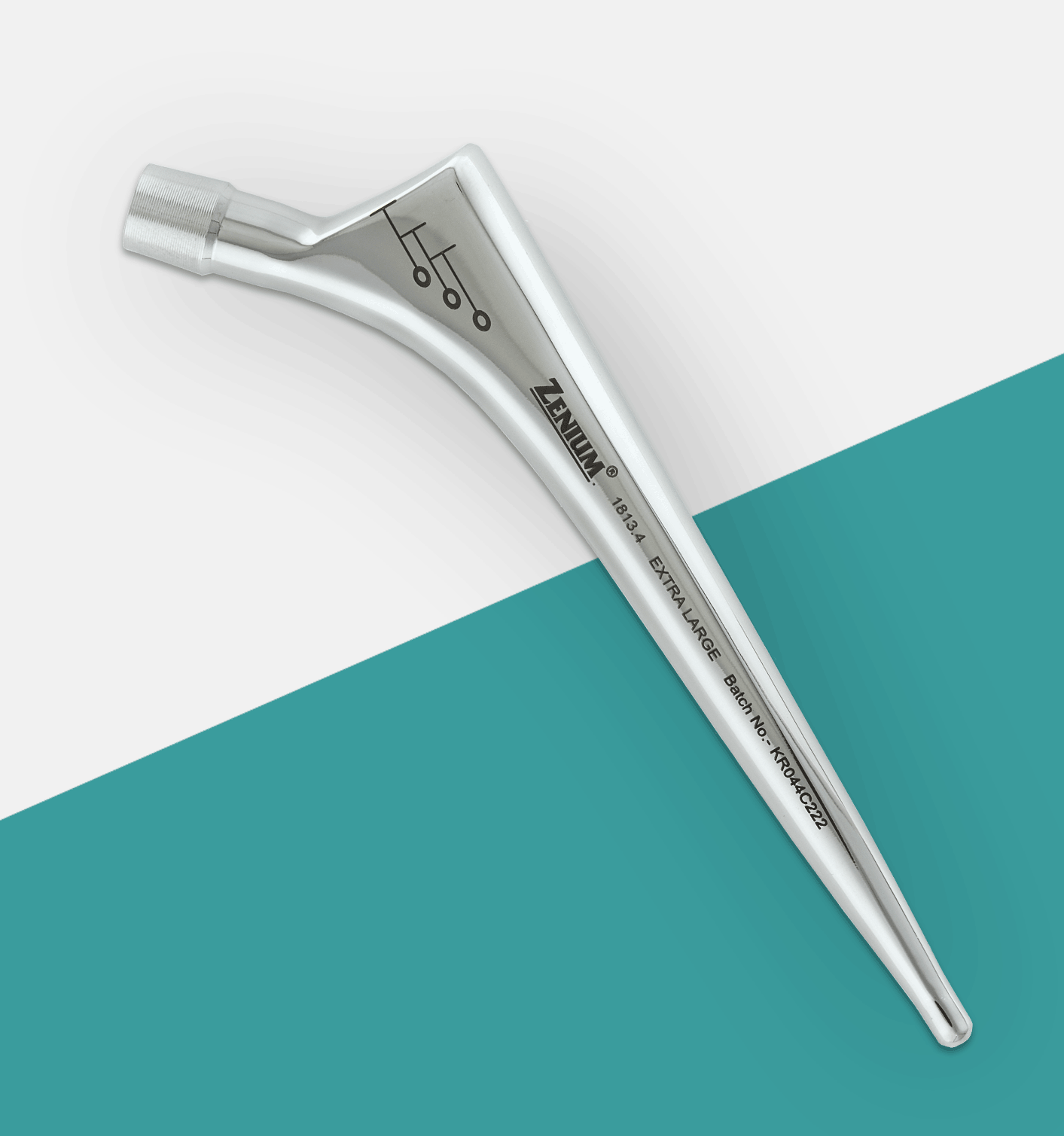 | Joint Replacement Bipolar Modular Stem (Cemented) Manufacturer The Bipolar Modular Stem (Cemented) is an orthopedic implant used in hip replacement surgeries, especially for elderly patients with fractured or... View product → |
Frequently asked questions
Does a hip cemented bipolar stem fit a radial head replacement?
No. A hip cemented bipolar stem is designed for hip anatomy and does not solve the geometry, fixation, or instrumentation requirements of radial head replacement.
Which dimensions prove radial head system compatibility?
Check radial head diameter and thickness, stem diameter and length, taper geometry, offset, collar design, and the matching trials and instruments.
What should a complete radial head prosthesis supply include?
Request implant components, size options, trial heads and stems, insertion instruments, sterilization information, lot traceability, instructions for use, and packaging records.
How should a Mexican buyer verify the supplier?
Ask for the supplier’s legal and regulatory documents, COFEPRIS evidence where applicable, ISO 13485 certification, lot records, product documentation, and after-sales support details.