The terms describe different aspects of hip implants, so treating them as competing categories can lead to the wrong comparison. By the end, you will be able to distinguish hemiarthroplasty from total hip replacement, separate construction from fixation, and identify the specifications that matter when selecting a component.
Key takeaways
- A modular bipolar cup replaces the femoral head and preserves the native acetabulum.
- An acetabular cup replaces the socket during total hip replacement.
- Choose hemiarthroplasty or total hip replacement using patient, fracture and acetabular factors.
- Specify cup size, bearing, fixation method, materials and compatibility before purchasing hip implants.
What is the difference between a modular bipolar cup and an acetabular cup?
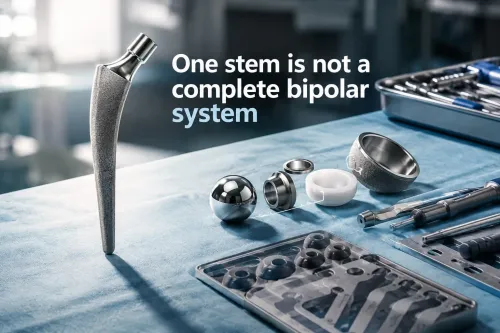
A modular bipolar cup and an acetabular cup do not serve the same operation. The modular bipolar cup is used in hemiarthroplasty: it attaches to a femoral stem and head, replacing the femoral head while leaving the patient’s native acetabular socket in place.
Its two articulations are between the prosthetic femoral head and inner cup, and between the cup’s outer surface and the native socket.
| Component | Operation | Native hip surfaces that remain |
|---|---|---|
| Modular bipolar cup | Hemiarthroplasty | The acetabular socket remains; the femoral head and neck are removed |
| Acetabular cup | Total hip replacement | The native femoral head and acetabular cartilage are removed; neither joint surface remains as the bearing |
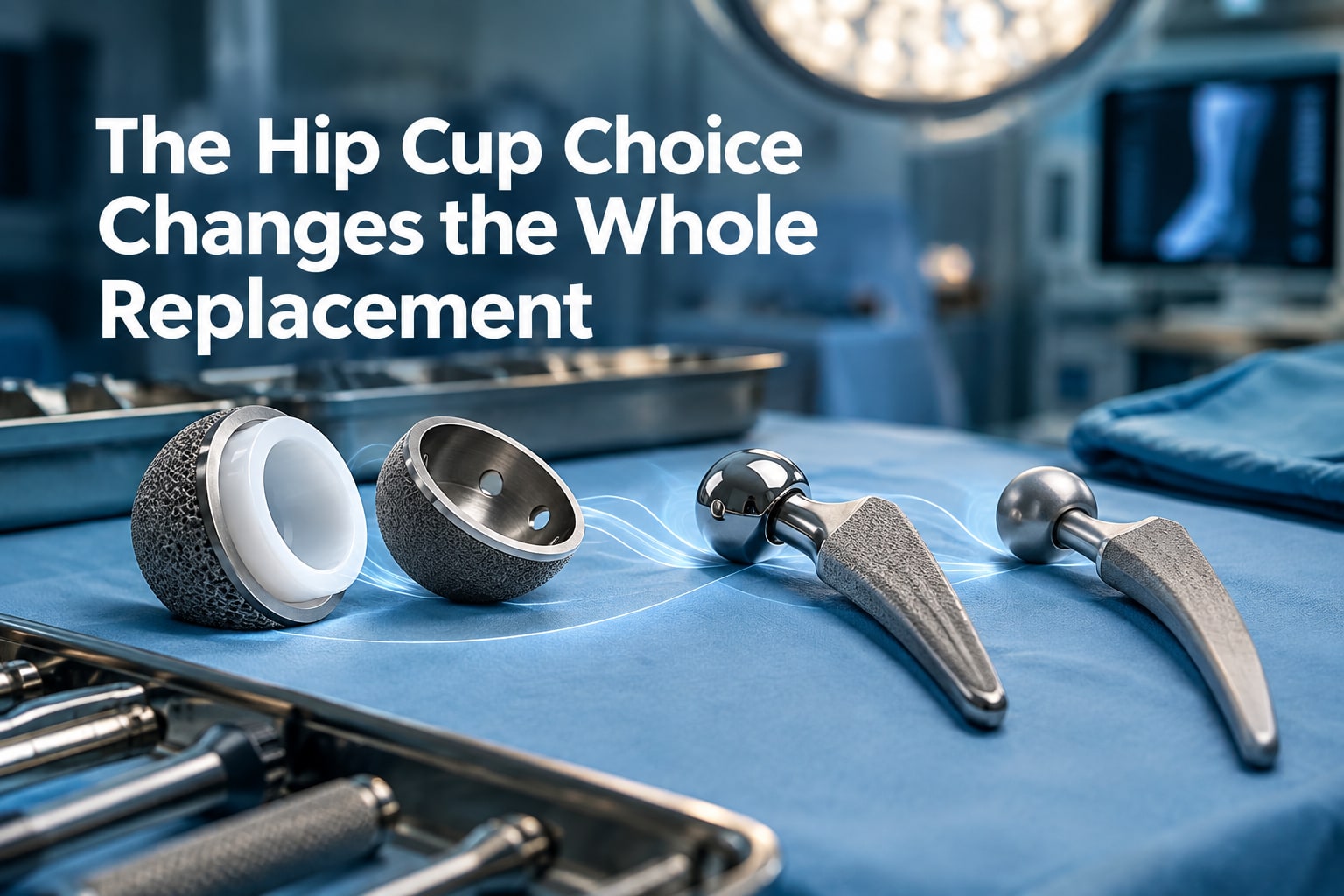
An acetabular cup is the socket-side component of total hip replacement. It is implanted into the prepared acetabulum and works with a femoral stem, head and liner or bearing surface. Together, these hip implants replace both sides of the hip joint.
Do not treat “modular” as the opposite of “acetabular.” A modular acetabular cup is a different design category: it usually has a separate metal shell and replaceable liner. A modular bipolar cup is a hemiarthroplasty component with dual articulation, while an acetabular cup replaces the socket itself.
The surgeon’s choice therefore determines whether the native acetabulum continues to bear against an implant.
Is a modular cup the opposite of a cemented THR cup?
A modular cup is not the opposite of a cemented THR cup: modularity describes how the component is built, while cemented describes how it is fixed to bone. “Acetabular cup” is the broader name for the socket-side implant used in total hip replacement.
| Option | Construction | Fixation |
|---|---|---|
| Modular acetabular cup | Separate metal shell and replaceable liner | Usually cementless, using press-fit and later bone ongrowth; some modular designs are cemented |
| Cemented THR cup | Usually an all-polyethylene monoblock component | Polymethylmethacrylate bone cement bonds the cup to the prepared acetabulum |
| Cementless monoblock cup | One-piece socket component without a separate liner | Press-fit or bone ingrowth, depending on the design |
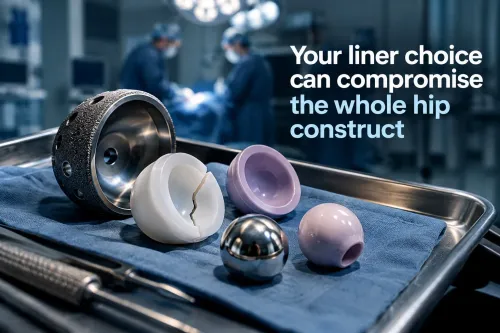
The practical difference is the shell-and-liner interface. A modular cup lets the surgeon or revision team change the liner without routinely removing a well-fixed shell, but incomplete seating, locking-mechanism damage, component mismatch or impingement can cause liner dissociation.
If the locking interface is damaged, replacing the liner alone may not be safe, even when the shell looks firmly fixed on an X-ray.
A cemented THR cup avoids that separate locking interface because its monoblock body is implanted as one piece. It still depends on a sound cement mantle and stable cement–bone and cement–implant interfaces. Specify both attributes when comparing products: construction, such as shell-and-liner or monoblock, and fixation, such as cementless or cemented.
How do surgeons choose between hemiarthroplasty and total hip replacement after a femoral neck fracture?
After a femoral neck fracture, surgeons favour hemiarthroplasty when replacing the femoral head is enough; they favour total hip replacement when the native acetabulum is also likely to cause pain or failure. A modular bipolar cup articulates with the patient’s acetabular cartilage, while an acetabular cup replaces that socket.
| Option | Factors supporting choice | Main concern |
|---|---|---|
| Modular bipolar cup in hemiarthroplasty | Lower-demand activity, intact acetabular cartilage, cognitive impairment, high dislocation risk, limited life expectancy, or bone disease making a longer procedure less attractive | The native socket can wear or become painful; the bipolar mechanism does not remove acetabular arthritis |
| Acetabular cup in total hip replacement | Independent walking outdoors, higher activity, good cognition, longer life expectancy, pre-existing acetabular arthritis, or damage visible on imaging | Greater operative complexity and a higher dislocation risk than hemiarthroplasty |
Activity is not a simple age threshold. A fit, alert patient who walks long distances or expects substantial independence gains more from the durable pain relief of total hip replacement when the acetabulum is diseased. A frail patient with dementia may benefit from the shorter, simpler hemiarthroplasty pathway, particularly when dislocation prevention is difficult.
Surgeons also assess acetabular bone stock, protrusio, inflammatory arthritis, metastatic disease and femoral bone quality. Severe bone disease can change fixation and reconstruction plans, so the final choice depends on radiographs, medical fitness, expected survival and the surgeon’s assessment—not the cup label alone.
How are the cup and femoral components fitted during surgery?
After the femoral head is removed, the surgeon exposes the acetabulum and removes damaged cartilage, labrum and soft tissue that obstruct the rim. The acetabular cup is then sized against the prepared socket, while the femoral canal is opened and shaped for the stem.
- Ream the acetabulum gradually until the surface is hemispherical and the planned shell has adequate contact with viable bone.
- Check the rim, medial wall, bone defects and remaining coverage; excessive reaming can weaken the socket or place the cup too deep.
- Position the trial shell at the intended inclination and version, then confirm that its rim is fully supported and its orientation avoids impingement.
- Insert the femoral trial stem and head, reduce the hip, and test leg length, offset, range of motion and stability through flexion and rotation.
A cementless shell must achieve firm press-fit fixation before bone grows onto its surface. If the shell lacks stability or the design permits it, screws are placed through approved holes, avoiding the pelvis’s inner structures.
A cemented THR cup instead receives polymethylmethacrylate cement in the prepared acetabulum; it is not automatically interchangeable with a modular shell.
Before final assembly, verify that the liner matches the shell diameter, locking mechanism and bearing specification, and that its inner diameter matches the femoral head. Confirm compatibility across the complete set of hip implants; a successful trial reduction cannot correct a mismatched liner or an improperly seated component.
What should a hospital specify when comparing hip implant cups?
The phrase acetabular cup identifies the socket-side component, not a complete product specification. A modular cup usually means a metal shell with a separate liner; “modular” describes construction, while cementless or cemented describes fixation.
| Comparison point | Modular acetabular cup | Cemented THR cup |
|---|---|---|
| Construction | Separate shell and replaceable liner | Usually a single polyethylene component |
| Fixation | Often press-fit, with bone ongrowth; screw options may be available | Fixed to prepared bone with polymethylmethacrylate cement |
| Bearing system | Shell, liner and femoral head form a specified bearing couple | Cup material and femoral head form the bearing couple |
| Compatibility | Requires matched shell, liner, locking geometry and head | Requires the stated cement, component and head compatibility |
Write the procurement specification as separate fields, not simply “hip implants” or “acetabular cup”:
- Shell or monoblock design, material, outer-diameter range and geometry
- Fixation method, including press-fit, screw-hole configuration or cement use
- Liner material, inner diameter, bearing couple and available head sizes
- Shell-size and liner-size ranges, with the manufacturer’s compatibility matrix
- Femoral head interface, taper, screw options and instruments supplied
- Sterilization status, packaging configuration, shelf life and sterile-barrier condition
- Current instructions for use, regulatory documentation and storage requirements
A similar nominal diameter does not make liners interchangeable. Ask the supplier to identify the exact shell–liner pairing in writing. Whether the quotation comes from Komal Health Care Pvt Ltd or another supplier, compare the complete system and its documents rather than a catalogue label.
Related products
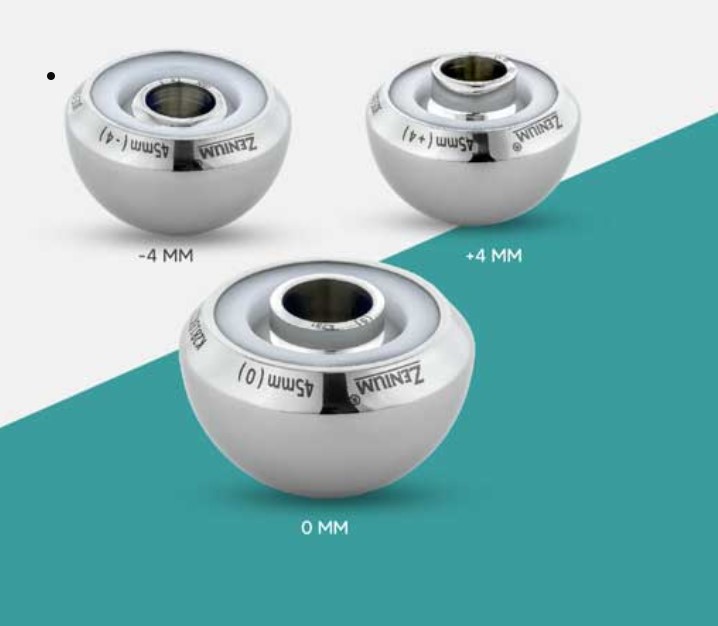 | Joint Replacement Modular Bipolar Cup (With Head) Manufacturer The Modular Bipolar Cup (With Head) is an advanced hip implant system used in hemiarthroplasty procedures, particularly for treating femoral neck... View product → |
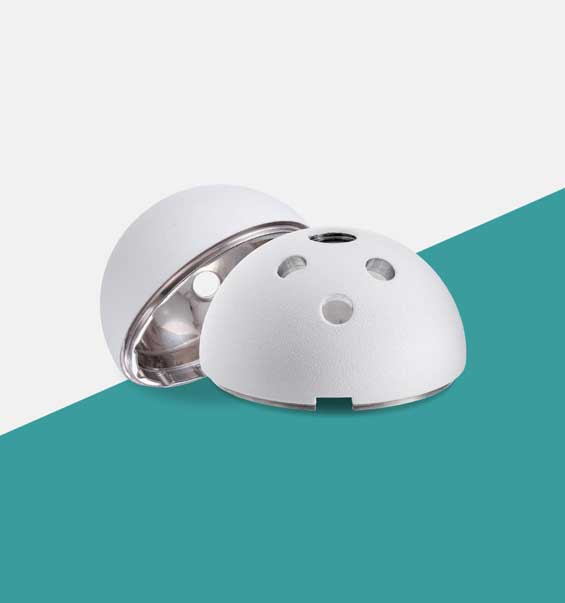 | Joint Replacement The Acetabular Cup is a key component in total hip replacement surgery, designed to fit into the hip socket (acetabulum). View product → |
Frequently asked questions
What is the difference between a modular bipolar cup and an acetabular cup?
A modular bipolar cup is used in hemiarthroplasty and articulates with the patient’s native acetabulum. An acetabular cup replaces the socket in total hip replacement.
Is a modular cup the opposite of a cemented THR cup?
No. “Modular” describes how the bipolar cup connects to the femoral components, while “cemented” describes fixation. A total hip replacement acetabular cup can be cemented or uncemented.
How do surgeons choose between hemiarthroplasty and total hip replacement after a femoral neck fracture?
They assess age, mobility, cognition, medical fitness, life expectancy, fracture pattern, acetabular condition and ability to follow rehabilitation restrictions.
How are the cup and femoral components fitted during surgery?
The surgeon prepares the femur for the stem and prepares the acetabulum only for total hip replacement. Trial components establish leg length, offset, stability and range of motion before final implantation.
What should a hospital specify when comparing hip implant cups?
Specify the procedure, cup type, size range, bearing materials, fixation method, compatibility, instruments, sterilisation details, traceability documents and regulatory records.
Related products
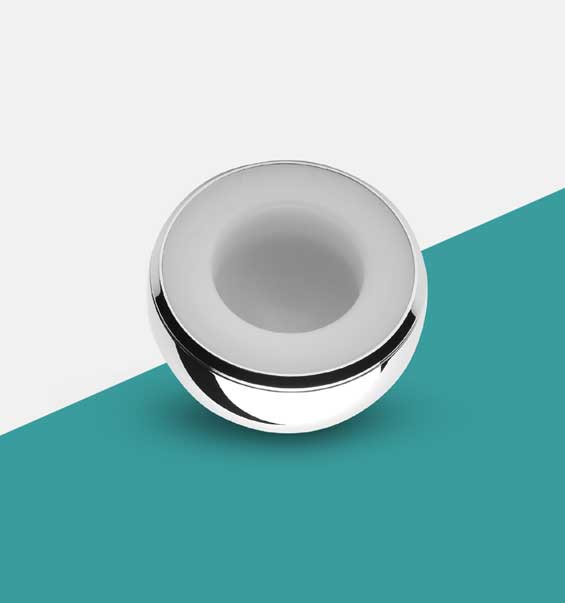 | Joint Replacement Modular Bipolar Cup Manufacturer A Modular Bipolar Cup Manufacturer specializes in producing advanced orthopedic components used in hip replacement surgeries. View product → |
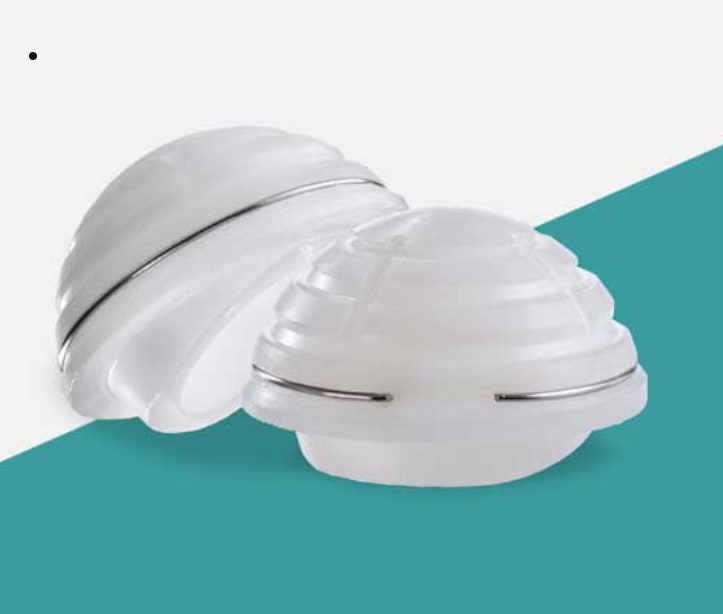 | Joint Replacement Acetabular Cup Cemented Manufacturer An Acetabular Cup Cemented Manufacturer produces acetabular components specifically designed for cemented fixation in total hip replacement... View product → |
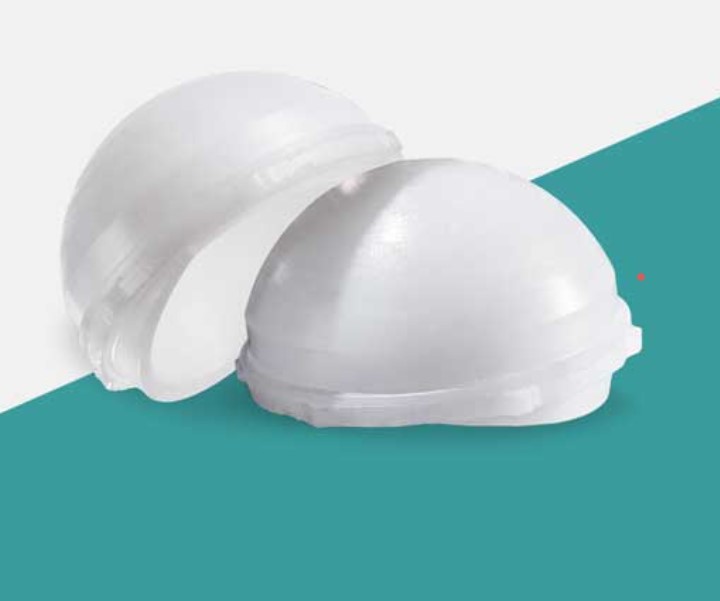 | Joint Replacement Acetabular Cup Liner Manufacturer An Acetabular Cup Liner Manufacturer specializes in producing liners that fit inside the acetabular cup during total hip replacement surgeries. View product → |
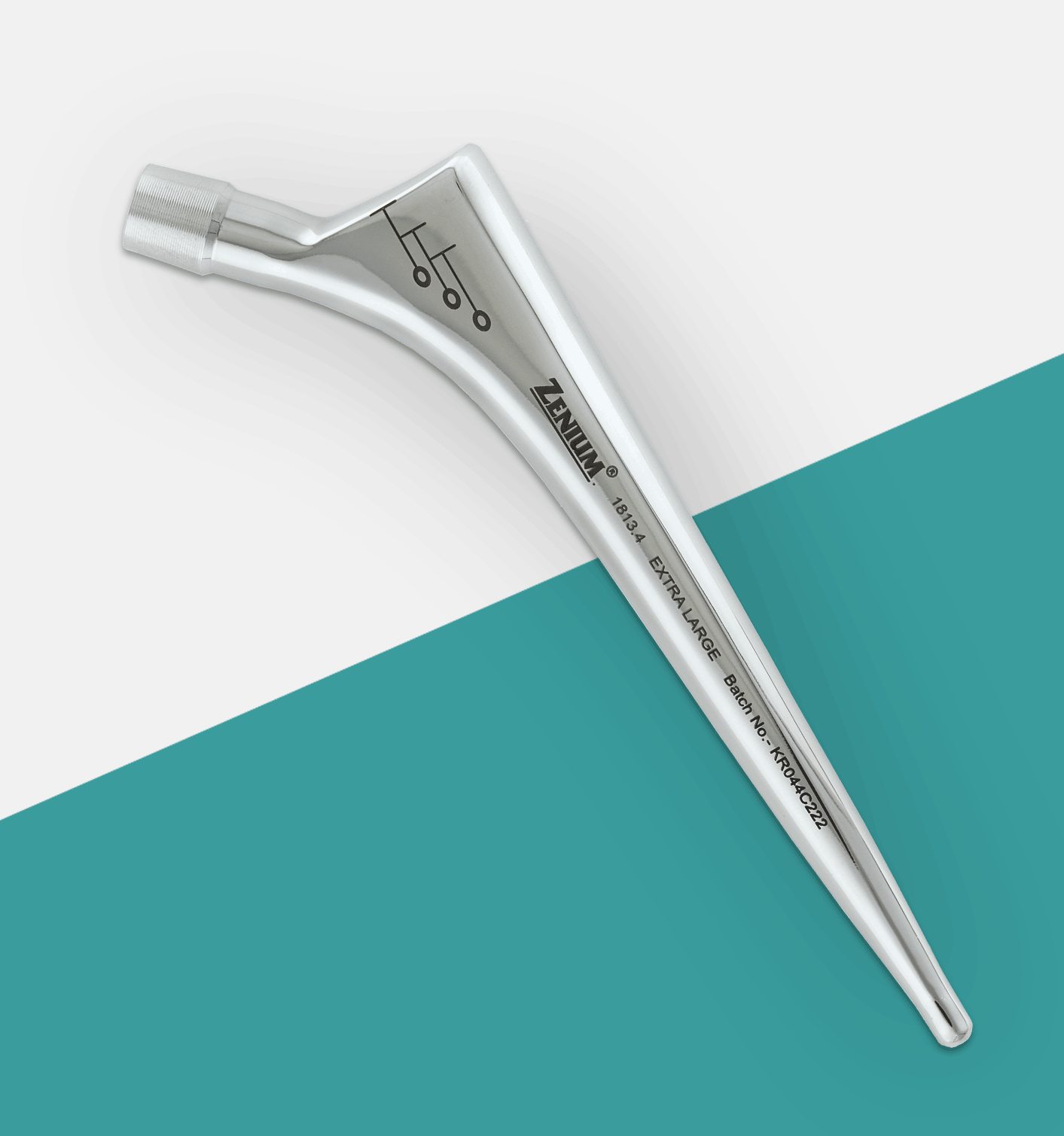 | Joint Replacement Bipolar Modular Stem (Cemented) Manufacturer The Bipolar Modular Stem (Cemented) is an orthopedic implant used in hip replacement surgeries, especially for elderly patients with fractured or... View product → |