A modular bipolar cup head can fine-tune the upper end of a hip replacement, but it cannot compensate for an uncemented stem that lacks stable press-fit fixation. By the end, you will know how the stem, taper, head and cup dimensions work together, when this pairing is unsuitable, and what to verify before selecting components.
Key takeaways
- Confirm taper, neck length and head diameter after stem seating.
- Match the stem and bipolar head using the same compatibility specification.
- Choose bipolar reconstruction when preserving the acetabulum suits the clinical plan.
- Reject components with uncertain dimensions, damaged tapers or incomplete traceability.
How press-fit fixation and the bipolar construct work together
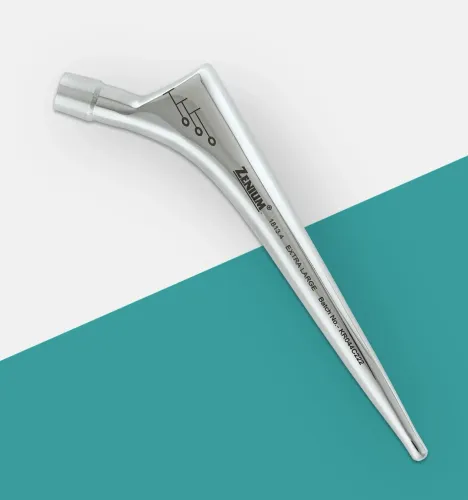
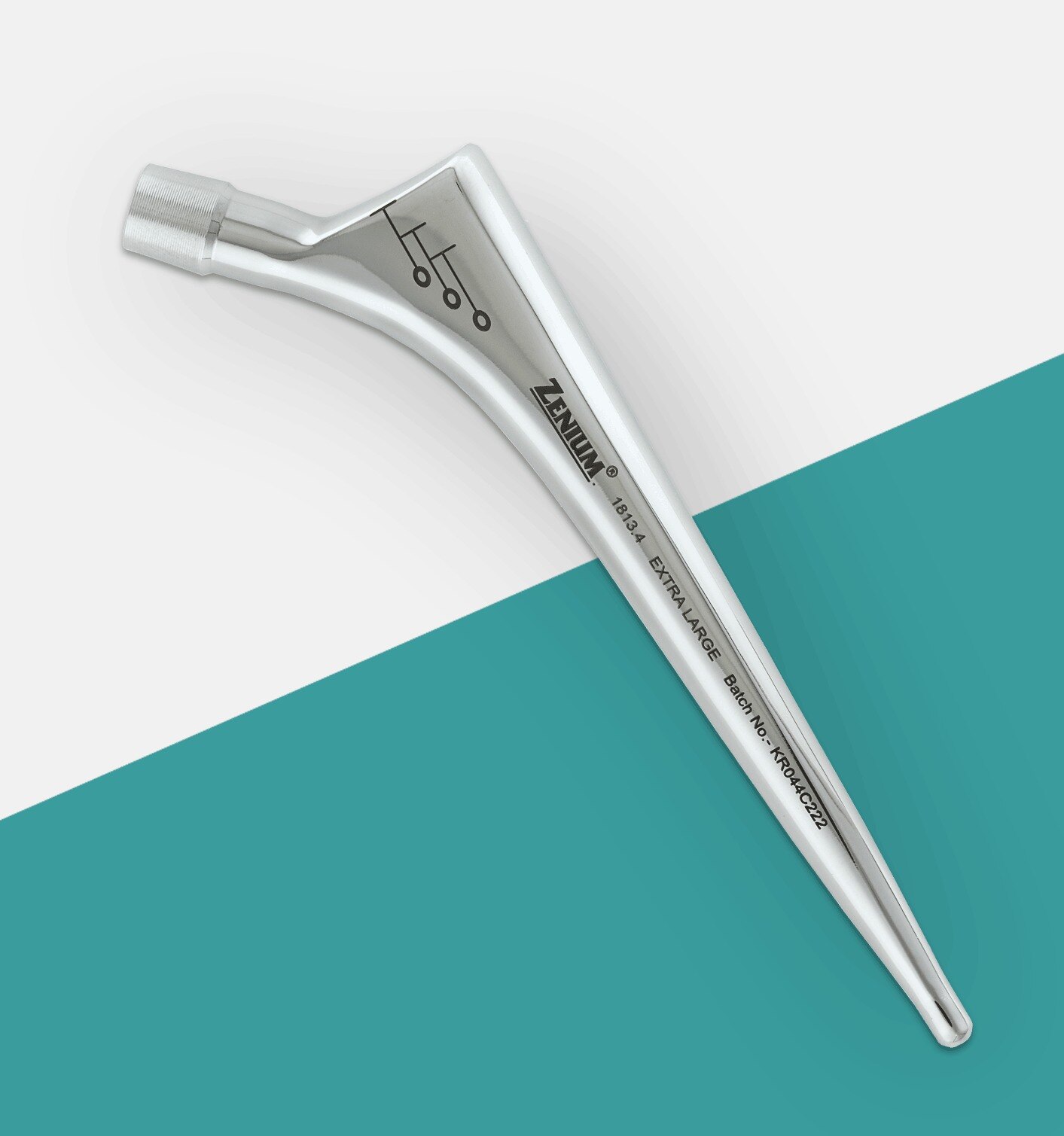
An uncemented femoral stem is driven into a prepared femoral canal until its geometry creates immediate axial and rotational stability. Its porous or hydroxyapatite-coated surface then supports bone ongrowth or ingrowth, converting initial press-fit into longer-term biological fixation.
The two components solve different mechanical problems:
| Interface | Function | What it does not solve |
|---|---|---|
| Stem–bone | Press-fit stability, followed by bone fixation | A bipolar head cannot rescue an undersized, unstable or poorly seated stem |
| Stem taper–head | Locks the modular head to the femoral neck taper | It requires the approved taper geometry and locking method |
| Head–acetabulum | Provides the outer bearing against native bone | It does not replace a diseased acetabular surface |
Inside the bipolar cup, the femoral head moves against a polyethylene liner; outside, the cup moves against the patient’s functioning acetabulum. This two-bearing arrangement can increase effective head diameter and shift some motion away from acetabular cartilage, but it does not remove acetabular loading, cartilage wear or erosion risk.
Bipolar hemiarthroplasty is therefore not total hip arthroplasty. The bipolar cup is not an acetabular replacement cup, so substantial cartilage loss, symptomatic osteoarthritis, inflammatory arthritis or protrusio may require another reconstruction.
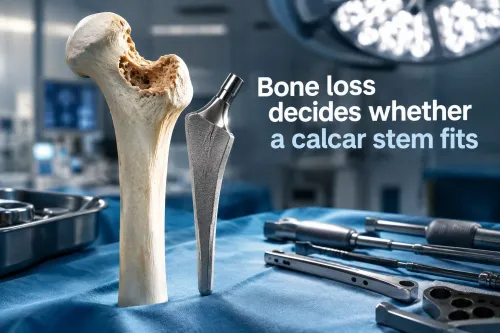
The uncemented stem component benefits include avoiding cement implantation and providing biological fixation when bone quality and femoral anatomy support reliable press-fit fixation. If the canal cannot hold the stem securely, those benefits disappear; cup selection cannot compensate for inadequate stem fixation.
Which dimensions must match after the stem is seated
The head and stem function as one construct only when every interface matches the approved stem family: taper geometry, taper dimensions, femoral head diameter, neck-length range, offset options and locking method. A label such as 12/14 identifies a nominal taper size, not its angle, length, tolerances, metallurgy or manufacturer-specific locking design.
Stem size and seating depth come first. After the uncemented stem achieves axial and rotational stability at its intended level, the surgeon selects the modular head dimensions that restore leg length, abductor tension, gait and stability.
| Dimension | What to match or assess | What can go wrong |
|---|---|---|
| Taper and lock | Exact geometry, dimensions and approved locking method | Incomplete seating, disengagement, fretting or corrosion |
| Neck length and offset | Options permitted by that stem family | Excess raises joint reaction forces and soft-tissue tension; too little causes laxity, leg-length discrepancy and instability |
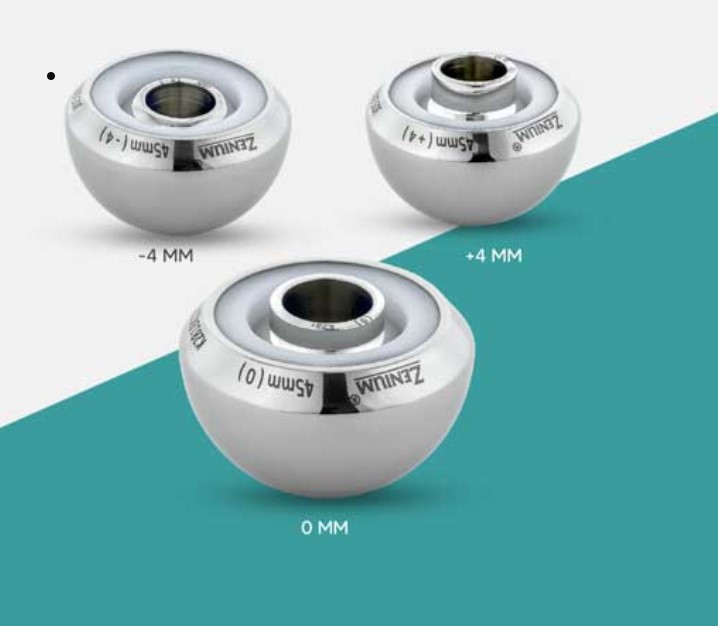
| Bipolar cup diameter | Template against the patient’s acetabulum | Stock-driven oversizing can increase cartilage loading, impingement or erosion |
A larger outer diameter can improve jump distance and the head-to-neck ratio, but it is not a universal stability solution. Choose it from acetabular anatomy, not inventory.
This is the practical modular bipolar cup head benefits with uncemented stem in Mumbai: intraoperative adjustment without assuming universal compatibility. Mixing nominally similar components can turn a useful adjustment into a failed taper construct.
When this pairing is preferable to other hip reconstruction options
Choose this pairing when the native acetabulum remains functional, the femur can hold a reliable press-fit, and intraoperative adjustment matters. For readers assessing modular bipolar cup head benefits with uncemented stem in mumbai, the key advantage is not the location or label but the ability to match the reconstruction to the patient.
| Option | Main advantage | When it is preferable |
|---|---|---|
| Modular bipolar head with uncemented stem | Adjusts cup diameter, head size, neck length and, where permitted, offset; avoids cement and relies on bone ingrowth | Adequate bone stock, suitable femoral anatomy and a functioning acetabulum |
| Fixed bipolar prosthesis | Fewer adjustment options, but a simpler construct | When the available fixed dimensions provide acceptable length, tension and stability |
| Bipolar head with cemented stem | Immediate cement fixation | Many displaced intracapsular fractures in older patients with osteoporotic bone |
| Total hip arthroplasty | Replaces both femoral and acetabular surfaces | Symptomatic osteoarthritis, inflammatory arthritis, protrusio or substantial cartilage loss |
Age alone does not decide fixation. Assess bone quality, fracture pattern, activity level, comorbidities, femoral anatomy and surgeon experience; fragile bone raises concern for intraoperative fracture and early stem subsidence with press-fit fixation.
A bipolar head suits a functioning native acetabulum, not a diseased one. Its outer bearing still loads acetabular cartilage, so total hip arthroplasty becomes more appropriate when cartilage loss or acetabular disease is substantial.
When an uncemented stem or bipolar head is the wrong choice
Component selection cannot rescue an uncemented stem when the femur cannot provide reliable press-fit fixation, or when a bipolar head is asked to solve instability it did not cause.
- Avoid an uncemented stem when bone quality cannot support press-fit, the fracture is uncontained, axial or rotational stability is unobtainable, or stem geometry does not suit the patient’s canal.
- Treat fragile bone as an early-risk setting: intraoperative femoral fracture, postoperative thigh pain and subsidence are recognized concerns.
Small early settling may be acceptable for a specific stem design. Serial radiographs distinguish settling from failure.
| Finding | Interpretation | Concern |
|---|---|---|
| Limited, design-expected early settling | Stem stabilizes afterward | May be acceptable |
| Progressive migration | Continued loss of height or fixation | Possible failed osseointegration |
| Varus change or widening lucency | Stem is losing support | Mechanical failure concern |
A bipolar label does not guarantee two independently moving bearings throughout follow-up. Friction, liner deformation, soft-tissue tension or fibrous fixation can reduce inner-bearing motion, leaving the construct to behave like a unipolar head during some activities.
Modularity adds a femoral-head taper junction vulnerable to fretting and mechanically assisted crevice corrosion. Blood, tissue or fluid contamination, incomplete seating, incompatible geometry and excessive assembly force increase avoidable risk; keep the taper clean and dry, then fully seat it using the approved surgical technique.
What to verify before buying a compatible modular system
Before approving a purchase, require evidence that the cup, liner, femoral head and stem form one validated system—not merely components with similar measurements.
Ask any modular bipolar cup head supplier in Mumbai or bipolar cup head manufacturer in Mumbai for:
- An exact compatibility matrix naming the approved stem family, taper geometry and dimensions, locking method, head diameter and neck-length options.
- The instructions for use and surgical technique, including taper cleaning, drying and full seating.
- Material, polyethylene-liner and bearing details; sterilization method; shelf life; and lot or batch traceability.
- Biocompatibility evidence and documented quality-system and regulatory status.
| System choice | Evidence to verify | Risk if absent |
|---|---|---|
| Approved matched system | The matrix lists the exact cup, liner, head and stem combination | Controlled seating, corrosion and traceability |
| Nominally similar components | Only a label such as 12/14 or a matching diameter | Taper mismatch, disengagement or mechanically assisted crevice corrosion |
| Mixed manufacturer components | Written approval for the complete combination | No validated interface or defensible clinical traceability |
Do not select cup diameter from stock availability. Confirm that it matches the patient’s acetabulum and that the chosen head, neck length and offset are available for the seated stem.
Komal Health Care Pvt Ltd can be included in that sourcing conversation as a Mumbai-based orthopedic implant and surgical-product supplier, but its location does not prove compatibility or clinical performance. A clean, dry, fully seated taper remains essential.
Related products
 | Joint Replacement Modular Bipolar Cup (With Head) Manufacturer The Modular Bipolar Cup (With Head) is an advanced hip implant system used in hemiarthroplasty procedures, particularly for treating femoral neck... View product → |
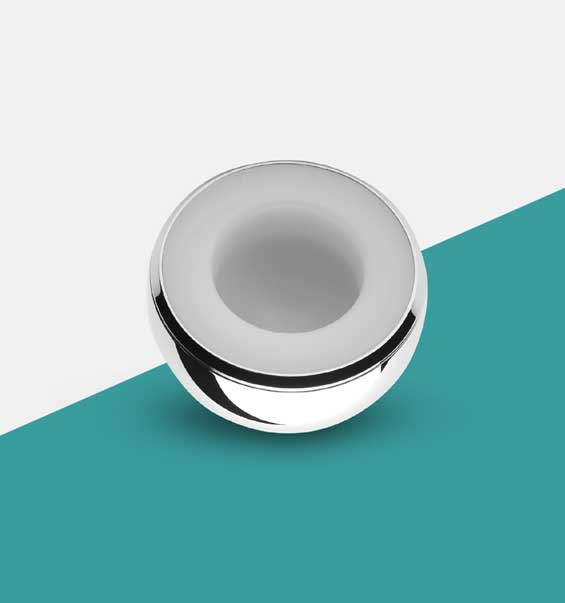 | Joint Replacement Modular Bipolar Cup Manufacturer A Modular Bipolar Cup Manufacturer specializes in producing advanced orthopedic components used in hip replacement surgeries. View product → |
Frequently asked questions
How do press-fit fixation and a bipolar construct work together?
The uncemented stem gains initial axial and rotational stability from press-fit, then supports bone ongrowth or ingrowth. The bipolar head provides a mobile bearing construct while the stem remains fixed in the femoral canal.
Which dimensions must match after the stem is seated?
Verify the stem taper, taper size, neck length, head diameter, offset and bipolar shell dimensions. Use the manufacturer's compatibility chart rather than relying on visual fit.
When is a modular bipolar head with an uncemented stem preferable?
This pairing can suit selected hip reconstructions where a surgeon wants biological stem fixation and a bipolar bearing while preserving the native acetabulum.
When is an uncemented stem or bipolar head the wrong choice?
Avoid the pairing when the femoral canal cannot provide reliable press-fit, bone quality is unsuitable for biological fixation, the acetabulum requires reconstruction, or component compatibility cannot be verified.
What should you verify before buying a compatible modular system?
Check the taper specification, dimensions, material, sterilization status, lot and batch traceability, shelf life, instructions for use and documented compatibility between the stem and bipolar head.
Related products
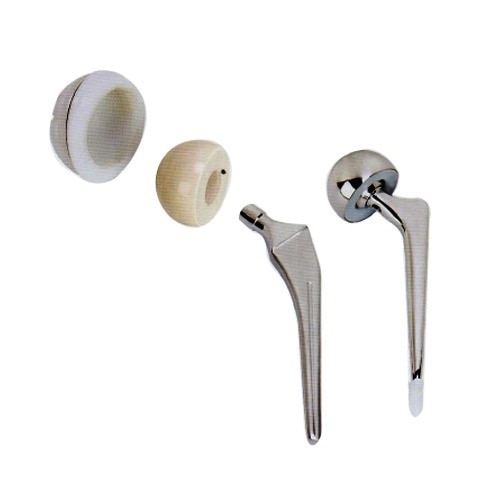 | Bipolar Hip Prosthesis ₹3500 We are manufacturer of Bipolar Prosthesis . Fix Bipolar and Modular Bipolar. Cup Size : 37 mm to 55 mm with 2 mm variation Material : S.S.316 L/LVM View product → |
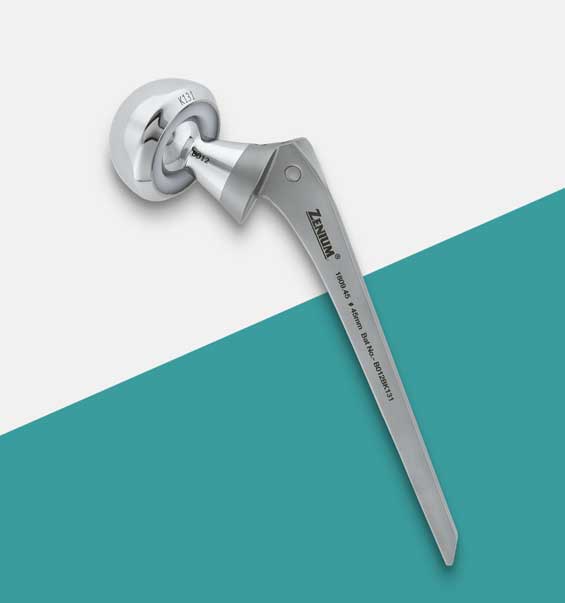 | Joint Replacement Bipolar Prosthesis (Non Fenestrated) Manufacturer The Bipolar Prosthesis (Non-Fenestrated) is a type of hip implant commonly used in hemiarthroplasty procedures, especially for treating femoral neck... View product → |