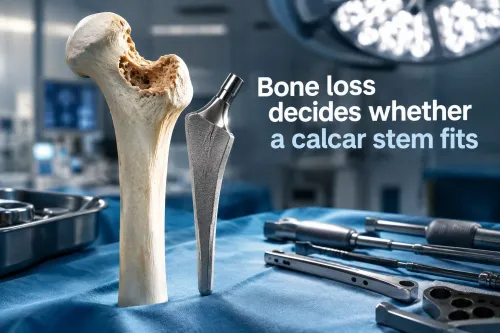
The stem must grip the prepared femoral canal before bone can grow onto or into its surface, while the bipolar cup must move correctly around the modular head and against the patient’s native acetabulum. By the end, you will be able to follow the implantation sequence, distinguish hemiarthroplasty from total hip replacement, and check whether a proposed component combination is genuinely compatible.
Key takeaways
- Press-fit stability comes before bone ingrowth secures an uncemented stem.
- Confirm stem, head, cup, taper and instrument compatibility before implantation.
- Bipolar motion reduces some contact stresses but does not prevent every dislocation.
- Match component sizes to canal preparation, anatomy and the planned surgical technique.
How press-fit fixation and bipolar motion work together
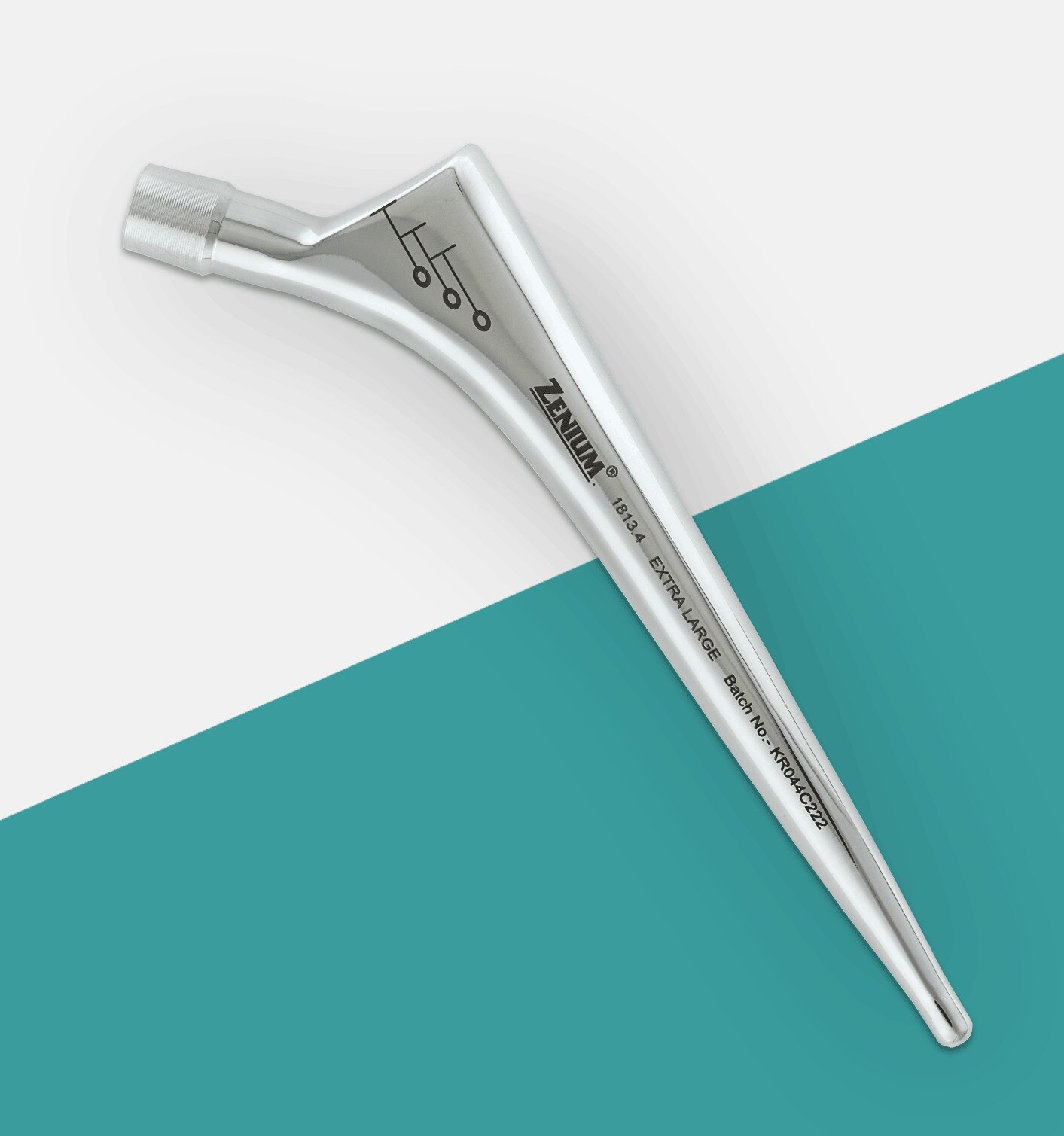
An uncemented stem supports the modular bipolar cup by anchoring in the femoral canal rather than relying on bone cement. Its initial stability comes from a tight press fit against prepared cancellous and cortical bone. Later, bone grows onto or into the stem’s porous or roughened surface, converting early mechanical stability into biological fixation.
In uncemented stem and modular bipolar cup use, the load path and movement work through separate interfaces:
- The stem grips the femur and carries forces through the implant’s neck and modular head.
- The head locks onto the stem taper; the connection must be clean and fully seated so impaction does not leave a gap or weaken the taper.
- The bipolar shell surrounds the head. Its inner bearing moves around the head, while its outer metal surface articulates with the patient’s native acetabulum.
The bipolar cup component function is therefore motion at the femoral side, not replacement of the acetabulum. It is a hemiarthroplasty shell, not a total-hip acetabular component requiring acetabular reaming and fixation.
The shell must be fully seated over the compatible head, and its dimensions, locking features and bearing materials must match the validated stem-and-cup system.
A cemented stem cannot be presented as an uncemented stem: it obtains fixation from polymethylmethacrylate, not bone ingrowth. If press-fit stability is inadequate, later ingrowth cannot reliably rescue a loose implant. Pairing similar-looking parts from different systems also risks an incorrect taper, head bore or shell-bearing fit.
What happens from femoral canal preparation to final stability checks
Canal preparation determines whether the uncemented stem gains immediate press-fit stability. The surgeon opens and broaches the femoral canal along the planned axis, removing cancellous bone until the broach fills the canal without fracture or excessive motion. Later, bone ingrowth can secure the stem; it does not correct a loose implant placed during surgery.
- Insert sequential broaches and assess axial and rotational stability. Select a stem that matches the final stable broach, rather than forcing a larger implant into an inadequately prepared canal.
- Place trial neck and head components, then reduce the hip with a trial modular cup. Check leg length, offset, soft-tissue tension, range of motion and the risk of impingement or dislocation.
- Remove the trial parts and inspect the stem taper. Keep the taper completely free of blood, tissue and bone debris, then dry it before attaching the compatible modular head.
- Impact the modular head onto the stem taper with the specified instrument and force. Mount the bipolar shell over the head until its locking feature is fully engaged and the shell rotates freely around the inner bearing.
- Reduce the assembled construct into the native acetabulum. The shell’s outer surface articulates with that acetabulum; it is not an acetabular replacement requiring reaming or fixation.
Final checks include complete seating, secure head–taper engagement, smooth movement at both interfaces, stable fixation through rotation and axial loading, acceptable leg length, and no dislocation during the planned range of motion. A trial that passes but a final component that is not fully seated still fails the check.
How surgeons choose the stem, head and cup for the patient
An intact, usable native acetabulum is the starting condition for uncemented stem and modular bipolar cup use. The surgeon confirms this with radiographs and clinical examination: severe acetabular erosion, infection, marked bone loss or a need to replace the acetabular surface points toward a total hip construct instead.
Preoperative templating measures the femoral canal width and shape, available stem length, femoral offset, leg-length difference and the native femoral head position. The surgeon also estimates the bipolar shell’s outer diameter from the acetabulum, then confirms the fit with trial components.
| Finding or measurement | Component decision | When this construct is unsuitable |
|---|---|---|
| Femoral canal width, curvature and bone quality | Select a stem that achieves stable cortical press-fit without splitting the femur | A canal too wide, deformed or fragile for reliable fixation |
| Leg length, offset and soft-tissue tension | Select modular neck length, head length and, where offered, offset | Stability cannot be achieved without excessive lengthening or impingement |
| Femoral head and acetabular dimensions | Match the head, inner bearing and outer bipolar shell within the validated size range | Similar-looking parts lack confirmed taper, bore or shell compatibility |
| Acetabular cartilage, depth and rim integrity | Size the shell to articulate with the native acetabulum | Advanced arthritis, destructive erosion or inadequate coverage |
During trial reduction, the surgeon checks leg length, range of motion, impingement and dislocation resistance. Final selection follows only after the stem is stable and the head, taper and shell belong to the same validated system; modularity does not make components interchangeable.
How to verify component compatibility before procurement or implantation
Similar-looking parts do not prove compatibility. Evidence of a validated system is a manufacturer’s model-specific compatibility matrix, instructions for use, and technical drawings showing the stem taper, modular head bore, bipolar shell dimensions, locking features and permitted materials.
1. Confirm the intended construct. The bipolar cup is a femoral-side hemiarthroplasty shell: its outer surface meets the native acetabulum, while its inner bearing accepts the modular head. Do not substitute a total-hip acetabular component, which requires acetabular preparation and fixation.
2. Match the exact models, not nominal diameters. The stem taper and head bore must correspond, and the head must be approved for that stem. The shell, inner bearing, head diameter and retention mechanism must appear together in the manufacturer’s validated system documentation.
3. Check Indian procurement records. Request the device licence or applicable authorization under the Medical Devices Rules, 2017, manufacturer or importer details, sterile-pack label, expiry date, storage conditions, material specification and instructions for use.
4. Require traceability before release. Record catalogue numbers, lot or batch numbers, serial numbers where used, implant dimensions and certificates supplied with the sterile packs. A hip replacement component guide in Mumbai is a starting point, not proof of interchangeability.
5. Reject a mixed set when the supplier cannot document compatibility. Komal Health Care Pvt Ltd’s published cemented stem information, for example, does not establish that a separate uncemented stem is supplied or validated with a particular modular cup.
During implantation, keep the taper dry and free of blood, tissue and debris before seating and impacting the head.
Related products
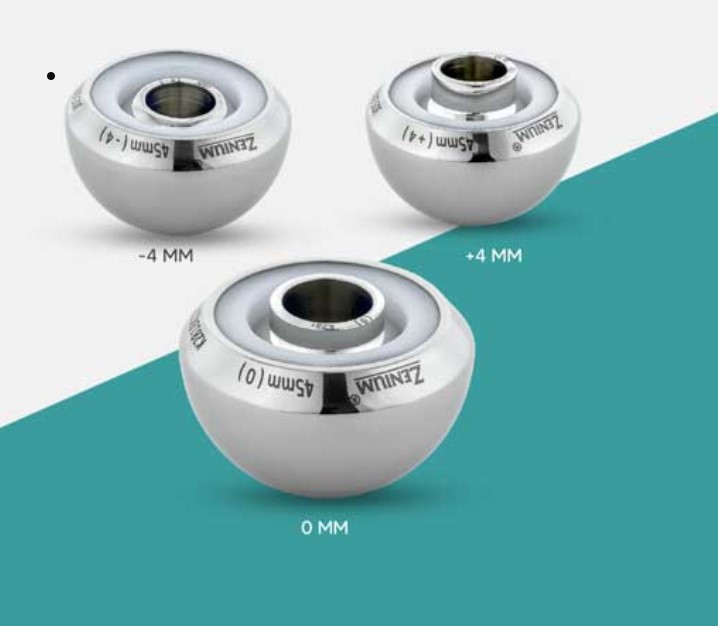 | Joint Replacement Modular Bipolar Cup (With Head) Manufacturer The Modular Bipolar Cup (With Head) is an advanced hip implant system used in hemiarthroplasty procedures, particularly for treating femoral neck... View product → |
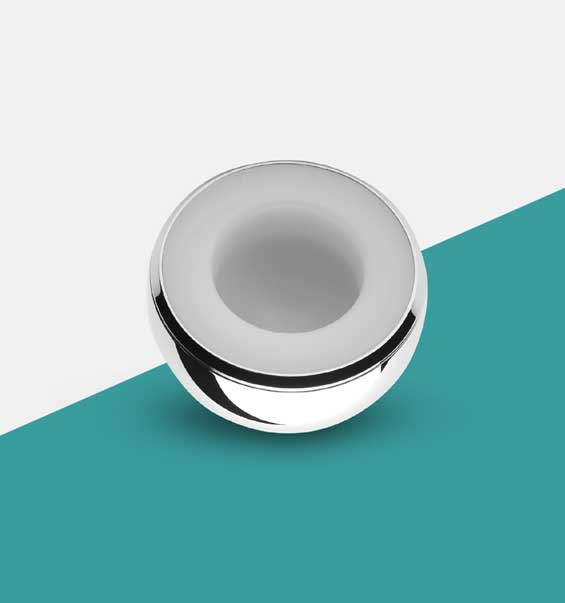 | Joint Replacement Modular Bipolar Cup Manufacturer A Modular Bipolar Cup Manufacturer specializes in producing advanced orthopedic components used in hip replacement surgeries. View product → |
What bipolarity does and does not prevent over time
Correct implantation does not make the construct immune to failure. Understanding bipolar cup component function matters: the inner bearing moves around the modular femoral head, while the outer shell moves against the patient’s native acetabulum. Inner movement varies between patients, so the shell may still transmit repeated load to cartilage over time.
Even with a stable press-fit stem and fully seated shell, mechanical risks remain:
- Stem subsidence or loosening can occur when bone ingrowth is inadequate or loading exceeds fixation.
- Instability can cause subluxation or dislocation when soft-tissue tension, component position or shell size is unsuitable.
- Intraprosthetic dislocation can occur when the femoral head escapes from the shell’s inner bearing.
- A periprosthetic fracture can follow trauma or stress around the stem.
Acetabular damage is a separate concern because bipolar hemiarthroplasty retains the native socket. Repeated shell contact can wear cartilage and drive medial migration, progressing to protrusio. Risk increases with an undersized shell, abnormal acetabular anatomy or prolonged high loading.
A larger shell is not automatically safer: oversizing can overstuff the joint, restrict movement or damage the acetabular rim. New groin pain or declining function warrants clinical assessment and radiographs to check migration, erosion and stem position.
Frequently asked questions
How do press-fit fixation and bipolar motion work together?
The uncemented stem gains initial stability from a tight fit in the prepared femoral canal, while the modular bipolar cup provides movement through an internal articulation and motion against the acetabulum.
What happens from femoral canal preparation to final stability checks?
The surgeon prepares and broaches the canal, selects trial components, checks leg length and stability through movement, then confirms the final stem and cup are seated correctly.
How do surgeons choose the stem, head and cup for the patient?
Selection depends on femoral anatomy, canal shape, bone quality, leg-length goals, offset, head and cup dimensions, and the compatibility limits of the implant system.
How can you verify component compatibility before procurement or implantation?
Check the manufacturer’s catalogue and instructions for use, matching taper, stem system, head size, cup size range, laterality, instruments, lot details and sterilization status.
What does bipolarity not prevent over time?
Bipolarity does not eliminate dislocation, wear, loosening, implant incompatibility, fracture, infection or changes in the surrounding bone and soft tissues.
Related products
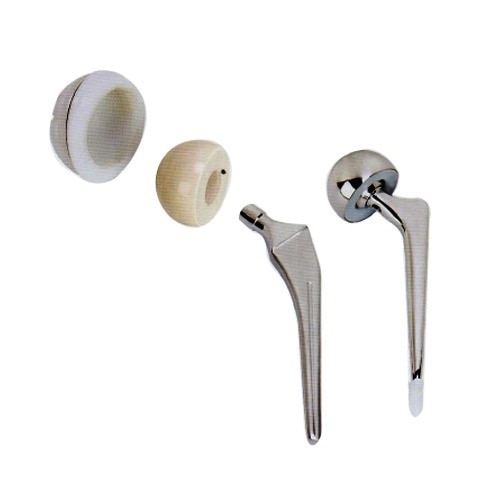 | Bipolar Hip Prosthesis ₹3500 We are manufacturer of Bipolar Prosthesis . Fix Bipolar and Modular Bipolar. Cup Size : 37 mm to 55 mm with 2 mm variation Material : S.S.316 L/LVM View product → |
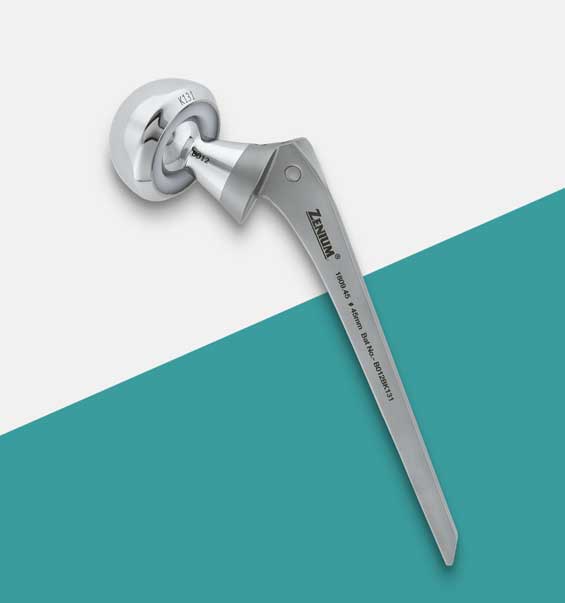 | Joint Replacement Bipolar Prosthesis (Non Fenestrated) Manufacturer The Bipolar Prosthesis (Non-Fenestrated) is a type of hip implant commonly used in hemiarthroplasty procedures, especially for treating femoral neck... View product → |