An uncemented long-stem operation does not require a special bandage because of stem fixation; it requires a dressing system matched to incision length, drainage, edema, skin condition and the hospital’s application protocol. By the end, you will be able to assign the roll to the correct dressing layer, compare materials and formats, specify procurement details, and reject options that create clinical or supply-chain risk.
Key takeaways
- Use the roll for retention, cushioning and exudate management—not implant fixation.
- Match material and format to the dressing layer and expected wound output.
- Specify absorbency, width, length and application requirements before ordering.
- Verify packaging, batch details and clinical-use documentation before purchase.
What the operation changes about postoperative dressing needs
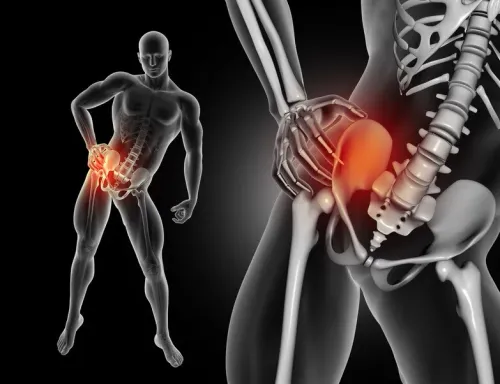
An uncemented long-stem hip, femoral or tibial procedure uses bone preparation and a press-fit stem, followed by biological fixation as bone grows onto the implant. From a dressing perspective, the soft bandage roll supports retention, cushioning and exudate management; it does not fix the implant or improve osseointegration.
A long revision or extensile incision needs more secondary dressing capacity than a routine incision because it creates greater wound length, expected drainage and edema. Drains, bed transfers and physiotherapy also increase the chance that a small dressing will shift, leak or lose padding.
The dressing system can place the roll in one of four positions:
- A sterile incision-contact or primary dressing, only when its labeling specifically permits wound contact.
- An absorbent secondary layer over the primary dressing.
- A cushioning or padding layer that protects the incision during transfers and rehabilitation.
- An outer retention layer that holds the underlying dressing in position.
The surgeon’s protocol determines that configuration. A soft surgical bandage roll is usually a secondary component, not the wound-contact dressing. Confirm the protocol before selecting uncemented long stem procedure supplies, and do not confuse roll absorbency with a primary dressing’s capacity for active bleeding or high-volume drainage.
Choose a soft bandage roll for uncemented long stem procedures to manage the dressing, not stem stability: press-fit design, bone preparation and later biological fixation determine that stability.
Which roll material and format fits the dressing layer
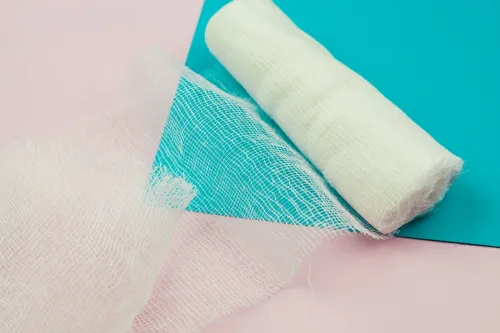
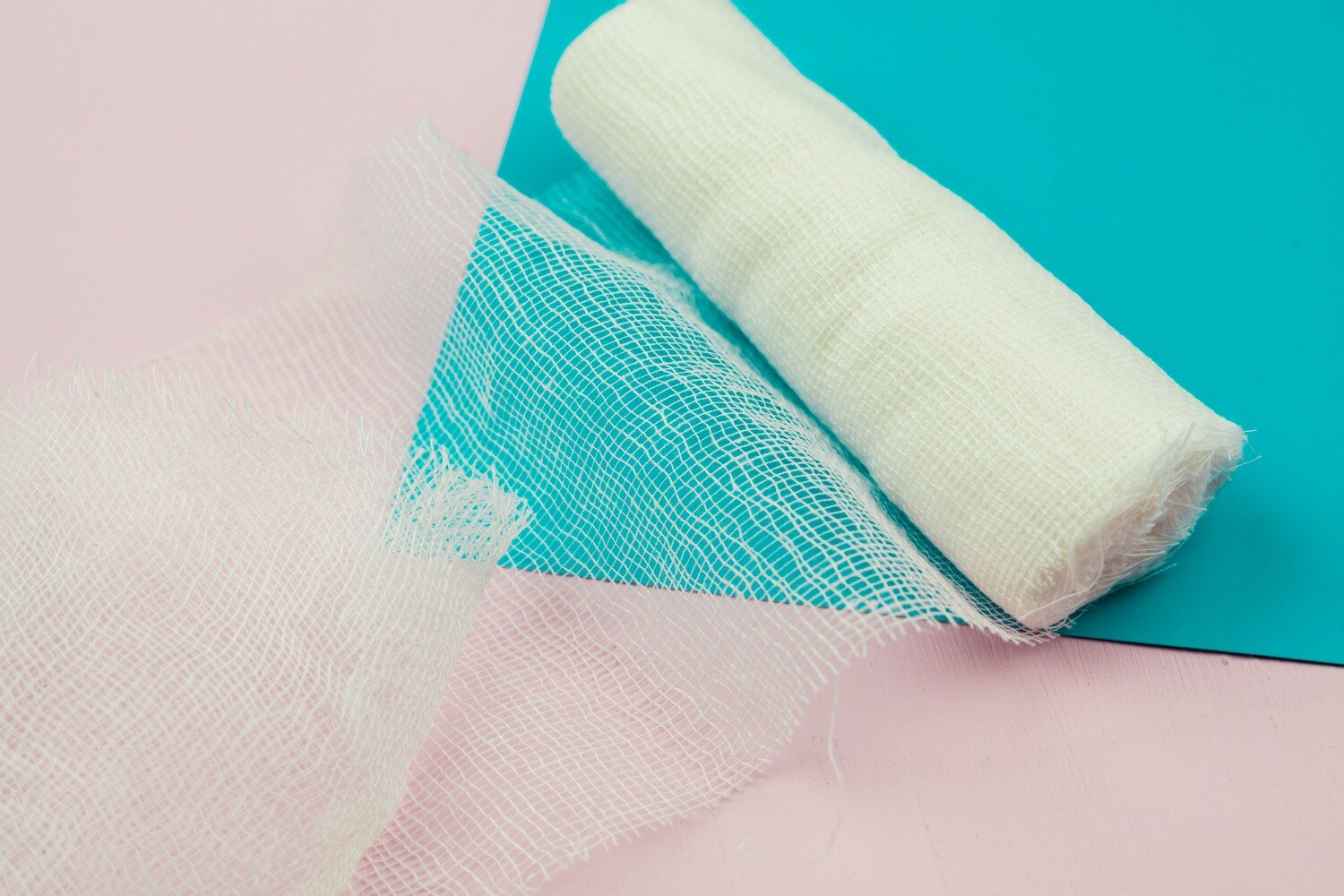
Choose the dressing layer before choosing the roll: cotton-based soft bandage roll options cushion well, while non-woven rolls usually deliver more even coverage with fewer loose fibres.
| Option | Absorbency, cushioning and uniformity | Fit, stretch and removal |
|---|---|---|
| Gamjee or cotton roll | Absorbent and familiar; cushions well, but can retain moisture and vary in thickness. Fibre shedding depends on construction. | Conforms around hip, thigh, knee and ankle; usually non-stretch, with comfortable removal when secured separately. |
| Viscose or rayon non-woven cast padding | Consistent thickness and coverage, with fewer loose fibres; cushioning and absorbency depend on weight. | Moulds smoothly; little stretch; needs a retention layer and usually removes cleanly. |
| Cotton crepe bandage | Moderate absorbency and cushioning; thickness varies less than loose cotton but more than engineered non-woven material. | Conforms well and stretches; tension can create pressure, and removal is comfortable only when not applied tightly. |
| Gauze roll | Absorbs drainage but offers limited cushioning; loose weaves shed more fibres and can vary in thickness. | Conforms closely, has little stretch, and secures easily; low-adherent gauze can still disturb an incision when dried exudate bonds to it. |
| Elastic adhesive or cohesive roll | Provides little primary absorbency or padding. | Stretches and secures firmly, creating circumferential pressure; use only when compression is prescribed, and expect less comfortable removal from fragile skin. |
A soft surgical bandage roll is usually padding or retention, not direct wound contact. Use the specified sterile contact layer for the incision, a transparent window when inspection is required, haemorrhage-control dressing for substantial bleeding, firm immobilisation for movement control, and a prescribed compression system when compression is clinically required.
How to specify absorbency, size and application safely
Match absorbency to the incision’s expected drainage, not to the operation’s name. An extensile long-stem wound may need more secondary capacity than a routine incision, but a soft surgical bandage roll cannot replace a primary dressing rated for active bleeding or high-volume drainage.
Specify the roll before ordering:
1. Record width, roll length and tolerance, folded and unfolded thickness, material, stretch or non-stretch status, absorbency test or stated capacity, and expected rolls per procedure. Select the least bulky format that covers the dressing and provides the required cushioning or retention.
2. State whether the roll is sterile and whether its label permits wound contact. Treat unlabelled soft rolls as secondary layers, not primary dressings. Keep absorbency claims separate from the primary dressing’s haemorrhage or high-volume drainage capacity.
3. Confirm the drain path, dressing position, drapes and skin preparation before application. Keep adhesive off the incision unless the operating-team protocol permits contact; secure to intact skin or the approved outer layer.
4. Apply without tight circumferential wrapping. Crepe or rolled-bandage compression claims do not authorise compression after an uncemented long-stem procedure.
5. Check retention during limb movement, bed-to-chair transfer and physiotherapy. Recheck distal colour, warmth, sensation, movement, swelling and pain after application and after each limb-position change; escalate abnormalities promptly.
6. Record the dressing-change interval and inspect drainage, skin and drain function at each change. Never use the roll to conceal increasing drainage, swelling, pain or neurovascular change; follow the operating team’s protocol.
What hospitals should verify before placing a purchase order
Before placing a purchase order, convert the clinical need into a hospital bandage roll procurement specification for uncemented long stem procedure supplies.
- Require material composition, width and length tolerances, folded and unfolded thickness, dry and wet tensile strength, absorbency test method or acceptance limit, lint generation, edge fraying, odour, fibre shedding and removal behaviour.
- State stretch or non-stretch status, latex status and shelf life. Confirm whether each roll is sterile, individually packed or non-sterile.
- Specify a sterile wound-contact layer whenever the product touches the incision or enters a sterile dressing set; a non-sterile roll belongs only in an approved padding or outer-retention role.
- For sterile rolls, request the sterilisation method and records covering ISO 11135 for ethylene oxide, ISO 11137 for radiation, ISO 11607 for terminally sterilised-device packaging and ISO 11737 for microbiological methods.
Use supplier samples before approval.
| Sample | Compare | Procurement decision |
|---|---|---|
| One roll from each proposed batch | Softness, thickness uniformity, lint and fibre shedding | Reject inconsistent construction |
| Packed case and individual roll | Storage space, expiry waste and packaging consistency | Set reorder units and stock levels |
| Procedure trial | Rolls consumed, securement and removal behaviour | Define quantity per operation |
Before opening, check intact packaging, lot or batch identification, expiry and cleanliness. Record size, lot, expiry and quantity used. Evaluate Komal Health Care Pvt Ltd against these same documented criteria, not a short catalogue description; require packaging and performance consistency across batches.
Related products
 | Surgical Disposable ₹27 These Gamjee Roll are highly absorbent cotton are available in low adherent gauze cover and is applied over dressing to provide low adherent wound... View product → |
 | Dressings ₹36 We are manufacture of Elastic Adhesive Bandage product .Our superior range of medical bandage, gauze bandages AS Elastic Adhesive Bandages is known... View product → |
How to control cost, waste and dressing-related risk after surgery
A roll that saves money per metre can increase cost per procedure through extra layers, early changes, skin injury or discarded unused material. A soft bandage roll for uncemented long stem procedures must be judged against drainage, incision length, rehabilitation movement and skin condition.
| Trade-off | Suitable choice | Failure to avoid |
|---|---|---|
| Absorbency and bulk | Light secondary padding for low drainage; higher-capacity secondary dressing for an extensile wound | An overly absorbent, bulky roll restricts movement around a low-drainage incision; a thin roll fails to cushion a long wound |
| Securement | A conformable roll that stays in place during transfers and physiotherapy | A loose roll loses the dressing; excessive grip damages fragile skin or causes painful removal |
| Softness and removal | Smooth, low-lint material with controlled removal | Rough fibres, adhesive contact or dried exudate can traumatise the incision |
| Cost and waste | Compare cost per completed procedure, not price per roll | Long nominal lengths, unnecessary overlap and unused opened rolls hide waste |
Set the dressing-change frequency in the surgeon’s protocol, name the infection-control method for each change, and specify the hospital’s clinical-waste disposal route. Keep postoperative dressing supplies separate from implants and instruments in the procedure pack, with distinct counts and traceability.
Do not let the roll conceal worsening drainage, expanding swelling, fever, increasing pain or neurovascular change. Inspect the wound and follow the hospital’s escalation pathway.
For hospital bandage roll procurement, choose the least bulky roll that provides the required padding or retention. Specify a separate sterile primary dressing when wound contact demands it, and record consumption so future orders reflect actual use rather than a generic orthopaedic-bandage description.
Frequently asked questions
What does a soft bandage roll do after an uncemented long-stem procedure?
It helps retain the dressing, cushion the operative area and manage exudate. It does not fix the implant or improve osseointegration.
How should hospitals choose among soft bandage roll options?
Select the material and format according to the dressing layer, required retention, cushioning needs and expected exudate.
What specifications should a hospital include in a bandage roll purchase order?
State the required absorbency, roll size, application purpose, packaging format and any handling or clinical-use requirements.
What should procurement teams verify before ordering a hospital bandage roll?
Check the product description, dimensions, packaging, batch identification, documentation and suitability for the intended postoperative use.