Choosing a hip implant is not a matter of selecting the largest shell or accepting a catalogue material name at face value. By comparing fixation, bone quality, cup geometry, bearing options, compatibility and Indian procurement documentation, you can build a shortlist that a surgeon can assess safely for the intended patient and procedure.
Key takeaways
- Confirm total hip replacement or hemiarthroplasty before selecting the cup.
- Match cemented or uncemented fixation to bone quality and revision plans.
- Verify shell size, orientation, liner compatibility and stability before implantation.
- Request traceability, sterilisation and regulatory documents from Mumbai suppliers.
Start with the operation: total hip replacement or hemiarthroplasty
Choose total hip replacement when the native acetabulum is diseased or the patient’s expected function makes replacing both sides of the joint worthwhile. Choose hemiarthroplasty when the acetabular cartilage remains acceptable and replacing only the femoral side offers adequate pain relief with less operative complexity.
| Operation | Acetabular component | Decision signal |
|---|---|---|
| Total hip replacement | Acetabular cup plus femoral component | Arthritis, cartilage loss, or high functional demand |
| Hemiarthroplasty | Femoral component articulating with the patient’s acetabulum | Preserved acetabular cartilage and limited need for high-demand hip function |
For a displaced femoral neck fracture, assess these factors before ordering hip implants:
- Acetabular cartilage and joint-space loss on anteroposterior pelvis and lateral radiographs
- Pre-existing osteoarthritis, inflammatory arthritis, protrusio, or acetabular deformity
- Mobility, independence, walking goals, and expected survival
- Cognitive impairment, neuromuscular disease, and the patient’s risk of dislocation
- Fracture pattern, bone quality, and the surgeon’s ability to obtain stable reconstruction
A hemiarthroplasty avoids an acetabular cup, shortening the procedure and eliminating cup fixation and liner complications. It can still cause acetabular erosion, groin pain, or later conversion to total hip replacement when the native socket cannot tolerate repeated loading.
Do not select total replacement solely because the patient is younger or the fracture is displaced. Select it when acetabular disease or anticipated activity makes a metal shell and bearing system clinically necessary; otherwise, a cup adds implant interfaces without solving the patient’s main problem.
Match fixation to bone quality and revision strategy
Bone quality and the likely revision problem should drive fixation, not shell diameter alone. A cemented THR cup suits selected patients with weak or deficient acetabular bone when the surgeon can create a sound cement mantle.
An uncemented shell needs host-bone contact and immediate press-fit stability; porous coating cannot compensate for segmental bone loss or an oversized shell that risks fracture.
| Option | Fixation and construction | When it applies |
|---|---|---|
| Cemented THR cup | Usually a monobloc polyethylene component fixed with bone cement; no intraoperative liner exchange | Consider when bone cannot reliably support press-fit fixation and acetabular preparation can produce a uniform cement mantle. Cementing technique, cavity preparation and mantle quality matter as much as outer diameter. |
| Uncemented press-fit shell | Porous or textured metal shell designed for biological fixation, with screws as supplementary fixation | Consider when adequate host bone permits stable hemispherical seating. Screws do not rescue an unstable shell and must avoid the joint and pelvic neurovascular structures. |
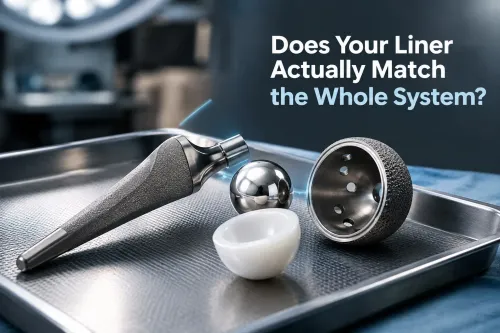
| Modular cup system | Metal shell, separate bearing liner and locking interface | Consider when liner choice, dual-mobility options, bone loss management or future revision flexibility matters. Confirm shell diameter, liner material, thickness, head size and revision compatibility as one system. |
Before ordering, request shell-size increments, matching reamers, trial components, drill guides, depth gauges, compatible screw lengths and revision liners. A liner from another manufacturer must not be assumed to lock safely. Intraoperative defects can force a different reconstruction than the radiograph predicted, so confirm the complete system—not merely the shell and screws.
Check size, orientation and stability before final implantation
Preoperative radiographs and templating estimate the acetabular cup diameter, hip centre, leg length and offset; CT adds detail when dysplasia, bone loss, protrusio or complex anatomy makes plain films unreliable. The surgeon then confirms those estimates after exposure, removing cartilage and reaming progressively until the prepared bed is hemispherical with sufficient host-bone contact.
1. Ream to the planned size without sacrificing supportive bone. An oversized press-fit can fracture the acetabulum, while a porous or textured shell cannot compensate for segmental bone loss or poor seating.
2. Insert the trial shell and assess contact, depth and initial stability. The surgeon checks that it does not toggle or rotate under manual pressure and that its orientation restores safe inclination and anteversion.
3. Trial the liner and femoral head through flexion, extension and rotation. Check leg length, offset, range of motion, impingement and dislocation tendency before committing to the final components.
4. Add screws only when supplementary fixation is needed. Their trajectory and length must avoid the joint and pelvic neurovascular structures; the set must include compatible drill guides, depth gauges and screw lengths.
5. Confirm the complete system before ordering. To select acetabular cup in Mumbai, request shell-size increments, reamers, trials, compatible liner materials and thicknesses, permitted head sizes, locking details, screw options and revision liners. A modular cup’s liner is not interchangeable with another manufacturer’s shell merely because the diameter appears similar.
Small shells need particular scrutiny because a large head can leave inadequate polyethylene thickness.
Compare liners, bearings, coatings and shell construction
Choose the bearing and shell as a matched system, not by material name alone. The right combination depends on bone quality, instability risk, patient activity, shell size, head size and the surgeon’s revision plan.
| Option | Main advantage | Limitation or selection check |
|---|---|---|
| Polyethylene liner | Highly cross-linked polyethylene generally reduces wear compared with conventional polyethylene; it works with ceramic or metal heads. | In a small shell, a large head can leave an excessively thin liner. Check minimum liner thickness and permitted head sizes. |
| Ceramic-on-polyethylene | A ceramic head can reduce polyethylene wear and avoids metal-ion release. | Confirm ceramic compatibility, taper requirements and the manufacturer’s fracture and stripe-wear data. |
| Metal-on-metal | Large bearing surfaces were designed to reduce wear. | Treat metal-ion release and adverse local tissue reactions as serious concerns; require a clear clinical rationale and surveillance plan. |
| Dual mobility | A mobile polyethylene insert inside the metal shell creates a large effective jump distance and can help address instability risk. | It adds interfaces and carries a specific risk of intraprosthetic dislocation; verify insert, shell and head compatibility. |
| Uncemented modular cup | A porous-coated shell can achieve biological fixation, while a separate liner permits intraoperative or revision changes. | Verify shell diameter, locking mechanism, liner thickness, head size and revision-liner availability as one system. Never assume another liner fits. |
Coatings such as porous titanium, tantalum or hydroxyapatite need evidence for fixation, fatigue strength and corrosion or fretting where applicable. Ask for ISO 7206 test evidence, but do not treat one passing test as proof of every clinical property.
A cemented monobloc polyethylene cup instead depends heavily on preparation and cement-mantle quality, not outer diameter alone.
Turn the shortlist into a Mumbai procurement checklist
A buyer trying to select acetabular cup in Mumbai should approve the exact catalogue number, shell diameter, liner and sterile configuration—not a product family or a supplier’s ISO 13485 certificate. ISO 13485 confirms a quality-management system; it does not prove Indian market authorization, cross-brand compatibility or clinical equivalence.
1. System file: Request the size chart and increments, reamers, trial shells, screw lengths, liner materials and thicknesses, compatible femoral heads, locking-interface drawings and revision liners. Confirm that the shell, liner and head are one validated system; never assume another manufacturer’s liner will lock safely.
2. Regulatory file: Check the applicable CDSCO licence or import documentation for that model, Indian label and instructions for use, manufacturer and importer details, sterilization method, sterile-barrier validation, expiry date, lot or serial traceability, and the written complaint and recall route. CE or FDA documents do not replace the Indian check.
3. Technical file: Ask for reports covering shell fatigue or strength, liner locking, deformation, wear, corrosion or fretting where relevant, plus packaging and sterilization validation. ISO 7206 evidence applies to specific hip-prosthesis tests, not every clinical claim.
4. Supply file: Put confirmed sizes, quantities, delivery dates, shelf life at delivery, replacement terms and instrument availability in the purchase order. Ask Komal Health Care Pvt Ltd, or any supplier, to identify which instruments and components arrive with the acetabular cup and which require separate ordering.
For a cemented THR cup, also verify cement compatibility, preparation instructions and the cup’s declared cement-mantle requirements. Its nominal outer diameter alone is not a procurement specification.
Related products
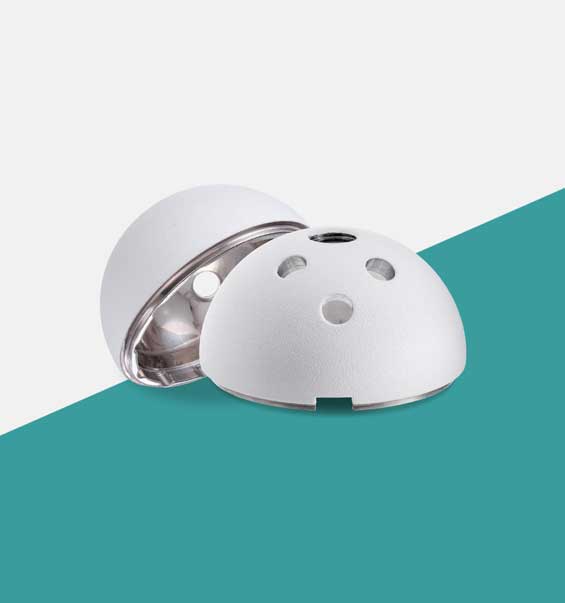 | Joint Replacement The Acetabular Cup is a key component in total hip replacement surgery, designed to fit into the hip socket (acetabulum). View product → |
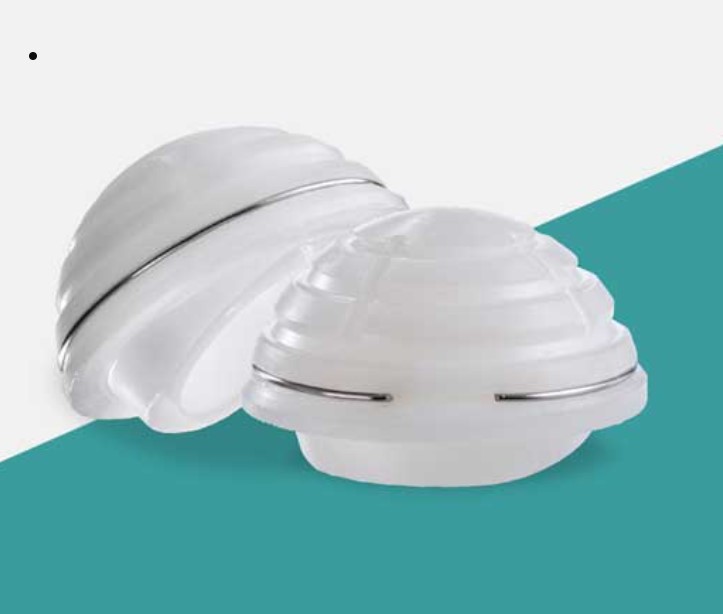 | Joint Replacement Acetabular Cup Cemented Manufacturer An Acetabular Cup Cemented Manufacturer produces acetabular components specifically designed for cemented fixation in total hip replacement... View product → |
Frequently asked questions
How do you choose between total hip replacement and hemiarthroplasty?
Choose total hip replacement when the acetabulum is diseased or expected function supports replacing both joint surfaces. Choose hemiarthroplasty when acetabular cartilage remains acceptable and femoral-side replacement is sufficient.
How should fixation be matched to bone quality?
Use bone quality, primary stability and the revision strategy to compare cemented and uncemented cups. A cemented THR cup relies on bone cement, while an uncemented cup requires reliable press-fit fixation and later bone integration.
What must be checked before final acetabular cup implantation?
Check cup size, position and orientation, trial stability, liner compatibility, shell seating and the absence of impingement before final implantation.
What should Mumbai buyers compare between acetabular cup systems?
Compare liner material, bearing pairing, porous or other coatings, shell construction, available sizes, instruments, sterilisation status, traceability records and supplier documentation.
Related products
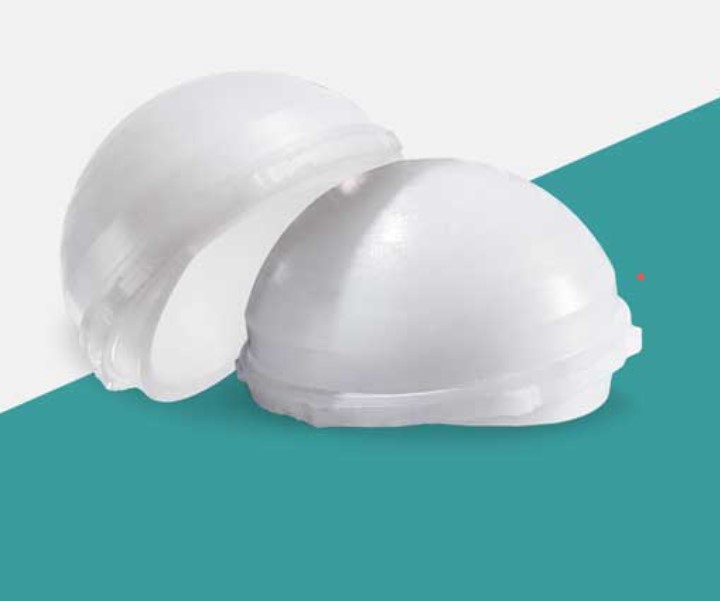 | Joint Replacement Acetabular Cup Liner Manufacturer An Acetabular Cup Liner Manufacturer specializes in producing liners that fit inside the acetabular cup during total hip replacement surgeries. View product → |
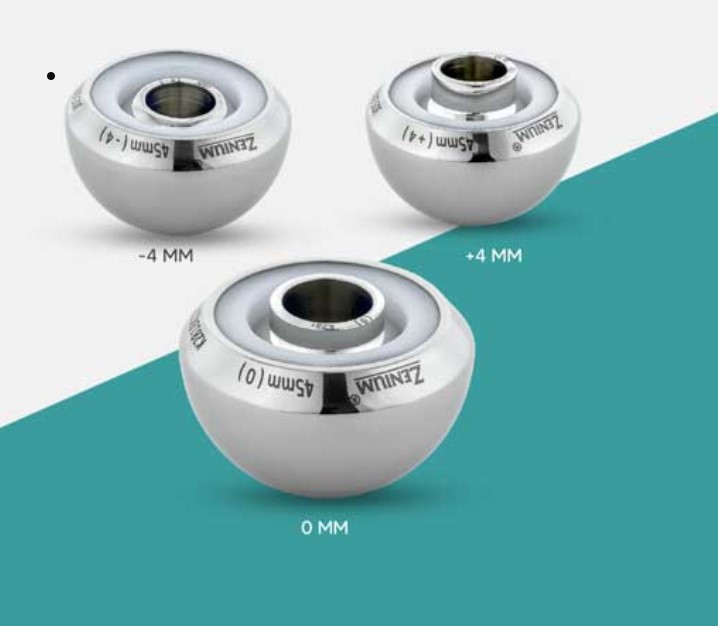 | Joint Replacement Modular Bipolar Cup (With Head) Manufacturer The Modular Bipolar Cup (With Head) is an advanced hip implant system used in hemiarthroplasty procedures, particularly for treating femoral neck... View product → |
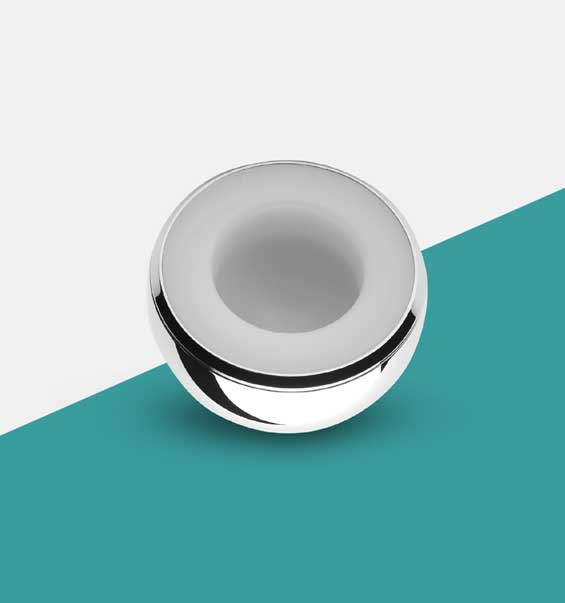 | Joint Replacement Modular Bipolar Cup Manufacturer A Modular Bipolar Cup Manufacturer specializes in producing advanced orthopedic components used in hip replacement surgeries. View product → |
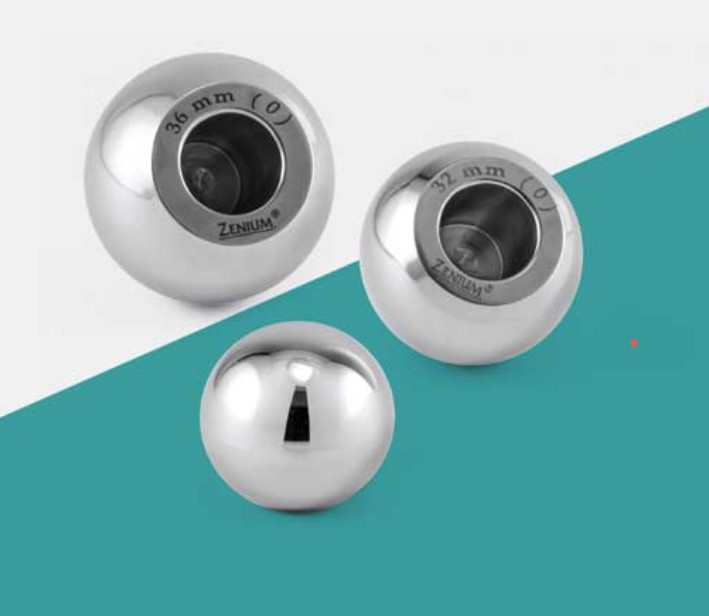 | Joint Replacement An Internal Head Manufacturer specializes in producing internal femoral heads used in hip replacement systems. View product → |