Choosing a roll by name alone can leave you with the wrong construction, an unsuitable sterility status, or padding that traps moisture and creates pressure points. By the end, you will be able to specify the material, apply it in the correct layer order, inspect every pack, and compare suppliers by usable clinical performance rather than roll price.
Key takeaways
- Confirm the roll has cotton wool enclosed between gauze layers.
- Layer padding smoothly and avoid wrinkles, folds and excessive pressure.
- Choose sterile stock for open wounds and inspect every pack before use.
- Compare suppliers by usable dressing cost, specifications and delivery reliability.
What a gamjee roll is—and how it differs from similar rolls
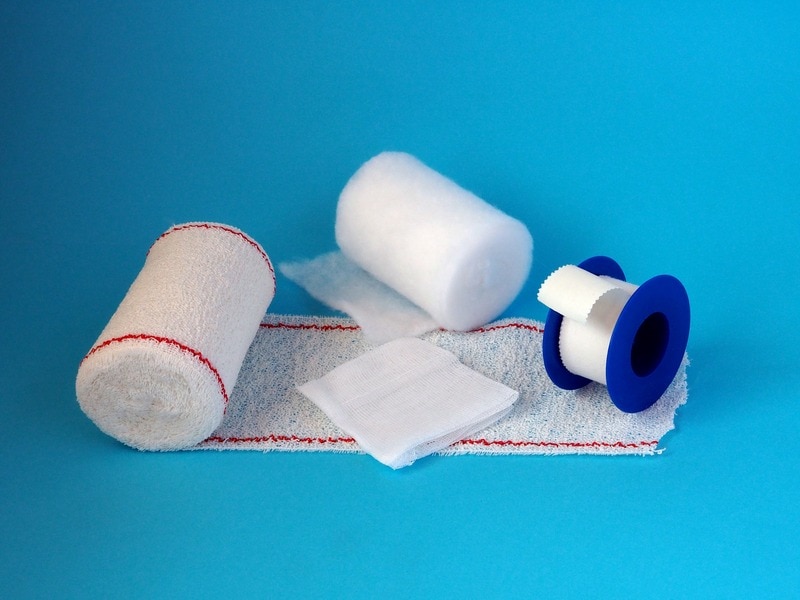
A gamjee roll, or Gamgee roll, is an absorbent cotton-wool layer enclosed between gauze layers. Some suppliers use the name for unenclosed orthopaedic padding, so the product name alone cannot identify its construction.
Write these details into the purchase specification:
- Fibre and construction
- Number of gauze layers and basis weight
- Lint performance
- Sterile or non-sterile status
A gamjee roll is absorbent secondary padding, not automatically a dedicated wound-contact dressing. Place a suitable primary dressing against the wound when the roll is intended for absorption, cushioning or fixation.
| Option | Construction or main purpose | When it is the wrong choice |
|---|---|---|
| Gauze roll | Usually a woven textile; mesh, ply, edge construction and absorbency determine performance | Do not select it by “cotton” alone when mesh, lint level or absorbency is unknown |
| Soft roll | Usually chosen for cushioning and gentle padding | Do not assume it provides wound contact or the same absorbency as gauze-enclosed cotton |
| Cast padding | Designed beneath plaster-of-Paris or synthetic casts | Do not treat it as a primary dressing for an open wound |
| Bandage cloth | An imprecise term covering gauze, woven cotton or calico-like fabric | Do not use it against a wound until cleanliness and absorbency are confirmed |
Specify a gauze roll’s fibre, mesh or thread count, ply, edge construction, lint performance and absorbency test method. State whether bandage cloth is for wrapping, external padding or wound contact; otherwise two rolls with the same trade name can perform very differently.
How to layer and apply the roll without causing harm
1. Wash your hands, prepare a clean work area, and check the pack before opening it. Keep the gamjee roll, bandage cloth or other padding from touching an unprepared wound surface; use a suitable primary dressing for wound contact.
2. Apply the layers in this order: place the wound-contact dressing directly over the wound, add the gamjee roll or another absorbent layer over it, then apply a securing bandage outside when fixation is needed. Cut only the amount required, using clean equipment, and avoid placing loose cut edges against the wound.
3. Smooth the padding around bony prominences with adequate overlap. Remove folds, ridges and uneven thickness before securing it; these defects create pressure points under a bandage or cast. Use even, light tension and never make a tight circumferential wrap that causes pain, colour change, coldness or impaired circulation.
4. Low-adherent gauze reduces sticking during removal, but it does not make a saturated, contaminated or incorrectly applied dressing safe to leave in place. Replace the outer layer when wet or soiled, and follow the primary dressing’s replacement schedule.
5. Arrange clinical reassessment for heavy bleeding, spreading redness, increasing pain, odour, fever, suspected infection, impaired circulation, numbness or swelling. An open wound needs a suitable primary dressing and clinical treatment when bleeding or infection is significant. Do not rely on padding alone.
6. Remove used material carefully and dispose of it as healthcare waste under the facility’s procedure.
How to choose sterile or non-sterile stock and inspect each pack
Use a sterile, intact, in-date roll when the roll or its gauze cover will touch an open wound or enter a sterile procedure. Use non-sterile stock only for a closed dressing, external cushioning or beneath a cast when the clinical protocol permits it. “Packed clean” and “suitable for surgical use” do not prove sterility.
| Option | Selection rule | Check before use |
|---|---|---|
| Sterile gamjee roll | Open-wound contact or sterile procedure | Intact sterile barrier, expiry date, lot number and sterilization evidence |
| Non-sterile gamjee roll | Closed dressing, external cushioning or permitted cast padding | Protocol approval and clean, undamaged packaging |
| Gauze roll or soft roll | Choose by intended contact, absorbency and cushioning function | Do not assume either product is sterile or wound-safe |
At receiving and before use, confirm:
- Product identity, material, dimensions, quantity, manufacturing date, expiry or shelf-life date, lot or batch number and manufacturer details.
- Claimed sterilization method, sterile-barrier packaging and stated storage conditions.
- Supplier temperature and humidity limits during storage and transport; do not assume room-temperature storage is acceptable.
- Certificate of analysis, sterilization record or release document for a sterile claim, plus the complaint and recall contact.
Quarantine any pack that is torn, damp, opened, crushed or stained, or lacks traceability information. A sterile claim requires a defined sterilization record, validated packaging evidence and lot traceability; a clean-looking soft roll cannot substitute for those records.
How to specify width, length, thickness and absorbency for each use
1. Specify the body area and function before choosing a name. A narrow, thin gamjee roll can suit a finger or hand; a wider roll with controlled loft can cover a limb. Trunk use needs sufficient width and length to avoid excessive joins. Cast use demands even thickness and predictable compression around bony prominences.
2. Record these purchasing fields: relaxed finished width; usable width after edge folding; length; thickness or basis weight; number of plies; roll diameter; absorbency test method; and wet handling performance. Measure relaxed dimensions, not compressed-pack dimensions, or nominal length will overstate usable material.
3. Compare fibres by the job. Cotton absorbs exudate but can hold moisture against skin. Synthetic cast padding often absorbs less and retains loft better when damp, yet its handling and moisture resistance may not suit every plaster or synthetic casting technique. Check compression recovery, skin compatibility and the manufacturer’s cast instructions.
4. Separate wound-support gamjee roll from cast padding. Do not place either directly on an open wound unless the exact product is sterile and intended for wound contact. Do not assume a gamjee roll, soft roll or cast padding works with plaster or synthetic cast systems.
For the exact SKU, confirm latex-free status, radiolucency, X-ray detectability, fibre shedding, compression recovery and cast-system compatibility; none follows from “soft roll” or “cast padding” alone. Use a dedicated primary dressing when wound contact requires it.
How hospitals can compare suppliers and delivered cost per usable dressing
Compare suppliers against an approved sample and calculate delivered cost per usable dressing, not price per roll. Evaluate the exact SKU from a manufacturer or exporter such as Komal Health Care Pvt Ltd against evidence, not the names gamjee roll, gauze roll or bandage cloth.
- Require a signed specification stating construction, gauze mesh or thread count, fibre composition, number of plies, edge integrity, lint or loose-fibre shedding, absorbency, moisture retention, and thickness before and after compression.
- Approve samples after checking relaxed roll length, finished width, usable width after cutting, layering and overlap, and the amount lost as offcuts. Record the supplier’s identified test methods for dimensions, absorbency and lint.
- For absorbent cotton gauze, request the applicable edition of EN 14079 and the supplier’s results against it. Do not accept “medical gauze” as a test result.
- Calculate: delivered cost per usable dressing = purchase, freight and handling cost plus cutting time, securing materials, damaged packs and disposal, divided by usable dressings produced. Include discarded offcuts in the denominator’s waste calculation.
Use a comparison sheet that exposes where a low roll price fails:
| Option | Check | Procurement decision |
|---|---|---|
| Sterile roll | Sterilization record, sterile-barrier evidence, lot traceability | Accept only with intact, in-date documentation |
| Non-sterile roll | Storage, transport, inspection, complaint and recall procedures | Use only where the clinical protocol permits |
| Any roll | Manufacturing and expiry dates, incoming criteria, approved sample | Reject undocumented substitutions |
State in the purchase order whether the roll is for wound dressing support, external padding or cast application. Require clinical and procurement approval before accepting any substitution.
Related products
 | Dressing ₹38 We are manufacture of Gamjee Roll. These Gamjee Roll are highly absorbent cotton are available in low adherent gauze cover and is applied over... View product → |
 | Surgical Disposable ₹27 These Gamjee Roll are highly absorbent cotton are available in low adherent gauze cover and is applied over dressing to provide low adherent wound... View product → |
Frequently asked questions
What is a gamjee roll, and how does it differ from a soft roll or gauze roll?
A gamjee roll contains an absorbent cotton-wool layer enclosed between gauze layers. A soft roll or cast padding may be unenclosed, while a gauze roll is primarily woven gauze without the same cotton-wool core.
How should you layer and apply a gamjee roll?
Place the roll smoothly over the required area, overlap each turn evenly and remove wrinkles, folds and pressure points. Use enough padding to protect the site without restricting circulation or compromising the dressing.
When should hospitals choose sterile rather than non-sterile gamjee rolls?
Choose sterile stock for applications involving an open wound or sterile field. Use non-sterile stock only where the clinical protocol allows it, and inspect the seal, expiry information, batch number and pack condition before use.
How should you specify a gamjee roll for procurement?
State the required width, length, thickness, cotton-wool construction, gauze covering, absorbency, sterile status and packaging format. Match each specification to the wound-care, orthopaedic padding or dressing application.
How can hospitals compare the delivered cost of gamjee rolls?
Divide the total delivered price by the number of usable dressings produced from the shipment. Include freight, rejected or damaged packs, usable dimensions, packaging quantity, lead time and delivery reliability in the comparison.
Related product
 | Gauze Roll ₹38 We produce and supply to our clients, a wide range of Gauze Rollthat are hygienically made so that they are safe to use in various medical... View product → |