Choosing the wrong roll can leave a wound damp, create pressure points under a cast, or make circulation checks harder. You will learn how gamjee roll differs from gauze, soft roll, cast padding and ordinary bandage cloth, then select, apply and inspect it for safer orthopaedic dressing and support.
Key takeaways
- Place gamjee roll over the primary dressing and under the securing bandage.
- Use wider, thicker padding for limbs and protect bony prominences with extra layers.
- Wrap smoothly without tight compression, wrinkles, gaps or exposed wound contact.
- Check sterile status, dimensions, cotton distribution, gauze integrity and batch details.
What a gamjee roll is—and how it differs from other rolls
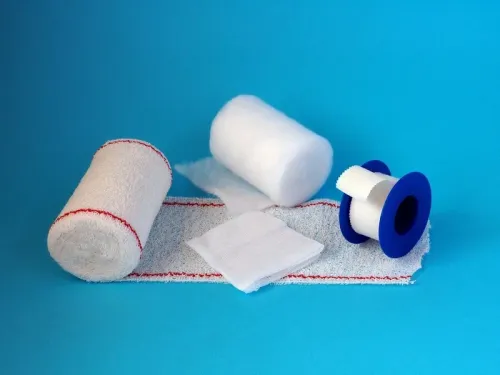
A gamjee roll is a layer of absorbent cotton wool enclosed between sheets of gauze and supplied in a roll. The cotton absorbs wound exudate and perspiration, while the gauze covering helps hold the padding together.
Check the label before use: sterile and non-sterile gamjee rolls are separate products, so a non-sterile roll is not automatically suitable for direct contact with an open wound.
| Product | What it contains or describes | When it is different |
|---|---|---|
| Gauze roll | Woven gauze without a cotton-wool core | Suits wound covering, securing or retention when you need a thinner, more conformable layer |
| Soft roll | A cushioning category made from cotton, polyester, polypropylene or blends | Provides padding under a splint or cast, but its name does not confirm absorbency or material |
| Cast padding | Padding manufactured for placement beneath plaster or synthetic casts | Prioritises even cushioning and cast compatibility; it may not absorb exudate like cotton gamjee |
| Bandage cloth | A broad term for cloth supplied in roll form | May secure or support a dressing, but the term does not promise absorbent padding |
| Gamjee roll | Cotton-and-gauze construction | Combines absorbency with cushioning beneath a dressing, splint or cast |
A gamjee roll does not immobilise a limb; the splint or cast supplies rigidity. Once saturated, its cotton layer can stay damp against skin, so inspect the dressing and replace it according to clinical instructions.
How gamjee roll protects a limb during orthopaedic care
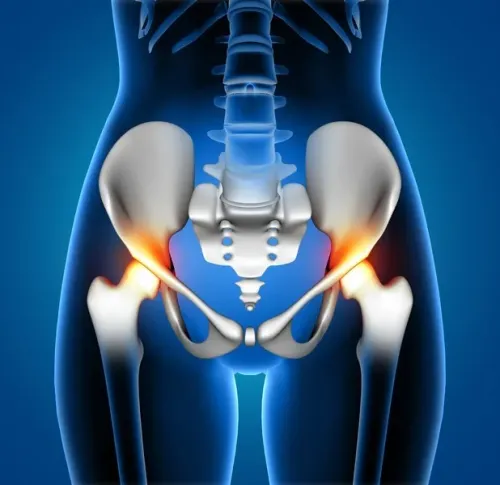
A gamjee roll provides a cushioning layer between the limb and a splint, plaster cast or synthetic cast. Its padding spreads pressure over a wider area, reducing concentrated loading on bony points such as the malleoli, heel, olecranon or ulnar styloid.
The benefits of gamjee roll include softer support around a wound dressing and less rubbing while a cast or splint is applied. It also helps prevent plaster or resin from pressing directly against the skin or catching on the dressing.
The cotton padding absorbs wound exudate and perspiration, which helps keep the outer bandage more comfortable. Once saturated, however, it can remain damp against the skin and contribute to maceration or odour; arrange dressing changes and cast review instead of leaving wet padding in place.
Apply it smoothly, without tight circumferential tension. Excess pressure can worsen swelling or restrict circulation, and padding cannot correct a poorly fitted cast. Check colour, warmth, sensation, movement and capillary refill after application, then repeat the check if pain, numbness, tingling or increasing tightness develops.
A non-sterile gamjee roll is not automatically suitable for direct contact with an open injury or surgical wound. Use a sterile wound dressing beneath it when the wound requires sterile coverage.
The correct order for applying gamjee roll over a dressing
Keep the wound dressing flat and undisturbed; place the gamjee roll over it as a smooth protective and cushioning layer, not as a substitute for a correctly fitted splint or cast.
1. Confirm that the dressing is secure, dry enough for the planned wrap, and appropriate for contact with the selected roll. Use a sterile gamjee roll when the product instructions require sterile wound-area use; a non-sterile roll is not suitable for direct contact with an open wound.
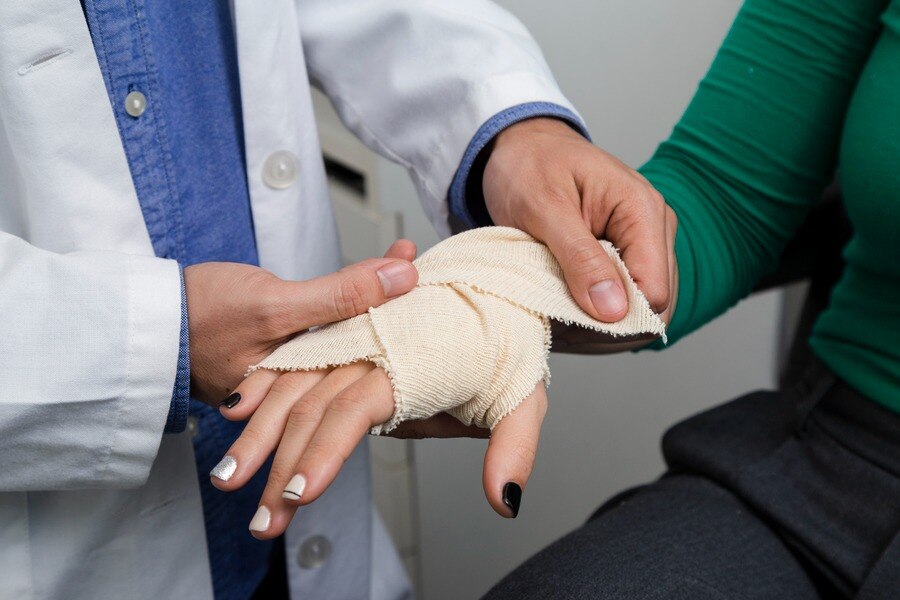
2. For a limb, begin at the distal end and move towards the body. Hold the roll against the limb without pulling, and cover the dressing with even pressure.
3. Overlap each turn by about half the roll’s width. Keep the layer smooth around the heel, malleoli, fibular head, olecranon and ulnar styloid; folds create pressure points.
4. Secure the final turn with tape or a separate bandage cloth, fixing the roll to itself rather than tightening it around the limb. Do not pin through the dressing or use tight circumferential tension.
5. Inspect the finished wrap without lifting the dressing. Check for gaps, ridges, loose fibres, frayed edges, dampness, leakage or odour, then check visible fingers or toes for normal colour, warmth, sensation and movement.
If pain, numbness, increasing swelling, cold or discoloured digits, or a saturated dressing appears, stop and obtain clinical review. Do not simply add another tight layer.
How to choose size, thickness and wrapping pressure by body area
Choose the narrowest gamjee roll that covers the area with minimal overlap, then add thickness only where pressure or bony prominence demands it. Wrap smoothly and snugly, never tightly enough to indent skin or restrict circulation.
| Area | Suitable dimensions and thickness | Application method and pressure |
|---|---|---|
| Finger | 5 cm width; one thin layer, with extra padding over the joint | Use short turns from the base toward the fingertip, leaving the fingertip visible. Keep pressure light. |
| Hand | 7.5–10 cm width; one layer, two over knuckles or a splint edge | Overlap each turn by about half the roll width. Keep the web spaces flat and uncompressed. |
| Forearm | 10–15 cm width; one to two layers | Begin below the elbow and wrap evenly toward the wrist. Add protection over the ulnar styloid and cast borders. |
| Ankle | 10–15 cm width; two layers over the malleoli and heel | Shape the padding around, rather than tightly across, each prominence. Avoid bunching in the ankle crease. |
| Leg | 15–20 cm width; one layer along the shaft, extra at the fibular head | Use a broad, even spiral beneath a splint or cast. Do not use padding to correct a loose or tight cast. |
| Post-operative wound | Width extending beyond the dressing; thickness matched to drainage and device pressure | Place it over the secured sterile primary dressing. A non-sterile roll must not touch an open wound. |
Do not confuse absorbent gamjee with a soft roll or purpose-made cast padding. After wrapping, check colour, warmth, sensation and movement below the area; increasing pain, numbness, swelling or blue fingers or toes requires prompt clinical review.
What to verify before buying gamjee roll for clinical use
The benefits of gamjee roll depend on matching its construction to the job. Check whether the roll is sterile, its width and length, padding thickness, absorbency, lint release, and packaging integrity.
A non-sterile roll can suit external cast padding but must not touch a surgical wound or open injury unless the product labeling specifically permits it.
| Use | Verify | Why it matters |
|---|---|---|
| Wound coverage | Sterility, intact individual packaging, low-lint material, and a stated intended use for wound contact | Non-sterile padding can contaminate an open injury; saturated cotton can stay damp against skin |
| Splint padding | Soft, resilient bulk; even thickness; suitable width for the limb | Uneven layers create pressure points over the heel, malleoli, olecranon, or fibular head |
| Temporary support | Width, length, edge stability, and compatibility with the securing bandage | A short or narrow roll leaves gaps; gamjee roll cushions but does not immobilise a limb |
| Under-cast use | Manufacturer’s designation for cast padding, moisture behaviour, and compatibility with plaster or resin | Absorbent cotton and purpose-made synthetic cast padding are not interchangeable |
Ask for the batch number, manufacture date, expiry date where stated, material composition, and inspection or conformity documents. Confirm that the outer wrap is dry and sealed. Ordinary bandage cloth may retain or secure a dressing, but its label does not prove absorbency or cast-padding performance.
Suppliers such as Komal Health Care Pvt Ltd can be compared by these documented specifications rather than by roll appearance alone.
Related products
 | Dressing ₹38 We are manufacture of Gamjee Roll. These Gamjee Roll are highly absorbent cotton are available in low adherent gauze cover and is applied over... View product → |
 | Surgical Disposable ₹27 These Gamjee Roll are highly absorbent cotton are available in low adherent gauze cover and is applied over dressing to provide low adherent wound... View product → |
Frequently asked questions
What is a gamjee roll, and how does it differ from cast padding?
A gamjee roll contains absorbent cotton wool between gauze sheets. Cast padding is a broader category that includes materials designed mainly to cushion beneath plaster or fiberglass casts; gamjee roll also supports dressing protection and fluid absorption.
How do you apply a gamjee roll over an orthopaedic dressing?
Complete the wound dressing first, then place the gamjee roll over it. Overlap each turn evenly, add padding over bony areas, avoid wrinkles and gaps, and secure the roll with a bandage without restricting circulation.
How should you choose gamjee roll size and thickness?
Match width to the body area: use narrower rolls for fingers, wrists and ankles, and wider rolls for forearms, legs and thighs. Select thickness based on cushioning needs, dressing bulk and the space available under a splint or cast.
What should you verify before buying gamjee roll for clinical use?
Check the stated width, length, thickness, cotton distribution, gauze covering, packaging seal, sterility status, batch or lot number, expiry date where applicable, manufacturer details and storage instructions.
Related products
 | Dressings ₹115 We are manufactures of Soft Roll (Cast Padding).The white cast padding is non- woven and is made using viscose fibers, which brings comfort to the... View product → |
 | Rolled Bandages ₹18 These medical Rolled Bandages, gauze bandages like Rolled Bandages are used for different types of cuts, injuries, wounds etc. View product → |