Hospitals need to distinguish an elastic adhesive bandage from cohesive wraps, cotton crepe, gamjee roll and cast padding before selecting or applying any of them. By the end, buyers and clinical teams will have a practical application method, safety checks and a specification they can use to compare products, verify incoming stock and prevent avoidable skin or circulation injuries.
Key takeaways
- Match stretch, padding and adhesion to the clinical task.
- Apply firm, even pressure without covering toes or causing numbness.
- Inspect skin after application and remove adhesive slowly along the skin.
- Specify materials, dimensions, packaging and batch traceability before purchase.
Choose the Correct Bandage Construction for the Job
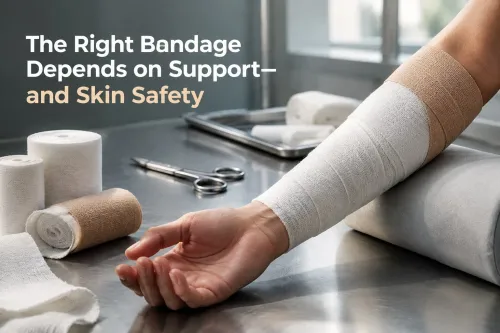
Choose the construction by the clinical job, not by the word “bandage” or the roll’s appearance.
| Option | Construction | Intended use |
|---|---|---|
| Elastic adhesive bandage | Elastic fabric with an adhesive coating that bonds to skin or an underlayer | Securing support or compression where adhesive fixation is required |
| Cohesive or self-adherent bandage | Elastic material that adheres mainly to itself and normally has no skin-contact adhesive | Retention without applying adhesive directly to skin |
| Cotton crepe bandage | Usually a non-adhesive, crimped fabric wrap | Retention and light support, not automatically calibrated high compression |
| Gamjee roll | Bulky absorbent cotton-wool between gauze or similar layers | Padding, absorption and protection |
| Cast padding | Protective padding placed beneath plaster-of-Paris or synthetic resin cast material | Skin protection under a cast |
Do not approve a specification that says only “bandage cloth.” Require the composition, weave or knit, extensibility, absorbency and intended use; otherwise, cotton cloth, gauze and elastic fabric can all arrive under the same description.
List gamjee roll, cast padding and cotton crepe bandage as separate procurement line items with separate acceptance criteria. They are not interchangeable cotton bandages: gamjee provides bulky absorbent padding, cast padding protects skin under a cast, and cotton crepe provides a non-adhesive retention wrap.
Confirm whether an elastic adhesive bandage is intended to contact skin or an underlayer before purchase, because its adhesive coating creates different removal and skin-trauma risks from a cohesive bandage.
Apply the Wrap Without Creating a Circulation Hazard
Clean and dry the surrounding skin before application. Cover any open wound with a suitable sterile wound dressing or interface; an elastic adhesive bandage must not contact the wound unless its label specifically permits it. A cotton crepe bandage is a different, non-adhesive retention material.
1. Anchor the bandage on the limb without pulling it to maximum stretch. Follow the manufacturer’s extension-force and application instructions.
2. Apply from distal to proximal, moving from the fingers or toes toward the limb. Keep each turn flat and overlap it consistently.
3. Finish without placing adhesive over fragile, macerated or recently shaved skin. Do not tension the bandage across damaged skin.
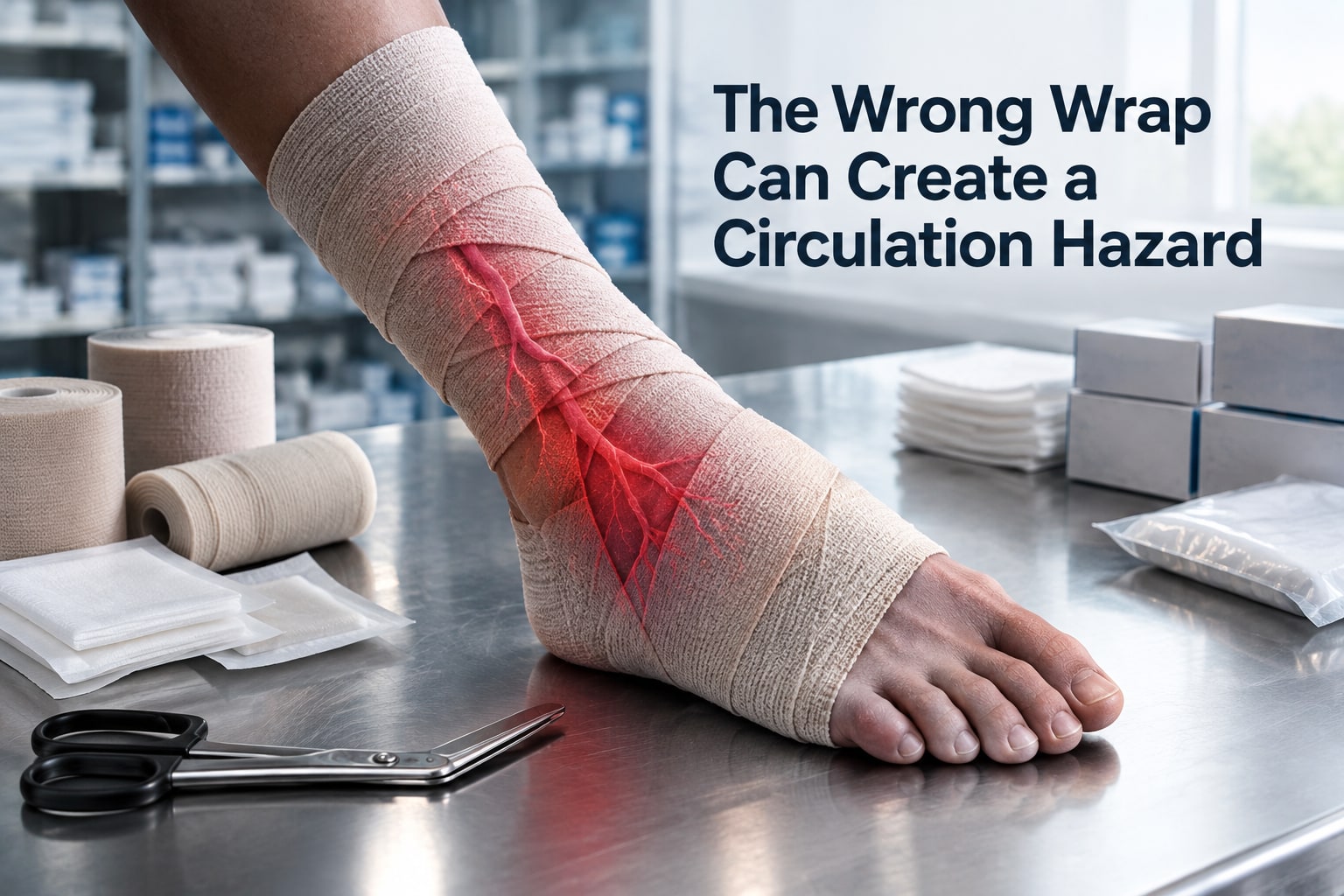
4. Check circulation after application and whenever the patient reports discomfort. Pressure depends on tension, overlap and limb radius under Laplace’s law, so the same wrap produces more pressure around a narrow ankle than around a larger calf.
Promptly loosen or remove the bandage and arrange clinical review for:
- Numbness or tingling
- Increasing pain
- Pale or blue fingers or toes
- Cold skin
- Swelling beyond the bandage
Do not apply sustained compression when the ankle-brachial pressure index is below 0.5 or ankle pressure is below 60 mmHg unless a qualified clinician directs it. A generic elastic adhesive bandage is not a substitute for vascular assessment or a prescribed compression system.
Protect Wounds and Skin During Wear and Removal
Keep the adhesive off an open wound unless the product label specifically permits wound contact. Place a suitable primary sterile dressing underneath the elastic adhesive bandage to protect the wound.
Antiseptic residue, lotions, perspiration, moisture, hair and wound exudate reduce tack or lift the edges. Before application, clean and dry the surrounding skin, and do not tension adhesive across fragile, macerated or recently shaved skin.
| Stock type | Required handling | Main risk |
|---|---|---|
| Single-use | Use once, then discard under hospital infection-prevention policy | Reuse can spread contamination and reduce performance |
| Reusable | Use only when the manufacturer has designed and validated the product for reprocessing | Unapproved washing can alter elasticity, redistribute adhesive and introduce contamination |
Do not wash, dry or return a used adhesive roll to clinical stock unless validated reprocessing instructions specifically permit it. A sterile roll also loses its status if its validated sterile barrier is compromised.
Maintain a documented skin-sensitivity protocol covering adhesive allergy, latex risk and fragile skin. Obtain a written declaration stating whether the complete patient-contacting product is latex-free, including elastic yarn, adhesive and packaging-contact components.
For removal, loosen the wrap slowly in the direction of hair growth while supporting the skin. Stop immediately if pain or skin lifting occurs, and use only a removal aid approved by hospital policy. Examine the skin after removal and document redness, blistering, stripping or other injury.
Build a Hospital-Grade Purchasing and Receiving Specification
Approve an elastic adhesive bandage against a written performance specification, not appearance or roll dimensions alone. Require the supplier to identify the intended application, including whether compression, fixation or dressing retention is intended. “Bandage cloth” is insufficient without measurable properties.
- State width, roll length, stretch range, recovery, tear resistance and edge construction.
- Identify the extension-force or tensile test method, test speed, gauge length and acceptance limits.
- State backing material, fibre composition and adhesive type; name the chemistry as acrylic-based, rubber-based or another formulation.
- Provide a written latex-free declaration covering elastic yarn, adhesive and packaging-contact components.
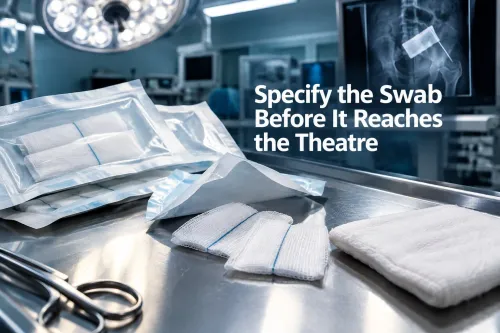
- Declare sterile or non-sterile status separately. For sterile stock, specify sterilization method, validated sterile barrier, lot or batch number and expiry date; reject wet, opened or damaged packs.
- State storage temperature, humidity limits, shelf life, packaging format and instructions for use.
On receipt, inspect pack integrity, labels, batch traceability, expiry, actual width and length, frayed edges, adhesive bleed-through, tack, transfer, extension and recovery against the supplier’s method. Reject rolls that fail the stated limits, even if the fabric looks thick.
A hospital comparing products from manufacturers such as Komal Health Care Pvt Ltd can use this evidence-based checklist to distinguish documented performance from claims based on fabric appearance or aesthetic appeal. Keep sterile and non-sterile stock segregated.
Related products
 | Surgical Disposable ₹36 Our superior range of medical bandage, gauze bandages AS Elastic Adhesive Bandages is known for its good aesthetic appeal, woven fast edges and thick... View product → |
 | Surgical Disposable ₹18 The Bandages available with us includes rolled bandages, Cotton Crepe Bandage, Elastic Adhesive Bandage and Soft Bandage Roll. View product → |
Store, Monitor and Retire Bandage Stock Correctly
Store rolls within the temperature and humidity range printed on the label or instructions for use. Keep them away from direct sunlight, heat, moisture, dust and chemicals that can contaminate adhesive or degrade the bandage cloth.
1. Segregate sterile and non-sterile stock. Reject sterile packs that are wet, opened or damaged, and rotate every category by first-expiry-first-out. Record the batch number when an elastic adhesive bandage enters a patient record or procedure pack.
2. Inspect stock during issue and use. Remove any roll showing loss of tack, edge lift, adhesive transfer, bleed-through, elastic fatigue, fraying or packaging damage. Do not return a used roll to clinical stock.
3. Treat compression as a performance claim, not a product-name claim. When compression is required, request the manufacturer’s application instructions, extension-force information and intended compression class; width and length alone cannot establish pressure.
4. Dispose of used adhesive bandages as single-use clinical waste under the hospital’s infection-prevention policy. Do not wash, dry or reuse a roll unless the manufacturer has specifically designed and validated it for reprocessing.
5. Log every complaint or skin injury against the batch, storage conditions, application tension and removal method. This record lets procurement teams connect repeated failures to a supplier, lot or storage problem instead of treating each incident as isolated.
Frequently asked questions
How do you choose the right elastic adhesive bandage construction?
Match the bandage to the job: use elastic adhesive support for secure compression or fixation, cotton crepe bandage for adjustable support, gamjee roll for soft wound cushioning, and cast padding beneath plaster or synthetic casts.
How do you apply an elastic adhesive bandage without harming circulation?
Wrap with even, controlled tension and avoid tightening around a single point. Check skin colour, warmth, sensation and distal pulses after application, then reassess if pain, numbness, tingling or swelling develops.
How should wounds and skin be protected under a bandage?
Cover the wound with an appropriate sterile dressing, keep adhesive away from broken skin, and inspect for redness, blistering, moisture or pressure damage during wear and removal.
What should hospitals include in a bandage purchasing specification?
State the bandage type, material, width, roll length, stretch or padding requirement, adhesive characteristics, sterile status, packaging, batch number, expiry date and supplier documentation.
How should hospitals store and retire bandage stock?
Keep rolls in clean, dry storage away from direct sunlight, heat and moisture. Use stock by expiry or receipt date, quarantine damaged packs, and retire products with broken seals, contamination, deterioration or missing traceability.
Related products
 | Surgical Disposable ₹27 These Gamjee Roll are highly absorbent cotton are available in low adherent gauze cover and is applied over dressing to provide low adherent wound... View product → |
 | Surgical Disposable ₹36 The range of medical bandage, gauze bandages available with us is known for its woven fast edges, thick fabric, better elasticity and controlled,... View product → |
 | Rolled Bandages ₹18 These medical Rolled Bandages, gauze bandages like Rolled Bandages are used for different types of cuts, injuries, wounds etc. View product → |