A hospital must verify more than the plate’s catalogue description before a DHS locking plate reaches the operating table: dimensions, laterality, screw and barrel compatibility, sterile-barrier condition, storage history and patient imaging all affect safe use. By the end, you will have a practical checklist for accepting, storing, preparing, tracing and following up DHS locking-plate constructs in Mumbai fracture hospitals.
Key takeaways
- Verify implant identity, dimensions, expiry, packaging and documentation before acceptance.
- Match the plate, screws and instruments to the planned fracture construct.
- Store sealed implants in a dry, controlled area away from damage and contamination.
- Record cleaning, sterilisation, lot numbers, implantation and follow-up findings.
What must be checked before a DHS locking plate is accepted?
Accept a DHS locking plate only when its identity, mechanical fit and planned bone construct agree. These DHS locking plate conditions in Mumbai begin with the supplied pack, not the catalogue description.
Check the following against the purchase order, label and current instructions for use:
- Plate length, left or right laterality, hole count, screw diameter and barrel angle
- Catalogue number, batch or lot number, expiry date where applicable and sterilisation information
- Compatibility with the intended DHS lag screw, barrel, cortical screws, locking screws and manufacturer-approved instruments
- Manufacturer or importer details, applicable Indian device authorization or registration information, current labeling and an available IFU
| Check | Accept when | Quarantine when |
|---|---|---|
| Plate and pack | Correct size and side; sterile barrier is intact | Identification is incomplete, seal is broken or packaging is wet or damaged |
| Implant surface | Smooth, clean and undeformed | Pitting, corrosion, bending, scratches, damaged locking thread or prior-use evidence appears |
| Construct fit | Lag screw, barrel, screw head, thread profile and instruments match the documented system | Staff are relying on similar dimensions or mixing stainless steel and titanium without written approval |
Compare the plate with the patient’s radiographs or CT scans. The neck-shaft angle, proximal femur anatomy, fracture pattern, reduction, bone stock and planned lag-screw position must support the selected construct.
A locking hole cannot correct varus reduction, poor femoral-head purchase or an incorrectly positioned lag screw. If any identification, compatibility or surface check fails, quarantine the stock and record the decision before surgery.
When is a DHS locking plate preferable to another fixation method?
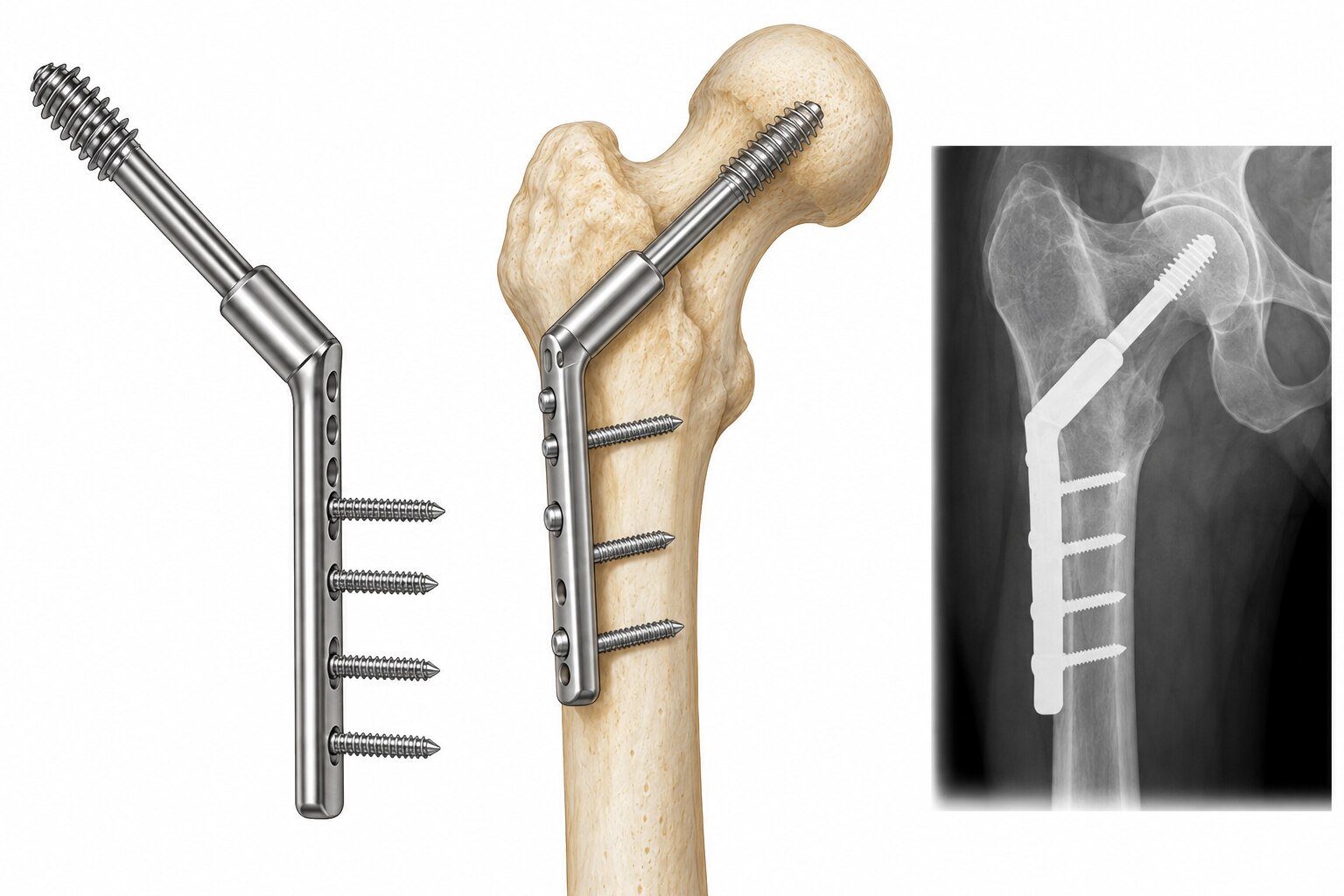
A DHS locking plate is preferable when the surgeon’s fixation plan needs threaded screw interfaces in addition to a sliding lag-screw construct; it is not automatically better than a standard DHS, intramedullary device or another proximal-femur method. A conventional DHS uses a side plate, barrel and lag screw.
The locking version adds threaded locking holes for selected cortical or locking screws.
| Option | What it means | When it applies |
|---|---|---|
| Conventional DHS | Side plate, barrel and lag screw | A stable fracture with adequate lateral-wall support and suitable bone |
| DHS locking plate | DHS construct with threaded locking interfaces | Selected comminuted patterns, weak bone or planned fixed-angle support |
| Intramedullary or other fixation | A different load-sharing or fixation strategy | Fracture anatomy, reduction, lateral-wall failure or the surgeon’s plan favours another device |
Selection depends on reduction, comminution, lateral-wall support, bone quality and proximal-femur anatomy. A locking hole cannot correct varus reduction, poor femoral-head purchase or an incorrectly positioned lag screw.
That distinction matters in dhs locking plate care in mumbai: confirm one documented system before opening the set. Match the:
- Plate, barrel and lag screw
- Cortical and locking screws
- Drill guides, guidewires and taps
- Screwdrivers, insertion tools and torque-limiting instruments
Do not mix systems or pair stainless-steel and titanium components because dimensions look similar. Thread profile, screw-head geometry, barrel dimensions and instrument engagement must match the current instructions for use, unless the manufacturer expressly permits interchangeability.
How should Mumbai hospitals store and handle the implant before surgery?
Keep the DHS locking plate sealed, dry, traceable and protected from physical damage from acceptance until implantation. Mumbai’s humidity and monsoon conditions make wet packaging, condensation and corrosion immediate quarantine concerns.
- Confirm the implant name, plate size and length, left or right laterality, hole count, catalogue number, lot or batch number, expiry date where applicable, and sterilisation information.
- Check the sterile barrier, seals and outer packaging for tears, punctures, wetness or water ingress.
- Inspect the plate through the packaging for corrosion, pitting, deformation, scratches, damaged locking threads or evidence of prior use.
- Reject or quarantine the pack if identification is illegible or any listed defect appears. Cleaning and resterilisation cannot reliably restore a damaged implant’s surface or mechanical integrity.
- Record or scan the implant label, linking the patient, operation, implant type, size, lot or batch number and instrument-sterilisation load.
Store stock in a clean, dry, temperature-controlled area, off the floor and away from saline, chemicals, direct sunlight, condensation, water ingress and salt-laden air. Use stock rotation, and follow the product label and current instructions for use for storage limits; do not invent temperature or humidity values.
In theatre, open the plate only after the team confirms size and laterality. Do not drop, scratch, bend, re-contour or expose it to unverified instruments.
For orthopedic implant care in Mumbai, remember that a sterile plate is not the same as a reusable instrument tray. Intact transport packaging around drills, taps or screwdrivers does not prove sterility; those tools require validated cleaning and sterilisation under their current instructions for use.
How should reusable DHS instruments be cleaned, sterilised and traced?
1. Start cleaning at the point of use: remove gross blood and bone before soil dries on drill guides, targeting guides, drills, taps, screwdrivers and insertion instruments. Keep reusable tools separate from single-use plates and screws; an intact transport carton does not prove that an instrument tray is sterile.
2. Disassemble each instrument as its design permits. Use the validated brush size and flushing method for cannulations, threaded holes and locking interfaces; retained bone can block cleaning and prevent sterilant contact. Inspect every surface, tip and thread under adequate light, then reject damaged tools rather than packaging them.
3. Follow the current manufacturer’s instructions for use for exposure time, temperature, drying, packaging configuration and maximum reprocessing count. A 121°C cycle and a 134°C cycle are not interchangeable defaults. If the IFU is missing, quarantine the set; do not choose a steam cycle by habit.
Package the clean set protectively and record the sterilisation load, including cycle identification and biological-indicator result where used.
4. Link the patient, operation date, implant type, plate or screw size, lot or batch number and instrument-load number in the medical record. Scan or retain the implant label so a recall or failure investigation can identify other affected patients. This is the foundation of DHS locking plate care in Mumbai.
5. Segregate rejected implants, contaminated packaging, blood-soiled disposables and explanted devices under biomedical-waste and infection-control procedures. Preserve an explant as traceable clinical material when infection, breakage or manufacturer review requires analysis; never discard it as ordinary metal waste.
How should hospitals monitor the patient, supplier and care system after implantation?
After implantation, document a fracture-specific weight-bearing plan; a locking plate does not justify unrestricted loading or remove the risks of cut-out, varus collapse, nonunion, infection and implant breakage. These DHS locking plate care conditions for fracture hospitals in Mumbai should guide follow-up.
- Record the patient, operation, plate and screw sizes, lot number and instrument-sterilisation load. Retain or scan the implant label in the medical record.
- Schedule clinical and radiographic reviews at defined postoperative intervals. Check reduction, alignment, callus, hardware position, wound condition and function.
- Escalate increasing pain, fever, drainage, redness, calf pain or swelling, limb shortening, new deformity, or loss of function. Investigate infection, thromboembolism, fixation failure and nonunion rather than attributing every symptom to healing.
- Audit wet-pack rates, positive biological indicators, missing lot numbers, tray damage, instrument turnaround time, expired-stock losses, deep infection and unplanned reoperation. These measures help separate storage, reprocessing, surgical-technique and follow-up failures.
For orthopedic implant care in Mumbai, procurement must check current IFU access, labeling, manufacturer or importer details, device authorization or registration information, shelf life, traceability and the supplier’s recall and complaint-response procedure. Do not select a 121°C or 134°C reprocessing cycle by habit; the IFU controls exposure, drying, packaging and reprocessing limits.
Komal Health Care Pvt Ltd can be evaluated by the completeness and consistency of these implant, instrument and batch records, not catalogue wording alone.
Related product
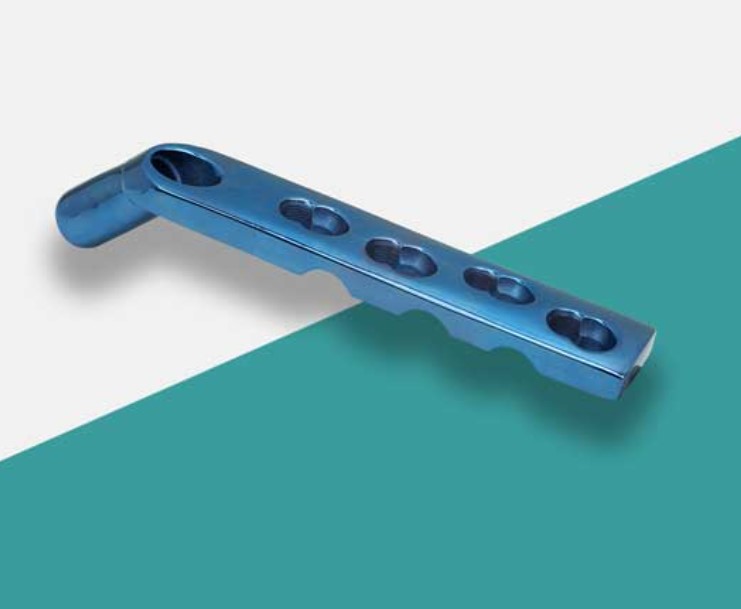 | Bone Plate Dhs Locking Plate Manufacturer DHS (Dynamic Hip Screw) locking plate manufacturers produce specialized orthopedic implants used in the surgical treatment of proximal femur... View product → |
Frequently asked questions
What must a Mumbai hospital check before accepting a DHS locking plate?
Check the product name, size, material, lot or batch number, expiry date, sterile barrier, packaging damage, instructions for use and supplied documentation. Confirm that the plate, screws and instruments match the planned construct.
When is a DHS locking plate preferable to another fixation method?
The operating surgeon selects it when its plate geometry, locking screw options and controlled-angle fixation suit the fracture pattern, bone quality and reduction plan. Compare it with other fixation methods before choosing the implant.
How should hospitals store and handle a DHS locking plate before surgery?
Keep the sealed pack in a clean, dry, controlled storage area, protected from crushing, moisture, direct sunlight and unnecessary handling. Quarantine packs with a broken seal, corrosion, missing labels or damage.
How should reusable DHS instruments be cleaned, sterilised and traced?
Follow the instrument manufacturer’s validated cleaning and sterilisation instructions, inspect instruments after processing, and record the sterilisation load, cycle, operator, instrument set and implant traceability details.
What should hospitals monitor after DHS locking plate implantation?
Record the implanted plate and screw identifiers, monitor wound and neurovascular status, assess radiographic progress and document complications, revisions, supplier communication and follow-up actions.