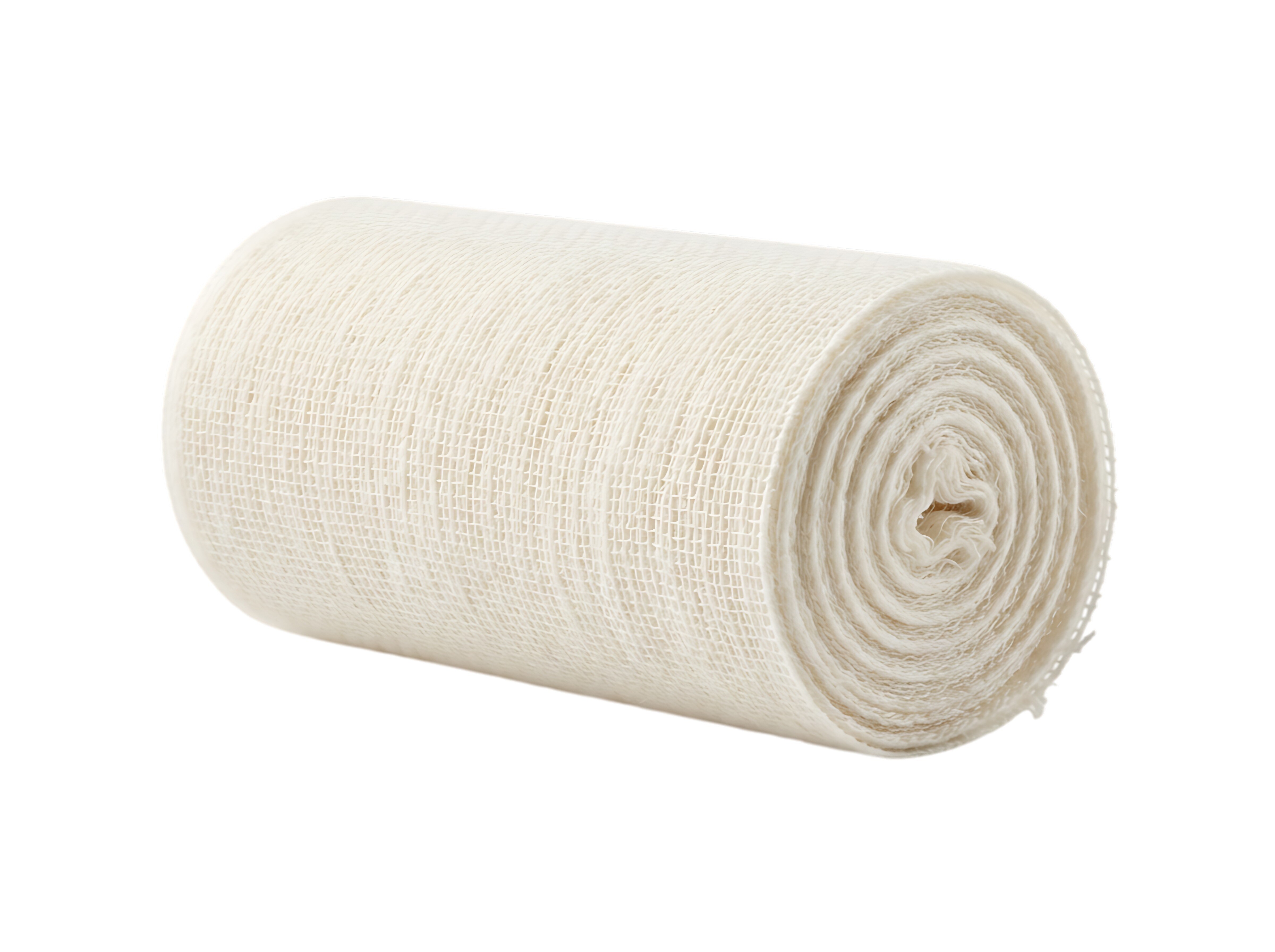
A hospital cannot compare gauze rolls by width, ply or the words “medical grade” alone: a roll for wound cleaning has different requirements from one used for cavity packing, plaster padding or an operating-room procedure. By defining the clinical use first and then checking construction, sterility, packaging, testing and lot records, you can approve a product that performs consistently at the point of care.
Key takeaways
- Match gauze dimensions to cleaning, packing, compression or padding.
- Compare ply, mesh and thread count before approving a hospital gauze roll.
- Specify sterility, radiopacity, packaging and lot inspection requirements in writing.
- Request samples and batch documents from every gauze roll supplier.
Which gauze format and dimensions fit the clinical task?
Choose the clinical task before choosing width, length or ply. Wound cleaning and direct wound contact need absorbent, low-lint gauze; packing needs a controlled, retrievable form. Compression, securing, padding and plaster work need support or cushioning rather than a dressing that sheds fibres.
| Format | Best fit | Main caution |
|---|---|---|
| Gauze roll | Variable-length cleaning, packing or theatre use | Cutting adds contamination and length-variation risks |
| Gauze swabs | Pre-measured sterile wound contact and controlled presentation | Less flexible for irregular coverage |
| Rolled bandage | Securing dressings or light compression | It is not a wound-contact dressing |
| Conforming bandage | Holding dressings around joints and contours | Excess tension can impair circulation |
| Soft bandage roll | Padding beneath plaster or compression layers | It provides cushioning, not primary absorbency |
| Non-woven alternative | Low-lint cleaning, wound contact or fluid handling | Compare absorbency and wet strength against gauze |
For emergency care and wards, a hospital gauze roll suits variable cut lengths; operating theatres and wound-care procedures often favour pre-cut sterile swabs.
If you buy a gauze roll in Mumbai, specify finished width, total roll length, intended cut length and tolerances for each dimension, then define the cutting method, clean handling and discard procedure after opening.
“8-ply” or “12-ply” is incomplete: width, mesh, yarn size, basis weight and absorbency can differ substantially. Approve retained samples at the intended cut length before accepting production.
How do ply, mesh and thread count affect gauze performance?
Ply, mesh and thread count belong in one specification because they jointly control absorbency, bulk, wet strength, conformability, fluid handling and linting. An “8-ply” label alone cannot compare rolls with different yarn sizes, mesh openings or basis weights.
| Construction | Performance tendency | What to compare |
|---|---|---|
| Ply and basis weight | More material can increase bulk and uptake, but reduce conformability | Ply, grams per square metre, compressibility and wet-strength results |
| Mesh and thread count | Open mesh improves fluid passage; tighter mesh supports surface handling and containment | Threads per centimetre in warp and weft, weave, yarn size and uniformity |
| Cotton | Often supports dry and wet handling strength | Dry and wet-strength results, absorbency and finishing |
| Cotton-viscose | Viscose can increase liquid uptake, but the balance depends on yarn construction and finishing | Fibre percentages and matched sample results |
Require the fibre composition, weave or mesh, thread count, ply, basis weight, finished width, roll length and tolerances. Compare samples cut to the intended clinical length; a roll that absorbs well can still fray, shed fibres or lose strength when wet.
Ask a gauze roll manufacturer to identify the edition of EN 14079 and provide applicable results for absorbency, acidity or alkalinity, water-soluble substances, ether-soluble substances, fluorescent substances, foreign matter and loss on drying.
Keep low-lint approval separate from absorbency approval. Set a test method and maximum rates for loose fibres, fraying, retained particles and visible defects, then require lot-specific results rather than relying on “medical grade” or an ISO 13485 certificate.
When should you buy sterile, non-sterile or radiopaque gauze?
Buy sterile gauze for direct contact with an open wound, a surgical field or a body cavity. Use non-sterile gauze for cleaning intact skin, padding, securing a dressing or applying a secondary dressing that does not touch the wound.
A sterile label describes the packaged product, not merely the fabric. For each sterile hospital gauze roll, request:
- Sterilization method: ethylene oxide under ISO 11135, radiation under ISO 11137, or moist heat under ISO 17665
- Validated cycle or radiation dose, with biological or dosimetric release records
- Expiry rationale, lot traceability and records linking the lot to release
- Seal-strength results and package-integrity testing
- Sterile-barrier and protective transport-packaging evidence under ISO 11607
Do not approve a sterile claim from a sterilization certificate alone. A roll that loses package integrity during transport is no longer protected through opening, regardless of its original sterilization result.
Choose non-sterile gauze when the use does not require direct wound or surgical contact. Set a numerical bioburden limit, define the sampling plan, and inspect environmental monitoring, personnel handling and packaging controls; non-sterile must not mean uncontrolled.
Choose radiopaque gauze for a surgical field or body-cavity use where a retained piece must be located on imaging. Specify the marker’s location, continuity, radiographic detectability and resistance to separation, supported by a named validation or test method. “X-ray detectable” alone is not evidence.
What should you inspect before approving a gauze roll lot?
Approve a gauze roll against a controlled master specification, not a catalogue description. Retain samples from several production lots and test each at the intended cut length; this exposes edge fraying, loose threads, uneven winding, telescoping, inconsistent ply, difficult tearing, dust, lint and wet-strength loss.
1. Request a lot-specific certificate of analysis covering dimensions, mesh, ply, fibre composition, absorbency, visual defects, foreign matter, lint or particulate assessment and non-sterile bioburden. An ISO 13485 certificate proves a quality-management system; it does not prove that this lot meets your clinical specification.
2. Cut and handle the retained samples as staff will use them. Reject results that exceed the master specification’s limits for fraying, loose fibres, winding defects, particulate release or wet-strength loss, and record the lot number against every result.
3. Check every roll and carton for product name, sterile or non-sterile status, lot number, manufacture date, expiry date, storage conditions and traceability. For sterile product, also match sterilization and package-integrity records to the lot.
4. For gauze roll in Mumbai, require labelled temperature and humidity limits, packaging configuration, shelf-life evidence and a documented excursion procedure. Sealed cartons do not eliminate moisture exposure during monsoon transport or warehouse storage; cotton and viscose exchange moisture with humid air.
Do not approve a gauze roll supplier’s substitution without written change notification, fresh samples and evidence that the replacement meets the same acceptance criteria.
How do you write a supplier-ready gauze roll specification?
Start with the clinical task, not the catalogue size. To choose gauze roll specifications in Mumbai, state whether the roll is for direct wound or surgical-field contact, or secondary use such as cleaning, padding or securing; then define sterile or non-sterile presentation.
1. Identify the material: fibre composition, cotton quality, weave, mesh or thread count, ply, basis weight, absorbency, wet strength, lint limit and foreign-matter limit. State the applicable standard and test method. Do not accept “8-ply” as a complete comparison.
2. Define dimensions: finished width, roll length, intended cut length and cut tolerance. Add acceptance limits for uneven winding, telescoping, inconsistent ply, fraying, dust and difficult tearing. Specify a radiopaque marker’s location, continuity, detectability and resistance to separation when required.
3. Control microbiology and presentation: set the bioburden limit and sampling plan for non-sterile rolls; for sterile rolls, require sterilization records, package-integrity and seal-strength results. Specify packaging configuration, product name, sterile status, lot number, manufacture date, expiry date, labelling language, shelf life, storage temperature and humidity limits, transport conditions and excursion handling.
4. Attach an approved master sample and require lot-specific release records for dimensions, mesh, ply, composition, absorbency, wet strength, lint, foreign matter, bioburden and sterilization results. Set pass/fail acceptance criteria and require written change notification before any material, process or packaging change.
Ask every gauze roll supplier and gauze roll manufacturer for retained samples from several lots. Buyers evaluating Komal Health Care Pvt Ltd can use this document to approve only products and lot evidence that match it.
Related product
 | Gauze Roll ₹38 We produce and supply to our clients, a wide range of Gauze Rollthat are hygienically made so that they are safe to use in various medical... View product → |
Frequently asked questions
Which gauze format and dimensions fit the clinical task?
Choose absorbent, low-lint gauze for wound cleaning and contact. Use controlled, retrievable rolls for packing, and supportive or cushioning formats for compression, securing, padding and plaster work.
How do ply, mesh and thread count affect gauze performance?
Ply affects thickness and absorbency, while mesh and thread count influence coverage, strength, linting and fluid handling. Compare these specifications against the intended clinical use.
When should you buy sterile, non-sterile or radiopaque gauze?
Buy sterile gauze for direct contact with wounds when the clinical procedure requires sterility. Use non-sterile gauze for applications such as cleaning equipment or external padding. Specify radiopaque gauze when retrieval inside a surgical site must be supported by X-ray visibility.
What should you inspect before approving a gauze roll lot?
Check roll dimensions, ply, weave consistency, absorbency, lint, odour, visible contamination, packaging seals, labels, batch number, expiry date and sterility indicators where applicable.
How do you write a supplier-ready gauze roll specification?
State the clinical use, material, width, length, ply, mesh or thread count, edge finish, sterility, radiopacity, packaging, labelling, inspection criteria and required batch documents.