A shipment from an internal head manufacturer is more than a quantity of polished components: it should arrive with defined packaging, identification, technical records and a clear statement of sterile status. By checking those items against the purchase order and the intended hip system, you can reject mismatched parts before they enter inventory or clinical use.
Key takeaways
- Confirm whether the order contains heads only or a complete hip implant set.
- Match head diameter, taper, material and bearing type to the purchase order.
- Request lot records, certificates, labels and sterilization status before dispatch.
- Settle packaging, traceability, replacement and documentation terms with the supplier.
What should be inside an internal-head shipment?
Expect the shipment to identify the exact product: the number of femoral heads, each internal head component in individual sterile or non-sterile packaging, protective caps, labels, instructions for use and certificates requested before dispatch. Ask the internal head manufacturer to state whether the order contains components only or a complete hip implant set.
| Shipment type | Included | Quote separately when needed |
|---|---|---|
| Component-only | Femoral heads, packaging, labels and documents | Trial heads, trial necks, impaction or extraction tools, revision adapters and caps |
| Complete set | Defined implant components listed in the system configuration | Any instrument or revision item absent from the purchase order |
At receipt, count every unit and compare each label with the packing list. Check the catalogue or reference number, record the lot or batch number, inspect any printed expiry date, and photograph the outer and inner packaging.
For sterile units, verify an intact sterile barrier, undisturbed seals, dry packaging, legible labels and no punctures, crushing or opened corners. Quarantine a damaged or opened pack; do not sterilize or use it by assumption. Document its condition and request the supplier’s disposition.
For non-sterile heads, confirm the validated cleaning and sterilization route, packaging configuration and reprocessing instructions. Treating “non-sterile” as a missing label can send an unvalidated process into the operating room.
How do you match each head to the purchase order and hip system?
Hold the unit unless every purchase-order line agrees with the label and release record. In hip implant procurement, compare the delivered catalogue number, drawing or reference number, revision level, nominal femoral-head diameter, neck-length or offset option, taper designation, material, system designation and laterality marking when used.
Confirm the lot or batch identifier and expiry date against the order and release records.
| Check | Modular bipolar construct | Total hip arthroplasty |
|---|---|---|
| Bearing relationship | Internal head articulates within a specified bipolar cup | Femoral head articulates with the specified acetabular liner |
| System match | Confirm the bipolar cup, stem taper and approved instrumentation | Confirm the liner, stem taper and approved instrumentation |
| Wrong-family consequence | Unusable assembly or invalid instruments | Unvalidated bearing pair or unusable assembly |
A diameter alone proves little. The head must match the stem’s taper angle, nominal size, engagement length, bore geometry and permitted dimensional tolerances.
Obtain the technical drawing and compare head diameter, sphericity or roundness, taper dimensions, bore depth, neck length and surface-finish criteria with the supplier’s inspection results; a catalogue nominal size does not prove every lot conforms.
Treat internal head components and femoral heads as system-specific parts, not universal pieces. Components from different manufacturers are not interchangeable without documented engineering validation. Record each comparison and stop acceptance when the part, drawing revision, inspection result or traceability record disagrees with the purchase order.
Which material and bearing details determine the correct component?
Unit price cannot decide between cobalt-chromium alloy, stainless steel, titanium alloy for selected applications, alumina ceramic and zirconia-toughened alumina ceramic. Ask an internal head manufacturer for the exact alloy grade or ceramic type, applicable material standard, surface-finish requirement and a material certificate linked to the production lot.
| Material | Procurement trade-off | Compatibility control |
|---|---|---|
| Cobalt-chromium alloy | Requires controlled polishing, corrosion resistance and clean taper engagement | Validate the specified stem and liner combination |
| Stainless steel | Confirm the exact grade and corrosion performance; “medical-grade steel” is inadequate | Use only approved stem and bearing pairings |
| Titanium alloy | Reserved for selected applications; surface and fretting behaviour require closer review | Confirm the defined validated combination |
| Alumina ceramic | Protect from impact; inspect for chips and cracks | Require a ceramic-compatible liner and taper |
| Zirconia-toughened alumina ceramic | Ceramic toughness does not remove handling or compatibility controls | Confirm the manufacturer’s qualified stem and liner range |
A metallic head must be validated with its intended liner or cup. A ceramic head requires a validated ceramic-compatible bearing and taper combination; the same nominal diameter does not make it interchangeable with a metal head.
For incoming inspection, check the spherical articulating surface, taper bore, markings and packaging. Reject or quarantine scratches, dents, corrosion, embedded particles, contamination, chipped ceramic or taper damage that could affect seating, articulation or fretting.
Request release criteria or inspection results for diameter, roundness, taper dimensions, bore depth and roughness, rather than accepting a catalogue size alone. Each set of internal head components has a defined range of validated stem and liner combinations.
Which records prove that the delivered lot is controlled?
Accept the lot only when every delivered head connects to a lot or serial identifier and the procurement file contains matching release evidence. For hip implant procurement, request:
- Certificate of conformity
- Material certificate naming the alloy grade or ceramic type and production lot
- Inspection or release report
- Batch traceability record, including manufacturing date where used
- Packaging label and instructions for use in Spanish or the destination market’s required language
| Supply status | Records to request | Decision point |
|---|---|---|
| Sterile | Sterilization method, release status, packaging configuration and stated shelf life | Identify the organisation controlling sterilization |
| Non-sterile | Validated cleaning and sterilization route | Confirm who performs and releases sterilization |
| Reprocessing claimed | Written reprocessing instructions | Do not assume reprocessing is permitted |
Confirm whether reprocessing is allowed. An invoice showing a Buenos Aires address does not establish whether the party is the manufacturer, legal manufacturer, exporter, distributor or authorised representative, nor who controls design and post-market complaints. A hip implants supplier in Buenos Aires must identify those roles.
Argentine buyers should verify applicable ANMAT registration or listing evidence, current market authorisation, quality-management certificate and importer or distributor details with ANMAT or the supplier. Reject invented registration numbers and generic approval claims.
Retain the supplier’s change-control process for alloy source, machining, polishing, cleaning, packaging and sterilization. Changes without documented review can invalidate the approved lot.
What should you settle with a supplier before placing the order?
Before placing the order, require representative samples from the internal head manufacturer across every requested diameter, neck length, material and taper variant. Obtain the technical drawings, dimensional tolerances, inspection methods, packaging samples and written change-control procedure. The procedure must cover changes to alloy source, machining, polishing, cleaning, packaging and sterilization.
| Option | Benefit | Purchasing burden |
|---|---|---|
| Standard catalogue head | Shorter drawing approval, validation and replenishment | Confirm system compatibility and catalogue revision |
| Custom dimension or taper | Closer fit to a specified stem or cup system | Tooling, verification, minimum-order quantities and change control |
| Private-label configuration | Your markings and packaging | Artwork approval, label verification, packaging validation and revised records |
State each requirement in the purchase order:
- Component reference, quantity, material, diameter, taper, neck-length option and system designation
- Sterile or non-sterile status, sterilization method, expiry or shelf-life requirement and packaging format
- Certificate of conformity, material certificate, inspection or release record, lot traceability and instructions for use
- Taper-protection caps, trial heads, impaction or extraction tools and revision adapters, if required
For a hospital, distributor or system assembler comparing a hip implants supplier in Buenos Aires, the test is a consistent sample, document set and lot-traceability chain—not a polished sample alone. Compare Komal Health Care Pvt Ltd’s quoted components with the approved drawing, intended stem or cup and market-specific regulatory route.
Do not approve the order until the physical part, paperwork and compatibility evidence agree.
Related product
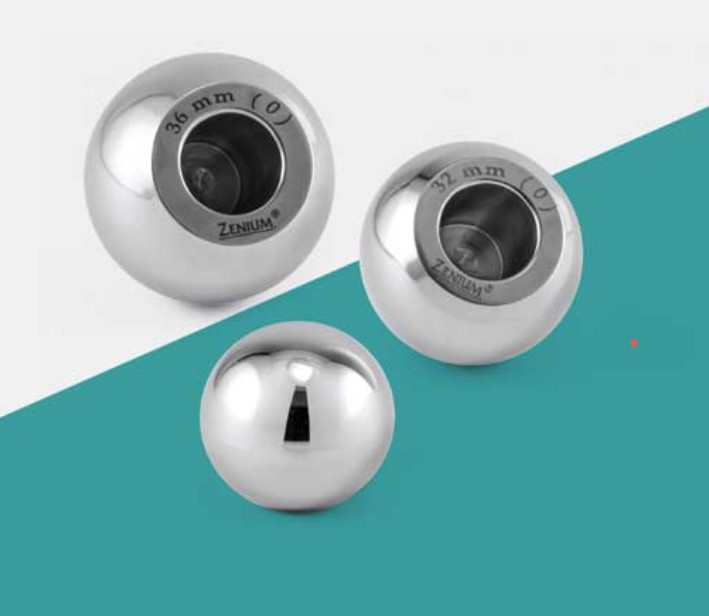 | Joint Replacement An Internal Head Manufacturer specializes in producing internal femoral heads used in hip replacement systems. View product → |
Frequently asked questions
What should be inside an internal-head shipment?
Confirm the quantity of femoral heads, individual sterile or non-sterile packaging, protective caps, labels, instructions for use and agreed certificates. Ask whether the shipment contains internal head components only or a complete hip implant set.
How do you match each head to the purchase order and hip system?
Compare the product code, quantity, head diameter, taper specification, lot number and packaging status with the purchase order and the compatible hip system. Do not accept a component when its taper or catalogue reference is unclear.
Which material and bearing details determine the correct component?
Check the head material, bearing pairing, diameter, taper geometry and compatibility with the stem and acetabular component. Record these details against the system specification before ordering.
Which records prove that the delivered lot is controlled?
Request the lot or batch number, certificate of conformity, material certificate, sterilization record for sterile products, inspection records and product labels. Keep these documents with the purchase order and receiving record.
What should you settle with a supplier before placing the order?
Agree on product codes, quantities, compatibility, sterile status, packaging, documentation, delivery condition, shelf life, replacement of discrepancies and the process for reporting damaged or incorrect components.