A modular bipolar head is not a universally interchangeable replacement part: its taper, head size, offset, shell, liner and locking mechanism must work as one validated assembly. By the end, you will know how to read the component configuration, evaluate sizing and trial instrumentation, confirm compatibility, and screen a supplier before a hospital or distributor places an order.
Key takeaways
- Request the taper, shell, head and bearing specifications before ordering.
- Match shell diameter and head size to the planned reconstruction.
- Confirm compatibility using manufacturer drawings, catalog numbers and assembly instructions.
- Reject mixed systems when the supplier cannot document validated component combinations.
What parts make up a modular bipolar head?
The assembly begins at the femoral stem’s taper, where a modular internal femoral head attaches. That head sits inside a polyethylene bearing, which is captured within a metallic bipolar outer shell by a retaining ring, snap-fit, crimp, or other locking mechanism.
The internal head articulates against the bearing; the outer shell articulates against the patient’s acetabulum. Therefore, the inner head diameter is not the acetabular contact diameter. Confusing those measurements can lead to an incorrectly sized order.
| Surface | What moves against it | What the measurement means |
|---|---|---|
| Internal head and polyethylene bearing | Internal head against bearing | Bearing or head geometry; not acetabular coverage |
| Metallic outer shell and acetabulum | Shell against native acetabulum | Bipolar shell diameter and acetabular contact size |
Two articulation sites do not make a bipolar device equivalent to a total hip replacement. Inner-bearing motion contributes little movement in some patients, and bipolar construction does not guarantee protection from acetabular erosion, groin pain, migration, dislocation, or later conversion to total hip arthroplasty.
For modular bipolar head details, request these specifications instead of accepting “polyethylene liner”:
- Exact shell material and surface finish
- Bearing-polymer grade, including oxidation or aging controls
- Sterilization method and any post-sterilization shelf-life evidence
- Retaining or locking-interface design and validated assembly instructions
Treat the stem taper, internal head, shell diameter, bearing geometry, and locking interface as one validated system. A catalogue phrase such as “modular bipolar cup head” does not prove that separate components are interchangeable.
What does modular mean, and how does it compare with other hip replacements?
“Modular” usually describes selected junctions, not the complete implant. In practice, it refers to the stem-head connection and the intraoperative choice of head diameter, neck length and offset. The stem, shell, polyethylene liner and locking mechanism remain a validated combination; a modular label does not authorise mixing manufacturers.
Taper angle, length, diameter, surface finish and locking tolerances still have to match. The modular bipolar head details worth checking are the approved stem-head and shell assembly, not a promise of universal interchangeability.
| Option | What changes | Practical implication |
|---|---|---|
| Modular bipolar | Head diameter, neck length and offset can be selected | The outer shell articulates with the acetabulum; the inner head moves against the liner |
| Fixed bipolar | Head or neck relationship is supplied as a fixed configuration | Fewer intraoperative adjustment options |
| Unipolar hemiarthroplasty | One femoral head articulates principally against the acetabulum | It does not replace the acetabular surface |
| Total hip replacement | An acetabular cup replaces the joint surface, and a femoral head moves inside it | It offers a different reconstruction with greater dislocation and perioperative burden |
For an older adult with a displaced femoral-neck fracture, AAOS guidance supports arthroplasty rather than internal fixation and allows either hemiarthroplasty or total hip arthroplasty. Choose between them using mobility, cognition, life expectancy, pre-existing acetabular disease and ability to follow precautions.
Total hip replacement may suit a selected, independently mobile patient; a bipolar hemiarthroplasty is not a universal fracture solution.
How do shell size, head size and offset affect the reconstruction?
A stated 37 mm to 55 mm range in 2 mm increments usually describes available shell diameters, but confirm this in the manufacturer’s documentation. Unless stated otherwise, ask whether each number identifies the outer bipolar shell diameter—not the internal femoral head or polyethylene liner diameter.
- Compare preoperative radiographs with templating and direct acetabular or femoral-head measurements. Select a trial shell that matches the patient’s anatomy.
- Reduce the hip with the trial components and assess coverage, leg length, offset, stability, range of motion and soft-tissue tension.
- Reject a shell that overfills the acetabulum, because overstuffing can restrict motion. Reject one that is too small, because poor coverage can create abnormal loading.
- Confirm the chosen shell, internal head, neck length and offset before opening the sterile final package.
The 2 mm increments provide finer control of shell fit, not a solution for every reconstruction problem. Neck length affects leg length and soft-tissue tension; offset affects abductor mechanics, stability and range of motion. A modular bipolar cup head therefore requires more than a nominal diameter.
For hip implants, ask how the trial system evaluates reduction and whether the catalogue offers enough offset choices. A supplier listing many shells but only one or two offsets may leave the surgical team without adequate options.
A phrase such as hip implants modular bipolar cup head does not establish which dimension the stated size represents.
How can you prove that the head, stem and shell are compatible?
Prove compatibility with the manufacturer’s controlled documents, not a catalogue phrase such as “hip implants modular bipolar cup head.” Request modular bipolar head details that identify the stem, inner head, polyethylene bearing, outer shell and locking mechanism as one validated system.
- Approved component matrix naming every permitted head, stem, liner and shell combination
- Taper drawing or specification showing taper angle, length, diameter, surface finish and locking tolerances
- Available head diameters and offsets, plus stem-family limitations
- Liner and shell material declarations, including the exact bearing-polymer specification, shell material and surface finish
- Locking-interface description and instructions for use
- Validated assembly instructions, compatible impactors, taper-cleaning instructions and traceability records for both mating components
Check whether each listed part is the stem-head taper, the inner head, the outer shell or the complete implant assembly. “12/14” and “Morse taper” are descriptions, not proof of interchangeability; manufacturers can use different angles, lengths, diameters, finishes and locking tolerances under those labels.
Require evidence from the complete intended combination, including static-load resistance and relevant fatigue or modular-junction testing. Separate testing of a head, shell, liner or stem does not establish assembled clinical performance.
Follow the assembly instructions exactly. Debris, fluid or incomplete impaction can cause fretting, corrosion, dissociation or assembly failure at the modular junction. The supplier must identify which impactor achieves the validated seating force and how staff must clean and inspect the taper.
What should a Buenos Aires buyer verify before ordering?
Do not release a purchase order until the supplier’s product, legal roles and clinical support appear in one procurement file. A search for modular bipolar supplier in buenos aires is only a starting point: a local warehouse does not prove Argentine registration or responsibility.
1. Verify the product’s ANMAT registration or applicable import authorization. Record the manufacturer, importer or local legal representative, and distributor as separate entities. Identify who handles registration, storage, warranty claims, vigilance reports and recall communication.
2. Check the Spanish label and instructions for use, storage temperature, sterile-packaging method, lot and serial fields, expiration date or shelf-life control, and damage or seal-failure instructions. Ask how complaints are logged, investigated and escalated after implantation.
3. Demand the approved component matrix, taper drawing or specification, available head diameters and offsets, stem-family limitations, liner and shell material declarations, locking-interface description and validated assembly instructions. Confirm impactor compatibility, taper-cleaning steps and traceability for both mating components; incomplete impaction or contamination can cause fretting, corrosion, dissociation or assembly failure.
4. Request complete-system static-load and relevant fatigue or modular-junction test evidence, not separate tests for the shell, liner, head and stem. Obtain the trial-instrument list and the manufacturer’s method for confirming shell fit, reduction, leg length, offset and stability before opening the sterile implant.
5. Require a written statement on manufacturer-specific interchangeability. Komal Health Care Pvt Ltd belongs in the same evidence-based comparison when evaluating modular bipolar head hip implants in buenos aires: document what is supplied, by whom and under which authorization.
Record warnings that bipolar construction does not eliminate acetabular wear, infection, periprosthetic fracture, dislocation or later revision.
Related products
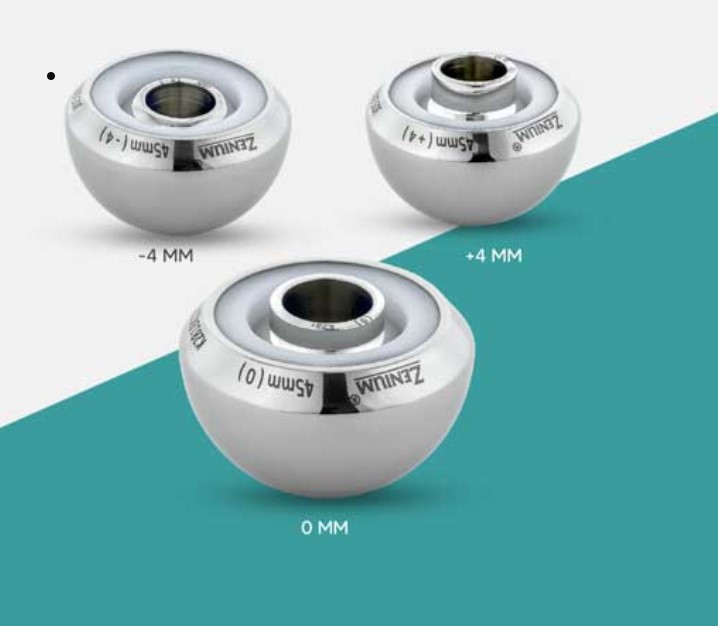 | Joint Replacement Modular Bipolar Cup (With Head) Manufacturer The Modular Bipolar Cup (With Head) is an advanced hip implant system used in hemiarthroplasty procedures, particularly for treating femoral neck... View product → |
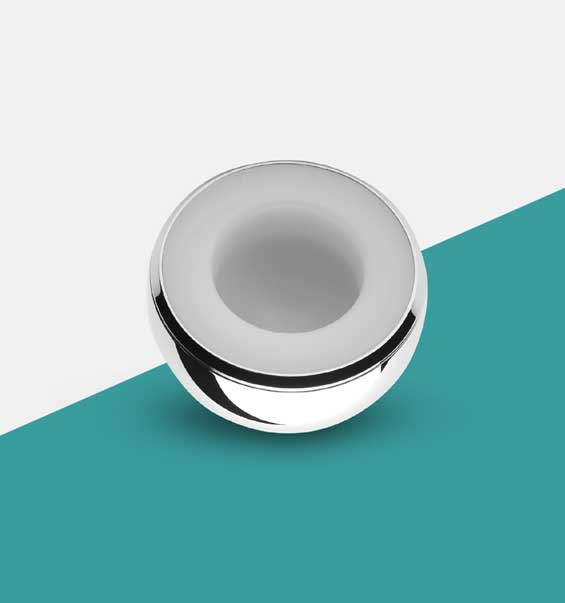 | Joint Replacement Modular Bipolar Cup Manufacturer A Modular Bipolar Cup Manufacturer specializes in producing advanced orthopedic components used in hip replacement surgeries. View product → |
Frequently asked questions
What parts make up a modular bipolar head?
A modular bipolar assembly includes an internal femoral head attached to the stem taper, a polyethylene bearing, a metallic outer shell and a locking mechanism such as a retaining ring, snap-fit or crimp.
What does modular mean in a bipolar hip replacement?
Modular means the femoral head and bipolar shell are separate components assembled during surgery. This allows the surgeon to select compatible head size, neck length and offset instead of using one fixed head-shell unit.
How do shell size, head size and offset affect reconstruction?
Shell size affects acetabular coverage, head size affects fit within the bearing and joint stability, and offset affects soft-tissue tension, leg length and the hip’s center of rotation.
How can you prove that the head, stem and shell are compatible?
Check the manufacturer’s compatibility chart, taper specification, catalog numbers, dimensions and assembly instructions. Do not rely on visual similarity or nominal diameter alone.
What should a Buenos Aires buyer verify before ordering?
Verify the supplier’s product documentation, traceability details, available sizes, packaging and sterilization information, regulatory records, and written confirmation that the selected head, stem and shell combination is validated.
Related products
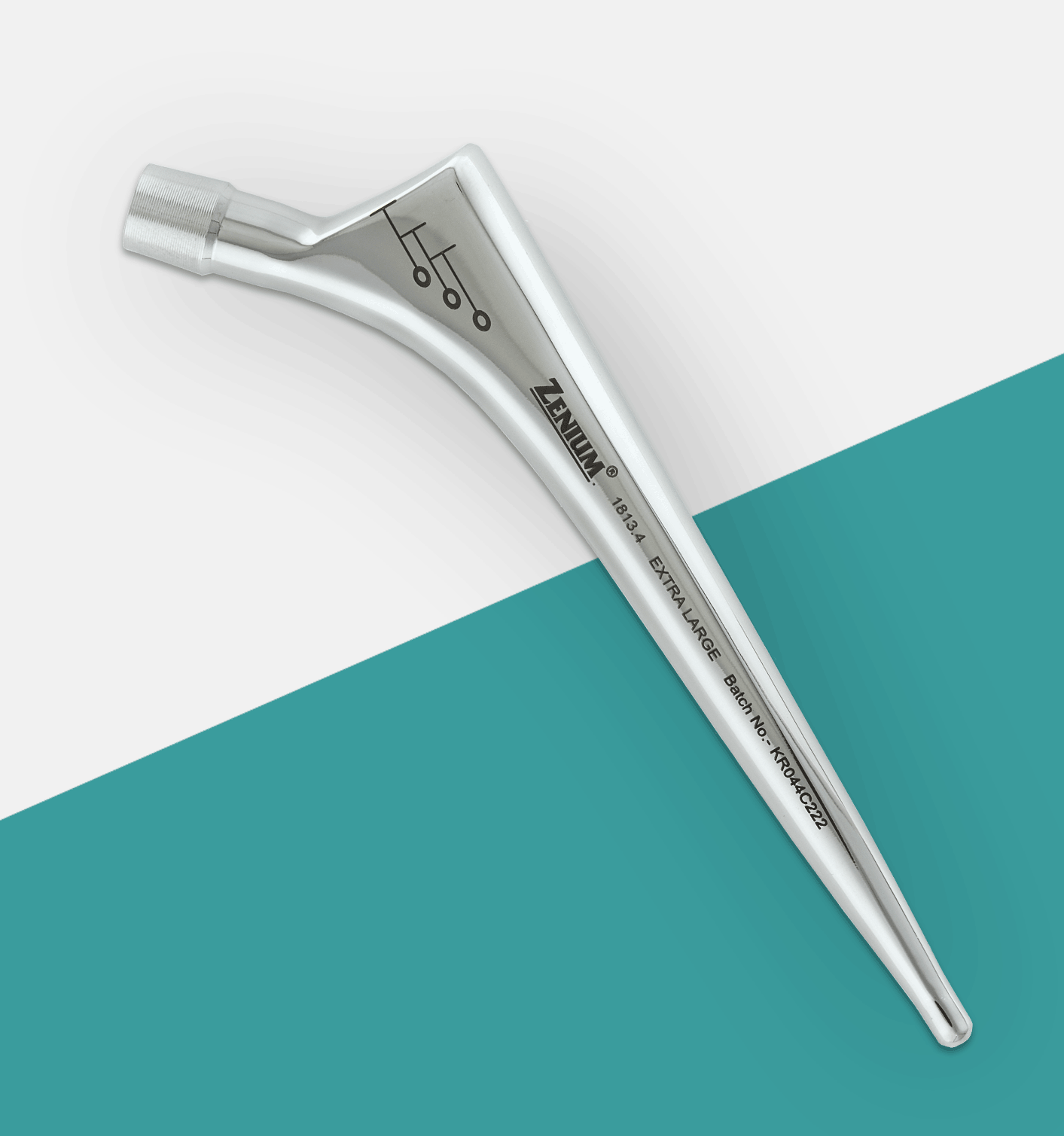 | Joint Replacement Bipolar Modular Stem (Cemented) Manufacturer The Bipolar Modular Stem (Cemented) is an orthopedic implant used in hip replacement surgeries, especially for elderly patients with fractured or... View product → |
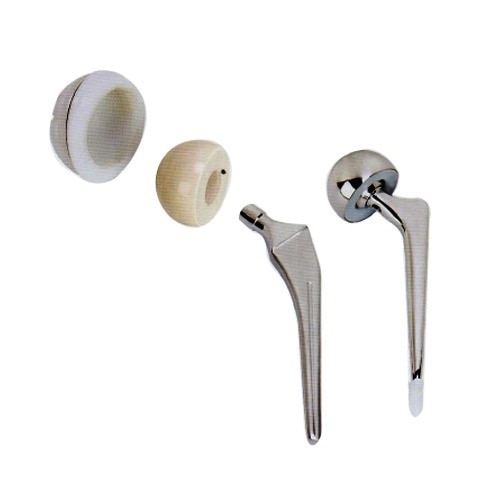 | Bipolar Hip Prosthesis We are manufacturer of Bipolar Prosthesis . Fix Bipolar and Modular Bipolar. Cup Size : 37 mm to 55 mm with 2 mm variation Material : S.S.316 L/LVM View product → |
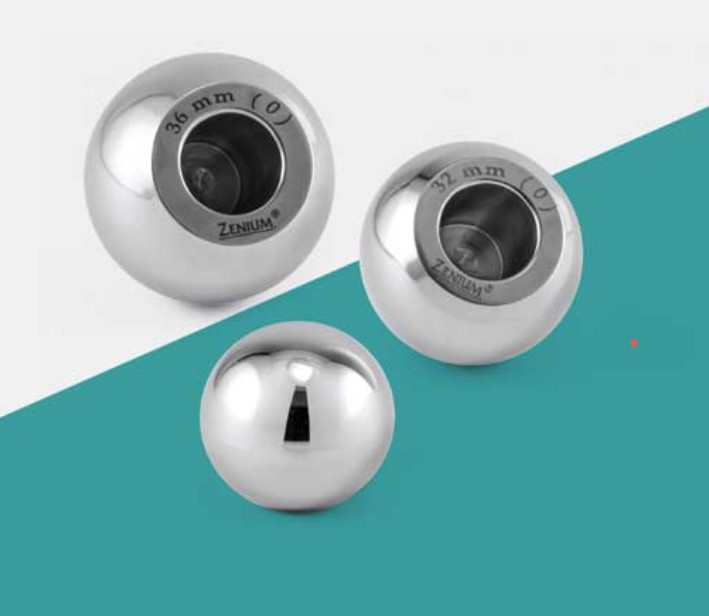 | Joint Replacement An Internal Head Manufacturer specializes in producing internal femoral heads used in hip replacement systems. View product → |
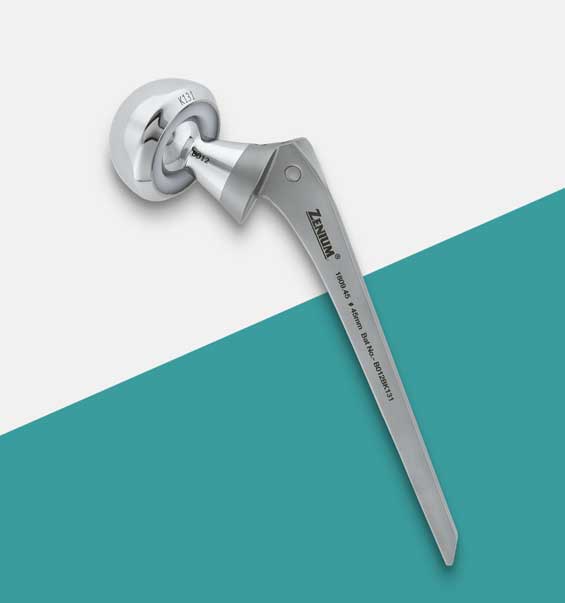 | Joint Replacement Bipolar Prosthesis (Non Fenestrated) Manufacturer The Bipolar Prosthesis (Non-Fenestrated) is a type of hip implant commonly used in hemiarthroplasty procedures, especially for treating femoral neck... View product → |