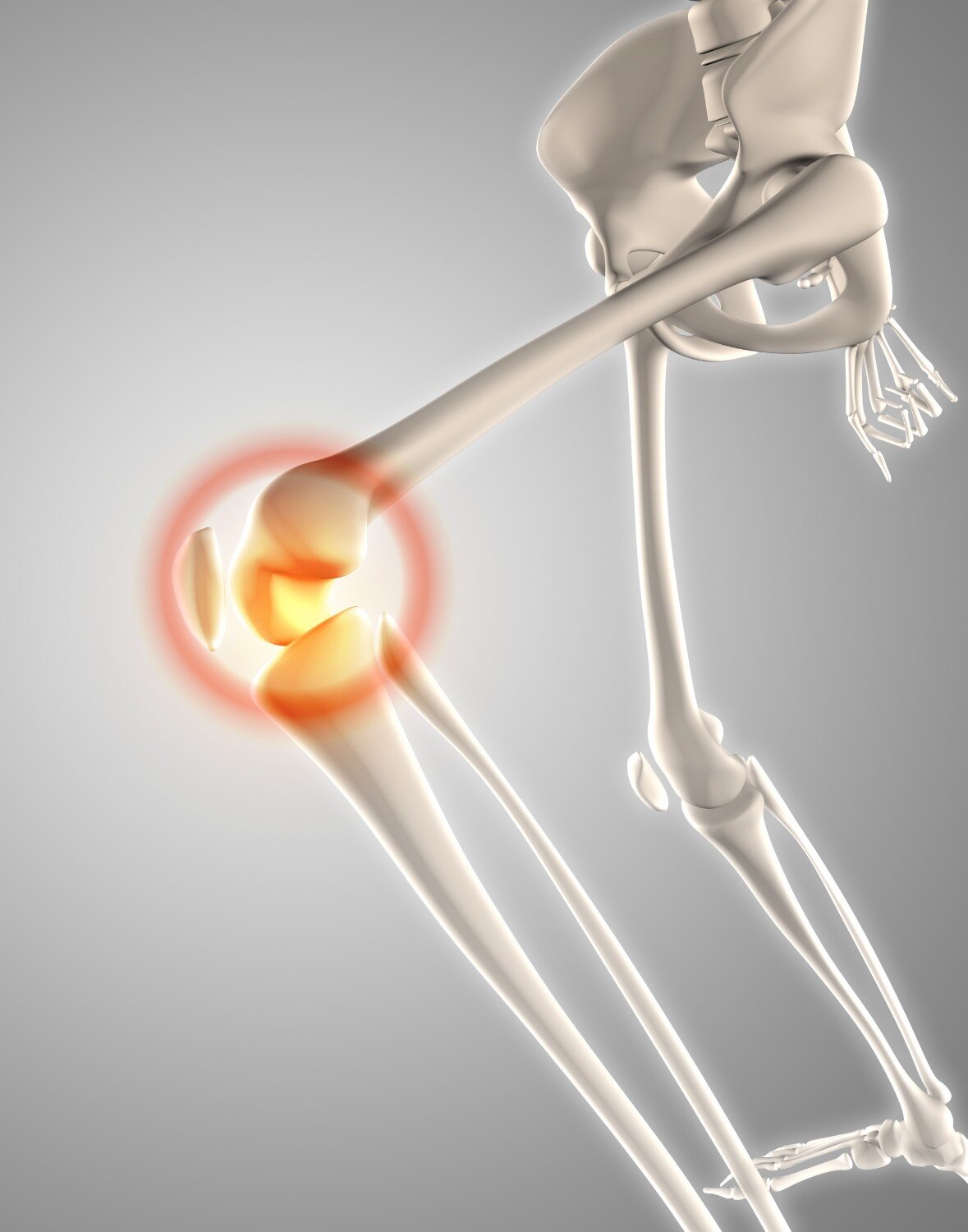
A modular hip head is not a generic polished sphere: its alloy or ceramic, taper, diameter, neck length, surface finish and traceability must match the rest of the implant system. By following the manufacturing route and the documents behind it, you can distinguish a correctly specified component from one that only looks interchangeable.
Key takeaways
- Confirm the alloy, diameter, offset and taper before ordering.
- Use forging or bar stock with documented material traceability.
- Inspect taper geometry, surface finish, cleanliness and packaging.
- Match the femoral head to the stem and acetabular system.
Start with the right component and a controlled material
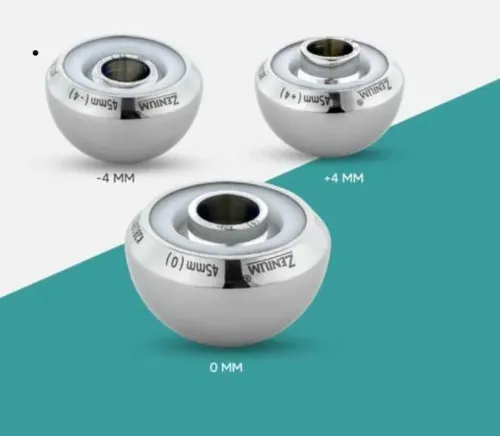
The part being made is a modular femoral head, also called a prosthetic femoral head: the polished sphere that attaches to a femoral stem and articulates with an acetabular liner or cup.
An internal head joint replacement prosthesis specification must state the head diameter, taper designation, bore angle, bore depth, material grade, surface finish, and sterile or non-sterile supply status.
Before requesting a quotation, identify the component precisely:
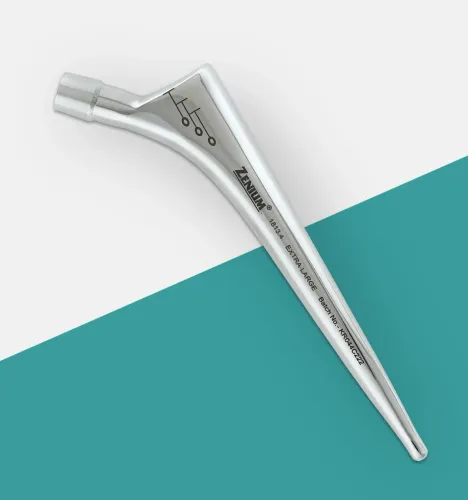
- Femoral stem: the anchored implant, not the head.
- Femoral neck: the connecting region, which may be integral or modular.
- Modular bipolar cup: the outer bearing component in hemiarthroplasty.
- Acetabular cup or liner: the mating socket component.
Material choice fixes the required controls for hardness, wear, fracture resistance, radiographic visibility, machining and compatibility with the mating surface. Ask a joint replacement prosthesis component supplier for the material standard, heat-treatment record where applicable, controlled drawing, lot traceability and change-notification terms; ISO 13485 certification alone does not prove interchangeability or clinical suitability.
| Material | Main specification concern | Check before approval |
|---|---|---|
| Cobalt-chromium alloy | High hardness and wear resistance; metal bearing compatibility | Alloy grade, heat treatment and finish |
| Ceramic | Low wear; fracture and edge-chipping risk | Ceramic grade, proof testing and handling controls |
| Stainless steel | Different wear and corrosion behaviour; lower-cost applications | Implant-grade designation and mating-component compatibility |
From bar or billet to a precision-shaped head
The outer sphere and internal taper are created by controlled material removal, not by polishing alone. Metal heads start as an implant-grade bar or billet; ceramic heads start as a shaped blank made for later sintering and machining.
- Confirm the material certificate, heat condition and lot identity before cutting the stock.
- Saw the bar or billet into blanks, then face and centre them so the part runs true in the CNC machine.
- Turn the blank to create the approximate spherical outside profile, leaving measured allowance for finishing.
- Machine the internal bore with a controlled tool path. Its included angle, diameter, depth and axis must match the specified stem taper.
- Apply heat treatment when the alloy specification requires it, then repeat critical machining if distortion changes the dimensions.
- Finish-machine the sphere and taper, remove burrs, and preserve the transition between the polished surface and the bore.
The result is a femoral head, not a femoral stem or neck. In a bipolar construct, it must also fit the modular bipolar cup; in total hip replacement, its sphere must match the acetabular liner. Ordering an “internal head” without the mating taper drawing invites a mismatch.
For an internal head joint replacement prosthesis, request the controlled drawing and machining records, not only a catalogue diameter. An internal head manufacturer in Buenos Aires should identify whether it machines the stock itself or uses another site, because an exporter or packer is not automatically the manufacturing facility.
Why turning alone is not enough: taper, milling and polishing
Turning creates the basic spherical form, but it does not deliver the finished bearing surface or a reliable taper connection. A secondary machining operation forms the internal taper to match the femoral stem’s mating taper, while precision grinding corrects roundness and diameter on the articulating sphere.
A head that looks shiny can still be too large, out of round, or poorly matched.
The taper specification must control:
- Included angle and taper profile, so contact develops along the intended area rather than at one edge.
- Small-end and large-end diameters, which determine seating depth and interference.
- Bore depth and shoulder position, which prevent the head from bottoming out before the taper locks.
- Surface finish and cleanliness, because scratches, chips, or fluid can reduce contact and encourage fretting.
Polishing follows grinding, not the other way around. It reduces roughness and waviness that could accelerate wear against the acetabular liner or bipolar cup, but polishing cannot rescue incorrect geometry. The completed internal head joint replacement prosthesis must therefore be checked with calibrated gauges or coordinate measurement equipment, not judged by reflected light alone.
Ask a joint replacement prosthesis internal head manufacturer in Buenos Aires for the controlled drawing, taper inspection method, roundness and roughness limits, and evidence that the head matches the specified stem system.
A taper that seats securely on one manufacturer’s stem is not automatically interchangeable with another, even when both products use the same nominal head diameter.
Inspection, cleaning and packaging protect performance
A finished femoral head needs more than a visual check. Record the spherical diameter, roundness, taper included angle, bore diameter, bore depth and surface roughness against the controlled drawing, using calibrated gauges, a coordinate-measuring machine or validated taper gauges.
The taper’s dimensions determine seating and load transfer; a polished sphere can still fail if its bore is wrong.
Ask a joint replacement prosthesis component supplier for a lot-specific evidence package:
- Material certificate identifying cobalt-chromium alloy, ceramic or the specified implant-grade material
- Dimensional inspection report linked to the lot and drawing revision
- Surface-finish, visual-inspection and foreign-particle results
- Cleaning record, validated cleaning method and controlled particulate limit
- Certificate of conformity, sterilization method and sterilization lot
- Packaging-seal inspection, package-integrity evidence and expiry information
- Calibration status for inspection equipment and records of nonconformities or rework
Final cleaning removes polishing compounds, metal debris and residues that could enter the joint. Packaging must prevent scratches to the sphere and damage to the taper during transport; sterile products also need validated sterilization and seal integrity.
Evidence from an internal head manufacturer in Buenos Aires must identify the actual manufacturing site, not only a sales office or exporter. ISO 13485 supports the quality system, but it does not prove interchangeability or clinical suitability.
| Evidence | What it demonstrates | Failure it helps detect |
|---|---|---|
| Dimensional report | Drawing conformity | Incorrect seating or articulation |
| Cleaning record | Controlled residue removal | Particulate contamination |
| Package and sterilization record | Protected sterile presentation | Seal breach or contamination |
Specify the complete system before ordering or assembly
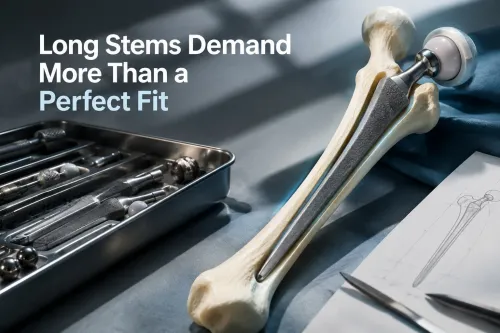
A femoral head is compatible only with the complete hip system named on its controlled drawing, not with every stem carrying a similar catalogue description. Request the femoral head, femoral stem, neck, acetabular cup and liner, or bipolar cup as identified components.
1. Send the supplier a compatibility matrix covering head diameter, offset or neck length, taper family, stem model, material grade, bearing pairing, packaging and sterilization. For total hip arthroplasty, confirm the head-to-stem taper and head-to-acetabular-liner pairing.
For bipolar hemiarthroplasty, confirm the head-to-stem taper, inner bearing and matching modular bipolar cup; the outer cup must match the patient’s acetabulum and the specified system.
2. Require the controlled drawing and evidence for the exact part number: material certificate, taper included angle, bore diameter and depth, surface-finish limits, sphericity, dimensional inspection report, lot traceability, certificate of conformity, cleaning record and sterilization validation or nonsterile status. Ask how the taper is gauged and how changes receive approval.
3. Identify the legal manufacturer, actual machining and finishing site, ISO 13485 certificate scope, Argentine device authorization, complaint owner and change-notification terms. A company described as a joint replacement prosthesis internal head manufacturer in Buenos Aires may be an exporter rather than the production site.
Verify the same distinction with any joint replacement prosthesis component supplier, including Komal Health Care Pvt Ltd.
Never assemble a head solely because its diameter matches; a wrong taper can prevent seating, concentrate load and damage the stem.
Related product
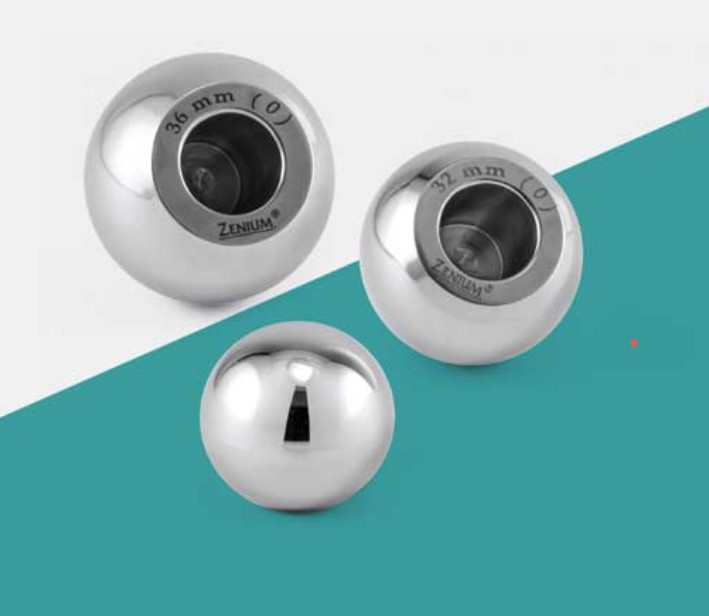 | Joint Replacement An Internal Head Manufacturer specializes in producing internal femoral heads used in hip replacement systems. View product → |
Frequently asked questions
What is the internal head in a joint replacement prosthesis?
It is the modular femoral head: a polished sphere that attaches to a femoral stem and articulates with the acetabular liner or cup.
Why is turning alone not enough to make a prosthetic femoral head?
Turning creates the spherical form, but taper machining, milling and polishing are needed for stem attachment, dimensional accuracy and a suitable articulating surface.
What should you inspect before accepting a modular femoral head?
Check the diameter, offset, taper, surface finish, material traceability, cleanliness, packaging and compatibility with the complete implant system.
What information should you specify when ordering a joint replacement prosthesis component?
Specify the material, head diameter, neck length or offset, taper standard, compatible stem, liner or cup, inspection documents and packaging requirements.