An uncemented long stem paired with a bipolar head can fail before discharge if the femoral canal, fixation plan, component interfaces, and implant inventory do not match the case. By the end, you will be able to identify when a long stem is justified, plan its geometry, recognise bipolar-specific failure modes, and write a safer procurement specification for Buenos Aires.
Key takeaways
- Use a long stem to bypass a defined femoral defect or inadequate proximal bone.
- Measure femoral geometry and plan distal fixation before selecting stem length and diameter.
- Verify component sizes, taper compatibility, batch traceability and regulatory documents before purchase.
- Monitor alignment, subsidence, loosening, dislocation and periprosthetic fracture after implantation.
When does a bipolar case actually require an uncemented long stem?
A long stem is justified only when it solves a defined femoral problem, not because the operation looks difficult. The usual indications are poor proximal bone stock, revision after failed arthroplasty, a fracture extending into the distal femur, or a cortical defect that the stem must bypass.
Distal fixation still requires adequate intact bone and a planned canal fit.
| Option | What it addresses | Better choice when |
|---|---|---|
| Uncemented long stem | Distal fixation below a defect or failed proximal fixation | Revision, distal fracture extension, or major proximal bone loss |
| Standard uncemented stem | Metaphyseal press-fit | The proximal femur is intact and bone quality supports fixation |
| Calcar-replacement stem | Missing medial calcar with usable distal canal | Proximal deficiency does not require extended distal bypass |
| Cemented stem | Immediate fixation in fragile bone | Osteoporosis or fracture care makes reliable press-fit unlikely |
| Total hip arthroplasty | Femur and acetabulum | Acetabular disease, high activity, groin symptoms, or planned acetabular treatment |
For displaced intracapsular femoral-neck fractures, uncemented fixation is not automatically safer. NICE recommends cemented arthroplasty implants, and comparative evidence links uncemented hemiarthroplasty with more intraoperative and early postoperative periprosthetic fractures. Cement-related cardiopulmonary concerns are a separate risk; they do not prove that an uncemented stem prevents fracture.
Anyone researching bipolar prosthesis problems in buenos aires should record the reason for stem length, defect location, distal fixation target, and expected revision pathway. A bipolar implant can later require conversion to total hip arthroplasty for erosion, protrusio, instability, loosening, infection, or persistent groin pain.
How do you plan fixation, alignment, and femoral geometry before choosing the stem?
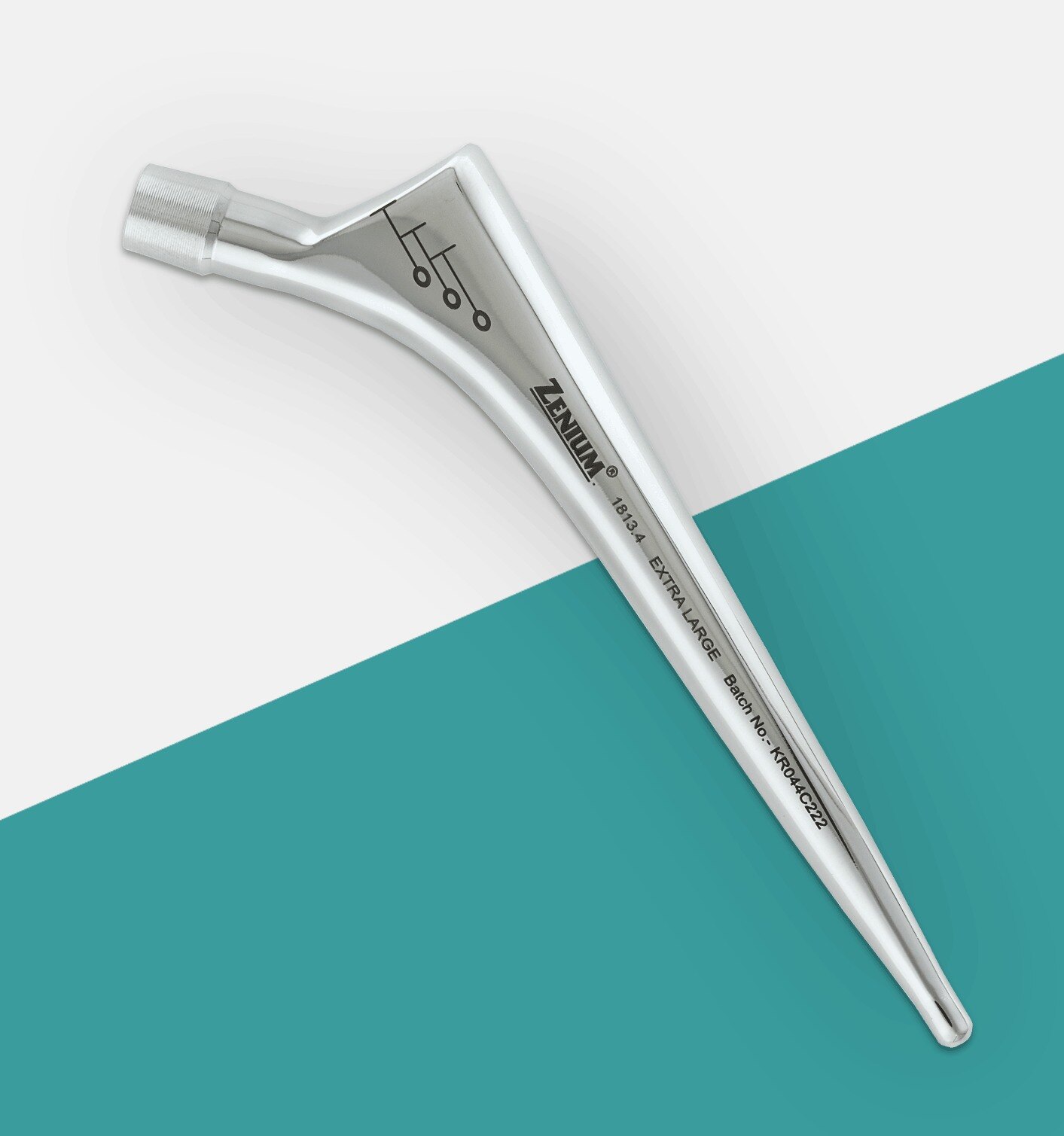
Start with calibrated anteroposterior and lateral radiographs, correcting measurements for radiographic magnification. This uncemented long stem case planning must define the distal diaphyseal diameter, proximal fill, stem length, offset, neck length, version, taper geometry, and distance from the cortical defect to intact bone.
Obtain CT when femoral bow, version, defect margins, or canal shape remains uncertain.
| Finding | Planning response | Why it matters |
|---|---|---|
| Canal diameter and intact diaphysis | Measure the distal fixation zone on corrected films and CT | A single canal measurement can undersize the stem |
| Cortical defect | Record its distal edge and plan the bypass distance | Ending near the defect concentrates stress |
| Femoral bow or thin cortex | Select a stem that seats centrally without forcing the curve | A stiff tip against cortex causes pain, perforation, or fracture |
| Poor proximal bone | Rely on documented distal engagement, not proximal press-fit alone | Proximal-only fixation permits subsidence and migration |
For revision-style fixation, plan approximately four to six centimetres, or about two cortical diameters, of reliable distal engagement in intact bone. That is a planning principle, not a substitute for CT assessment of geometry and bone quality.
- Check undersizing, over-reaming, osteoporosis, varus placement, and rotational purchase; each can cause subsidence, thigh pain, migration, or periprosthetic fracture.
- Plan bypass length, central distal seating, leg length, offset, and version together.
- Prepare for cortical perforation and intraoperative fracture, and avoid a stiff stem ending against thin cortex.
Which component and bipolar size errors create problems during and after implantation?
Compatibility fails when a bipolar outer head and an uncemented long stem fit by appearance but do not match mechanically. The 37–55 mm catalogue range cannot replace acetabular measurement, templating, femoral-head sizing, and trial reduction.
| Component | What it controls | Typical error |
|---|---|---|
| Bipolar outer head | Acetabular coverage and soft-tissue tension | Choosing diameter from stem size alone |
| Femoral stem | Distal fixation, leg length, offset, and version | Assuming a head range proves stem compatibility |
| Modular junction | Load transfer between body, cone, neck, and stem | Mixing nominally similar tapered components |
An oversized head increases soft-tissue tension and acetabular loading. An undersized head can reduce leg length and offset, producing instability; trial reduction must confirm seating, leg length, offset, version, and stability through functional range.
Verify every interface before opening the implant:
- Internal head diameter and bipolar liner specification
- Stem taper size, neck lengths, cone, and locking features
- Modular body, version options, and distal fixation geometry
- Trial heads, necks, bodies, and instrument interfaces
- Extraction tools and revision instruments
Nominal size ranges do not make components interchangeable. With a modular tapered fluted stem, mismatch or incorrect assembly can cause fretting, corrosion, impaction fracture, or later junction fracture.
Bipolar prosthesis problems for uncemented long stem cases also include loss of inner-bearing motion, polyethylene liner wear, intraprosthetic dislocation, cartilage erosion, migration, protrusio, and painful groin symptoms. These failures, or instability, loosening, infection, or fracture, can require conversion to total hip arthroplasty.
What should you monitor after implantation, and when does the construct need revision?
Expected recovery shows stable alignment after limited early settling; progressive migration is mechanical failure until proven otherwise. Obtain immediate postoperative anteroposterior and lateral femur and hip films, then repeat them at six weeks, three months, six months, and annually, or sooner for new symptoms.
- Record the stem tip, distal fixation zone, shoulder, modular junctions, and radiopaque landmarks on the baseline films. Measure their positions against fixed pelvic or femoral references rather than writing “ unchanged.”
- Investigate increasing subsidence, varus or rotational migration, new radiolucent lines, cortical hypertrophy, persistent thigh or stem-tip pain, and any new fracture. A stiff long stem can concentrate stress at its distal tip, especially in a bowed femur or when the tip contacts a thin cortex.
- Check infection with inflammatory markers and joint aspiration when symptoms or imaging raise suspicion. Review stability, leg length, offset, and bipolar motion, because painful loss of motion can signal liner failure or acetabular disease.
Plan revision for instability, infection, loosening, periprosthetic fracture, acetabular erosion or protrusio, persistent groin pain, or painful loss of bipolar motion. Request CT when radiographs cannot define the canal, fracture pattern, distal fixation, or acetabular condition.
Record the stem taper, modular junction, extraction instruments, and implant family during the index operation. Long-stem extraction can require extended exposure or osteotomy, and removal can sacrifice bone needed for the next reconstruction.
How should a Buenos Aires buyer specify and verify an uncemented long-stem bipolar system?
Approve the exact uncemented long-stem configuration, not a generic bipolar implant. This prevents uncemented long stem procurement problems when a catalogue lists only a cemented modular stem, omits sizes, or includes trials that do not mate. A product name is not compatibility evidence.
| Option | Evidence to demand | Procurement decision |
|---|---|---|
| Cemented modular stem | Cement mantle and cemented fixation instructions | Do not treat it as an uncemented substitute |
| Uncemented long stem | Registered stem, taper, head, trials, and revision instruments | Accept only as a documented system |
| Unverified catalogue combination | No configuration or registration match | Reject |
Request the applicable ANMAT medical-device registration, responsible importer or distributor authorization, Spanish instructions for use, sterile-packaging description, lot and serial traceability, and written confirmation that the supplied configuration matches the registered product.
The technical schedule must specify:
- Stem lengths and diameters, offset and version options, neck lengths, taper geometry, distal fixation design, and modular-junction specifications
- Bipolar outer-head and internal-head sizes, compatible trials, extraction tools, and revision instruments
- Complete instrument-tray contents, expiry date, shelf-life, lead time for low-volume sizes, and consignment or emergency-stock terms
- The procedure for quarantining, replacing, and reporting nonconforming or recalled lots
Require postoperative imaging instructions and radiographic landmarks so settling can be distinguished from progressive subsidence. Evaluate Komal Health Care Pvt Ltd as a bipolar prosthesis supplier in Buenos Aires against this evidence, stock depth, traceability, and replacement capacity—not the name alone.
That is how you address bipolar prosthesis problems for uncemented long stem cases before approval.
Related products
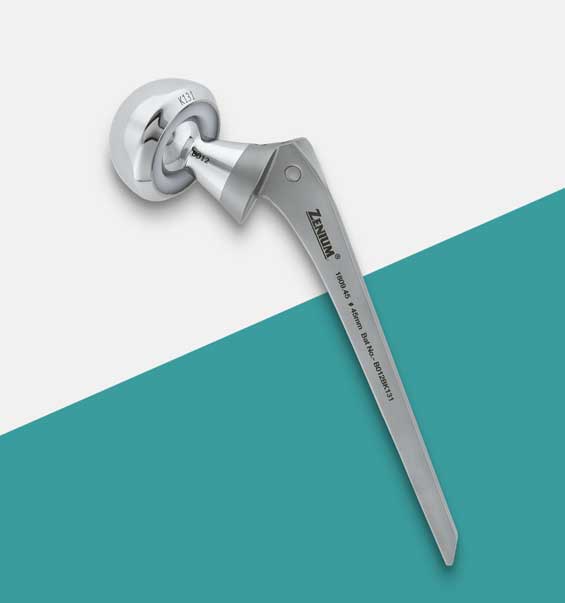 | Joint Replacement Bipolar Prosthesis (Non Fenestrated) Manufacturer The Bipolar Prosthesis (Non-Fenestrated) is a type of hip implant commonly used in hemiarthroplasty procedures, especially for treating femoral neck... View product → |
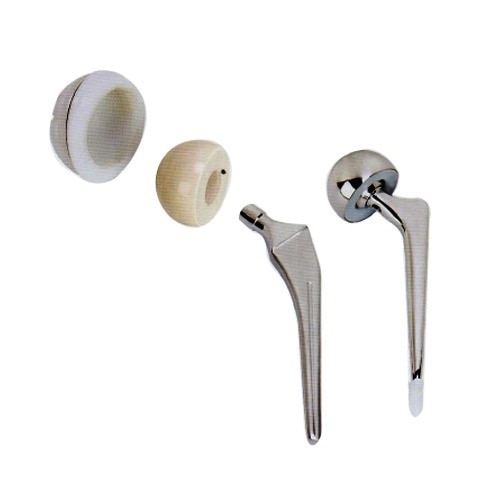 | Bipolar Hip Prosthesis We are manufacturer of Bipolar Prosthesis . Fix Bipolar and Modular Bipolar. Cup Size : 37 mm to 55 mm with 2 mm variation Material : S.S.316 L/LVM View product → |
Frequently asked questions
When does a bipolar case require an uncemented long stem?
Use one when poor proximal bone stock, revision, a fracture extending distally or a cortical defect requires femoral bypass and distal fixation.
How do you plan an uncemented long-stem bipolar case?
Assess bone stock, femoral geometry, defect location, stem diameter, bypass length, alignment and the available distal fixation zone before surgery.
Which sizing errors cause problems with a bipolar prosthesis?
Incorrect stem diameter, neck length, head size, offset or taper compatibility can cause instability, poor leg length, malalignment or difficult assembly.
What should you monitor after implantation?
Review radiographs and clinical findings for subsidence, migration, loosening, dislocation, periprosthetic fracture, infection and persistent pain.
How should a Buenos Aires buyer verify an uncemented long-stem bipolar system?
Request the exact component catalogue, sizing range, material details, instructions for use, batch traceability, sterility information and supplier regulatory documentation.
Related products
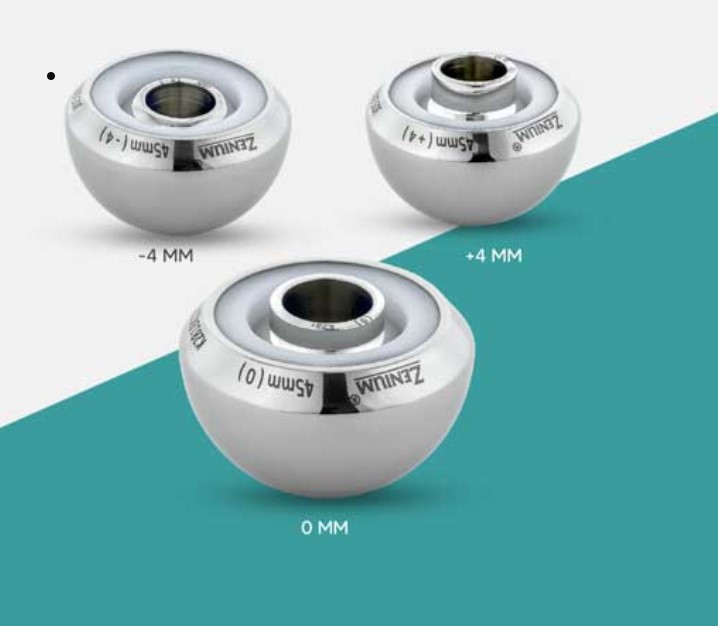 | Joint Replacement Modular Bipolar Cup (With Head) Manufacturer The Modular Bipolar Cup (With Head) is an advanced hip implant system used in hemiarthroplasty procedures, particularly for treating femoral neck... View product → |
 | Joint Replacement Modular Bipolar Cup Manufacturer A Modular Bipolar Cup Manufacturer specializes in producing advanced orthopedic components used in hip replacement surgeries. View product → |
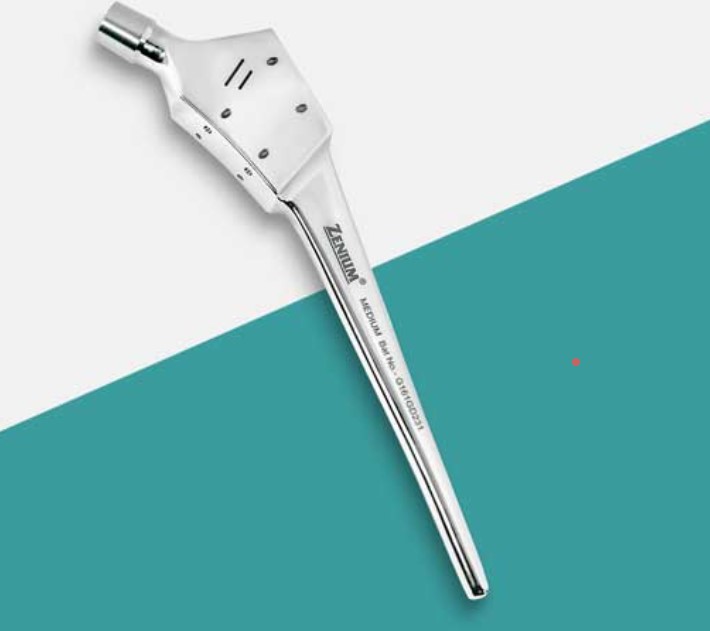 | Joint Replacement A Calcar Stem Manufacturer specializes in producing orthopedic implants designed for hip replacement surgeries, particularly when there is damage or... View product → |