A THR instrument set may prepare the femur without containing the trials and impactors needed for bipolar hemiarthroplasty. By checking the implant interfaces, fixation method, instrument catalogue numbers and manufacturer-approved configuration, you can identify a genuinely compatible set before procurement or surgery.
Key takeaways
- Confirm the THR set supports bipolar hemiarthroplasty before procurement.
- Match the femoral taper, head and bipolar shell within one approved system.
- Request bipolar trials, a shell impactor and the correct inserter.
- Compare catalogue numbers, instructions and compatibility evidence before ordering.
First confirm that the THR set supports bipolar hemiarthroplasty
A THR instrument set does not automatically support bipolar hemiarthroplasty. A non-fenestrated bipolar prosthesis articulates internally between its bipolar shell and femoral head, then externally with the patient’s native acetabulum. A total hip replacement set may prepare the femur well while lacking the bipolar trials, shell impactor and bipolar-specific inserter.
1. Identify the proposed implant as a hemiarthroplasty system, not merely a femoral component from a total hip replacement system. Record its shell diameter range, head sizes, neck lengths and stem fixation type: cemented, press-fit or both.
2. Open the quotation’s instrument inventory and look specifically for bipolar shell trials, femoral head trials, a bipolar shell impactor, a bipolar inserter and any retaining or locking tool named in the manufacturer’s instructions.
Acetabular reamers and cup impactors do not replace these instruments; they prepare an implanted THR cup that bipolar surgery does not use.
3. Check that the set contains the correct broaches, rasps, trial necks and stem inserters for the proposed stem family. Cemented stems can require cement restrictor instruments and centralizers, while uncemented stems require press-fit preparation tools.
4. Require written confirmation that the implants and reusable instruments form an approved configuration. For a Buenos Aires procurement, also verify the Argentine registration, importer or local responsible party, catalogue numbers, lot traceability and Spanish-language IFU. A trial assembly that appears to mate is not compatibility evidence.
Match the femoral taper, head and bipolar shell as one approved system
Do not pair parts by nominal head diameter alone: match the femoral stem, femoral head and bipolar shell as one manufacturer-approved system. A 28 mm head can still fail if its taper angle, taper length, engagement geometry or locking condition does not match the stem’s femoral-neck taper.
Request the approved compatibility file and check:
- Stem catalogue number, stem family and femoral-neck taper drawing
- Head catalogue number, diameter, neck length and taper interface
- Bipolar shell catalogue number, inner head size, bearing design and retaining-ring mechanism
- Matching trial head, shell, liner and neck-length catalogue numbers
- Current instructions for use (IFU), including the approved stem/head/shell matrix
| Check | What must match | Failure if it does not |
|---|---|---|
| Stem to head | Taper angle, length, diameter, engagement depth and locking condition | Incomplete seating, instability or head disengagement |
| Head to shell | Head diameter, shell inner diameter and bearing clearance | Excessive play, binding or inability to assemble |
| Shell to retaining ring | Ring profile, capture geometry and product family | Incorrect capture or ring failure |
| Trials to implants | Dimensions and catalogue-family references | Misleading trial reduction and wrong implant selection |
| Instruments to procedure | Shell trials, shell impactor and bipolar inserter, not only stem tools | A usable THR tool set without bipolar instrument compatibility |
Mechanical fit between a broach, inserter or impactor and an implant does not prove implant compatibility. Confirm thr instrument set compatibility separately from the validated implant interfaces, and reject “universal” or “fits most THR systems” claims without drawings and catalogue cross-references.
Build the instrument list around stem fixation and bipolar insertion
The fixation method determines the essential instruments. A cemented bipolar stem needs canal-preparation and cement-delivery tools; an uncemented stem needs broaches and a press-fit insertion system. Both procedures also require bipolar-specific trials and insertion instruments that a conventional THR set may not contain.
For a cemented configuration, check for:
- Femoral rasps or broaches, a canal plug or cement restrictor inserter, canal brush and lavage equipment
- Cement mixing and delivery equipment, a stem inserter, and a centralizer when specified by the stem system
- Trial necks, femoral heads, bipolar shells, shell trials, and a bipolar shell inserter or impactor
- A femoral head impactor and extraction tools matched to the stem family
For an uncemented configuration, check for:
- The correct broach geometry and size range, a calcar planer when specified, and a press-fit stem inserter
- Femoral head and neck trials, bipolar shell trials, the system-specific shell inserter, and head impactor
- Stem extraction instruments for intraoperative correction or revision
| Configuration | Required fixation instruments | Bipolar instruments still required |
|---|---|---|
| Cemented stem | Restrictor inserter, cement delivery system, canal preparation tools, centralizer where specified | Shell trials, head and neck trials, bipolar shell inserter, femoral head impactor |
| Uncemented stem | Broaches, rasps, press-fit inserter, calcar tools where specified | Shell trials, head and neck trials, bipolar shell inserter, femoral head impactor |
| Conventional THR set | Acetabular reamers and cup impactors for an implanted acetabular cup | Usually lacks bipolar shell trials and bipolar-specific insertion tools |
Acetabular reamers and THR cup impactors do not replace bipolar sizing or shell insertion instruments. A broach or head impactor from the THR set can be mechanically usable, but only the manufacturer’s approved configuration proves implant-and-instrument compatibility.
Verify catalogue numbers, trials and instructions before the operation
A sterile tray and a component that locks together do not prove a validated configuration. Require a manufacturer-issued cross-reference that links the exact implant, trial parts and reusable instruments; “universal” or “fits most THR systems” is not technical evidence.
1. Record the catalogue number, size range, lot or serial information and current IFU revision for the stem, femoral head, bipolar shell and locking mechanism. Confirm the approved stem–head–shell matrix, taper dimensions, head diameter, neck length and shell range in the manufacturer’s documentation.
2. Match every trial to its catalogue number and intended implant. The trial head, bipolar shell trial, neck-length options and reduction tools must reproduce the final construct; a trial that fits mechanically but is not listed for that implant does not validate the choice.
3. Inventory the THR set by catalogue number. Identify the broaches, rasps, stem inserter, head impactor, bipolar-shell inserter, extraction tools and any dedicated adapters. A femoral instrument that works physically is not proof that the implant combination was tested with it.
4. Check the non-fenestrated shell instructions for its retaining mechanism and insertion interface. Do not use a central-screw, peg or fenestrated-shell driver unless the IFU expressly lists it.
5. File the reusable-instrument instructions for cleaning, inspection, assembly, packaging and sterilization, and mark single-use components separately. ISO 16061 supports instrument safety for non-active implants; it does not make systems interchangeable.
6. Have the surgeon, theatre lead and procurement or quality officer sign the configuration record before opening the set. A missing catalogue cross-reference, obsolete IFU or unmatched trial stops the case.
Turn compatibility evidence into a procurement decision in Buenos Aires
In Buenos Aires, do not approve a quotation until the evidence identifies a legally deployable implant, an authorized seller and a complete procedure configuration. Compare bipolar components for hospital procurement by total readiness, not by shell price alone.
1. Request the applicable ANMAT registration or authorization record, the importer or Argentine responsible party, seller authorization, catalogue numbers, lot traceability method and Spanish-language instructions for use and labeling.
2. Require a written system cross-reference linking the stem family, taper, femoral head, neck length, bipolar shell range, retaining mechanism, trials and separate THR instrument set. “Non-fenestrated” does not prove acceptance of a screw, peg or fenestrated-shell driver.
3. Demand the complete instrument schedule: shell trials, a shell impactor contacting the manufacturer-designated shell surface, femoral broaches, stem inserter, head impactor, extraction tools, sterilization trays and replacement catalogue numbers. A standard head impactor can load the liner or retaining rim incorrectly.
4. Ask for reusable-instrument instructions covering cleaning, inspection, assembly, packaging and sterilization, plus a clear separation of reusable and single-use items. ISO 16061 supports evaluation of instruments for non-active implants; it does not make unrelated systems interchangeable.
If Komal Health Care Pvt Ltd is the proposed non-fenestrated bipolar prosthesis supplier, request this dossier alongside its quotation and have the surgeon, biomedical engineer and procurement officer sign the compatibility decision. Missing evidence is a reason to pause, not an invitation to substitute a familiar THR instrument.
Related products
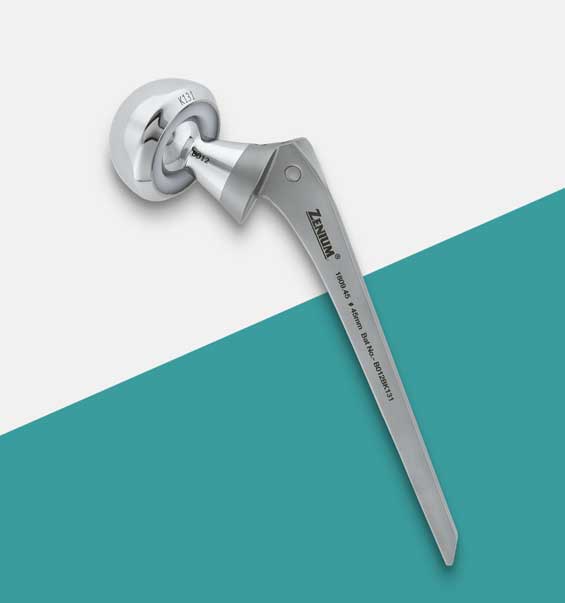 | Joint Replacement Bipolar Prosthesis (Non Fenestrated) Manufacturer The Bipolar Prosthesis (Non-Fenestrated) is a type of hip implant commonly used in hemiarthroplasty procedures, especially for treating femoral neck... View product → |
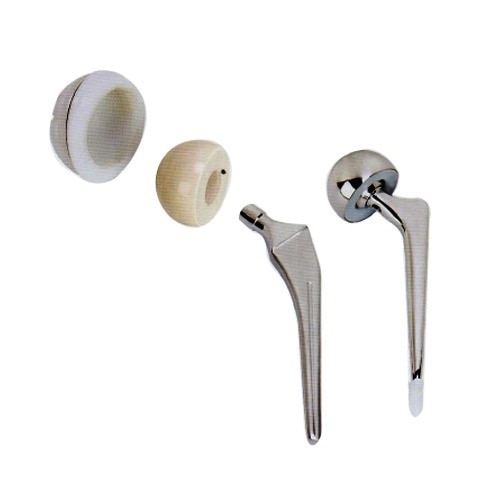 | Bipolar Hip Prosthesis We are manufacturer of Bipolar Prosthesis . Fix Bipolar and Modular Bipolar. Cup Size : 37 mm to 55 mm with 2 mm variation Material : S.S.316 L/LVM View product → |
Frequently asked questions
Does every THR instrument set support bipolar hemiarthroplasty?
No. Confirm that the set includes bipolar trials, a bipolar shell impactor and a bipolar-specific inserter, not only total hip instruments.
How should you match non-fenestrated bipolar components?
Match the femoral taper, femoral head and bipolar shell as one approved system, using the manufacturer's compatibility documentation.
Which instruments are needed for bipolar insertion?
Build the list around femoral stem fixation and bipolar insertion, including the required trials, shell impactor and bipolar inserter.
What should Buenos Aires hospitals verify before procurement?
Check catalogue numbers, trial sizes, instructions for use and documented compatibility before selecting a supplier or ordering the set.
Related products
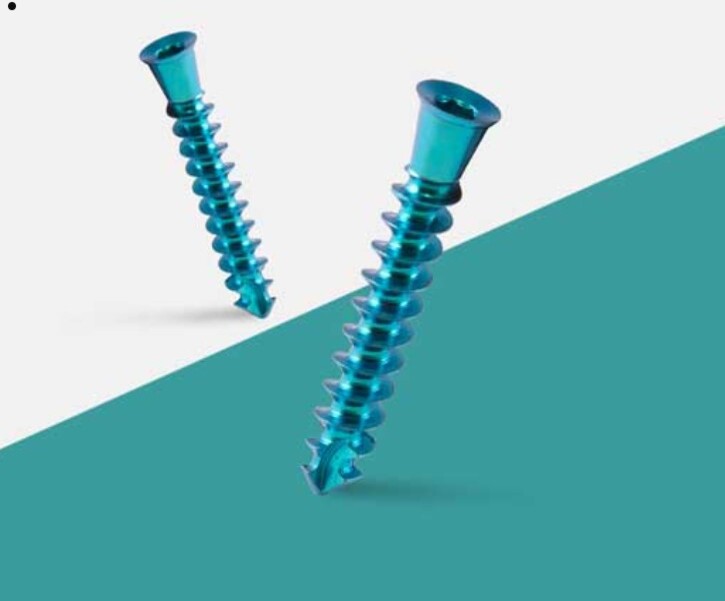 | Joint Replacement A THR Screw Manufacturer produces specialized screws used in Total Hip Replacement (THR) surgeries to secure implants and enhance joint stability. View product → |
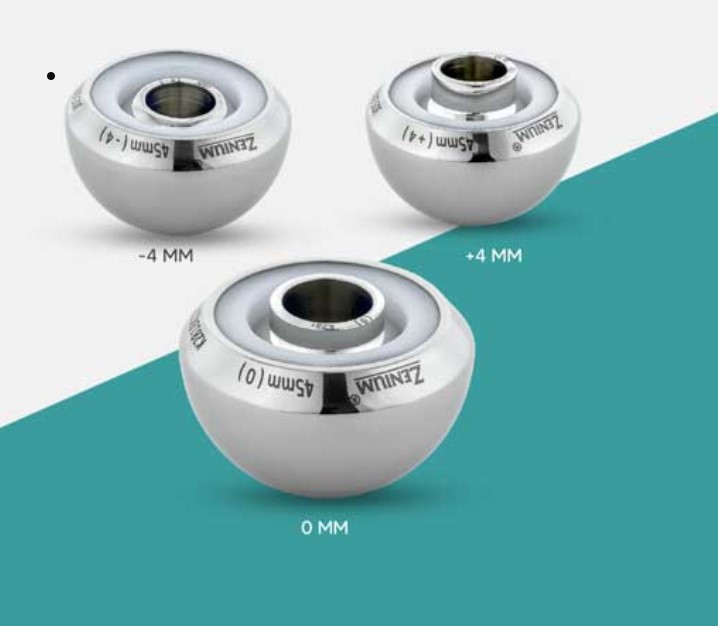 | Joint Replacement Modular Bipolar Cup (With Head) Manufacturer The Modular Bipolar Cup (With Head) is an advanced hip implant system used in hemiarthroplasty procedures, particularly for treating femoral neck... View product → |
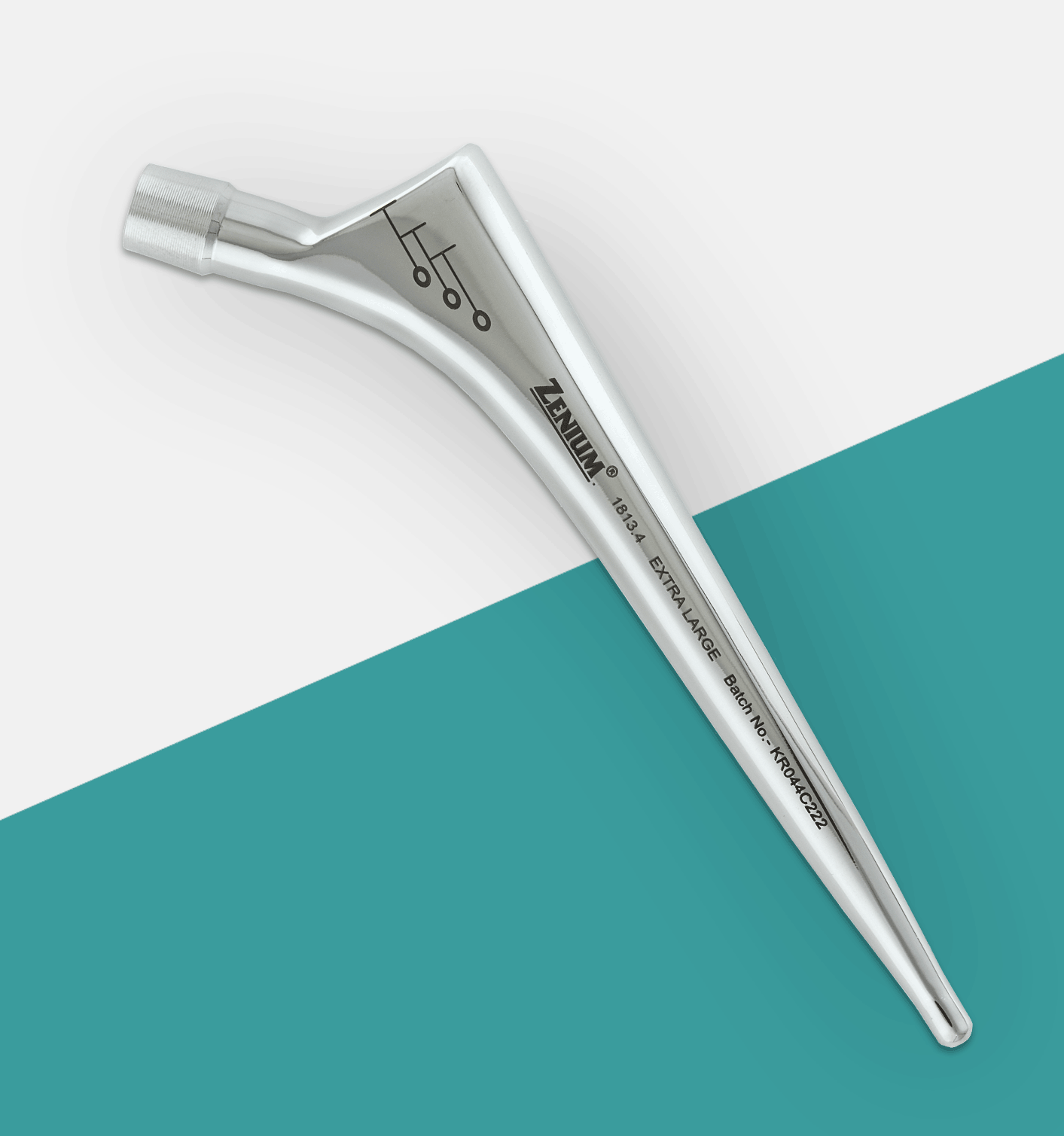 | Joint Replacement Bipolar Modular Stem (Cemented) Manufacturer The Bipolar Modular Stem (Cemented) is an orthopedic implant used in hip replacement surgeries, especially for elderly patients with fractured or... View product → |
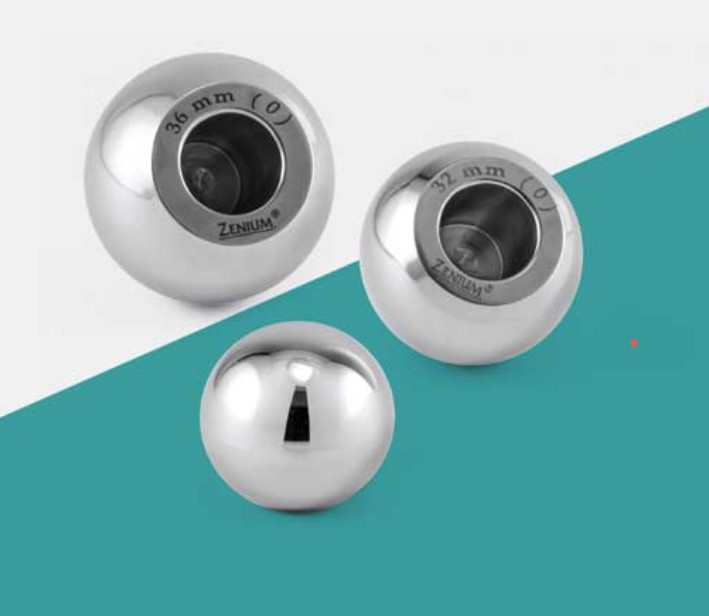 | Joint Replacement An Internal Head Manufacturer specializes in producing internal femoral heads used in hip replacement systems. View product → |