Problems often begin with a mismatch between the dressing, the wound’s drainage, the surrounding skin and the way the product is removed. By checking the product format, recognising irritation or allergy, managing the outer absorbent layer and identifying urgent warning signs, you can separate a dressing problem from a wound complication and know when clinical advice is needed.
Key takeaways
- Confirm the dressing type, concentration, contact area and intended wound site.
- Treat spreading redness, blistering or burning as possible dermatitis or chemical injury.
- Prevent drainage, paraffin and drying from causing the dressing to stick or fail.
- Match the dressing to the wound problem instead of choosing by antiseptic label alone.
First check what kind of chlorhexidine dressing you have
A chlorhexidine dressing is appropriate only when its label matches both the wound site and the intended use. “Chlorhexidine gauze” is not one standard product: paraffin gauze containing chlorhexidine acetate differs from chlorhexidine gluconate polymer discs, sponges and transparent catheter-site dressings in concentration, release and contact area.
Before using it for chlorhexidine dressing wound care, check the package for these details:
- Intended site: intact skin, a catheter insertion site, superficial wound, burn, donor site, surgical wound or ulcer
- Chlorhexidine form and concentration, such as acetate in paraffin gauze or gluconate in a polymer disc
- Whether the label permits contact with an open wound, rather than use only on surrounding skin
- Contraindications, including previous chlorhexidine reaction, allergy to the dressing material and restrictions for infants or damaged skin
- Directions for cleansing, contact time, change interval and compatible secondary dressing
- Sterility, expiry date, package seal and lot number
Do not assume evidence for catheter-site infection prevention proves benefit for a traumatic, pressure or chronic wound. Chlorhexidine is an antiseptic adjunct, not source control: pus, necrotic tissue, a retained foreign body, pressure or untreated infection still needs specific management.
Heavy blood or exudate can also reduce its practical antimicrobial effect, so cleansing and exudate control remain essential.
Allergy, dermatitis and chemical exposure can look like wound deterioration
Stop using the dressing if redness expands, pain increases, blisters appear, or the skin becomes sharply outlined beneath the gauze. Remove it and seek clinical advice for facial swelling, hives, wheezing, severe burning, wound-edge breakdown, fever, spreading pain or pus; wheezing or facial swelling requires urgent emergency care.
| Reaction | Clues | What to do |
|---|---|---|
| Irritant contact dermatitis | Burning, tenderness and red, dry or eroded skin matching the contact area | Remove the dressing, cleanse as directed, and avoid further chlorhexidine exposure |
| Allergic contact dermatitis | Intense itching, vesicles, hives or a rash that worsens after repeated applications | Stop chlorhexidine and have the reaction assessed; future chlorhexidine products may trigger it |
| Chemical injury | Severe pain, blistering, pale or raw skin, or damage after solution pooled under an occlusive dressing | Remove promptly, irrigate exposed skin according to clinical instructions, and obtain medical review |
Brief stinging or temporary staining does not prove infection, but symptoms that intensify after application are not normal reassurance signs. Chlorhexidine gauze dressing problems are especially concerning in premature or low-birth-weight newborns, where immature skin, prolonged contact and pooled antiseptic can cause chemical injury.
Do not apply the gauze to the eye, middle ear, meninges or another sensitive internal site. If the wound deteriorates despite a quieter surface, look for abscess, necrotic tissue, retained material or untreated pressure: chlorhexidine cannot replace drainage, debridement, pressure relief or prescribed systemic treatment.
Drainage, paraffin and drying create mechanical dressing problems
A paraffin-based chlorhexidine gauze is a non-adherent contact layer, not an absorbent dressing. If the wound produces moderate or heavy exudate, fluid passes into the gauze but has nowhere to go without an absorbent secondary layer, so it pools at the edges, leaks and softens surrounding skin.
- Leakage occurs when the secondary dressing is too small, saturated or changed too late. Exudate then reaches clothing and wound margins instead of leaving the contact layer.
- Maceration occurs when trapped moisture, an impermeable cover or poorly managed drainage leaves the periwound skin white, swollen and fragile. The softened edge breaks down more easily.
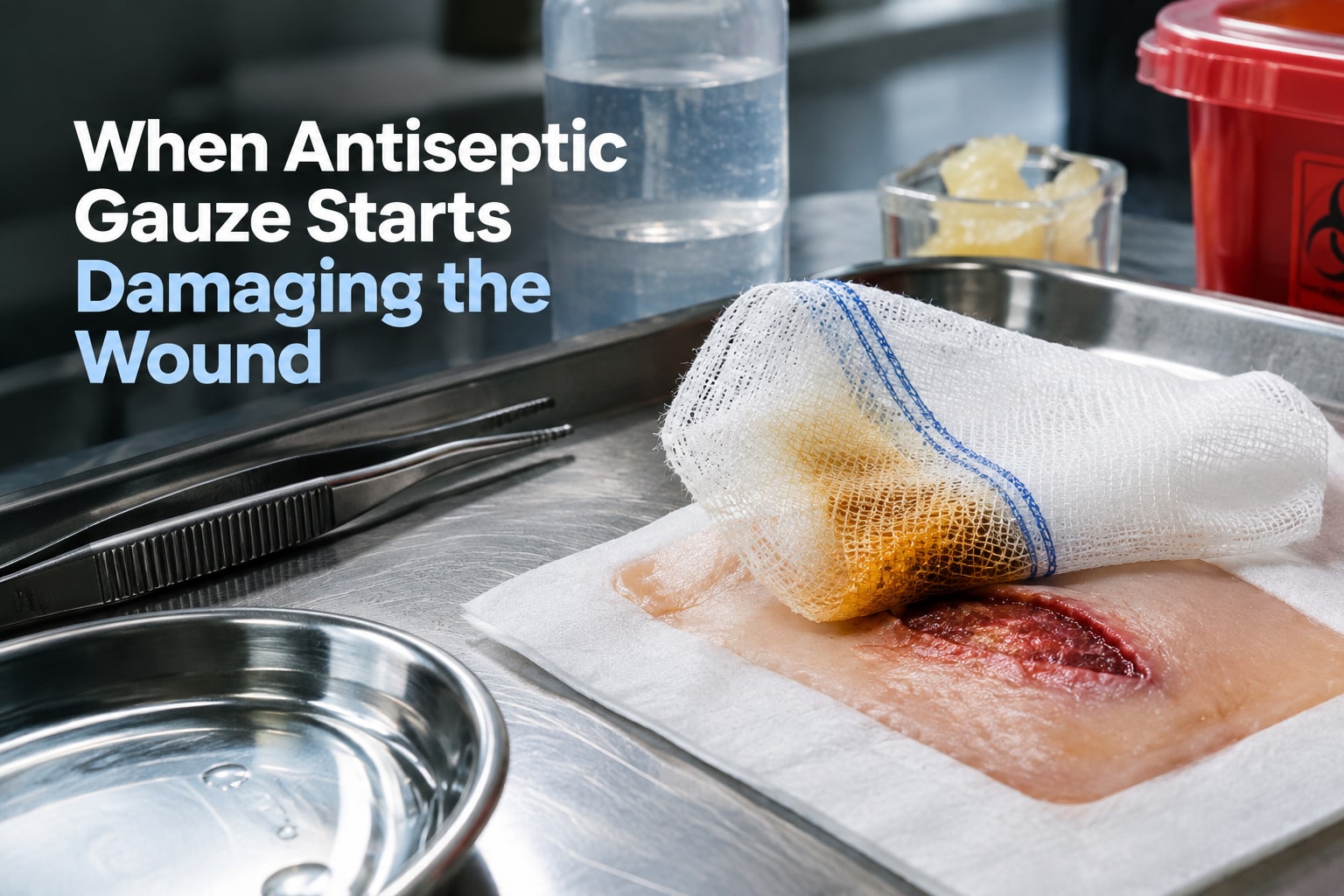
- Sticking occurs when paraffin has been displaced, absorbed into a dry secondary dressing or left beyond the product’s intended interval. Dried blood, pus or exudate then bonds the mesh to granulation tissue and new epithelium.
These mechanical failures explain many antiseptic gauze dressing problems without proving chlorhexidine intolerance. Heavy organic material also reduces chlorhexidine’s practical antimicrobial effect, so cleansing, exudate control and treatment of the wound’s underlying cause still matter.
Do not solve leakage by sealing the wound more tightly: excessive occlusion can worsen maceration, while an uncovered or infrequently changed dressing can dry and adhere. Choose secondary absorbency and a change interval that match the drainage.
Use and removal determine whether the dressing protects or traumatizes the wound
Clean hands before handling the wound, and check the product label for its intended site and wear time. A gauze product for superficial wounds is not interchangeable with a chlorhexidine gluconate catheter dressing. Using the wrong format can expose tissue to an unsuitable concentration or fail to cover the site securely.
- Cleanse away blood, pus and loose debris with the solution specified for the wound; heavy organic material reduces chlorhexidine’s practical antimicrobial action.
- Apply the impregnated surface flat against the wound bed without packing, folding or stretching it. Keep chlorhexidine gauze off the eyes, ears, mucous membranes and intact skin outside the treatment area unless the product label permits contact.
- Add enough absorbent secondary dressing to control drainage. Saturation lets exudate leak, while a dry outer layer can draw paraffin away and make removal traumatic.
- Change the outer layer when wet or soiled, but replace the contact layer according to its stated interval rather than leaving it until it dries firmly in place.
- Before removal, moisten stuck gauze with sterile saline or the recommended cleansing fluid and wait for dried exudate to soften. Lift an edge slowly while supporting nearby skin; stop if new tissue comes away.
These steps reduce chlorhexidine gauze dressing issues, but stop and seek clinical advice for worsening pain, spreading redness, pus, fever, wound-edge separation or a sharply outlined rash. Remove the dressing and seek urgent help for hives, facial swelling or wheezing, which can indicate a serious allergy.
Choose the dressing for the wound problem, not just for its antiseptic label
Use chlorhexidine gauze as a contact layer for a clean, superficial wound with low or moderate exudate when the product is labelled for that wound type and no chlorhexidine sensitivity is present. It does not absorb enough fluid to manage a wet wound by itself.
| Wound situation | Better priority | Reason |
|---|---|---|
| Clean abrasion, superficial incision or denuded area | Chlorhexidine gauze plus an absorbent secondary dressing | Provides a non-adherent antiseptic contact layer |
| Moderate or heavy exudate | Absorbent foam, hydrofiber or alginate selected for the wound | Paraffin gauze alone traps fluid, leaks and causes maceration |
| Pus, abscess, necrosis or retained foreign material | Clinician assessment, cleansing, debridement or drainage | Antiseptic cannot provide source control |
| Deep, spreading, pressure-related or chronic wound | Clinician-selected treatment plan | The cause needs treatment beyond surface antimicrobial action |
| Suspected chlorhexidine reaction | Stop the product and obtain clinical advice | Continuing it can worsen dermatitis or systemic allergy |
Blood, pus and heavy exudate reduce chlorhexidine’s practical antimicrobial effect, so cleansing and exudate control still matter. Do not assume evidence for a chlorhexidine catheter disc or sponge applies to traumatic or chronic wounds; format, concentration and release rate differ.
To prevent chlorhexidine gauze dressing problems and antiseptic gauze dressing problems, ask Komal Health Care Pvt Ltd to identify the intended wound indication, chlorhexidine concentration and required secondary dressing before procurement. Choose the wound-management function first; the antiseptic label comes second.
Related product
 | Dressings Chlorhexidine Gauze Dressing (Antiseptic Tulle Dressing) Chlorhexidine dressing and antiseptic tulle dressing B.P. Consists of fabric of Leno weave of cotton, which has been impregnated with white soft... View product → |
Frequently asked questions
What should you check first when chlorhexidine gauze causes problems?
Check whether it is paraffin gauze, a polymer disc, sponge or transparent catheter-site dressing, then compare its label with the wound site and intended use.
How can chlorhexidine allergy or dermatitis resemble wound deterioration?
Redness, burning, itching, blistering and rash can extend beyond the wound and indicate skin reaction or chemical exposure rather than infection.
Why do drainage, paraffin and drying cause chlorhexidine dressing problems?
Heavy drainage can overwhelm the dressing, while paraffin and dried exudate can reduce absorption and make removal pull on healing tissue.
How can application and removal traumatize a wound?
Apply the dressing without excess pressure or overlap onto fragile skin, and loosen or moisten it before removal when it adheres.
How should you choose a chlorhexidine dressing for wound care?
Choose according to the wound’s drainage, tissue condition, site and treatment goal, not solely because the product carries an antiseptic label.