Revision hip surgery uses screws selectively: a screw may secure a trochanter, augment, cage, calcar reconstruction, or a stem’s distal interlocking hole, but it is not a universal substitute for cement, porous fixation, or cerclage. By the end, you will know how to match screw design, materials, manufacturing controls, inspection records, and supplier documentation to the revision construct being used.
Key takeaways
- Confirm whether the screw fixes the stem, a modular junction, or an attached fixation feature.
- Match screw diameter, length, thread, head, and material to the implant system.
- Request dimensional inspection records, material certificates, and lot traceability.
- Check trial fit and interface compatibility before approving revision-use screws.
Where screws fit in a revision stem construct
A screw supports revision stem surgery only when it serves a defined fixation task. Revision stem components are often modular: a distal tapered, fluted stem gains fixation in the femoral diaphysis, while a separate proximal body restores offset, leg length, version, and soft-tissue tension. The screw does not automatically fix the femoral stem itself.
A screw may secure a calcar reconstruction, porous augment, plate, cage, or trochanteric fragment. If the stem has dedicated holes, it may provide distal interlocking fixation, but its diameter, length, head, thread, driver, and trajectory must match that system.
The surgeon’s decision sequence is:
- Assess bone loss and cortical thickness; thin cortex can make a screw unsafe.
- Check the stem design for dedicated holes and confirm rotational stability.
- Define the fracture pattern and the fragment or component requiring fixation.
- Confirm a trajectory that provides useful purchase without perforating the cortex or colliding with the stem.
- Use cement when the planned construct depends on cement fixation.
- Choose a porous augment when bone ingrowth is required.
- Choose cerclage wiring when circumferential control of a fragment is the objective.
A screw is the wrong choice when it adds stress concentration without meaningful purchase. This is why THR screw manufacturing for revision stem procedures must begin with the intended implant interface and surgical task, not a generic catalogue.
Designing the screw for bone, implant, and load
Revision-use screws need more than a larger diameter. Thread pitch and form, usable engagement length, core diameter, bending strength, torsional strength, and pull-out resistance must suit thin, irregular bone. Longer or larger screws can improve purchase, but can perforate the cortex, contact the stem, or concentrate stress in limited bone.
Control thread runout and point geometry so the screw starts cleanly without wasting engagement.
Head seating must match the plate, augment, locking hole, and driver recess; a poor match leaves the construct loose or strips during removal. Locking designs also require controlled head angle, under-head geometry, and tolerance stack between screw and mating hole.
Cannulation needs a straight, patent guide-wire passage with a smooth transition, not a sharp fatigue-prone notch.
| Property | Titanium alloy | Stainless steel |
|---|---|---|
| Stiffness and strength | Lower stiffness; strength depends on alloy and treatment | Higher stiffness; strength depends on grade and treatment |
| Imaging artefact | Usually less artefact | Usually more artefact |
| Interface risks | Fretting, galling, and galvanic interaction depend on pairing and surface | Fretting, galling, and galvanic interaction still depend on pairing and surface |
| System choice | Match the connected implant and finish | Match the connected implant and finish |
A nominally matching screw is incompatible if its stem thread, head profile, driver, or trajectory differs. ASTM F543 testing can support dimensional, torsional, insertion-torque, and axial-pullout evaluation, but fatigue testing with the actual revision stem components, mating hole, tightening method, and load direction is still necessary.
What the THR screw production process must control
A dependable THR screw production process begins with medical-grade bar or wire stock, not with machining alone. Verify the alloy, material certificate, and heat or lot before release, then preserve that identity through every operation.
1. Prepare the blank by cutting, heading, or CNC turning to control diameter, length, concentricity, and the future head geometry.
2. Form the thread. Thread rolling suits appropriate solid geometries because it forms material rather than removing it, producing continuous grain flow and a work-hardened surface. Thread cutting or machining remains useful for cannulated, unusual, low-volume, or customized screws, but control tool marks, interrupted flanks, burrs, and thread-root damage.
3. Machine the cannula, point, and driver recess. Keep the cannula straight and patent, the point consistent, and the recess deep enough to transmit torque without stripping.
4. Deburr, clean, and apply passivation or another specified surface treatment. For stainless steel, remove free iron, cutting fluid, tooling debris, and metallic particles. For titanium, protect mating and patient-contacting surfaces from contamination.
5. Inspect thread profile, pitch, diameters, head recess, cannula patency, point shape, runout, surface condition, and material identity. A blocked cannula, sharp burr, damaged recess, or incomplete thread start can prevent guide-wire passage, reliable driving, or full seating despite correct overall length.
6. Package the finished screw to prevent damage. Sterile supply requires validated sterilization and sterile-barrier packaging; non-sterile supply requires labeling that assigns hospital reprocessing responsibility.
How buyers verify fit and manufacturing consistency
Buyers verify fit against controlled system documentation, not nominal dimensions. Require the revision stem’s system drawing, surgical technique, or approved component list before comparing the screw.
1. Match diameter, overall length, thread pitch and form, engagement length, head profile, under-head geometry, driver interface, cannulation diameter and patency, point shape, and intended trajectory. Confirm bone stock with the surgeon’s planned path; never infer safe screw length from nominal stem size.
2. Ask the THR screw manufacturer to demonstrate seating, locking, guide-wire passage, and removal using the actual stem, plate, augment, or instrument set. A screw that measures correctly can still fail to seat, lock, accept the driver, or pass a guide wire.
3. Set release checks for major and minor thread diameters, pitch, head-recess dimensions, length, concentricity or runout, surface finish, burrs, cannula straightness, and material identity. Sample torque, torsion, pull-out, and fatigue testing with the actual mating component and clinical load direction.
4. Request batch records linking each raw-material heat or lot to machining, heat treatment, surface treatment, cleaning, inspection, packaging, and sterilization. ISO 13485 certification does not replace device-specific verification, and ISO 10993 biological evaluation does not validate cleaning or residue control.
Choosing a supplier for revision-use screws
Approve a supplier only after it proves compatibility with the named revision stem components and intended construct; catalogue dimensions and material certificates do not prove fit under load.
Ask for:
- A controlled drawing, alloy and heat-lot records, inspection methods, thread-gauge results, cannula-patency checks, and surface-finish limits.
- Nonconformance records, corrective-action procedures, change-control notices, and traceability from raw material through machining, cleaning, packaging, and the packaged lot.
- Validation using the actual revision stem, plate, augment, cage, and driver set, including seating, locking, removal, tightening torque, and fatigue loading. Isolated screw testing is insufficient.
Compare the supplied configuration before approval:
| Configuration | Questions to resolve | Consequence |
|---|---|---|
| Sterile | Who owns sterilization validation? Does the barrier protect threads and the driver recess? What shelf-life evidence is supplied? | The hospital receives a ready-to-use component with documented expiry. |
| Non-sterile | Are labeling and reprocessing instructions explicit? Who cleans, packages, and sterilizes it? | The hospital assumes process and sterility responsibility. |
A supplier such as Komal Health Care Pvt Ltd should be evaluated by whether its records support the exact system and buyer workflow, not simply whether it lists THR screws. A distributor must preserve lot numbers and component identifiers through shipment; the hospital must match them to the implant log and operative report.
Select the supplier that proves fit, consistency, cleanliness, and traceability.
Related products
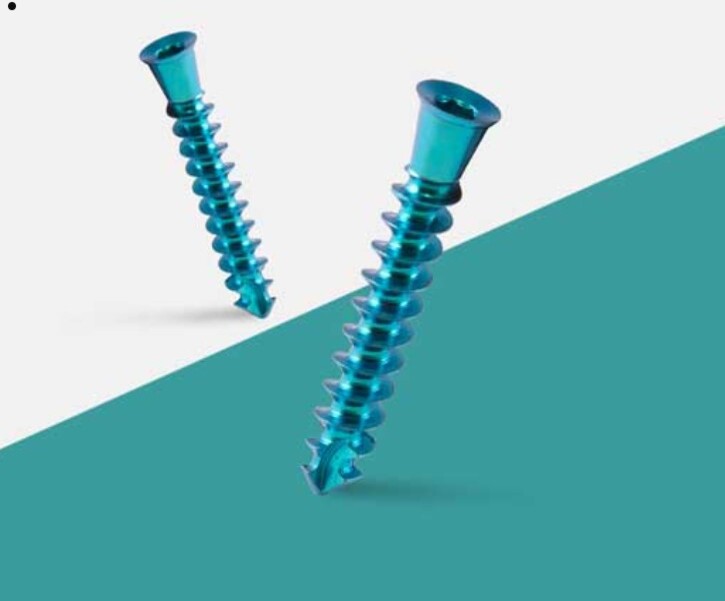 | Joint Replacement A THR Screw Manufacturer produces specialized screws used in Total Hip Replacement (THR) surgeries to secure implants and enhance joint stability. View product → |
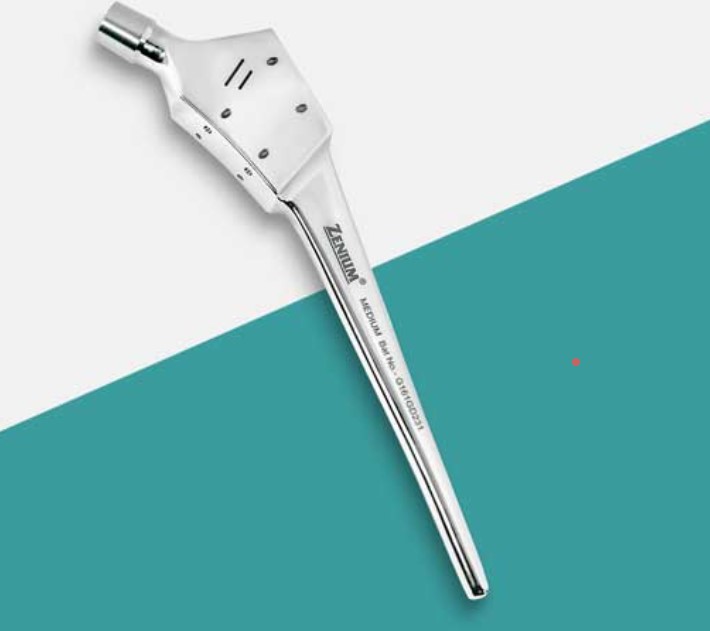 | Joint Replacement A Calcar Stem Manufacturer specializes in producing orthopedic implants designed for hip replacement surgeries, particularly when there is damage or... View product → |
Frequently asked questions
Where do screws fit in a revision stem construct?
A screw performs a defined fixation task; it does not automatically fix the femoral stem. Distal tapered, fluted stems often gain fixation in the femoral diaphysis, while screws may support an attached feature or another specified interface.
How should a THR screw be designed for revision use?
Design must account for the bone, implant interface, expected load, screw diameter and length, thread form, head geometry, material, and compatibility with the revision stem components.
What does the THR screw production process need to control?
The process must control raw material identity, machining, thread and head dimensions, surface finish, cleaning, inspection, packaging, lot identification, and traceability.
How can buyers verify fit and manufacturing consistency?
Compare drawings and tolerances with the implant system, request material and inspection records, confirm lot traceability, and use controlled trial fitting before approval.
What should buyers look for in a THR screw manufacturer?
Choose a supplier that can demonstrate repeatable dimensional control, documented material traceability, inspection records, clean packaging, and clear communication about revision-use compatibility.
Related products
 | Joint Replacement Cemented Restrictor Manufacturer A Cemented Restrictor Manufacturer produces medical devices used in orthopedic surgeries to control the depth of bone cement during joint replacement... View product → |
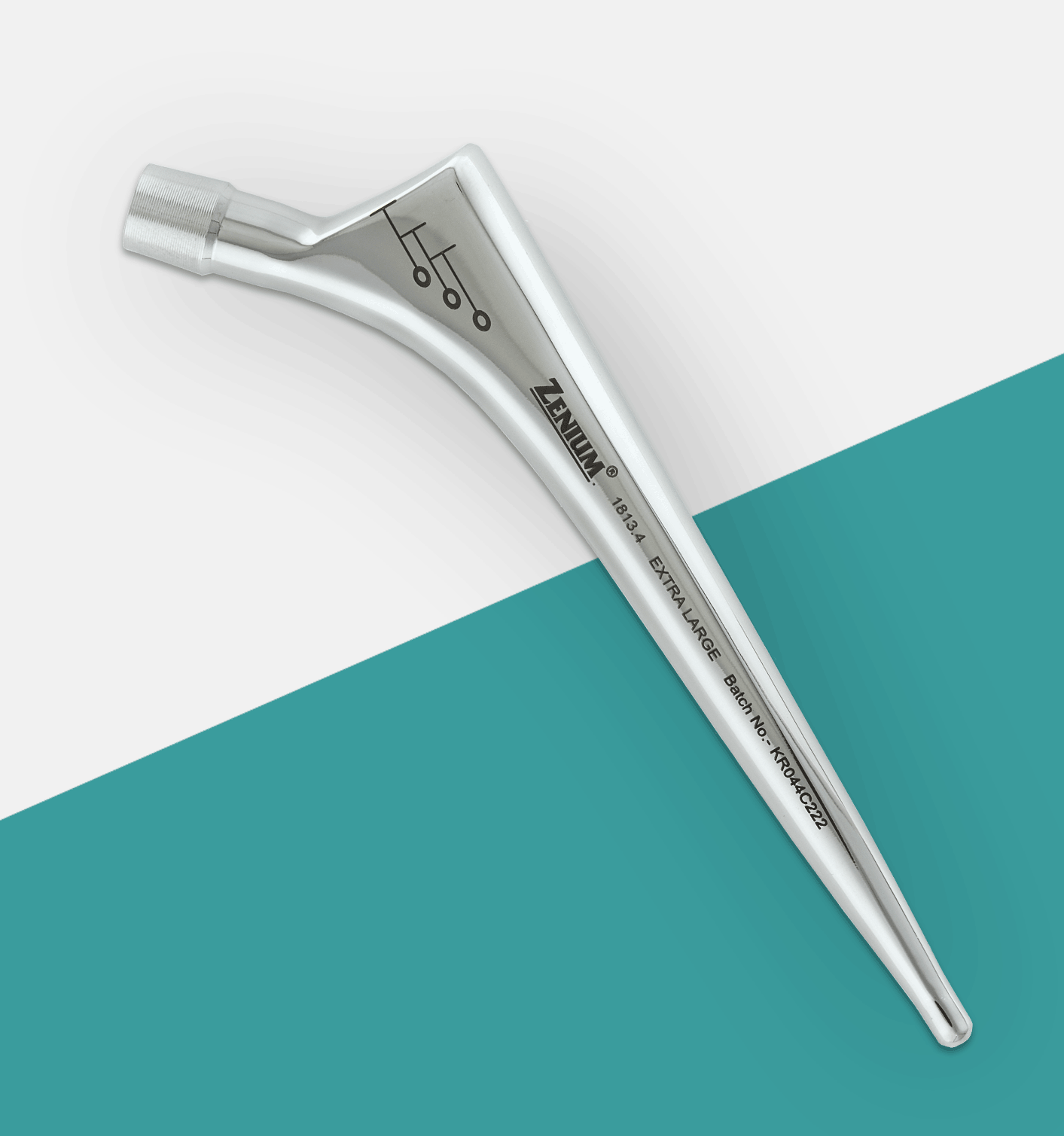 | Joint Replacement Bipolar Modular Stem (Cemented) Manufacturer The Bipolar Modular Stem (Cemented) is an orthopedic implant used in hip replacement surgeries, especially for elderly patients with fractured or... View product → |