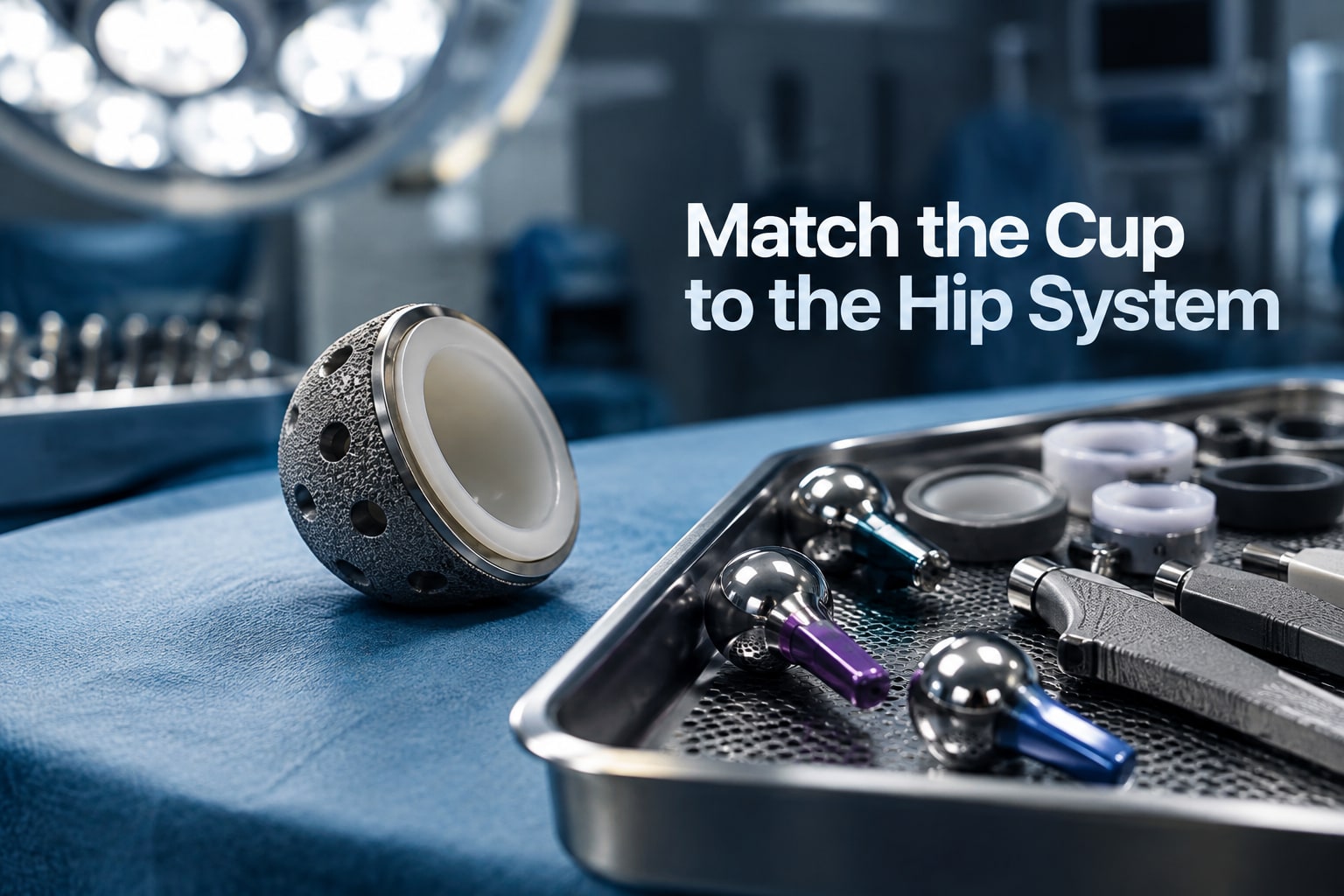
A catalogue label such as “size 48” does not tell a hospital whether a cemented cup will fit the prepared acetabulum, match the femoral head, or satisfy its documentation requirements. By the end, you will have a specification checklist covering dimensions, materials, cement compatibility, clinical selection, testing, regulatory records, and supplier verification.
Key takeaways
- Require dimensions, material, fixation surface, radiographic markers, and tolerances.
- Match cup sizes with the femoral head, shell geometry, and complete hip system.
- Confirm cement compatibility, sterilisation details, packaging integrity, and traceability.
- Request technical files, regulatory records, and hospital acceptance documents before purchase.
The specification table a cemented acetabular cup must provide
A complete specification table must define the cup’s physical dimensions, material, fixation surface, radiographic features, and permitted variation; “size 48” is not enough.
| Item | Required specification | Why it matters |
|---|---|---|
| Outside dimensions | Outside diameter, shell height, rim profile, cup geometry, nominal or measured values, and permitted tolerances | Defines acetabular fit and prevents catalogue-code confusion |
| Bearing dimensions | Inside diameter or approved femoral-head diameter, wall thickness, and tolerances | Establishes bearing compatibility and remaining polyethylene thickness |
| Construction | All-polyethylene, metal-backed, or another design; identify the part that receives PMMA cement | Separates a cemented cup from a porous bone-ingrowth shell |
| Polyethylene | Conventional UHMWPE to ASTM F648 or ISO 5834, or a named highly cross-linked formulation | “Medical-grade polyethylene” does not identify grade, formulation, or performance |
| Processing | Sterilization method, antioxidant or vitamin-E treatment, oxidation controls, and packaging-related limits | Sterilization and oxidation history affect material condition |
| Radiopacity | Barium sulfate, zirconia, or marker wire; marker location and visibility on plain radiographs | Allows postoperative identification, position assessment, and migration monitoring |
| Fixation and instruments | Lug, groove, textured backside, screw holes, cement-retentive features, and impactor interface, stating “none” where absent | Prevents incorrect instruments and undocumented fixation assumptions |
Record every dimension with its unit, reference datum, inspection method, and tolerance. A statement such as “stable fixation” is a performance claim, not a specification; the schedule needs the cement interface and documented design features. These acetabular cup implant specifications, together with the acetabular component materials, let you compare drawings rather than catalogue labels.
How to match cemented acetabular cup sizes to the hip system
“Size 48” is incomplete: one manufacturer may use 48 for outside diameter, another for inside diameter, or a catalogue code. Cemented acetabular cup sizes become usable only when the technical drawing or instructions for use define the number.
Request acetabular cup implant specifications showing the outside-diameter range, size increments, wall thickness, cup height, rim geometry, nominal versus measured dimensions, and the prepared acetabulum or intended cement-mantle dimensions. There is no universal range or 2-mm increment.
The inner diameter must match the system’s approved femoral-head diameter and material. Common examples include 22, 28, 32, and 36 mm, but these figures do not establish interchangeability. Confirm the approved liner, stem, bipolar and femoral-head combinations, taper dimensions where applicable, instrumentation, trial components, and any prohibition on mixing brands.
- Assess acetabular anatomy, bone quality, and the planned fixation method.
- Prepare the acetabulum, then measure the reamed surface and required cement mantle against the manufacturer’s drawing.
- Trial the cup and approved head; check seating, orientation, stability, range of motion, and bony or component clearance.
- Confirm that the selected head, liner, stem, cement, instruments, and impactor interface belong to an approved combination.
- Record the exact cup, head, stem, liner, cement, and instrument catalogue numbers, including lot details.
A larger head can increase jump distance and improve clearance, but it raises volumetric polyethylene wear and can leave less polyethylene thickness. Choose it only within the cup’s approved inner diameter and thickness limits.
Cement fixation, surgical use, and when another cup design fits better
PMMA fixes a cemented cup by mechanical interdigitation with cancellous bone, not by chemical bonding to bone or polyethylene. The specification must name the cement, commonly ISO 5833 acrylic bone cement, plus mixing method, working time, setting characteristics, vacuum-mixing requirement, cement-retentive backside features, expected mantle thickness, and pressurization method.
Acetabular preparation, reaming, lavage, drying, trialling, cup orientation, seating, curing, and removal of excess cement belong in the instructions for qualified surgical teams. The historical Lewinnek reference of 40° ± 10° inclination and 15° ± 10° anteversion assists planning; it does not guarantee stability.
Confirm the indication before ordering:
- Cemented total hip arthroplasty requires a matched cup, femoral head, stem, cement, and instruments.
- Hemiarthroplasty does not use an acetabular cup; revision, dysplasia, bone loss, fracture, infection, or poor-quality bone may require another reconstruction plan.
- An uncemented shell, revision shell, augment, cage, or grafting plan requires a different system and inventory.
Cemented component | Uncemented component Preparation | Prepared acetabulum, cement mantle, and pressurization | Bone preparation for press-fit or planned ingrowth Fixation dependence | Cement interdigitation and mantle quality | Host bone contact, initial stability, and later bone ingrowth Revision strategy | Cement removal adds operative work | Shell removal, retained fixation, or modular revision options Inventory | Cup, cement, restrictors or injectors, and compatible instruments | Shells, liners, screws, augments, and revision instruments
The acetabular cup implant specifications must therefore identify the complete compatibility set, including acetabular component materials, approved head combinations, and restrictions on mixing brands. A cemented polyethylene cup is the wrong choice when the planned reconstruction depends on porous ingrowth, augments, cage support, or structural graft fixation.
Evidence, regulatory records, packaging, and hospital acceptance checks
A favourable ISO 14242-1/-2 simulator result proves laboratory wear under the stated load, motion, lubricant, temperature, cycle count, and head material—not clinical longevity or universal compatibility. Request the complete report, not a pass statement.
| Evidence | Require before acceptance | What it does not establish |
|---|---|---|
| Wear | ISO 14242 conditions, cycles, gravimetric or volumetric loss, lubricant, temperature, head material | Clinical longevity or every head combination |
| Fatigue | Applicable ISO 7206 method, load, frequency, cycles, fixation, and acceptance limit | Clinical fracture risk in every anatomy |
| Cement fixation | ISO 5833 cement, mantle thickness, preparation, aging, load, cycles, and bond test method | Performance with another cement or technique |
| Motion and dimensions | Range-of-motion angles, impingement criteria, drawing tolerances, inspection method, sample size | Safe mixing with another implant system |
Request the Mexican sanitary registration or applicable import authorization, Spanish label and instructions for use, ISO 13485 certificate, ISO 10993 biological-evaluation information, acetabular component materials certificates, dimensional inspection records, sterilization validation, packaging validation, and shelf-life evidence. Keep COFEPRIS authorization separate from ISO 13485 quality-system evidence.
At receipt, compare the purchase order with the catalogue number, size, orientation, lot, expiry, sterile status, and instructions. Inspect every sterile barrier for wetness, tears, punctures, or broken seals. Quarantine damaged or expired packs.
Require documented storage temperature, humidity, transport limits, shelf life, and excursion procedures. Record each decision against the acetabular cup implant specifications, including the tested material and approved head combination.
Questions to ask an acetabular cup manufacturer in Mexico City
Do not place an order until the supplier proves that its cup, head, cement and instruments form one approved system. Ask an acetabular cup specifications manufacturer in Mexico City for:
- A controlled technical drawing showing outside diameter, inside diameter, wall thickness, shell height, geometry, tolerances and nominal-versus-measured dimensions.
- A complete size matrix identifying cemented acetabular cup sizes, increments, material grades and catalogue numbers.
- A compatibility matrix listing approved femoral-head diameters and materials, cement types, instruments, impactors and restrictions on mixing brands.
- The approved cement instructions, including ISO 5833 cement designation, mixing method, working time, setting characteristics and vacuum-mixing requirement.
- Revision history, sample or evaluation procedure, custom-size limits, minimum order quantity and manufacturing lead time.
- Technical-support scope, complaint process and replacement terms.
| Document | Confirm before purchase | Consequence of omission |
|---|---|---|
| Mexican shipment file | COFEPRIS registration or applicable authorization, Spanish IFU and labels, ISO 13485 evidence, sterilization and packaging records | Market release and acceptance cannot be verified |
| Lot record | Product and raw-material codes, sterilization cycle, inspection results and release decision | A failed or recalled lot cannot be isolated |
| Compatibility file | Drawing, approved combinations and cement instructions | “Interchangeable” remains an unsupported claim |
Komal Health Care Pvt Ltd can identify which dimensions and material grades correspond to each catalogue number, which documents accompany Mexican shipments, and how damaged or discrepant stock is handled. Apply the same questions to any hip replacement cup manufacturer Mexico buyers source through a distributor.
End the purchase file with the selected cup, head, cement, instruments, regulatory evidence, storage conditions and named technical contact.
Related products
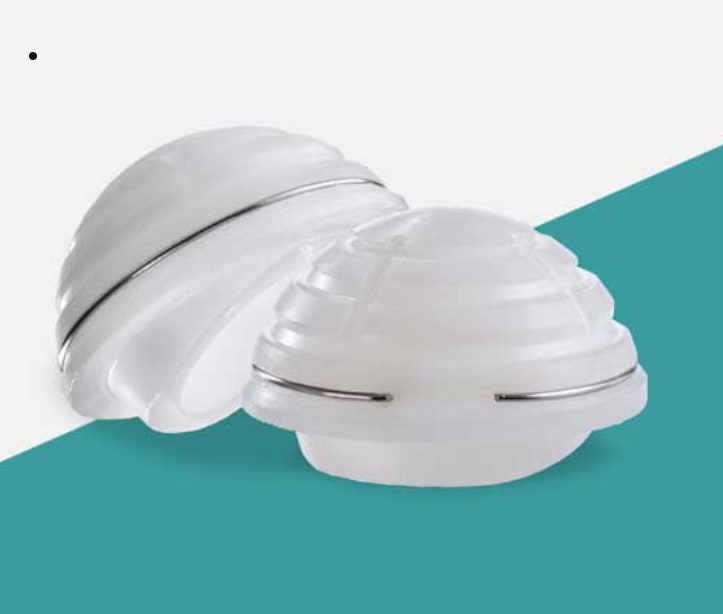 | Joint Replacement Acetabular Cup Cemented Manufacturer An Acetabular Cup Cemented Manufacturer produces acetabular components specifically designed for cemented fixation in total hip replacement... View product → |
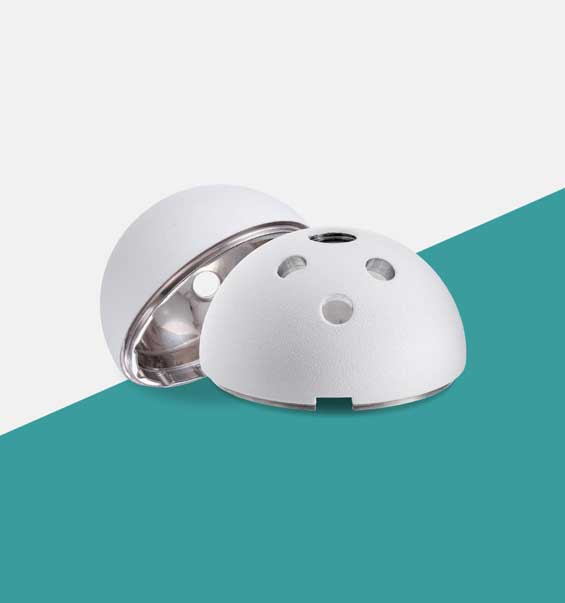 | Joint Replacement The Acetabular Cup is a key component in total hip replacement surgery, designed to fit into the hip socket (acetabulum). View product → |
Frequently asked questions
What specifications must a cemented acetabular cup provide?
The specification table should state physical dimensions, acetabular cup sizes, material, fixation surface, radiographic features, tolerances, sterilisation method, and packaging details.
How do you match cemented acetabular cup sizes to a hip system?
Check the cup’s internal diameter against the femoral head, then confirm outer dimensions, geometry, instrumentation, and compatibility with the complete hip replacement system.
When is another acetabular cup design a better fit?
Choose another design when the patient’s anatomy, bone quality, fixation plan, revision requirements, or system compatibility do not suit a cemented cup.
What should hospitals ask an acetabular cup manufacturer in Mexico City?
Ask for technical specifications, material details, quality and regulatory records, sterilisation information, lot traceability, packaging validation, instructions for use, and product samples for acceptance review.