Choosing a liner is not a material-only decision: the bearing couple, liner geometry, acetabular shell, femoral head, patient risk profile and revision plan must work as one validated construct. By the end, hospital teams will be able to compare clinical trade-offs, reject incompatible combinations and build a procurement checklist that accounts for documentation, availability and total system cost.
Key takeaways
- Start with highly cross-linked polyethylene for many primary replacements.
- Choose elevated or constrained geometry only for a defined instability risk.
- Verify shell, liner and femoral-head compatibility by exact catalogue numbers.
- Compare sterilisation, inventory, evidence and revision support—not unit price alone.
Compare the bearing materials before comparing brands
Start with the bearing couple: highly cross-linked polyethylene is the strongest default balance for many primary total hip replacements, but age, activity, instability risk and revision plans can change that choice. A total hip replacement acetabular cup liner comparison in Mumbai should assess the processed material, not stop at “polyethylene.”
| Option | Wear and toughness | Cost and revision implications |
|---|---|---|
| Conventional UHMWPE | Lower price and good toughness, but more wear and oxidation over time | Greater risk of osteolysis, loosening and wear-driven revision in young or highly active patients |
| Highly cross-linked polyethylene | Substantially lower wear; cross-linking, remelting, annealing and antioxidant treatment affect oxidation and crack resistance | Usually costs more; useful for active or younger patients, but avoid assuming maximum cross-linking is automatically safest when liner thickness is limited |
| Ceramic-on-polyethylene | Ceramic resists scratching and lowers wear against polyethylene | Higher component cost; a practical compromise when ceramic-on-ceramic fracture or squeaking concerns matter |
| Ceramic-on-ceramic | Very low wear and no polyethylene wear debris | Highest sensitivity to edge loading, component position, squeaking and ceramic fracture; revision can require removal of damaged ceramic parts |
| Metal-on-polyethylene | Familiar, durable and comparatively economical | Scratching or damaged heads accelerate polyethylene wear; metal debris and corrosion require surveillance |
Ask the team to match the material to the patient population: conventional polyethylene suits lower-demand patients when budget dominates, while highly cross-linked polyethylene or ceramic-on-polyethylene better serves younger, active patients. Ceramic-on-ceramic is a selective choice, not a universal upgrade.
Include liner thickness, head size, oxidation resistance and fracture risk in the approval record; the cheapest liner can create the highest revision cost.
Match liner geometry to instability and motion requirements
Start with the instability pattern, not the liner catalogue. A neutral liner suits routine primary replacement when abductors function well, the patient has acceptable dislocation risk, and maximum range of motion matters. It is the wrong choice when instability is already predictable.
| Liner | When to consider it | When it is the wrong choice |
|---|---|---|
| Neutral | Normal stability and unrestricted motion are priorities | Recurrent dislocation, deficient abductors, or severe malposition |
| Elevated-rim | Extra posterior or anterior containment is needed without a full capture mechanism | Impingement risk, limited flexion, or a component position that already reduces clearance |
| Constrained | Salvage for recurrent instability, poor abductors, or selected revision cases | Routine primary replacement; capture forces can cause impingement, liner dissociation, shell loosening, or bone failure |
| Dual-mobility | Elevated dislocation risk, including selected revisions, while preserving useful motion | The team cannot manage its specific risks, including intraprosthetic dislocation and mobile-liner wear |
| Ceramic | A ceramic bearing is appropriate after confirming the approved head-liner pairing | The system lacks scratch-free handling, or fracture, noise, cost, and revision availability are unacceptable |
Treat elevated-rim and constrained designs as different solutions: a lip adds directional containment, while a constrained mechanism captures the head and transfers higher loads to the shell. Dual mobility adds a mobile polyethylene component, so nominal inner diameter alone cannot predict stability or motion.
For a total hip replacement cup liner comparison in Mumbai, require the manufacturer’s minimum liner thickness, head-size options, shell-liner combinations, and validated locking mechanism. A smaller shell, lip, dual-mobility construct, or constraint can reduce polyethylene thickness and range of motion; never approve a liner independently of shell geometry.
Verify the shell, liner and femoral-head combination
A liner is compatible only when its shell interface and femoral-head relationship have been validated as one system. Do not approve a liner from a catalogue based on diameter alone: a smaller shell, lipped design, dual-mobility construct or constrained mechanism can change polyethylene thickness, motion and head clearance.
Ask the manufacturer to confirm each of these points in writing:
- The shell and liner belong to the same implant family and have matching shell inner diameter and liner outer diameter.
- The liner’s locking mechanism, taper or locking ring matches the shell, including the approved insertion instruments and seating method.
- The liner orientation, elevated-rim position and anti-rotation features are compatible with the shell’s indexing features.
- The femoral-head diameter, neck geometry and taper match the approved liner and stem combination.
- The manufacturer’s minimum liner thickness, permitted shell-liner combinations and available head sizes cover the planned case.
- The bearing pairing is approved, such as ceramic-on-polyethylene, rather than inferred from a similar-looking component.
A modular interface creates risks of incomplete seating, micromotion, locking-ring damage and backside wear. Require a defined liner-locking check, including the intraoperative seating test and any radiographic confirmation specified by the manufacturer; a well-fixed shell is not safe to retain if the replacement liner cannot lock securely.
For acetabular cup liner options in Mumbai, compare complete-system availability, uncommon-size response time and revision access. A locally available liner is not useful if its matching shell or femoral head cannot be supplied years later.
Demand evidence for the exact implant family
Require a document pack tied to the exact liner family, catalogue number, shell and femoral-head combinations—not a distributor’s general registration certificate.
| Document set | What to verify | Why it matters |
|---|---|---|
| Technical file | Material, liner thickness, shell sizes, head diameters, locking mechanism, IFU and compatibility matrix | Prevents unsafe mixing and exposes designs with inadequate polyethylene thickness |
| Performance evidence | ISO 21534 and relevant ISO 7206-2 testing, plus clinical evidence for the specific design | Shows engineering performance without pretending two systems have equivalent outcomes |
| Regulatory file | CDSCO authorisation or licence under the Medical Devices Rules, 2017 for the manufacturer, importer and exact catalogue numbers | A company-level registration does not prove that the supplied liner is authorised |
| Sterility and storage file | Sterilisation method, sterile-pack integrity, shelf life, storage temperature and handling instructions | Prevents use of expired, damaged or improperly stored implants |
Ask the supplier to provide:
- A signed compatibility matrix covering shell inner diameter, liner outer diameter, orientation, femoral-head taper and approved material pairings.
- Locking verification instructions, required instruments, seating checks and the process for liner-only revision.
- The implant’s material declaration, manufacturing-site details, batch or lot format, and patient-implant card or equivalent traceability record.
- Post-market surveillance, complaint handling and adverse-event reporting contacts for India.
Reject a pack that uses “universal,” omits the batch number, or cannot identify the importer responsible for the shipment. Record the catalogue number, lot, expiry date and patient identifier in the operative record so a later revision does not depend on memory.
Compare usable system cost and long-term availability
A liner priced 20% lower is not cheaper if the hospital must stock a second shell system, borrow instruments, or delay an urgent revision. Compare the cost of a completed, supported case over the implant’s expected service life, not the liner invoice alone.
| Cost item | Supplier A versus Supplier B | Why it changes the decision |
|---|---|---|
| Implant inventory | Liner and femoral-head sizes matched to each shell | Unused sizes expire or tie up capital; missing an uncommon size can postpone surgery |
| Instruments | Dedicated trials, inserters, extraction tools and sterilisation trays | Extra trays increase processing time, storage needs and operating-theatre delays |
| Availability | Local stock, consignment terms and response time for uncommon sizes | A low price has little value when replacement parts take weeks |
| Revision access | Same liner family, shell compatibility and locking parts available years later | Removing a well-fixed shell adds bone loss, theatre time and revision risk |
| Support | Surgeon training, seating checks, troubleshooting and traceability help | Poor support increases errors, waste and avoidable reoperation costs |
For hospital hip implant procurement in Mumbai, request a 12-month availability record, catalogue-specific quotations, expiry and storage conditions, consignment responsibility, and a written plan for revision supply. Verify CDSCO authorisation and licence status for each implant family and catalogue number, not merely the distributor’s general registration.
Ask suppliers such as Komal Health Care Pvt Ltd to identify which instruments, compatible heads and replacement liners they can support locally.
Score each supplier on cost per completed case, emergency response time and five-year revision access. Keep the scoring sheet with the tender file.
Related product
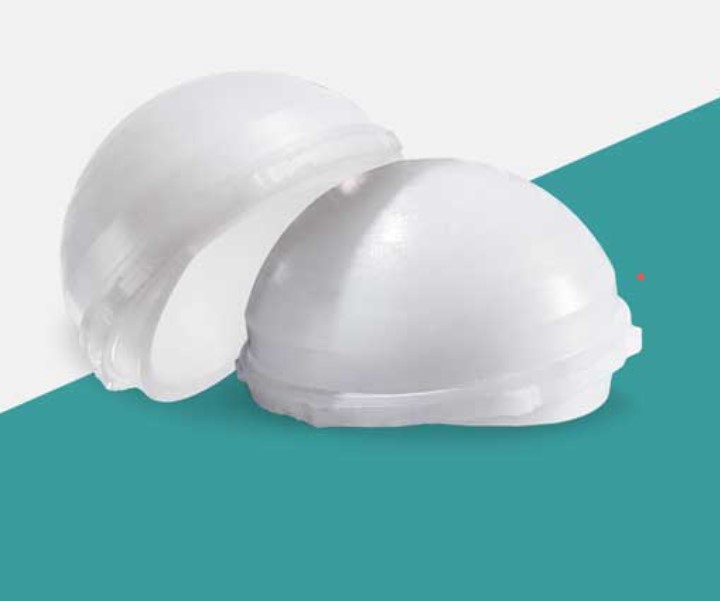 | Joint Replacement Acetabular Cup Liner Manufacturer An Acetabular Cup Liner Manufacturer specializes in producing liners that fit inside the acetabular cup during total hip replacement surgeries. View product → |
Frequently asked questions
Which bearing material is the strongest default for many primary total hip replacements?
Highly cross-linked polyethylene offers a strong balance for many primary replacements. Review patient age, activity, instability risk and revision plans before selecting it.
When should a hospital team consider liner geometry beyond a standard liner?
Match geometry to the clinical problem. Elevated-rim liners can address directional instability, while constrained liners restrict motion and require a clear indication because they transfer greater forces to the implant-bone construct.
How can procurement teams verify acetabular cup liner compatibility?
Check the exact shell catalogue number, shell size, liner size, locking mechanism, femoral-head diameter and taper. Confirm the combination in the manufacturer’s current compatibility chart rather than relying on nominal sizes.
What belongs in a total hip implant system cost comparison?
Include the shell, liner, femoral head, instruments, sterilisation or packaging requirements, stock burden, training, documentation, revision availability and the supplier’s ability to support the exact implant family over time.