Hospital buyers need to know whether Gamjee Roll will reduce leakage, protect a primary dressing and improve comfort without creating excess bulk, moisture or procurement risk. By the end, you will be able to select the right sterile status, compare meaningful specifications, verify supplier evidence and confirm whether a quoted roll is actually available for Buenos Aires delivery.
Key takeaways
- Use Gamjee Roll as a secondary absorbent and cushioning layer.
- Keep the primary dressing against the wound unless clinical instructions say otherwise.
- Compare dimensions, cotton-wool weight, gauze construction, packaging and batch evidence.
- Confirm Argentine documentation, delivery terms and replenishment capacity before ordering.
When Gamjee Roll Adds Value to a Hospital Dressing
Choose Gamjee Roll when a wound needs more than a thin cover: use it as a secondary absorbent and cushioning layer over a suitable primary dressing. Its cotton-wool core takes up exudate, spreads light pressure and reduces strike-through, while the gauze outer layer contains the fibres and helps hold the roll together.
| Material | Practical advantage | Limitation |
|---|---|---|
| Gauze roll | Low-profile coverage and easier wound inspection | Less cushioning and lower fluid-holding capacity |
| Gamjee Roll | Absorption plus padding over a primary dressing | Adds bulk and can hide the wound |
| Cotton wool | Soft cushioning and substantial loft | Needs containment; loose fibres make it unsuitable as the wound-contact layer |
The added padding helps over bony prominences, beneath fixation materials and where movement creates rubbing. It can improve comfort when a rigid splint, dressing support or light protective wrap presses against the site.
That benefit disappears if the roll is folded unevenly, becomes saturated or is secured too tightly; pressure points, retained moisture and impaired circulation can follow.
Gamjee Roll is a poor choice when frequent visual inspection, minimal bulk or direct atraumatic contact matters most. Do not treat it as a sterile wound-contact, haemostatic, occlusive or compression dressing. For buyers assessing gamjee roll benefits in buenos aires, compare the protection gained against the extra thickness, reduced visibility and replenishment space required.
How to Use the Roll Without Misusing It
Start with a clean wound-contact layer, not with Gamjee Roll. A hospital dressing team in Buenos Aires, Argentina, uses the roll as an absorbent, cushioning secondary layer over the primary dressing.
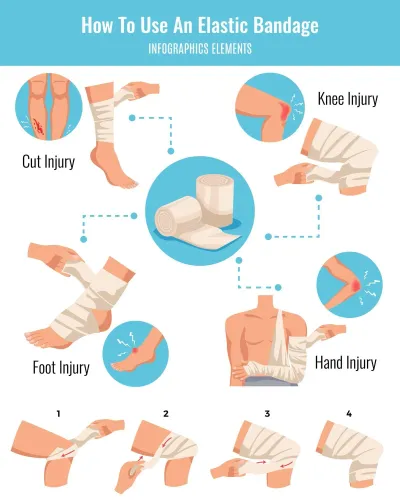
1. Clean the wound and apply the prescribed sterile primary dressing. Keep the cotton-filled layer away from the wound unless the product labelling and clinical protocol specifically permit that use.
2. Unroll enough material to cover the primary dressing and surrounding area without excessive overlap. The gauze covering helps contain the cotton while the inner layer absorbs exudate and distributes light pressure.
3. Secure the roll with suitable tape, a bandage or another approved retention method. Apply it smoothly, then check skin colour, warmth, sensation and capillary refill; loosen it immediately if it restricts circulation.
4. Inspect the dressing at the planned interval and replace it when saturated, leaking, soiled or displaced. Saturated Gamjee Roll becomes heavy and can promote strike-through, maceration and skin damage.
Do not use it as a haemostatic dressing when active bleeding needs a product designed to control bleeding. It is not an occlusive barrier for wounds requiring airtight or watertight coverage, and it cannot replace a compression bandage for venous disease or haemorrhage control.
Confirm whether the supplied Gamjee Roll is sterile or non-sterile: non-sterile stock cannot replace a sterile wound dressing without an approved sterilisation and clinical-use process.
Specifications and Evidence to Compare Before Buying
Compare a defined construction and test result, not the word “absorbent.” Require the same reporting units from every supplier, and compare the roll’s cushioning and fluid retention rather than price per metre alone.
| Specification | What to request | Why it matters |
|---|---|---|
| Cotton core | Cotton composition and whether it is absorbent or hydrophilic cotton | Identifies the material providing bulk absorption |
| Gauze covering | Fibre, thread count or construction, and whether gauze encloses or backs the cotton | Distinguishes a layered Gamjee Roll from ordinary gauze |
| Performance | Fluid-absorption or fluid-retention test method, test conditions and measured result | “High absorbency” has no comparison value without a method and figure |
| Dimensions | Roll width, length, thickness or mass per roll, with permitted tolerances | Exposes differences hidden by a similar product name |
| Sterility | Sterile or non-sterile status; if sterile, sterilization method and sterility claim | Prevents a non-sterile roll entering a sterile-dressing workflow |
| Packaging | Rolls per pack, individual wrapping, storage temperature and humidity limits | Supports stock rotation and protects the product before use |
Request a technical datasheet, product label artwork, manufacturer instructions, certificate of analysis for the quoted lot, and samples matching the quotation. Check each sample for intact packaging, lot or batch identification, manufacture or expiry information, and readable storage instructions.
For imported supply, request the Argentine importer’s details and applicable registration information, then verify the product through ANMAT’s medical-device regulatory channels. A CE mark or foreign exporter declaration does not prove authorization for commercial supply in Argentina. Include a written quarantine-and-recall process; a damaged outer package is not evidence of sterility.
How to Verify Buenos Aires Availability and Argentine Supply
A quote does not prove gamjee roll availability in buenos aires. Confirm the exact SKU with width, roll length, sterile or non-sterile status, packaging unit, current local stock, lead time, minimum order and whether the supplier holds it in Argentina or imports it after purchase.
Use this verification sequence:
1. Search beyond the English name. Try “rollo de algodón hidrófilo con gasa,” “algodón laminado con gasa,” “venda de algodón absorbente” and “apósito acolchado de algodón,” as well as “gamjee roll supplier argentina.” Ask each vendor for a dated stock statement tied to the quoted SKU.
2. Check Argentine authorization. Request the local importer’s legal name, product registration or authorization details applicable to the item, and Spanish labelling or instructions. Verify the product through ANMAT’s medical-device regulatory channels; a CE mark, foreign catalogue page or exporter declaration does not establish Argentine commercial authorization.
3. Match the presentation to the workflow. A non-sterile roll cannot replace a sterile wound-contact dressing unless your approved sterilization and clinical-use process permits it. Confirm that the quoted sterile status, packaging integrity, lot number and expiry format fit the procedure and receiving controls.
4. Put logistics in writing. Specify dimensions and tolerances, fibre-shedding limits when relevant, storage conditions, delivery temperature, traceability, and replacement of damaged or short-dated stock. If Komal Health Care Pvt Ltd is included in the comparison, request the same evidence and delivery terms rather than comparing catalogue descriptions alone.
The final test is operational: can the hospital reorder the identical SKU before its ward stock runs out? If not, the apparent local price hides supply risk.
Related product
 | Dressing We are manufacture of Gamjee Roll. These Gamjee Roll are highly absorbent cotton are available in low adherent gauze cover and is applied over... View product → |
A Practical Tender and Replenishment Checklist
Put every control into the tender, not into an informal supplier promise. Separate clinical performance from logistics, then make receiving staff verify the quoted SKU rather than accepting a catalogue substitute.
1. Define cotton composition, gauze material and construction; roll width, length and permitted tolerances; sterile or non-sterile status; and, for sterile stock, the sterilization method.
2. If absorbency or fluid retention is claimed, require the test method and performance value. State the intended exudate level and expected change frequency, because saturated Gamjee Roll becomes heavy, leaks and raises maceration risk.
3. Specify the packaging unit, intact-seal requirement, lot or batch number, expiry date, Spanish-language instructions or labelling, and traceability documents. For imported stock, request the Argentine importer and applicable ANMAT registration details.
4. Before awarding, confirm the exact width, roll length, sterile status, packaging unit, current Buenos Aires stock, minimum order, lead time and whether stock is locally held or imported after ordering.
5. Write storage requirements into the order: delivery temperature, storage temperature, humidity or light limits, pallet protection and stock-rotation method. Require replacement or credit for wet, crushed, opened, contaminated or short-dated packs.
6. At receipt, compare the delivery against the purchase order, inspect seals and cartons, record batch and expiry, quarantine discrepancies, and release only the approved SKU. Set a reorder point based on average consumption, delivery lead time and emergency reserve, then review usage monthly.
Frequently asked questions
When does Gamjee Roll add value to a hospital dressing?
It adds value as a secondary absorbent and cushioning layer when a wound has exudate or needs light pressure distribution. Do not treat it as a universal replacement for a primary wound dressing.
How should hospital staff use Gamjee Roll without misusing it?
Place a suitable primary dressing against the wound, then apply Gamjee Roll as the secondary layer. Secure it without excessive pressure and replace it according to the wound-care protocol.
What specifications should Buenos Aires buyers compare?
Compare roll dimensions, cotton-wool weight, gauze coverage, absorbency, fibre containment, packaging, sterilisation status when required, shelf life, batch identification and supporting quality documents.
How can buyers verify Gamjee Roll availability in Buenos Aires and Argentina?
Ask the supplier to confirm local stock, lead time, minimum order quantity, delivery terms, batch details, invoices and the documentation required for Argentine hospital procurement.