Pairing a bipolar head with an uncemented long femoral stem creates fixation, alignment, sizing and procurement risks that do not arise in the same way with a routine cemented modular stem. You will be able to identify the cases that justify a long stem, plan the construct, control fracture and instability risks, and specify a complete system for procurement in Buenos Aires.
Key takeaways
- Confirm femoral anatomy, stem fit, offset, leg length and version before ordering components.
- Use a long uncemented stem only when distal fixation solves a defined reconstruction problem.
- Check broach, reamer, trial and implant compatibility across the complete system.
- Request traceable licences, lot records and component documentation in every Buenos Aires tender.
Why the bipolar and long-stem combination is mechanically demanding
An uncemented long stem transfers load to the distal femur while a bipolar head must restore hip motion, length and stability above it. That combination explains the bipolar prosthesis problems for uncemented long stem cases: distal fixation can control stem height and version before the surgeon has achieved the desired offset or soft-tissue tension.
A stem designed for routine primary arthroplasty is not automatically suitable for revision, fracture bypass or deficient proximal bone.
The main mechanical consequences are:
- An inadequate interference fit permits axial subsidence, varus migration, thigh pain and fibrous fixation instead of bone ingrowth.
- Excessive distal contact can cause cortical perforation, intraoperative fracture or later periprosthetic fracture.
- A long, straight stem in a bowed femur can sit in malposition, producing leg-length discrepancy, offset error, impingement or an unstable gait.
- Incorrect version, head-neck geometry, abductor tension or soft-tissue repair can cause dislocation; bipolar articulation does not correct poor orientation.
- Poor distal bone stock or an unsuitable fixation zone can lead to loosening, even though cement-related complications have been avoided.
The taper is another failure point. Confirm that the bipolar head matches the selected stem’s neck taper, size and approved head combinations; similar-looking tapers are not interchangeable. Before choosing this construct, assess the entire canal, femoral bow, cortical thickness, previous screw holes and defects.
Active infection, severe bowing, inadequate distal fixation or a case needing immediate cemented stability can make an uncemented long stem the wrong choice.
When a long uncemented stem is appropriate—and when it is not
Distal fixation justifies an uncemented long stem only when the distal femur offers enough intact, cylindrical bone for a stable interference fit. The stem must bypass a fracture, cortical defect, screw hole, or deficient proximal segment by at least two cortical diameters, while matching the canal’s diameter, bow, and version.
Choose it when:
- Revision surgery or proximal bone loss prevents reliable metaphyseal fixation.
- A femoral deformity or cortical defect requires fixation below the damaged area.
- The distal canal provides adequate cortical contact without forcing a stem that is too large, too straight, or too long.
- The manufacturer’s indications and surgical technique specifically cover revision, fracture-bypass, or femoral-defect use.
Do not select it because a routine primary stem is labelled “uncemented.” Early stability depends on interference fit; poor contact can cause subsidence, varus migration, thigh pain, or fibrous fixation instead of bone ingrowth. Distal fixation can also dictate height and version before leg length, offset, and soft-tissue tension are correct.
Reject the plan when the distal canal cannot hold the stem, femoral bowing risks cortical contact or perforation, bone stock is insufficient, or active infection is present. Choose cemented fixation when it provides better immediate stability, especially where distal press-fit is unreliable.
Bipolar articulation does not compensate for malposition or imbalance—an important distinction in searches for bipolar prosthesis problems in Buenos Aires.
Preoperative planning and component fit checks
Measure the entire femur before choosing an uncemented long-stem bipolar construct. Full-length AP and lateral radiographs, supplemented by CT when deformity or previous hardware obscures the canal, must show femoral bow, canal diameter, cortical thickness, version, distal fixation length, screw holes, cortical defects and fracture lines.
A standard proximal-femur image can miss the distal problem that causes perforation or fracture.
- Template the stem against the full canal. Match its length, diameter, curvature and fixation zone to intact cortical bone; a straight stem that exceeds the native bow can contact one cortex, perforate it or force varus.
- Measure the available distal segment for interference fit. If the canal is too wide, severely bowed or too deficient to provide stable distal fixation, do not select this construct.
- Record the planned neck cut, leg length, femoral offset and version. Excessive distal seating can set stem height before those targets are restored, producing limp, impingement, instability or abnormal abductor tension.
- Check acetabular depth, erosion and pre-existing disease, then size the bipolar head to avoid an oversized head or excessive loading against compromised cartilage.
- Confirm the head’s taper, size and manufacturer-approved compatibility with the exact stem. Similar-looking tapers are not interchangeable; mismatch can prevent assembly or alter head position.
This is the core of uncemented long stem case planning: match bone geometry, fixation length and reconstruction targets as one system. Document the selected stem, head, neck option and radiographic measurements before opening the implant set.
Managing fracture, malposition and instability risk during surgery
A long stem should not be driven into the femur until the team has confirmed its path, diameter and version. Distal fixation can control stem height and rotation before the surgeon has restored leg length, offset or soft-tissue tension.
1. Expose and inspect the canal from the entry point to the planned stem tip. Use the preoperative images, flexible reamers and intraoperative fluoroscopy to check femoral bow, cortical thickness, old screw holes and defects. A straight stem that contacts the distal cortex can perforate or split it.
2. Follow the manufacturer’s reamer sequence exactly. Under-reaming or forcing the stem into a bowed canal raises the risk of a cortical crack; over-reaming removes the interference fit and permits rotation, subsidence and fibrous fixation. Keep cerclage cables, fracture clamps and a backup stem available before insertion.
3. Trial the stem, neck and bipolar head before final impaction. Check leg length, offset, version, abductor tension, range of motion and impingement. If distal fixation locks the stem in a position that produces instability, varus alignment or abnormal tension, change the plan rather than accepting the position.
4. Confirm axial and rotational stability after implantation. An apparently firm stem that pistons, rotates or migrates under testing is not ready for closure.
Bipolar articulation does not compensate for incorrect version or poor soft-tissue repair. Restore the capsule and abductors according to the surgical approach, then document the final components, sizes and intraoperative findings for follow-up.
Turning a Buenos Aires tender into a complete, traceable implant system
A tender should specify a complete construct, not simply “uncemented long stem.” A single nominal length cannot accommodate variable femoral anatomy or an unexpected intraoperative finding. Ask a bipolar prosthesis supplier in Buenos Aires to document every compatible component before the award.
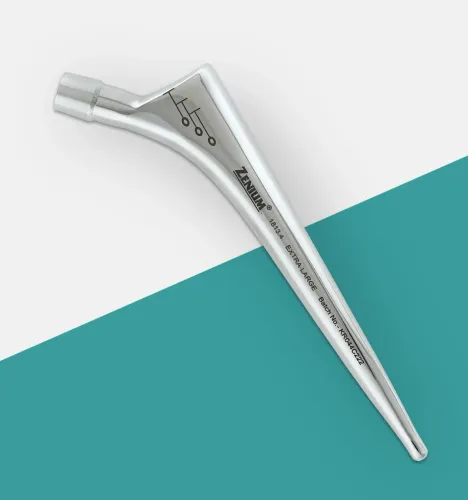
- Stem diameters, lengths, geometry, laterality, modular options, porous or roughened fixation zones, and the intended distal fixation method.
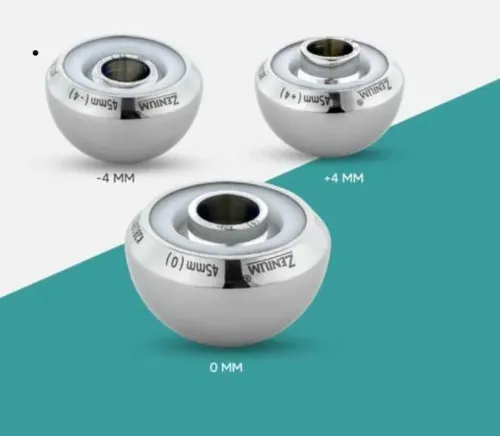
- Bipolar shell and liner sizes, femoral head sizes, neck lengths, and the exact stem taper, including manufacturer-approved combinations. Similar-looking tapers are not interchangeable.
- Reamers, broaches, trial stems, trial heads, version-control features, extraction tools, and cerclage equipment. The technique must address both an over-reamed, rotationally loose canal and a tight or bowed canal that risks cracking.
- The manufacturer’s indications and surgical technique for revision, fracture bypass, femoral defects, and poor proximal bone. Approval for routine primary arthroplasty does not establish suitability for these cases.
- ANMAT registration status, approved configuration, Argentine importer or responsible entity, Spanish labeling and instructions, and lot or batch traceability.
- Local stock, replacement lead times, and a contingency plan for a different diameter, longer stem, bipolar shell, or fixation accessory during surgery.
Komal Health Care Pvt Ltd should be evaluated against this evidence rather than catalogue breadth alone. These checks expose uncemented long stem procurement problems before a tender becomes a missing-component problem in the operating room. A cemented modular stem listing cannot substitute for documented uncemented compatibility.
Related products
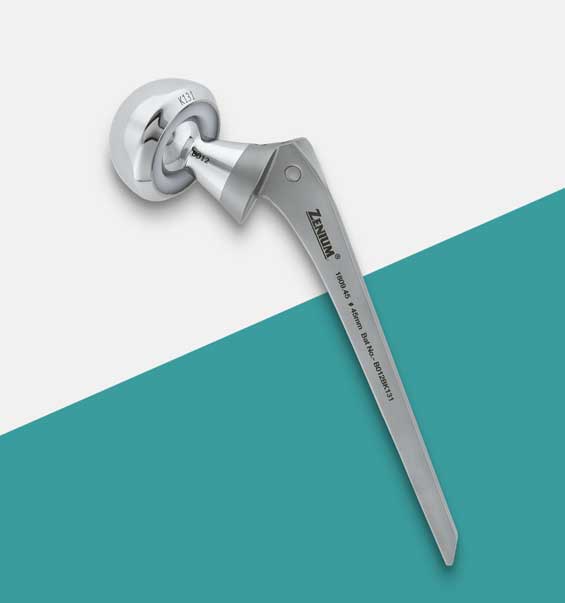 | Joint Replacement Bipolar Prosthesis (Non Fenestrated) Manufacturer The Bipolar Prosthesis (Non-Fenestrated) is a type of hip implant commonly used in hemiarthroplasty procedures, especially for treating femoral neck... View product → |
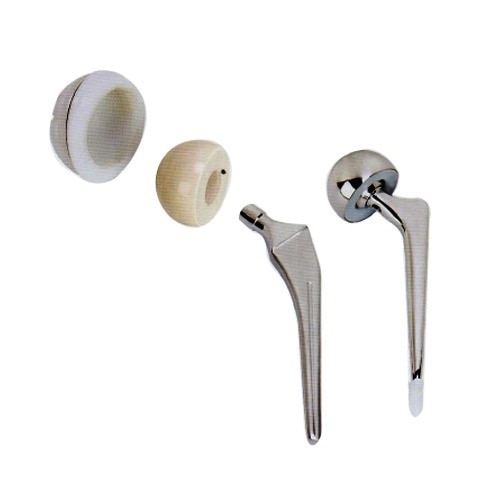 | Bipolar Hip Prosthesis We are manufacturer of Bipolar Prosthesis . Fix Bipolar and Modular Bipolar. Cup Size : 37 mm to 55 mm with 2 mm variation Material : S.S.316 L/LVM View product → |
Frequently asked questions
Why is the bipolar and long-stem combination mechanically demanding?
The long stem gains distal fixation, while the bipolar head must restore hip motion, offset, leg length and soft-tissue tension. Stem height and version can become fixed before those targets are achieved.
When is an uncemented long stem appropriate?
It is appropriate when distal femoral fixation is needed because of deficient proximal bone, revision anatomy or a fracture pattern that cannot support a standard stem. Avoid it when anatomy, bone quality or available instrumentation cannot provide reliable fixation.
What should preoperative planning verify?
Verify femoral canal dimensions, stem diameter and length, distal fixation, offset, neck geometry, head size, leg length, version, broach progression and compatibility between trials and final implants.
How can surgery reduce fracture, malposition and instability risk?
Use controlled preparation, protect the femur during broaching and insertion, confirm version and height with trials, assess stability through range of motion, and avoid forceful impaction when the stem or canal does not match.
What should a Buenos Aires tender include for a complete implant system?
Specify compatible stems, bipolar heads, neck options, trials, broaches, reamers, instruments, packaging, lot traceability, regulatory documents and replacement arrangements rather than ordering isolated components.
Related products
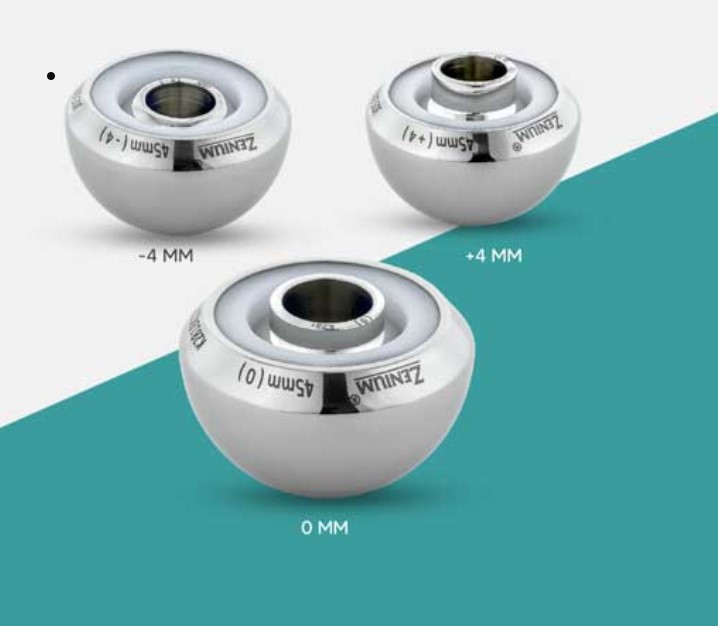 | Joint Replacement Modular Bipolar Cup (With Head) Manufacturer The Modular Bipolar Cup (With Head) is an advanced hip implant system used in hemiarthroplasty procedures, particularly for treating femoral neck... View product → |
 | Joint Replacement Modular Bipolar Cup Manufacturer A Modular Bipolar Cup Manufacturer specializes in producing advanced orthopedic components used in hip replacement surgeries. View product → |