Hospital buyers must compare more than plate price: alloy designation, fatigue behaviour, imaging effects, instrument compatibility, traceability and local supply all affect clinical and financial risk. By the end, you will be able to compare stainless steel with titanium, verify an implant system’s documentation, choose the correct fixation configuration and build a procurement checklist for Chilean hospitals.
Key takeaways
- Choose stainless steel when rigidity, contouring and radiographic visibility outweigh titanium’s lower imaging artefact.
- Request the material grade, mill certificate, batch traceability and sterilisation instructions before approval.
- Match plate geometry, screw system and instruments to the fracture pattern and planned fixation technique.
- Include freight, inspection, inventory and replacement costs in the total ownership calculation.
Where stainless steel outperforms titanium—and where it does not
Stainless steel usually outperforms titanium when deformation resistance, ductile contouring, radiographic visibility and acquisition cost matter most. The benefits of stainless steel orthopaedic plates are practical, not universal.
| Property | Stainless steel under ISO 5832-1 or ASTM F138 | Titanium |
|---|---|---|
| Elastic modulus and stiffness | Higher modulus; stiffer plate resists deformation but can increase stress shielding and reduce fracture load sharing | Lower modulus; more flexible load sharing, with greater risk of deformation in some constructs |
| Ductility and fatigue | Ductile for controlled contouring; repeated bending or rebending creates fatigue damage | Lower weight and good fatigue performance when correctly designed, but contouring limits depend on alloy and manufacturer |
| Weight and corrosion | Heavier; corrosion resistance is good, not absolute—crevice, fretting and galvanic corrosion remain possible | Lighter and highly corrosion-resistant, but dissimilar-metal contact still requires control |
| Imaging and cost | Clear standard radiographs; usually greater CT and MRI artefact; often lower acquisition cost | Less radiopaque contrast and often lower artefact; commonly higher acquisition cost |
| Removal | Visibility can aid localisation, but removal still means another operation with bleeding, infection and refracture risks | Also requires another operation; lower mass does not remove those risks |
Disclose nickel content to patients with documented metal hypersensitivity. Retain the manufacturer’s MR Safe, MR Conditional or MR Unsafe status and exact scanning conditions; never label an implant simply “MRI-safe.”
Plate design, working length, screw density and loading protocol matter more than material alone. The stainless steel bone plate benefits disappear when excessive stiffness, poor reduction or premature loading overloads the construct. Choose compatible alloys and controlled passivation or electropolishing.
How to prove that the plate is implant-grade stainless steel
A “316L” label does not prove implant suitability. For orthopaedic plates for hospitals in Chile, request evidence that identifies the finished device, its material, processing history and release decision.
1. Require the exact alloy designation: normally ISO 5832-1 wrought stainless steel or ASTM F138, not merely commercial 316 or 316L. Obtain the chemical composition, mechanical-test results, heat or lot number and a lot-level material certificate. The certificate must connect the supplied plates to the manufacturer’s records.
2. Request process records covering machining, deburring, dimensional inspection, surface finish, passivation or electropolishing, cleanliness, corrosion testing, packaging and final release controls. These records address burrs, contamination, poor screw fit and corrosion risks that an alloy name cannot exclude.
3. Check the manufacturer’s ISO 13485 quality-management certification, ISO 14971 risk-management records and ISO 10993 biological-evaluation evidence. Ask for the sterilisation method and validation, shelf-life data, packaging validation, Spanish instructions for use where required, complaint contacts and recall procedures.
4. Verify the Chilean Instituto de Salud Pública requirements for the device classification and import route, including registration or notification status. Confirm that the documentation covers the exact plate, screw, instrument and packaging configuration you will purchase—not a similar catalogue family.
A supplier that cannot provide lot traceability or configuration-specific records has not proved implant grade.
Match the fixation construct to the fracture and the instrument set
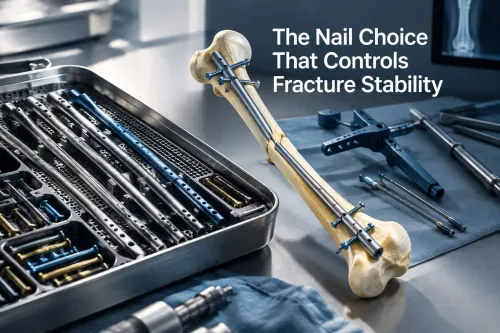
Choose the construct from the fracture pattern, bone segment, location, bone quality and loading environment—not from the plate name alone. A distal metaphyseal fracture, an articular fragment, an osteoporotic shaft and a high-load femoral fracture demand different support, working length and screw purchase.
| Construct | Selection signal | Main constraint |
|---|---|---|
| Locking | Fixed-angle screws suit poor bone, metaphyseal fixation or a bridge construct | Does not replace reduction; wrong default when interfragmentary compression or close contouring is needed |
| Compression | Screw loading draws the plate against bone for axial or interfragmentary compression | Requires accurate contouring and adequate plate-to-bone contact |
| Buttress | Supports a fragment against shear or collapse at a metaphysis or joint margin | Poor choice when the plate cannot oppose the dominant force |
| Anatomically contoured | Matches a named bone segment and reduces intraoperative bending | Confirm side, fit and fracture location; “anatomical” does not guarantee reduction |
Locking screws engage threads in the plate, creating a fixed angle while preserving plate-to-bone distance. Conventional compression screws pull the plate toward bone, so contouring and compression technique affect fit and load transfer.
Before ordering, ask the fracture fixation implant manufacturer to confirm:
- Left or right orientation, anatomical side, plate length, hole count and spacing, thickness, screw diameter, thread type, locking interface, screw trajectory, working length and contour.
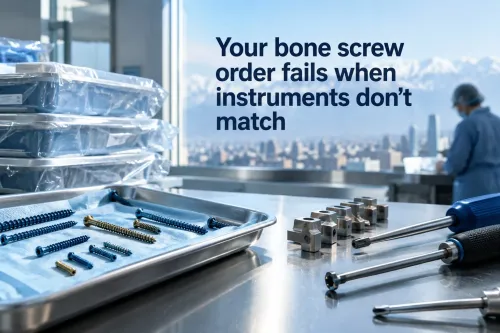
- Matching drill guides, taps, drivers, depth gauges, trays and sterilisation containers, all within the same documented system.
- Correction of catalogue labels such as “Distal Redius” and “Ankle Fixation Febula” before purchasing documents are issued.
Build a Chilean procurement file that protects supply continuity
Approval should follow a documented supply-and-compatibility review, not catalogue breadth. For a stainless steel implants supplier in Santiago, require the exact plate, screw, instrument and packaging configuration covered by its ISO 13485 records, ISO 14971 risk file, ISO 10993 biological evaluation, sterilisation validation and Instituto de Salud Pública documentation where applicable.
A CE mark does not prove Chilean compliance or lot traceability.
Build the file around these checks:
- Map the trauma case mix against anatomical regions, left/right plates, lengths, thicknesses, hole spacing, locking and nonlocking options, screw diameters and thread types.
- Confirm stock, replenishment lead times, emergency availability, replacement parts, Spanish instructions for use, complaint contacts and recall procedures.
- Compare surgeon familiarity and existing trays. Prevent mixed-system use: a nominally matching screw or driver can change thread engagement, locking performance, plate fit and construct strength.
- Require a continuity plan covering alternate production, retained inventory, distributor backup and notification of discontinuation.
| Check | Existing hospital system | Offered system |
|---|---|---|
| Instruments | Drill guides, taps, drivers, gauges and containers | Verify exact compatibility, not nominal size |
| Traceability | Implant and screw lot records | Match certificates and release documents to each configuration |
| Support | Trained local contact | Confirm technical response and replenishment times |
Assess Komal Health Care Pvt Ltd as a manufacturer and exporter by requesting these records, sample lot documentation, Santiago support arrangements and continuity commitments. That is a stronger test for orthopaedic plates for hospitals Chile than counting catalogue pages.
Related products
 | Orthopaedic Locking Plate Our range of locking plates are manufactured using the highest quality medical grade stainless steel for strength and durability. View product → |
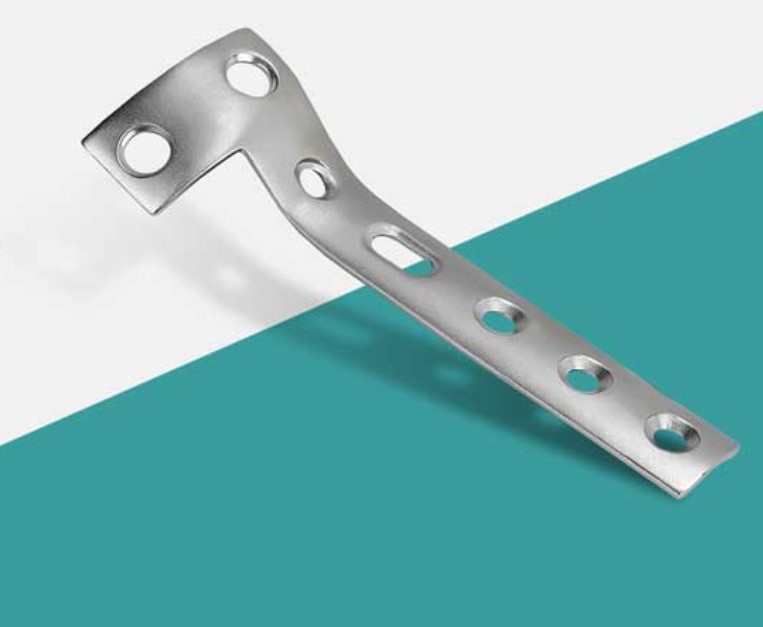 | Bone Plate 'L' Buttress Plate Manufacturer 'L' Buttress Plate manufacturers produce specialized orthopedic implants designed for the stabilization of fractures, particularly around the distal... View product → |
Calculate total cost of ownership before approving the material
Approve stainless steel only after pricing the complete fixation system, not the plate alone. Include screws, trays, drill guides, sterilisation cycles, storage space, inventory breadth, replacement parts, training, freight, emergency availability and the cost of a stock-out. Mature stainless steel supply, broad surgeon familiarity and standardised instruments often reduce operational friction.
| Option | Cost and operational effect | When it earns preference |
|---|---|---|
| Stainless steel | Usually lower acquisition cost, broad compatibility and simpler replenishment; established instruments can reduce training and tray changes. | Standardised trauma workloads with reliable local supply. |
| Titanium | Higher acquisition cost may be offset by lower weight, specific imaging needs or an established surgeon technique. | Imaging, weight or technique requirements outweigh purchase price. |
A procurement review of stainless steel bone plate benefits must include clinical controls. Contour once with approved instruments; never repeatedly straighten and rebend. Confirm adequate reduction and screw purchase, plan support for delayed union risk, and document postoperative weight-bearing limits to prevent fatigue failure.
- Material certificate, lot traceability, surface treatment and corrosion controls.
- MRI labelling, Spanish instructions and the regulatory file.
- Implant–instrument compatibility, including guides, taps, drivers and trays.
- A documented process for complaints, recalls, replenishment and emergency stock.
Frequently asked questions
When does stainless steel outperform titanium for orthopaedic plates?
Stainless steel is a practical choice when deformation resistance, ductile contouring, radiographic visibility and lower acquisition cost matter most. Titanium remains preferable when reduced imaging artefact, lower modulus or corrosion considerations drive the decision.
How can a hospital verify that a stainless steel plate is implant grade?
Request the stated alloy grade, material test or mill certificate, lot or batch number, manufacturer traceability records, surface-finish information and applicable biocompatibility and quality documents. Match every document to the plate packaging and label.
How should hospitals match a plate to the fracture and instrument set?
Confirm the plate’s shape, hole pattern, screw diameter, locking or non-locking design and contouring limits against the fracture and surgical plan. Check that the hospital owns the compatible drill guides, bending tools, depth gauge, screwdrivers and extraction instruments.
What belongs in a Chilean procurement file for stainless steel plates?
Keep the quotation, product and material specifications, batch traceability, certificates, regulatory and import documentation, shelf-life or packaging details, delivery commitments, replacement terms and records showing compatibility with the hospital’s instrument inventory.
Related products
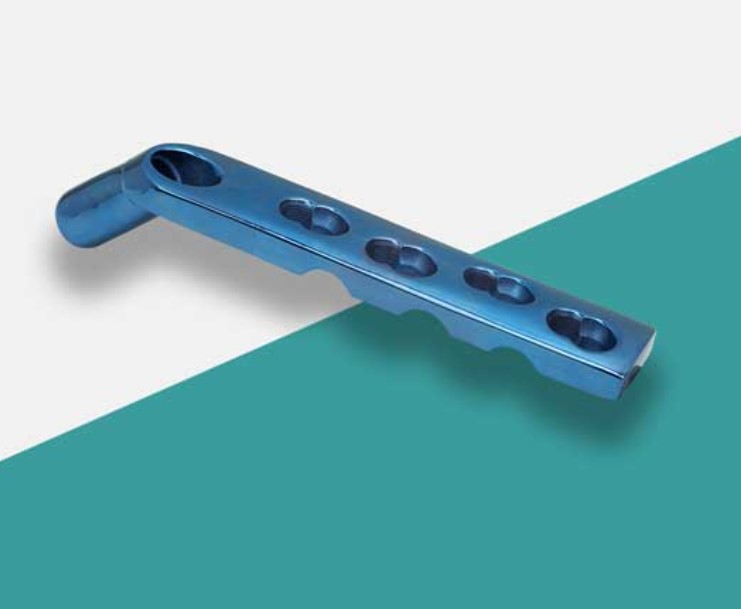 | Bone Plate Dhs Locking Plate Manufacturer DHS (Dynamic Hip Screw) locking plate manufacturers produce specialized orthopedic implants used in the surgical treatment of proximal femur... View product → |
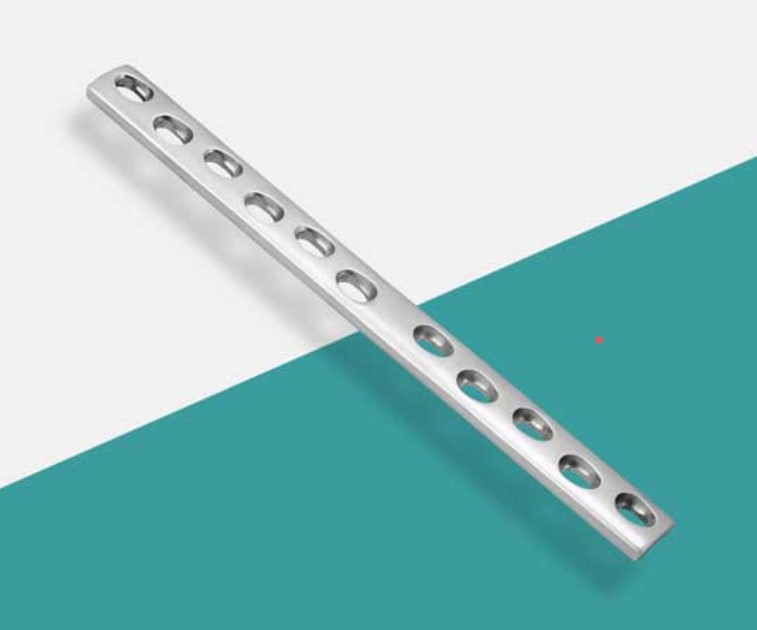 | Bone Plate D.C. (Dynamic Compression) plate manufacturers produce orthopedic implants designed to provide stable fixation for bone fractures through controlled... View product → |
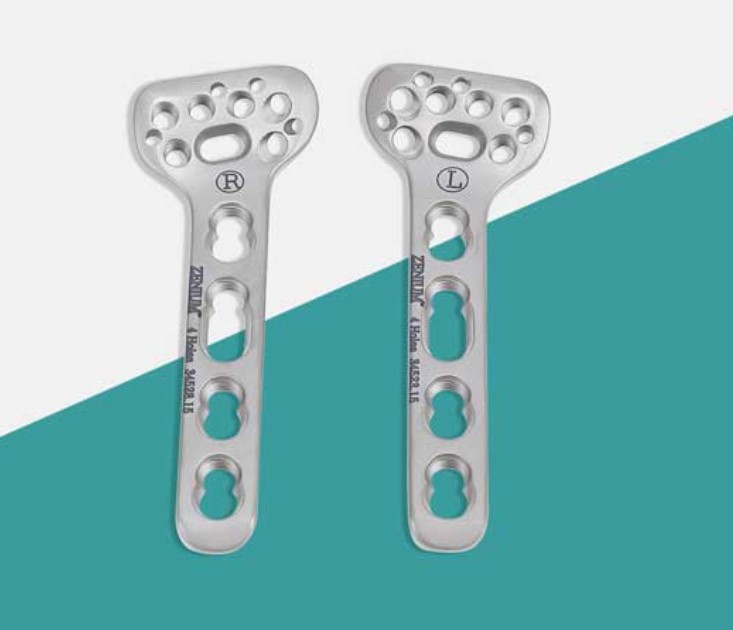 | Bone Plate Distal Redius Plate Manufacturer Distal radius plate manufacturers specialize in creating orthopedic implants used to treat fractures of the distal radius, commonly occurring near... View product → |
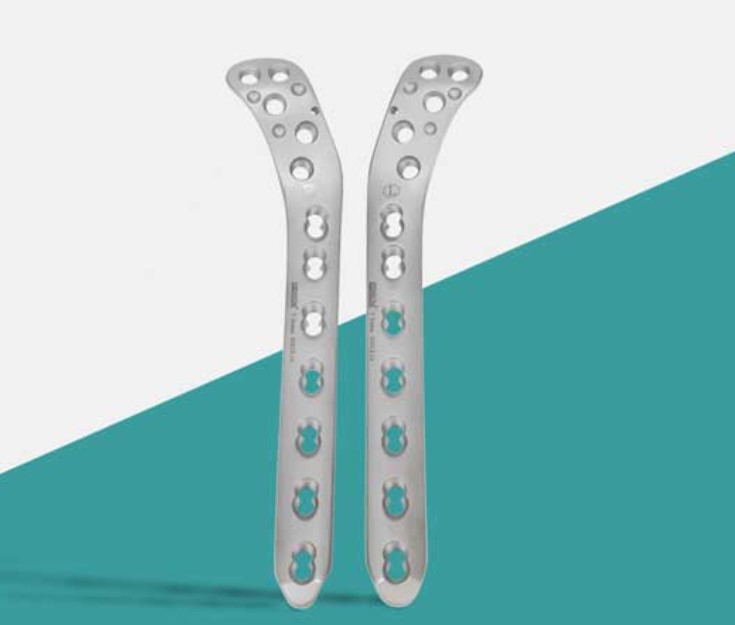 | Bone Plate Lateral Tibial Locking Plate Manufacturer Lateral Tibial Locking Plate manufacturers specialize in producing orthopedic implants designed to stabilize fractures on the lateral side of the... View product → |