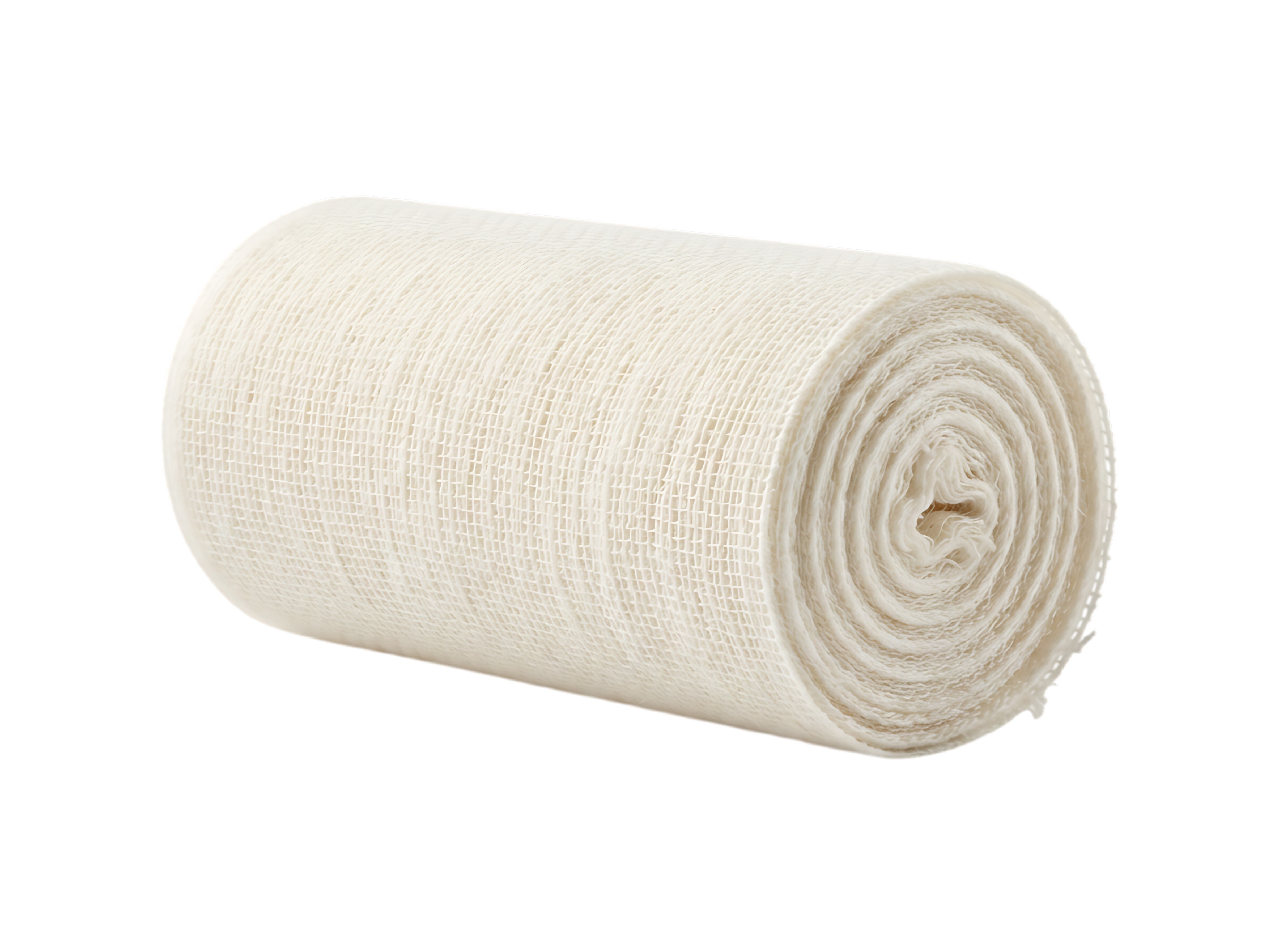
A gauze roll is not adequately specified by fiber and a claimed absorbency level. By comparing construction, dimensions, sterility, packaging, clinical purpose, test data and supplier controls, you can select a product that performs predictably without paying for unusable length or accepting avoidable retained-item and contamination risks.
Key takeaways
- Match roll width and length to wound size, packing depth, and expected waste.
- Choose sterile gauze roll options when the dressing enters a sterile field or wound.
- Request test data for absorbency, linting, tensile strength, and packaging integrity.
- Check batch traceability, markers, loose fibres, and retained-item controls before approval.
Match the roll specification to the clinical task
Narrow, shorter gauze roll formats suit small wounds and controlled packing; wider or longer rolls cover larger areas but leave more opened-product waste. Match the roll to the task before requesting a price.
| Option | Recommended specification | Main reason |
|---|---|---|
| Wound packing | Narrow width, short length, sterile when contacting an open wound, suitable ply and weave for controlled placement | Limits excess material and supports removal |
| Wound coverage | Wider width, longer length, absorbent cotton or non-woven construction | Covers larger areas with fewer joins |
| Primary-dressing support | Light-to-medium ply, conformable weave, cut or selvedged edge | Secures the dressing without serving as the wound-contact layer |
| Operative use | Sterile, low-lint, wet-strong construction with controlled edges and radiopaque marker when required by protocol | Reduces fibre, fraying and retained-item risk |
Ply changes thickness, handling and fluid capacity. Thread count and mesh opening affect conformability, fluid movement and wound contact; open mesh may pass fluid readily, while tighter construction can control loose fibres.
Specify these details in writing:
- Fiber composition, such as cotton or cotton/viscose
- Finished width, length, ply, weave or mesh
- Cut edges, selvedged edges or loose-thread controls
- Absorbency, intended use and operative-field status
- Wound size, exudate level, packing depth and procedure type
Compare cotton with non-woven material for lint release, absorbency, conformability, wet strength and cost per usable dressing area. A gauze swab is a folded, countable pad; an abdominal sponge is larger and often marked for surgery, while a rolled bandage secures dressings and cast padding cushions beneath a cast.
Decide when sterile gauze roll options are required
Use a sterile pack when the roll will contact an open wound, enter a sterile operative field or support a procedure whose facility policy requires sterility. Non-sterile gauze suits external protection, securing a primary dressing and other uses allowed by local protocol; “medical grade” and a clean manufacturing area do not prove sterility.
Verify sterile gauze roll options through the supplied unit and its records:
1. Request the sterilisation method—ethylene oxide, radiation or moist heat—plus product-specific validation and batch-release records. For ethylene oxide, request residual ethylene oxide and ethylene chlorohydrin controls under ISO 10993-7, including aeration evidence.
2. Review sterile-barrier validation under ISO 11607 for forming, sealing, distribution and aging. A sterilisation certificate alone does not show that the package stayed sterile during transport and storage. Ask for shelf-life evidence and identify whether expiry is limited by package integrity, material degradation or label legibility.
3. Inspect every pack before use. Reject one with a broken seal, puncture, moisture, crushed area or opened corner. Confirm the lot or batch number, expiry date and storage instructions; visual inspection cannot prove sterility after a damaged barrier.
4. Keep sterile and non-sterile stock separate in a clean, dry area protected from dust and moisture. Rotate both stocks first-expiry, first-out, and quarantine packs with missing identification or doubtful integrity.
Compare performance with measurable test data
Compare a gauze roll by controlled results, not by “highly absorbent” or “low lint” claims. Ask for the test method, specimen size, conditioning, immersion or contact time, fluid used and reporting unit. A result in grams of fluid per gram of material is not comparable when suppliers use different fluids, times or sample sizes.
| Measure | What to compare | Evidence to request |
|---|---|---|
| Absorbency | Fluid uptake under identical conditions | Method, fluid, specimen size, time and g/g result |
| Wet strength | Retention after saturation | Wet tensile results in machine and cross directions, with wetting condition |
| Linting | Fibre release during handling | Lint or fibre-shedding method and result |
| Fluid handling | Passage, retention and roll integrity | Saturated-roll photographs or test records, plus edge-fray limits |
Use the same criteria for woven cotton and non-woven material. Compare thread count, mesh opening and ply with the test data: tighter mesh can reduce loose fibres, while open mesh can improve conformability and fluid passage; extra ply can increase capacity but also bulk and consumption.
- Request evidence that the gauze roll remains intact when saturated, especially for surgical use.
- Ask for roll length, finished width, usable area, pack count and recommended cutting method.
- Calculate cost per usable dressing or procedure. A longer roll can lower price per metre but increase waste when staff discard opened remnants.
Control markers, loose fibres and retained-item risk
Before selecting sterile gauze roll options for surgery or packing, confirm the product’s intended-use statement and your facility’s policy. A sterile roll for external dressing is not automatically suitable for packing or operative-field use.
1. Specify an X-ray-detectable or radiopaque marker when the roll may enter an operative field and the retained-item-prevention protocol requires one. Ask whether the marker is an edge thread, tape, strip or another defined element, and confirm that it remains visible after folding, cutting and saturation.
X-ray detectability supports identification; it does not replace counting, documentation, wound exploration or team communication.
2. Inspect each roll before use for loose fibres, frayed cut edges, foreign matter, discoloration, odour and damaged packaging. Use a controlled cutting process, keep unused material outside the field and prevent unravelled lengths from entering waste with usable or counted pieces.
3. Record the number of rolls opened and issued, pieces cut from each roll, and pieces returned or discarded. Reconcile the count before closure and document discrepancies under the facility’s escalation procedure. For packing, record the number and size of pieces placed and removed.
Dispose of contaminated material through the designated clinical-waste stream, while retaining the lot number and related records for incident investigation.
Qualify a Mexico supplier before requesting a quotation
A supplier’s certificate qualifies only the exact roll configuration you are buying. For a gauze roll supplier Mexico search or surgical dressing supplier Mexico search, request a specification identifying material, construction, width, length, ply, weave or mesh, edge treatment, marker, sterility status, sterilisation method, pack count, lot coding, expiry and intended use.
| Verify | Ask for evidence | Why it matters |
|---|---|---|
| Product quality | Certificate of analysis, sterility record where applicable, packaging configuration and lot-traceability records | A certificate for another size or gauze pad does not qualify the roll |
| Shelf life | Real-time or accelerated-aging evidence for gauze and sterile-barrier packaging | Expiry may depend on seal integrity, material degradation or label legibility |
| Mexican responsibility | Legal manufacturer, importer or responsible establishment, COFEPRIS registration or notification status, Spanish-language labelling | Manufacturing location and Mexican market responsibility are separate |
| Quality controls | Evidence relevant to NOM-241-SSA1-2021 covering traceability, complaints, change control and nonconforming product | ISO 9001 alone does not establish medical-device controls |
Ask whether stock is in Mexico or shipped internationally, who clears imports, and what lead time, minimum order quantity, carton dimensions, local-delivery terms, replacement process and continuity plan apply. For sterile rolls, confirm product-specific validation and release records for ethylene oxide, radiation or moist heat.
Put these fields in the quotation:
- Price per roll and carton, dimensions, pack configuration and custom-specification charges
- Sterilisation option, samples, expiry at delivery and ordering contact
Use the same checklist for Komal Health Care Pvt Ltd, but verify its actual manufacturing site, Mexican inventory and regulatory responsibility rather than relying on a search result or company name.
Related product
 | Gauze Roll ₹38 We produce and supply to our clients, a wide range of Gauze Rollthat are hygienically made so that they are safe to use in various medical... View product → |
Frequently asked questions
How do you match a gauze roll specification to the clinical task?
Compare width, length, weave, absorbency, pliability, and packing behaviour with the wound-care task. Use narrower, shorter rolls for small wounds and controlled packing; use wider or longer rolls for larger coverage while accounting for opened-product waste.
When are sterile gauze roll options required?
Use sterile gauze when it will enter a sterile field, contact an open wound, or support a procedure requiring sterile supplies. Confirm the package seal, sterilisation information, lot number, expiry date, and instructions for use.
What test data should you compare between gauze roll options?
Ask suppliers for comparable results covering absorbency, tensile strength, lint or fibre release, dimensions, packaging integrity, and sterilisation status. Compare the test method, sample size, acceptance limits, and batch identification rather than comparing headline claims alone.
How can you qualify a gauze roll supplier in Mexico?
Request product specifications, representative samples, batch records, certificates of analysis, packaging details, traceability procedures, complaint handling steps, and delivery documentation. Confirm that the supplier can maintain the approved roll dimensions and sterile-pack configuration across repeat orders.