An internal head is not a universally interchangeable sphere: its taper, diameter, offset, material and mating cup or liner must be specified as one implant interface. By following the manufacturing route, inspection evidence and purchasing checks, you can determine whether a component belongs in a validated hip system, whether a supplier’s production claims are credible, and when a complete system is safer than a standalone part.
Key takeaways
- Confirm head diameter, taper geometry, material pairing, and stem compatibility before approval.
- Request material certificates, dimensional inspection records, and surface-finish results for every production lot.
- Separate component capability from evidence that the complete hip system is validated.
- Ask Mexico City suppliers for traceability, process controls, and regulatory documentation.
Where the Internal Head Sits and What Must Match
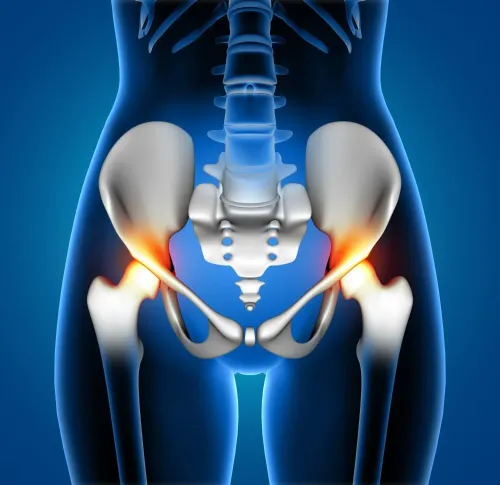
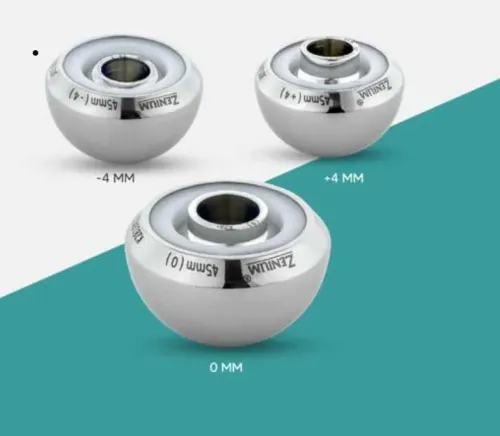
The component called an “internal head” is normally a femoral head or modular femoral head in a hip prosthesis. It mounts onto the femoral stem’s trunnion through a tapered bore, then forms the moving ball of the joint.
In a total hip replacement, it articulates with the acetabular liner; in a bipolar hip, it articulates with the bipolar cup’s inner bearing while the cup’s outer surface moves against the acetabulum. Searches for an internal head manufacturer for joint replacement prosthesis should therefore specify the complete mating system.
Compatibility depends on these features:
- Head diameter, which must match the liner’s internal diameter or the bipolar cup’s bearing size.
- Taper designation, including taper angle, major and minor diameters, length, and trunnion geometry.
- Neck length and offset, which set joint tension, leg length, and the stem-head relationship.
- Material and bearing pairing, such as cobalt-chromium against polyethylene or ceramic against a specified liner.
- Stem model and acetabular component, because similar-looking parts are not automatically interchangeable.
| Dimension | What must match | Failure if it does not |
|---|---|---|
| Head diameter | Liner or bipolar inner-bearing diameter | Excessive wear, looseness, or inability to assemble |
| Taper and trunnion | Stem’s exact taper designation and engagement length | Fretting, corrosion, fracture, or head loosening |
| Offset and neck length | Planned stem geometry and reconstruction | Instability, impingement, or incorrect leg length |
| Material and bearing couple | Approved opposing bearing surfaces | Accelerated wear or material damage |
From Implant-Grade Material to a Finished Head
A controlled internal head manufacturing process starts with verified implant-grade material and ends with documented release, not merely a polished sphere. The route depends on whether the head is cobalt-chromium alloy, titanium alloy, or ceramic, because ceramic requires densification and grinding rather than ordinary metal cutting.
- Receive the bar, forging, or ceramic blank with its material certificate and lot identity.
- Form or prepare the blank, then machine the head diameter, neck geometry, and stem-taper interface.
- Apply heat treatment to the specified metal alloy when the design requires it; ceramic blanks undergo pressing and sintering instead.
- Grind and polish the bearing surface and taper to the specified geometry and finish.
- Clean validated equipment and chemistry away from cutting fluid, polishing compound, particles, and process residues.
- Inspect dimensions, roundness, concentricity, taper fit, surface roughness, material identity, and visual defects before packaging.
- Record lot genealogy, nonconformities, cleaning results, and release approval.
| Route | Main production features | Principal control risk |
|---|---|---|
| Metal | Forging or bar preparation, CNC turning, taper machining, heat treatment, grinding and polishing | Distortion, incorrect taper, embedded particles, or unstable surface finish |
| Ceramic | Powder preparation, pressing, sintering, diamond grinding and polishing | Porosity, cracks, chipping, dimensional shrinkage, or residual stress |
A ceramic head is not a cobalt-chromium head made from a different feedstock. Its sintering shrinkage and brittle finishing steps demand dedicated process controls, while both routes require validated cleaning and inspection.
How Manufacturers Prove Fit, Finish and System Performance
A machined sphere is not yet a releasable implant. A finished femoral head must pass dimensional, material, surface, cleanliness and traceability checks, then demonstrate safe performance with its matching stem and bearing.
Release inspection should include:
- Confirm head diameter, roundness, sphericity, concentricity and offset on a calibrated coordinate-measuring machine.
- Inspect taper angle, major and minor diameters, length, engagement depth and surface condition with gauges or the coordinate-measuring machine.
- Measure bearing-surface roughness; polishing marks or embedded particles can accelerate wear.
- Examine the surface under magnification for scratches, pits, cracks, inclusions and discoloration.
- Verify alloy or ceramic identity against the material certificate and record the lot, heat-treatment history and inspection results.
- Confirm cleaning, packaging integrity and a traceable lot-release decision.
| Dimension | Performance effect | Failure if incorrect |
|---|---|---|
| Head diameter | Larger diameters can increase jump distance and stability; smaller diameters reduce frictional area and may increase dislocation risk | Excessive size can restrict motion or overload the bearing; insufficient size can compromise stability |
| Offset and neck length | Set leg length, soft-tissue tension and clearance | Wrong offset can cause limp, impingement or instability |
| Roundness and concentricity | Keep contact uniform through motion | Eccentricity creates localized wear, vibration and uneven loading |
| Taper geometry | Produces secure stem engagement | A near-looking but incompatible taper can fret, corrode or loosen |
Testing belongs to the assembled system. ISO 7206 evaluations can address head-neck static and fatigue strength, while ISO 14242 wear testing evaluates the bearing couple; taper fretting or corrosion assessment applies where the design requires it. A final inspection cannot rescue an unstable machining or polishing process.
What Procurement Teams Should Demand From a Mexico City Supplier
A sales address does not prove internal head implant production in Mexico City. Ask the supplier to identify the legal manufacturer, exact manufacturing site and activities performed there; match those details across authorization or registration records, the ISO 13485 certificate scope, device labels and an on-site audit.
Request this evidence for the femoral-head line:
- A site map and equipment list naming CNC machines, taper-finishing, polishing, cleaning, inspection and packaging areas.
- An ISO 13485 certificate covering medical-device manufacturing, not only trading or distribution.
- Lot genealogy linking the raw-material heat number to work orders, inspection results, nonconformance disposition and release records.
- Material certificates, calibration certificates, operator qualification records and validated process settings.
- A cleaning-validation protocol and report covering cutting fluids, polishing compounds, particles, residues, rinse quality, drying and recontamination controls.
- An ISO 14971 risk-management file or summary, plus destination-market test reports, labeling and regulatory authorization.
Sterility must appear as a stated configuration: sterile or non-sterile. For sterile supply, demand sterilization validation, packaging-integrity results, shelf-life evidence and transport controls; “clean” and “passivated” do not mean sterile.
For a supplier such as Komal Health Care Pvt Ltd, use an audit to verify that machining, finishing, cleaning and inspection occur at the named Mexico City site rather than at an undisclosed subcontractor.
Related product
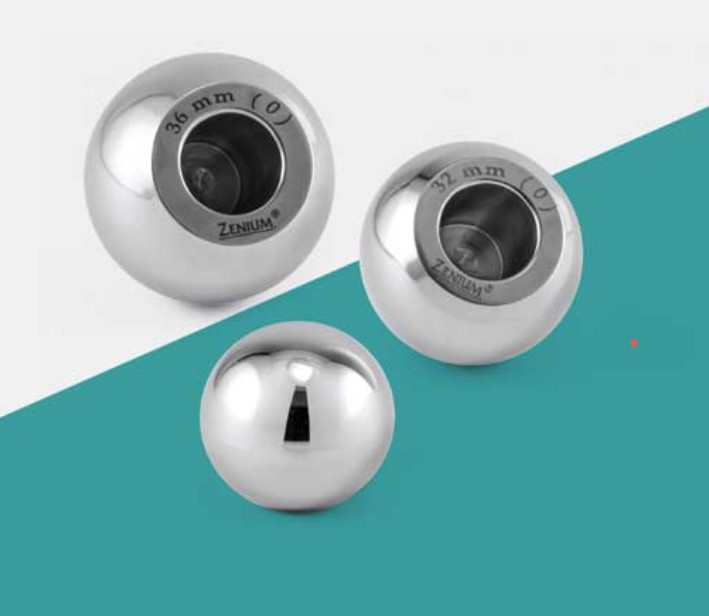 | Joint Replacement An Internal Head Manufacturer specializes in producing internal femoral heads used in hip replacement systems. View product → |
Standalone Component or Validated Hip System?
A standalone modular femoral head is appropriate when you are replenishing an established hip construct with a documented, validated match: the same stem taper, head diameter, offset, material and bearing combination. Treat “internal head” as a purchasing shortcut, not a specification.
| Buying route | Main advantage | Main exposure |
|---|---|---|
| Standalone head | Faster replenishment within an approved configuration | Taper mismatch, wrong offset or incorrect bearing pairing |
| Complete hip system | One validated stem-head-cup or liner combination | Higher initial qualification and inventory commitment |
Before ordering a standalone component, ask the joint replacement prosthesis manufacturer to confirm the exact taper designation, major and minor diameters, taper length, head size, offset, material and intended acetabular liner or bipolar cup. A head that looks identical can fail to seat correctly on another stem, causing fretting, corrosion, instability or assembly damage.
Expect extra lead time when the head requires a new diameter, ceramic or metal option, surface finish, packaging configuration or customer-specific documentation. The supplier may need engineering review, tooling, first-article inspection, compatibility evidence and a new release record. Never treat a dimensional drawing alone as system validation.
Source a complete prosthesis system when you are changing the stem, introducing a new bearing couple, combining suppliers, designing a new construct or lacking verified taper compatibility.
A complete system gives your regulatory and clinical teams one defined configuration for fatigue, taper-junction and wear evidence, while reducing errors from mixed labels, mismatched offsets and incomplete lot genealogy.
Frequently asked questions
Where does an internal head sit in a hip prosthesis?
The internal head is the femoral or modular femoral head. Its tapered bore mounts onto the femoral stem’s trunnion and creates the joint’s moving ball.
What must match when manufacturing an internal head?
The head must match the stem’s taper geometry, head diameter, material pairing, and the intended acetabular liner or cup system.
How do manufacturers verify a finished internal head?
They use material documentation, dimensional inspection, taper and bore checks, surface-finish evaluation, lot traceability, and system-level performance evidence.
What should procurement teams request from a Mexico City supplier?
Request supplier credentials, material certificates, manufacturing and inspection records, batch traceability, nonconformance controls, and documentation linking the component to its intended hip system.
Is a standalone internal head equivalent to a validated hip system?
No. A component can meet its own dimensional and finish requirements without proving compatibility, wear performance, fixation, and safety for the complete hip replacement system.