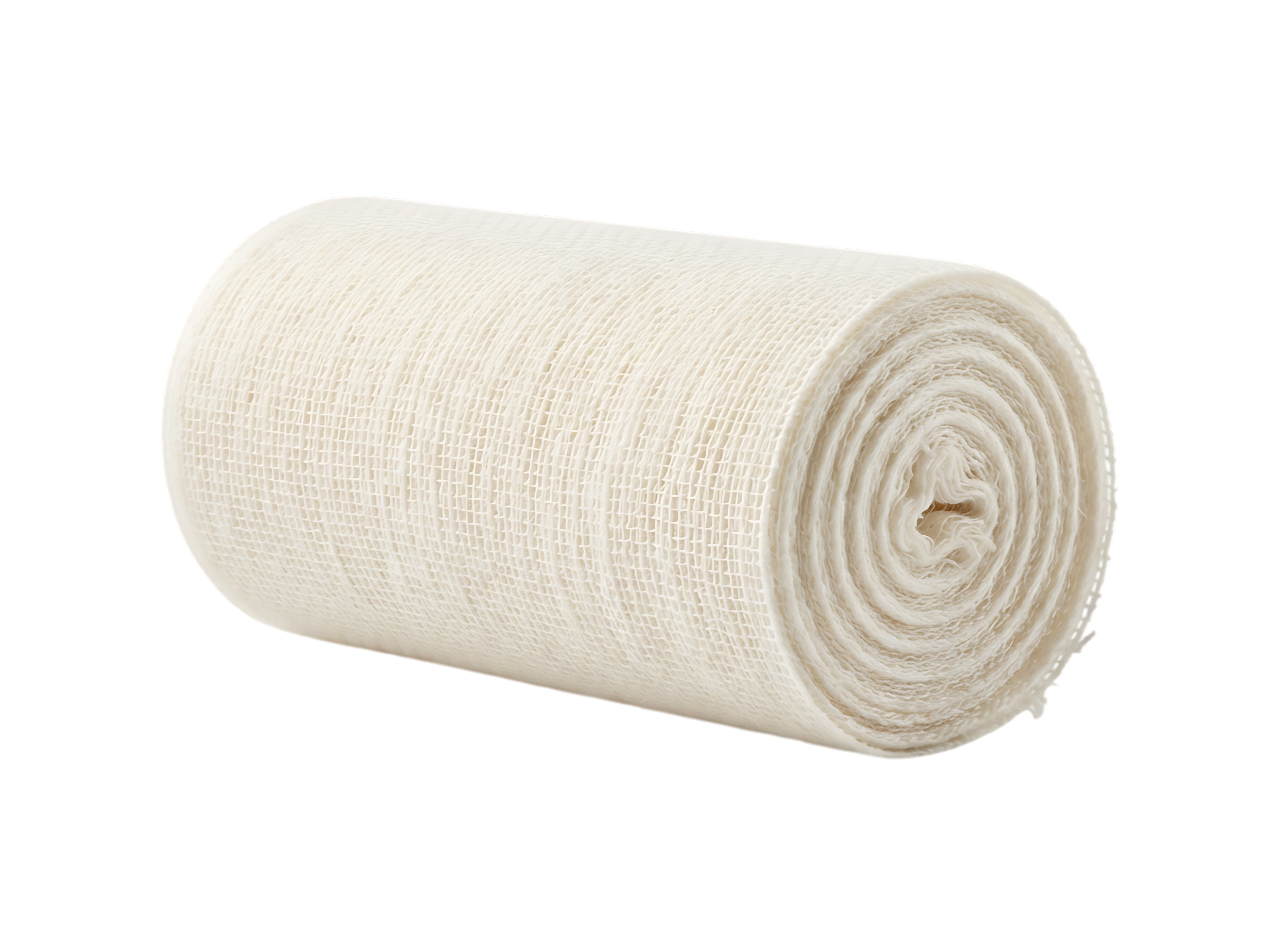
A Gamjee roll adds an absorbent, cushioned layer over a wound dressing, but it is not automatically a sterile wound-contact product or a compression bandage. By the end, you will know how to apply it, when its padding and fluid capacity are useful, when another dressing is better, and which specifications to verify before purchase.
Key takeaways
- Use a gamjee roll over a primary dressing as absorbent secondary padding.
- Secure the roll without wrapping tightly enough to restrict circulation.
- Choose gauze, soft roll, or crepe when padding or absorbency is unnecessary.
- Check cotton layers, gauze construction, size, packaging, and sterility claims.
What a Gamjee Roll Does for a Wound Dressing
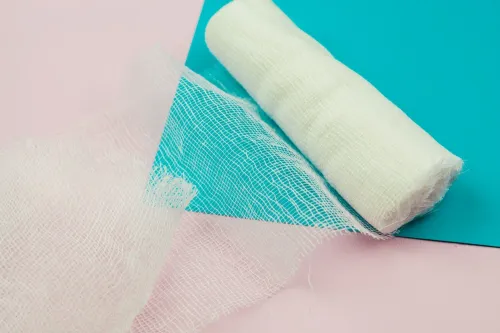
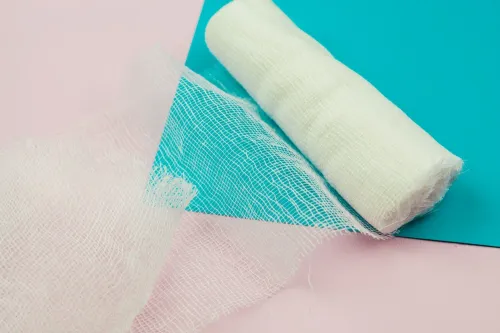
A Gamjee roll, also called Gamgee tissue, is an absorbent cotton-wool layer enclosed between gauze layers. It normally sits over a sterile primary dressing as a secondary dressing, rather than directly on every wound.
Its practical value is greater fluid capacity than a thin gauze layer, cushioning over bony prominences, and less friction over a suitable primary dressing. The cotton padding also protects the dressing from outside contamination and helps keep it in place. Absorbency declines after saturation, however; fluid can strike through or remain against the skin.
Padding can create excessive bulk, and the gauze surface can adhere if it dries against the wound.
A Gamjee roll can distribute localized pressure from a splint or cast, but it cannot correct poor fit or replace skin and neurovascular checks. It is not a compression bandage, pressure-relieving device, or substitute for correctly fitted cast padding.
Use it with an appropriate primary dressing: the roll does not replace sterile wound-contact material, bleeding control, infection treatment, or clinical assessment.
How to Apply a Gamjee Roll Safely
A secure dressing begins with the wound, not the roll. A gamjee roll is usually a secondary layer, so do not place its cotton filling directly on an open wound unless the product instructions and care plan specifically allow it.
1. Inspect the wound and surrounding skin for active bleeding, increasing redness, maceration, swelling, or discharge. Control bleeding and obtain clinical help for bleeding that does not stop with appropriate pressure.
2. Place the prescribed primary dressing or a non-adherent contact layer over the wound. This reduces the risk of the gauze surface sticking to a drying wound.
3. Unroll enough material to cover the primary dressing and the surrounding area. Keep the roll flat and apply it without pulling it tight; tension can create pressure points and restrict circulation.
4. Cut or tear the roll only as the product instructions permit. Avoid excessive overlapping, because multiple layers add bulk beneath fixation, footwear, splints, or casts.
5. Secure the dressing with suitable fixation, such as medical tape, a bandage, or another method specified in the care plan. Do not rely on the cotton layer alone to stay in position.
6. For a limb, check colour, warmth, sensation, movement, swelling, and distal pulses after application and during review. Loosen the fixation and seek clinical help immediately if circulation or sensation changes.
The outer cotton layer cannot show whether drainage, bleeding, pressure damage, retained moisture, or infection is developing underneath. Set inspection and replacement intervals in the care plan instead of judging the wound by the roll’s appearance.
Gamjee Roll, Gauze Roll, Soft Roll, or Cotton Crepe Bandage?
Choose by function: a gamjee roll supplies absorbent padding and cushioning, while a gauze roll, soft roll, and cotton crepe bandage solve different dressing problems.
| Option | What it provides | Best fit | Main limitation |
|---|---|---|---|
| gamjee roll | Cotton-wool padding enclosed in gauze | Exudate absorption, cushioning, and protection over a primary dressing | More bulk; saturation can cause strike-through or moisture against the skin |
| gauze roll | Thin, conformable gauze for wrapping, securing, or light absorption | Low-bulk coverage and holding a dressing in place | Less fluid capacity and less protection from pressure |
| soft roll | Protective padding beneath plaster or synthetic casts | Skin protection and cushioning under a cast | Construction, absorbency, and fixation needs vary by specification |
| cotton crepe bandage | Support, dressing retention, or controlled light compression | Holding a dressing or providing light limb support | Not the wound’s absorbent layer and not a substitute for padding |
Do not choose a cotton crepe bandage when the wound needs cushioning and exudate absorption; it can hold the dressing without managing drainage. Do not assume soft roll is interchangeable with Gamgee material, because one product may be designed for undercast protection while the other is intended as secondary absorbent dressing.
Use a gauze roll when conformity and low bulk matter more than fluid capacity. Use a gamjee roll when padding and absorption matter more, but avoid stacking several layers when footwear, cast fit, movement, or inspection requires a thinner dressing.
When Its Padding and Absorbency Are the Right Choice
A gamjee roll suits wounds that need padded secondary absorption, not every wound that needs covering. Its benefits are clearest when a suitable primary dressing already protects the wound and the outer roll adds fluid capacity, cushioning, reduced rubbing, and retention.
| Situation | Why it fits | Reconsider when |
|---|---|---|
| Postoperative wound | Covers a protected primary dressing and absorbs leakage | Drainage reaches the outside or the pack becomes wet |
| Exudative wound | Adds secondary absorbency over the contact layer | Heavy output needs a higher-capacity dressing and planned changes |
| Large abrasion or donor site | Covers a broad area with cushioning and fewer overlaps | Excessive bulk interferes with fixation or inspection |
| Bony prominence | Reduces rubbing and distributes localized pressure | Pressure-relieving equipment or better-fitted support is needed |
| Fragile skin | Protects the surface when the contact layer prevents sticking | The gauze dries onto the wound or causes lint |
Change direction for burns: use a clinician-selected burn dressing. A drying wound may need a non-adherent primary layer, not extra cotton. Review the choice if lint, retained moisture, strike-through, or increasing bulk appears.
A gamjee roll is not sterile wound contact material unless its product specification says so. It does not replace prescribed antimicrobial treatment, haemorrhage control, pressure-relieving equipment, or clinical assessment. The cotton layer also cannot show whether bleeding, infection, or pressure damage is developing underneath; follow the planned inspection and change schedule.
Specifications to Check Before Buying a Gamjee Roll
The word “Gamjee” is not a quality guarantee. Before buying, confirm exactly how the gamjee roll is intended to be used and what evidence supports its claims.
1. Check the label and product data for sterile or non-sterile status, direct wound-contact or secondary-dressing use, single-use status, sterilisation method or sterilisation statement, expiry date, lot or batch number, and intact packaging. A damaged seal or missing traceability information is a procurement warning.
2. Request the roll width and length, available sizes, cotton content or weight, cotton thickness, and gauze-layer construction. Dimensions determine coverage, overlap, storage space, and handling time; they do not prove clinical suitability.
3. Ask for absorbency or liquid-retention data, linting information, edge finish, and the dispensing or cutting format. These details affect mess, retained fibres, waste, and preparation time, especially when the gauze roll is cut for repeated procedures.
4. Confirm whether the soft roll is designed for wound dressing, protective padding, or cast application. Do not substitute it based on appearance alone.
5. Ask for packaging documentation and product data before approving a supplier. Buyers comparing Komal Health Care Pvt Ltd with other manufacturers can use the same checklist to verify sterile and non-sterile presentations, intended use, and traceability.
Never infer sterility, absorbency, low adherence, or regulatory conformity from the product name alone. If the roll is non-sterile or not labelled for direct contact, use it only over the specified primary dressing.
Related products
 | Dressing ₹38 We are manufacture of Gamjee Roll. These Gamjee Roll are highly absorbent cotton are available in low adherent gauze cover and is applied over... View product → |
 | Surgical Disposable ₹27 These Gamjee Roll are highly absorbent cotton are available in low adherent gauze cover and is applied over dressing to provide low adherent wound... View product → |
Frequently asked questions
What does a gamjee roll do in wound dressing?
It provides absorbent padding over a primary wound dressing and helps protect the site from pressure, friction, and leakage.
How do you apply a gamjee roll safely?
Place it over the primary dressing, wrap it evenly, secure it without tight compression, and check circulation after application.
How does a gamjee roll differ from gauze roll, soft roll, and cotton crepe bandage?
A gamjee roll combines cotton-wool padding with gauze layers; gauze roll is thinner, soft roll provides padding without the same gauze covering, and cotton crepe bandage supplies stretch and support.
When is a gamjee roll the right choice?
Choose it when a wound dressing needs cushioning and absorbency, especially when a thin gauze layer alone will not manage padding or exudate.
What specifications should you check before buying a gamjee roll?
Check the roll dimensions, cotton-wool thickness, gauze construction, absorbency, packaging, batch details, and whether the product is sterile or non-sterile.
Related product
 | Gauze Roll ₹38 We produce and supply to our clients, a wide range of Gauze Rollthat are hygienically made so that they are safe to use in various medical... View product → |