The correct buttress plate depends on the fracture’s direction of displacement, the available bone, the plate’s fit and the complete screw-and-instrument system—not on the product name alone. By the end, you will be able to assess the clinical design, verify technical and regulatory evidence, and request a quotation that matches the operation.
Key takeaways
- Match the plate to the fragment’s displacement and supporting column.
- Confirm plate geometry and screw options against radiographs or CT.
- Request material, testing, traceability and implant-system documents before ordering.
- Put dimensions, standards, batch details and surgical checks on the quotation.
What fracture problem should an L buttress plate solve?
A buttress plate resists shear: it props a metaphyseal fragment so it cannot slide, helping prevent articular-surface or cortical collapse. Choose an L-shaped plate when radiographs or CT show a distal femur or proximal tibia fracture requiring support from the lateral or medial column, according to displacement.
Check fragment size, comminution, bone quality and intact cortex available for screw purchase. A small fragment, severe comminution or weak purchase can make an L plate inadequate.
| Option | Primary objective | Typical distinction |
|---|---|---|
| Neutralisation plate | Protects lag-screw fixation | Does not primarily buttress shear |
| Compression plate | Applies axial compression | Suits contact across a fracture line |
| Bridging plate | Spans comminution | Avoids compressing every fragment |
| Locking buttress plate or LCP | Fixed-angle support | Useful when metaphyseal purchase is poor |
| Condylar buttress plate, DCS or DHS | Anatomy-specific fixation | Condylar, distal-femur, or hip-region trajectories differ |
Compare the proposed L plate by intended anatomy, screw trajectory and fixation objective; these names are not interchangeable. Locking screws do not reduce an unreduced fracture or guarantee compression.
If the fracture needs a blade plate, condylar design, dual plating, intramedullary fixation or arthroplasty, choose another construct. A buttress plate manufacturer of implants in Mexico City may also offer hip implants, but a joint replacement prosthesis is not trauma fixation; a femoral stem is an intramedullary hip-replacement component.
The treating orthopaedic surgeon must decide from imaging and operative requirements.
How do imaging, plate geometry and screws determine the construct?
Full-length radiographs establish the side, anatomical level and available plate length; CT clarifies metaphyseal contour, comminution and fracture lines when radiographs leave uncertainty. Confirm each detail rather than trusting the catalogue name:
- Left or right orientation
- Proximal or distal contour
- Plate length, hole count, thickness and hole layout
- Usable working length between the fracture and the nearest screws
| Plate geometry | Construct effect | Decision point |
|---|---|---|
| Short plate with clustered screws | Very stiff, high local stress | Avoid when a longer safe span can distribute load |
| Longer plate with spaced screws | Spreads load over more bone | Use when the soft-tissue envelope permits |
| Incorrect contour or side | Poor buttress contact and unsafe trajectories | Reject even if the anatomical name appears correct |
Reduce the fracture before final fixation, place the plate against the correct cortical surface and use its body to resist fragment sliding. Do not rely on screw compression to hold a fragment that remains unreduced. A cortical screw suits dense shaft bone; a cancellous screw suits metaphyseal or weaker fragment bone.
Verify diameter, length, thread engagement and subchondral purchase.
Locking screws add fixed-angle support but neither reduce the fracture nor automatically compress it. Check every trajectory for joint penetration, especially near the distal femur and proximal tibia. Protect skin, muscle, tendons and nearby neurovascular structures; reject any contour that forces unsafe exposure or screw direction.
A buttress plate manufacturer of implants in Mexico City should provide geometry that supports this imaging-led plan.
What implant-system and material evidence must you verify?
Treat the plate, screws and instruments as one validated system, not interchangeable catalogue items. Ask for screw diameter, thread system, and whether locking and non-locking holes accept the same screws. Identify the exact drill guides, aiming guides, torque-limiting tools and extraction instruments required.
Confirm whether the plate uses a recognised interface or only a proprietary manufacturer system. Request the plate material, grade, surface finish and mixed-metal rules. Stainless steel provides established strength, hardness and instrumentation; titanium alloy generally has a lower elastic modulus and creates less practical MRI artefact. Neither is universally superior.
Do not combine metals unless the manufacturer permits the construct and addresses corrosion and galvanic compatibility.
Request buttress-plate-family evidence, not generic evidence from a manufacturer of implants:
- Material certificates, dimensional and hole-position inspection, radiographic markings, fatigue testing of the plate-and-screw construct, biocompatibility evidence and change-control history.
- Sterilisation validation and packaging validation when supplied sterile.
- Labels and instructions identifying intended anatomy, indications, contraindications, single-use status, sterilisation method, cycle restrictions, storage conditions and shelf life.
- Reprocessing instructions for reusable instruments, including permitted cycles and cleaning steps.
Evidence for hip implants, a joint replacement prosthesis or a femoral stem does not validate a trauma plate. Re-sterilising a sterile implant or reusing a single-use implant against the instructions can invalidate the validated process.
How should you compare a Mexico City supplier before ordering?
A low plate price is irrelevant if the operating room lacks the correct guide, torque tool or matching screws. Compare suppliers from buttress-plate records, not catalogue adjectives.
| Evidence to compare | What to request | Why it matters |
|---|---|---|
| Design | Side-specific drawings, dimensions, tolerances, hole count, screw compatibility and sample or trial fit | Exposes a wrong contour or unusable screw pattern |
| System | Available drill and aiming guides, torque-limiting and extraction instruments, plus customisation limits | Confirms safe insertion and later removal |
| Supply | Lead time, minimum order quantity and replacement policy | Shows whether the supplier can support routine and urgent cases |
| Quality | Plate-and-screw fatigue testing, material certificates, dimensional and hole-position inspection, sterilisation and packaging validation, and change-control history | Evidence for another trauma plate, hip implant or femoral stem does not validate this family |
Treat any manufacturer of implants in Mexico City as a location, not proof of authorization. Verify the legal manufacturer, actual manufacturing-establishment details, COFEPRIS sanitary registration or other applicable authorization for the specific device, and quality-management evidence from the production site. Confirm lawful supply for Mexico or the intended export market.
Request Spanish technical files when your hospital requires them, plus export paperwork, commercial invoices, certificates and delivery terms. Confirm lot or serial identification, recall communication, post-market vigilance duties and the named complaint contact. Komal Health Care Pvt Ltd can be assessed against these buttress-plate-specific records rather than its broader label as a manufacturer of implants.
Related product
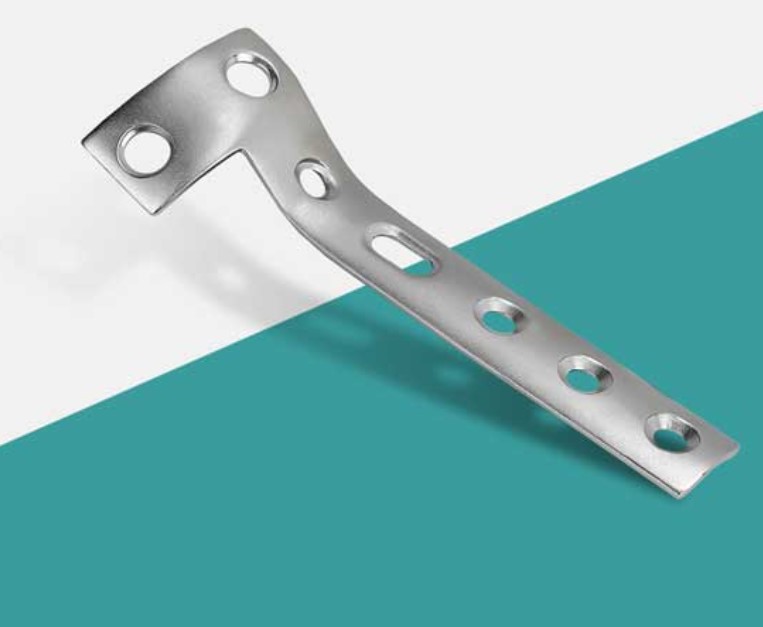 | Bone Plate 'L' Buttress Plate Manufacturer 'L' Buttress Plate manufacturers produce specialized orthopedic implants designed for the stabilization of fractures, particularly around the distal... View product → |
What should appear on the quotation and final surgical check?
A quotation is only usable when it names the exact construct, not merely “orthopaedic fixation product.” Send a buttress plate manufacturer of implants in Mexico City a written specification containing:
- Anatomy and side: left or right distal femur or proximal tibia; plate family; hole count; length; thickness; material; and surface finish.
- Screw set: diameters, lengths, thread type, locking or non-locking configuration, and required drill guides, aiming guides and torque tools.
- Quantities, catalogue numbers, sterile or non-sterile supply, packaging format, delivery destination and required documents, including the instructions for use, sterilisation details, shelf life and material or inspection certificates.
Before approval, reconcile every line with the surgeon’s imaging plan. Confirm contour, working length, screw trajectories, subchondral purchase and clearance from the joint. A catalogue match that fails on any of these points can cause an intraoperative plate change, extra imaging, unavailable screws or instruments, delayed surgery and inventory complications.
At the final surgical check, verify the complete instrument set and backup screws. Inspect intact packaging and confirm the label shows the lot or batch number, catalogue reference, sterilisation status and shelf-life information. Record risks including loss of reduction, pull-out, cut-out, intra-articular penetration, infection, nonunion and soft-tissue irritation.
The treating surgeon’s plan and the device’s instructions for use override the manufacturer’s webpage.
Frequently asked questions
What fracture problem should an L buttress plate solve?
An L buttress plate supports a metaphyseal fragment against shear and helps prevent articular-surface or cortical collapse. Use the radiographs or CT to identify whether the distal femur or proximal tibia needs lateral or medial column support.
How do imaging, plate geometry and screws determine the construct?
Imaging shows fragment size, displacement, bone quality and the column needing support. Match those findings to the plate’s L profile, contour, length, hole pattern and available screw types, then check that screws can capture the fragment without entering the joint.
What implant-system and material evidence must you verify?
Request the implant material specification, applicable biocompatibility and mechanical-test records, sterilisation status, instructions for use, lot or batch traceability and compatibility information for the complete plate-and-screw system.
How should you compare a Mexico City supplier before ordering?
Compare the supplier’s manufacturing licence and quality records, product drawings, available sizes, lead time, traceability, packaging, technical support and after-sales process. Verify that the quoted plate and screws come from a compatible system.
What should appear on the quotation and final surgical check?
The quotation should identify the plate model, dimensions, material, screw sizes and types, quantity, packaging, lot traceability, delivery terms and required documents. Before surgery, confirm the implant, instruments, imaging plan, screw trajectory and package integrity.